The short answer
Gallows brackets are steel supports fixed to the wall that carry a chimney stack in the roof space after the breast below has been removed. They are needed because the stack is heavy and would otherwise have nothing under it. Removing a chimney breast always needs Building Regulations approval, and a shared breast can also bring in a party wall notice.
What gallows brackets are
The breast is the bulge of masonry that projects into a room, running from the fireplace up through the floors. Above the roof line the chimney continues as the stack. In many houses the breast carries the weight of the stack above it, so the load has a direct path down to the ground.
When the owner wants the floor space back and removes the breast in a room, that path is cut. If the stack is to stay in the roof, something new has to hold it up. A gallows bracket is one answer: a heavy steel bracket, shaped like the gallows its name recalls, fixed into the wall at the level above the removed breast. A pair of them carries a steel beam or bearing plate, and the stack's weight rests on that.
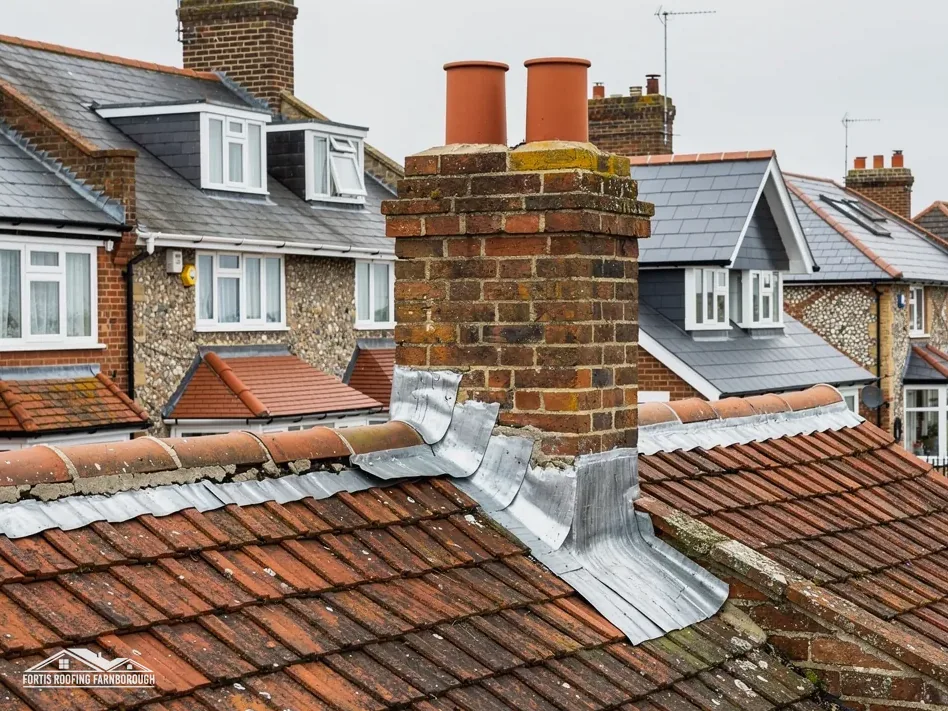
They are used higher up, in the loft or the upper storey, so that the lower breast can go while the stack above remains. The effect is a chimney that seems to float, with a visible steel frame where the breast used to be.
Other supports exist, such as a steel lintel or a beam spanning the opening, and the choice depends on the wall, the loads and the layout. Taking the whole stack down is the alternative, and our answer on removing a chimney stack below the roof line covers it.
Why approval is always needed
Removing a chimney breast is the clearest case of work that needs Building Regulations approval. The Planning Portal says approval always applies, as the breast is structural. There is no size limit below which it can be skipped.
The reason shows in what could go wrong. A stack that loses its support can crack, shift or fall through the roof and the floors beneath. The walls beside the breast may have been relying on it for stability, and floors or roof timbers can bear on it. Removing it changes how the whole building carries its loads.
Approval brings structural design into the process. A structural engineer works out the loads and specifies the supports, whether gallows brackets, a beam or another arrangement, and building control checks the design and inspects the work. The completion certificate that follows goes in the house papers, and a buyer's solicitor is likely to ask for it.
The owner chooses between the council's building control team and a registered building control approver. In Rushmoor and Hart, the council service is the shared Hart and Rushmoor team on 01252 398715. Our guide to chimney breast removal sets out the whole process.
The structural design
Gallows brackets are not an off-the-shelf fix. The design depends on facts about the house that only a survey and calculation can supply.
The engineer needs to know the weight of the stack above, which depends on its height, the number of flues and the bricks used. They need to know the wall below, whether it is solid brick, cavity or stone, and its condition, since the brackets bear on it. They also need the building's layout, because a bracket in an upstairs room has to fit between floor and ceiling and sit where the wall can take the load.
From that, the engineer specifies the size of the steel, the fixings and any padstones, the hard blocks that spread the load into the wall. The brackets are bolted or built into the masonry, and the old breast is removed only once the new support is in place and checked.
The stack itself may need work. Old pointing, cracked pots and failed flashings are far easier to put right while access is open, so a survey from the roof often leads to repairs at the same visit.
Do not take the breast out first and think about support afterwards. The order is design, approval, support, then removal.
Party walls and what the neighbour sees
Many chimney breasts are shared. Where houses are joined, the breast often sits on the dividing wall, with the neighbour's flue next to yours. Cutting into it brings in the Party Wall etc. Act 1996.
Section 2(2)(g) of the Act lets the building owner remove a protruding breast or flue from a party wall. Doing so means serving notice on the neighbour, and section 3 sets the period at two months ahead of the start. GOV.UK warns that no reply does not mean consent, and that surveyors step in when the owners disagree.
Party wall matters are handled by a party wall surveyor and not by building control, and the two processes run side by side. Plan the programme so both are complete before the first brick is removed. Our answer on a shared chimney stack with a neighbour covers the notice and the options.
Tell the neighbour early and in person. Dust, noise and the sight of scaffolding are easier to accept when they have been explained, and a friendly word often smooths the formal notice. The chimney repairs hub lists the roofing work that can go with the project.