The short answer
A chimney pot needs replacing when it is cracked through, loose in its bedding or leaning, because a failing pot can drop pieces and let water into the flue. The new pot goes into fresh mortar, called flaunching, and the flue is checked at the same time. Matching the old pot matters, and a conservation area calls for a check with the council first.
Signs that a pot needs replacing
Pots are made of fired clay, and they live a hard life: frost, sun, heat from the flue and wind. Most last for generations, but they do crack and loosen.
A pot should be replaced, and not just patched, when one or more of these is true:
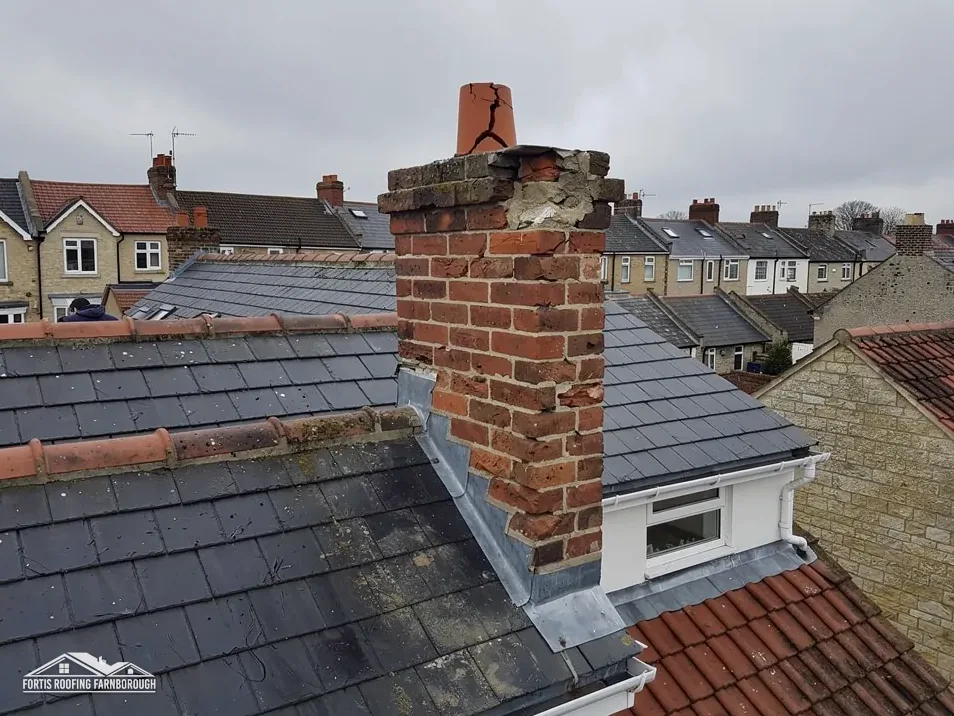
- a crack runs right through the wall of the pot, especially a vertical one;
- a piece has broken off the rim, or the pot is crumbling at the edges;
- the pot rocks or moves when pushed, which means its bedding has failed;
- the pot leans, or has shifted sideways in its mortar collar;
- the flue lining below is exposed to rain because the pot no longer seats properly.
A pot in this state is a hazard. Pieces that fall from the top of a stack land on the roof, the path or the garden, and a whole pot dislodged in a gale can do serious harm. If you can see a problem from the ground, do not wait for a storm to test it.
Look at the surrounding mortar as well. Cracks in the flaunching round the foot of the pot are often the first sign, and they let water in alongside the pot. Our chimney flaunching repair guide covers when the mortar alone needs attention.
How a replacement pot is fitted
Replacing a pot is a short job once the roofer can reach the top of the stack safely. A tower or a scaffold is often needed, since a ladder against the brickwork is not a safe base for lifting a heavy pot.
The sequence runs like this. The old pot is lifted off, with its mortar bed chipped away. The top of the stack is cleaned and checked, because a pot is only as secure as the brickwork beneath. A fresh bed of mortar is laid, the new pot is set upright and plumb, and the mortar is shaped into a sloping collar so that rain runs away from the pot instead of into it.
That collar is the flaunching. The mix and the shaping both matter, because a weak or flat flaunching cracks within a few winters and the repair is wasted.
While the pot is off, the roofer looks into the flue. If the lining is damaged at the top, or the brickwork below is loose, that comes up before the new pot goes on. The inspection photographs, which include the flue top, are shared with you. If the flue serves a working appliance, the sweep or installer deals with the inside.
The price is one written figure for the job, and access forms part of it.
Picking a pot that suits the house
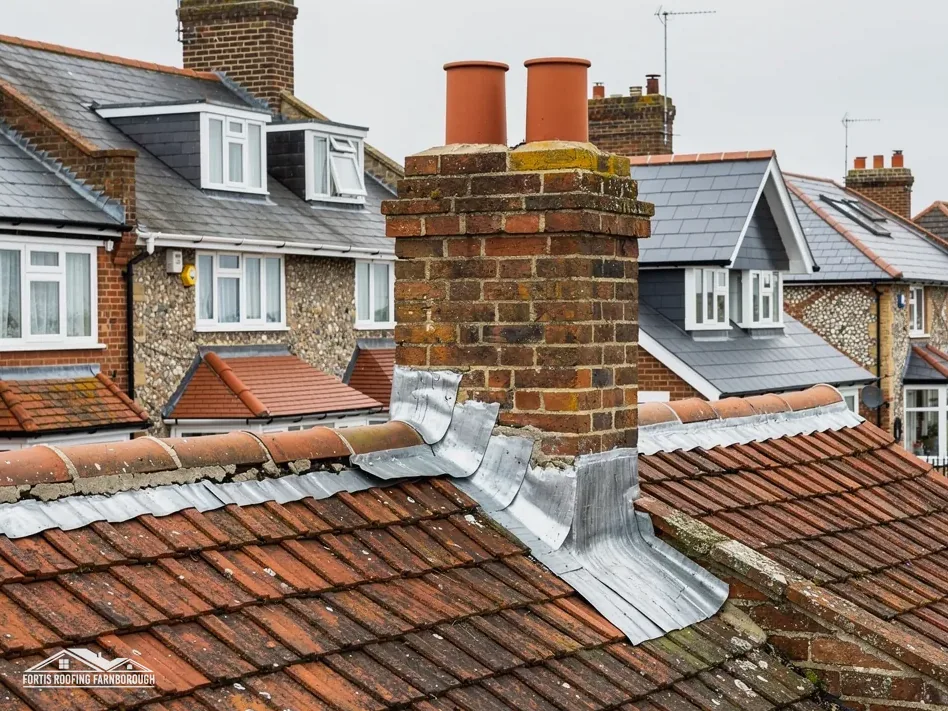
Pots come in many shapes and sizes, from plain round cans to tall decorative designs with crowns, castellations or twisted shafts. The new one should suit the house, and on an older home the original pots are part of the roofline's character, so the choice deserves care.
Size matters for the flue. A pot must fit the flue opening, and for a working fire it should not narrow the outlet. Height also affects how the chimney draws, so a roofer matches the original unless there is a reason to change it.
Colour and clay type are the other considerations. Terracotta pots weather and darken over time, so a brand new pot beside an old one will look different at first. A reclaimed pot can match more closely where a house has several of the same kind. If a pot is a feature of the street, an exact match is worth the effort.
Capping the pot with a cowl is a related decision, and our answer on whether you need a chimney cowl covers the options.
The point of keeping the same look is practical as well as visual. A changed profile on a listed or conservation-area house can raise planning questions, which the next section covers.
Conservation areas, Article 4 and listed houses
A pot of the same size and style is ordinarily a repair with no effect on how the building appears. Should the home be listed or fall within a protected area, confirm the position before you order.
Councils differ. Hart District Council's heritage pages describe repairs to non-listed buildings as needing no planning application when they follow traditional methods, the original detailing and the same materials. Hart also made Article 4 directions in 1998 for most of its conservation areas, and these reach chimneys on dwellings.
Over in Rushmoor, the Cargate direction at Aldershot takes in work seen from the street or open ground, with chimneys and flues among the items listed. Guildford's page warns that where a direction applies, altering or taking down a chimney needs permission first.
In every other area, ask your council's planning team whether an Article 4 direction applies. For a listed house, listed building consent is the route for changes touching its special interest, and the chimney forms part of what is listed.
Our chimney repairs in a conservation area page has more, and the chimney repairs hub lists the rest.