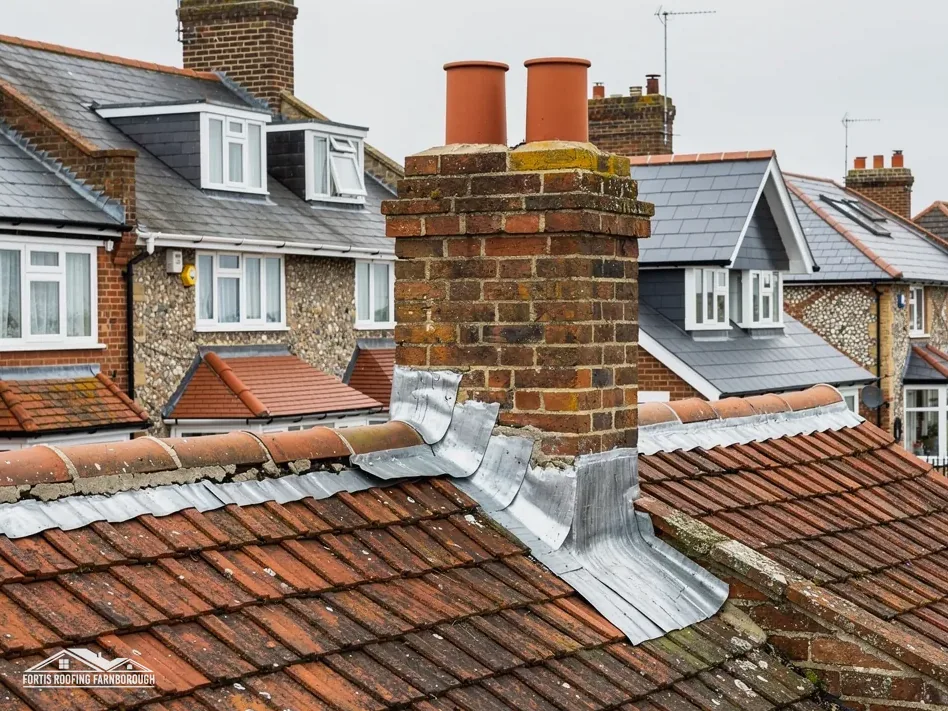
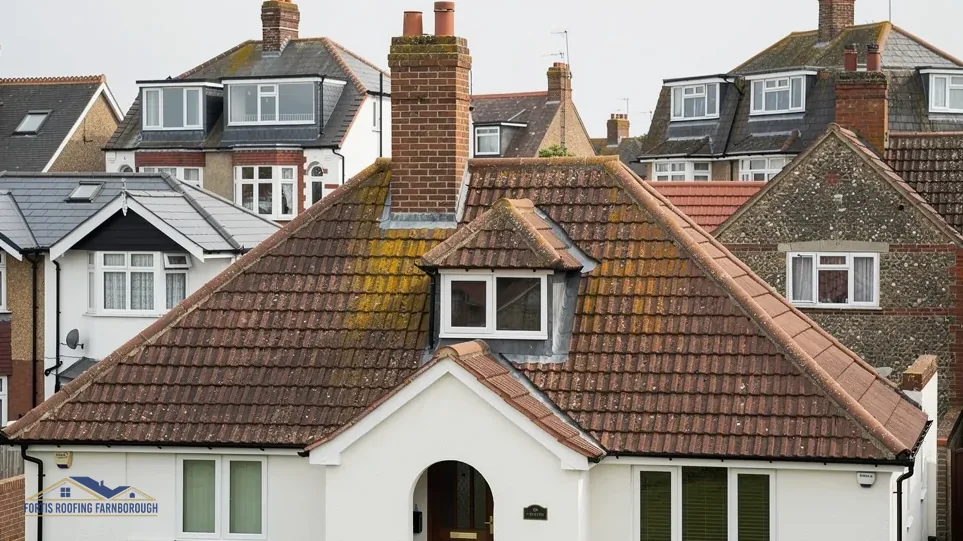
Rebuilding a chimney above the roofline means taking down the stack to a sound level, usually at or just above the roof, and building it back with the same or matching materials. The part inside the house, the breast, stays as it is. The work is confined to the section that stands in the weather, which is where most of the damage occurs.
It is a bigger job than repointing or renewing flaunching, and it is the right one when the brickwork has failed throughout. A stack that is repaired in patches while the bricks continue to crumble becomes an expensive habit. A rebuild resets the clock, and it gives the opportunity to fix the flashings, the pots and the weatherproofing at the same time.
Because a stack is a visible part of the house, a rebuild is not always a matter for the owner alone. In a conservation area, in a place covered by an Article 4 direction, or on a listed house, the council has a say, and getting the answer wrong can mean enforcement. This guide covers how to decide between repair and rebuild, what the work involves, how the matching is done, the planning checks, the scaffold licence that is often needed on the public highway, and how the price is built up.
When a rebuild beats a repair
A repair is right when the damage is local and the brick underneath is sound. A rebuild is right when the problem runs through the stack.
Signs that point to a rebuild
- Bricks that are soft, powdery or flaking in layers, across several courses.
- Cracks running down the stack or opening at the joints between courses.
- A stack that leans, bulges or has moved on its base.
- Mortar so far gone that bricks can be pulled out by hand.
- Repeated repairs that have not stopped the damp.
Signs that point to a repair
A cracked flaunching, a few eroded joints, a failing lead flashing or a single damaged pot can usually be put right without taking the stack down. Our guides on chimney repointing and flaunching repair cover those jobs, and the stack can often stay in place when only one of them is needed. Even then, the survey should look at the whole stack, so that a second repair is not needed a year later.
The survey decides
We cannot tell from the ground which case you have. On the roof, we tap the bricks, test the mortar, photograph each face and look for movement. If a repair will do, that is what the survey recommends, and a rebuild is proposed only where the evidence supports it. You receive the photographs, and the reasoning is written down.
Leaning stacks
A stack that leans is a safety matter. The ground beneath should be kept clear until it has been assessed. Our guide on the leaning chimney sets out the causes and what follows from them.
What a rebuild involves, course by course
The method is the same whatever the size of the stack, though the time varies with how many courses are coming down and how much is rebuilt.
Take down and sort
The stack is taken down course by course from the top, and the bricks that can be reused are cleaned and stacked. Soft or broken bricks are set aside. The pots and any cowls are removed and checked.
Find the sound base
The rebuild starts from sound brickwork. That may be at the roof level or a few courses down. The top of the retained brickwork is cleaned, and any loose material is removed so the new work bonds properly.
Rebuild and bond
The stack is built up again in a bond that matches the old one, with the same joint width and profile. Cleaned reused bricks are laid with new ones where the originals are too far gone. Each course is kept plumb, and the stack finishes at the right height for the flue and the roof.
Flue and lining
If the flue is in use, its lining is checked and made good. If it is unused, a vented cap is fitted so the flue can breathe. Our guide to capping a chimney explains why.
Flaunching, pots and flashings
New flaunching is formed under the pots, and the lead flashings at the base are renewed or re-fixed to suit the rebuilt stack. The roof around the stack is checked and made good.
Clearing up
Waste goes in the correct container and leaves the site, and the roof and garden are left tidy. Rubble from an old stack is heavy, so it is lowered in bags or by chute and never thrown from height, and the area below is kept clear while the stack is coming down.
Matching bricks, mortar and pots
A stack that is rebuilt in the wrong bricks sticks out. In most streets the chimneys are seen all together, so appearance matters as well as performance.
Brick
Where the old bricks are sound, they are cleaned and reused, with the best faces outward. Where new bricks are needed, the match is by colour, size and texture. Old bricks have a character that a modern brick often lacks, so a match may need several samples or reclaimed bricks.
Mortar
The mortar should be no harder than the bricks. A mix that is too hard forces moisture to leave through the brick rather than the joint, and damages the brick face. Matching also covers the joint colour and finish, which changes how the stack looks from the street.
Pots and cowls
Pots are reused if they are sound. If they are not, new pots are chosen to match the originals in shape and height, or the council's requirements if the house is in a protected area. Our answer on chimney repairs in a conservation area explains what councils tend to ask for, which is useful background before pots are chosen.
Lead
Flashings are in lead, in a code chosen for the position and fixed to be durable. The finish should look like the original, though lead weathers to a grey-green within a few seasons.
Photographs and samples
On a protected house, we suggest agreeing a sample with the council before the stack comes down. Photographs of the existing stack, taken from several angles before work begins, are useful for the planning officer and for us.
Conservation areas, Article 4 and listing
The stack is one of the most visible features of a roof, so councils pay attention to it. Whether you need permission depends on where the house is.
Conservation areas
A conservation area is article 2(3) land, where the usual freedoms are narrower. Repairing and rebuilding a stack like for like is generally less of an issue than changing it, but the council's view of what counts as like for like can be strict. Ask first.
Rushmoor
Rushmoor's Cargate Article 4 direction covers Aldershot's Cargate conservation area and reaches work visible from the street or open land, and chimneys and flues feature on its list. If your house is there, a rebuild that changes the stack needs consent from the council first.
Hart, Guildford and Basingstoke
Hart made directions in 1998 for most of its conservation areas, and chimneys on dwellings are among the features they control. Guildford tells owners that where one of its directions applies, the council must agree in advance to any chimney being demolished or modified. Basingstoke and Deane has directions on four town-centre areas, where roof changes need permission and original materials are expected to stay.
Everywhere else
Ask the council whether an Article 4 direction applies to your address.
Listed houses
A listed house needs listed building consent for anything touching its special interest, and a stack counts. Our answer on chimney repairs in a conservation area gives the nearby cases.
Scaffold and the highway licence
A rebuilt stack needs a safe working platform, and for a chimney that usually means scaffolding. It is the largest single element of the job on the access side.
Why a ladder is not enough
Rebuilding means standing at the top of the stack with materials, tools and a quantity of heavy brick. That needs a platform that is stable and has edge protection. A ladder or a roof ladder does not provide it.
The licence
Scaffolding that stands on or over a public highway is covered by section 169 of the Highways Act 1980, and it is the highway authority that grants the licence. On private land none is needed. In Rushmoor, Hart, East Hampshire and Basingstoke and Deane the authority is Hampshire County Council, and Hampshire County Council's own page puts the application in the scaffolding firm's hands, on behalf of the customer. Hampshire County Council allows no extensions, requires 10 clear working days to elapse from filing to start date, and charges £211.90 for the first 2 weeks and £72 for each further 2-week period.
Surrey
For addresses in Surrey Heath, Waverley, Guildford and Woking, the highway authority is Surrey County Council until 31 March 2027. Surrey County Council charges £208 for each 28-day period and wants applications in at least 10 working days before the start date. Elsewhere, including Surrey, ask the scaffolder who applies, and we fit our start date around the licence.
Timing
Because the notice period has to run, a rebuild cannot be arranged at short notice. Our guide to scaffolding for chimney repairs sets out the steps.
Neighbours, paperwork and the price
A rebuild touches more than the brickwork. A few practical matters come up each time.
Shared stacks
Where two homes share a wall, the stack often serves both and stands on the party wall. Work on it can affect the neighbour, and a party wall surveyor can advise whether notice is needed. Our answer on the shared chimney stack goes through what to expect, and who you should tell. A verbal word over the fence is not enough.
Building control
If the rebuild is part of a wider job, such as removing a breast or changing a flue, ask your building control body whether approval applies. In Rushmoor and Hart, the service is the Hart and Rushmoor Building Control Partnership.
What drives the price
The height and width of the stack, the number of pots, how many courses are rebuilt, the brick and the match, the lead, the flue work and the access, above all the scaffold, set the cost. MyJobQuote gives chimney leadwork at £350 to £920 (Sep 2026), which is part of a rebuild and shows how much depends on access. A rebuild is priced after the survey.
The written price
After the survey comes one total price for the work we agree. We photograph the stack before, during and after, and send you the record. Our chimney repairs page lists the rest of our chimney work.