The short answer
Often, yes, particularly if the chimney is unused. A cowl keeps rain, birds and debris out of the flue, and a vented design lets air move through so the breast stays dry. No rule demands one on every house, but an open pot on an unused flue invites damp and nests. A working fire or stove needs a type that suits it.
What a cowl does for the flue
A chimney pot is an open tube pointing at the sky. Rain falls straight down it, and over a winter that adds up to a lot of water reaching the flue lining, the brickwork inside the stack and the hearth below. Birds treat the open top as an invitation, and leaves and debris drop in with the wind.
A cowl covers the top of the pot. It keeps most of the rain out, stops birds from dropping into the flue and cuts down the debris that reaches the lining. On a stack that stands up above the roof, those jobs add up to a drier breast and a cleaner flue.
The effect on damp is worth stressing. Water that enters a flue does not stay there. It soaks the inside faces of the brickwork, travels into the chimney breast and shows up as brown stains and flaking plaster in the rooms below. Our guide to a damp chimney breast follows that route. A cowl does not cure existing damp, but it stops more water arriving.
There is no law that every chimney must have a cowl. The question is what the flue is used for, what the stack is exposed to and what condition the pot is in.
Which type suits which chimney
The right cowl depends on whether the flue is in use.
An unused flue should still breathe. Sealing the top of a flue completely can trap moisture, so the usual choice is a vented cap, sometimes called a ventilated cowl. It has a solid roof to shed rain and openings at the sides to let air move through. Air movement dries the flue and the breast, and that is the point of it.
A flue serving an open fire or a stove has different needs. The cowl must not restrict the escape of smoke and gases, so a wire bird guard or an open-sided rain cap is the more common choice. Some appliances need a specific outlet, and the stove maker's instructions or a qualified installer's advice decide the type. Do not guess, because a wrong cowl can slow the draw and send smoke back into the room.
Anti-downdraught designs, which have vanes or a revolving head, are another option on stacks where wind blows smoke back down. They are a specialist fit, and whether one is worth the cost depends on the setting.
Material matters too. Clay, terracotta, galvanised steel and stainless steel are all used, and the choice follows the pot, the weather and the look of the house.
How a cowl is fitted, and what we check first
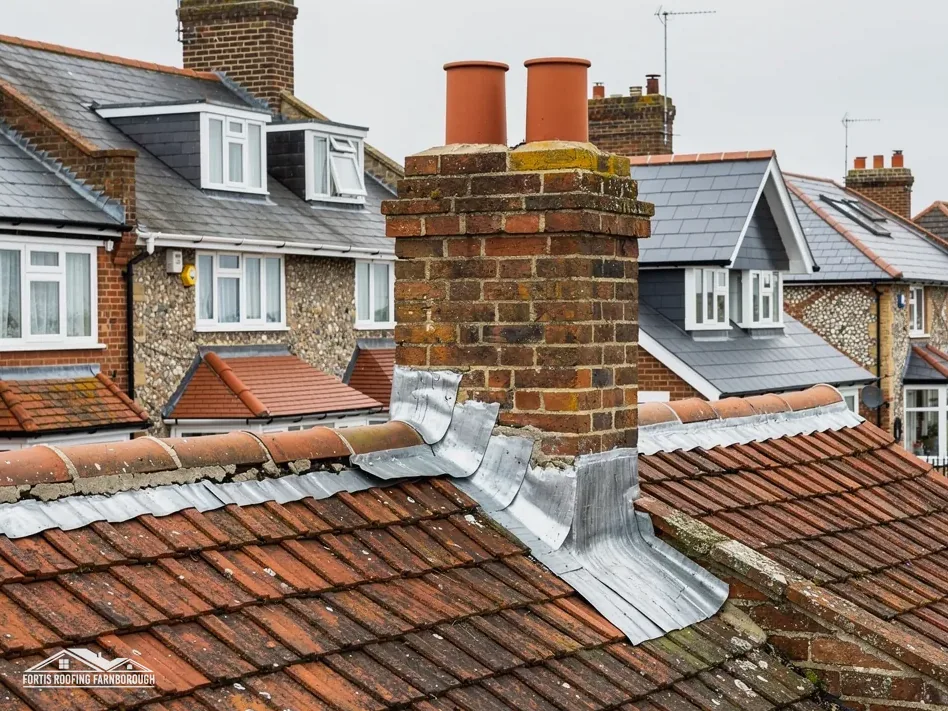
Most cowls either sit over the top of the pot with fixing straps, or are cemented into the flaunching, the sloping mortar collar around the foot of the pot. The roofer chooses the method to suit the pot's condition. A cracked pot, a loose flaunching or a pot out of plumb needs attention before anything is fitted on top.
That is why the survey comes first. We look at the stack from the roof, photograph the pot, flaunching, brickwork and flashing, and check whether the flue is clear. If there are signs of a nest, the cowl waits until the birds have gone. Our answer on birds nesting in a chimney covers that case.
Access is the next question. A low stack on a bungalow can be reached from a roof ladder, while a tall stack on a three-storey house may need a scaffold tower. Access often decides the price more than the cowl, which is a small item in itself.
Fitting takes a short visit once the equipment is in place. If a stack needs more than a cowl, such as repointing or new flaunching, the photographs go to you with a written price that covers every part of it. Our chimney repairs hub lists the other work on offer.
When a cowl is not the answer
A cowl is a cover, not a repair. It will not fix a leaning stack, crumbling brickwork or failed leadwork, and it can hide a problem if it is fitted without a proper look at the pot below. Putting a cowl on a pot that is already loose is a short-lived fix.
It is also not a substitute for a sweep. A flue serving a working fire needs sweeping at intervals set by the fuel, and a cowl makes no difference to that. Our guide on roofer or chimney sweep explains who does which job.
For an unused chimney that is damp, a cowl is often part of the answer, but the cause of the damp needs finding too. Water may be coming in at the flashing or through poor pointing as well as down the flue. The cowl deals with one route out of several.
When deciding on one, start with a photograph of the top of the stack and the age of the pot. Both help a roofer judge whether a cowl alone will do, or whether the pot and flaunching need work first.