The short answer
It can be, but the answer sits in your policy wording and in how sound the stack was before the weather. Insurers pay for storm damage as their own policy describes a storm, and many policies leave out wear and tear. Tell the insurer first, make the stack safe, and keep photographs and receipts. No payout is promised, and a refusal can go to the Ombudsman.
How a storm is judged
Whether chimney damage counts as storm damage depends first on your own policy. Each insurer words its storm definition in its own way, so the definition in your own policy is the one that counts. The policy wording governs your claim, so read it before you assume anything.
The Financial Ombudsman Service offers a general guide to how it sees storms. Violent wind, usually carrying rain, hail or snow, is the typical picture, though a storm can occur without high winds and rain or snow alone can qualify when it is extreme. The Beaufort Scale is part of its thinking, and some insurers set their own wind-force line.
When it reviews a refusal, the Ombudsman weighs three matters: whether weather of that kind really occurred, whether the damage fits it and what the real cause of the failure was. The third is the sticking point for many chimneys, because an old stack with tired mortar may have been close to failure already.
The result is that cover is never automatic. A storm that fits your policy, damage that fits a storm and a stack that was sound beforehand all help. Where one of them is missing, the claim is harder.
What to do straight away
Safety comes first. If bricks or a pot have come down, keep people clear of the area below, and leave the climbing to a roofer.
After that, a sensible order of steps protects both the house and the claim:
- phone your insurer before arranging any repair, and ask what it needs from you;
- photograph the damage from the ground, the debris and any damp indoors, with the date recorded;
- have the stack made safe, using a temporary repair if needed, and keep every receipt;
- hold on to fallen pots and bricks until the insurer says they can go.
Photographs form the backbone of a claim. The Institution of Structural Engineers calls photographs vital evidence, so take them before anything is moved or tidied.
Insurers usually expect a temporary repair, because they want the property kept from further harm. A roofer can sheet the stack, secure loose masonry or cap the pot in one short visit. For general steps after any roof damage, see our guide to a roof insurance claim, and for the repairs that can follow, the chimney repairs hub.
Why chimney claims stall
Which? reported that only 32 per cent of storm-related claims in 2024 ended in a payout. The number covers storms in general, not chimneys, but it shows that many claims are turned down or only partly met.
The Ombudsman's published pages explain the usual reasons. Policies often leave out gradual deterioration and wear and tear. A complaint is unlikely to succeed when the roof was in poor condition before the weather arrived and the owner knew, or when the storm merely exposed a weakness that already existed.
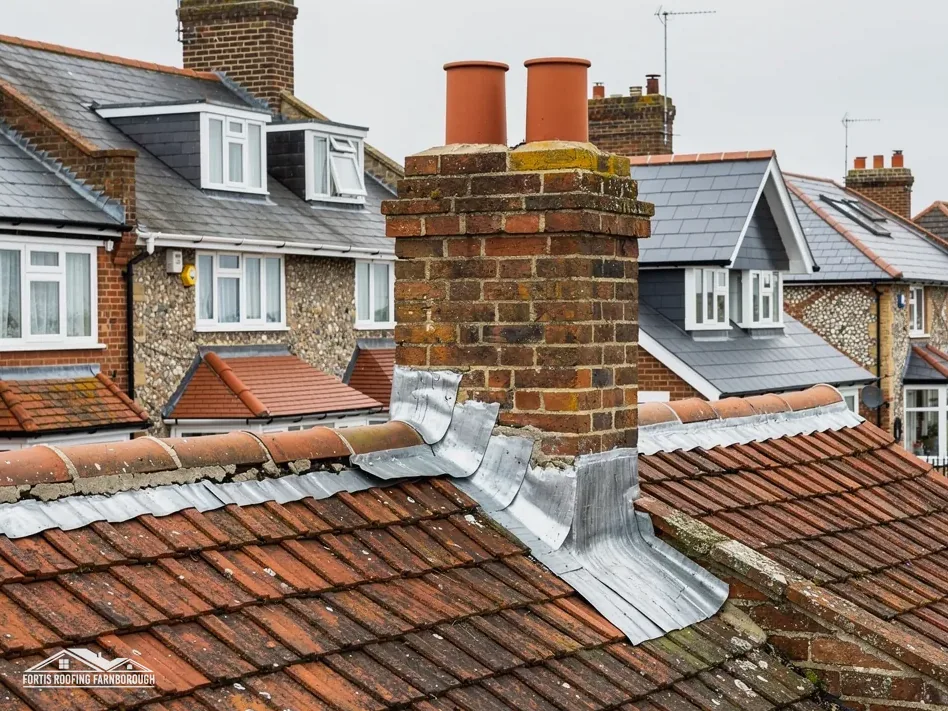
For a chimney, the evidence of condition therefore carries weight. Crumbling pointing, a visible lean or cracked pots before the storm give an insurer room to argue that age did the damage and the wind only finished it. A stack that had been checked and found sound makes a far stronger case.
That is why a dated record helps. Photographs from a survey taken before any damage show what the stack looked like on a particular day. Our answer on a chimney inspection sets out what such a record covers.
None of this predicts what will happen to your claim. Each rests on its own policy and its own facts.
When the insurer declines
A refusal is not always final. Begin with a request for the insurer's reasons on paper, naming the clause relied on, and see whether the ground is the storm wording, an exclusion or a gap in the evidence.
If you still disagree, use the insurer's complaints process. Where no final response arrives within eight weeks, you can go to the Financial Ombudsman Service, which is free and can be reached on 0800 023 4567. Once a final response has been issued, a complaint must be brought within six months.
Our part is practical and separate from the claim. A survey of the stack gives you dated photographs and a written price for the repair, and those papers are yours to pass to the insurer. The dispute itself remains with you and the insurer, and nobody can promise you the outcome.
Do not hold back a safety repair while you argue. A loose or leaking stack should be secured with receipts kept, since the cost of further harm may be hard to recover if it could have been avoided.
A storm that hits a chimney often calls for a wider look at the roof as well, which the survey provides.