Bargate stone gables
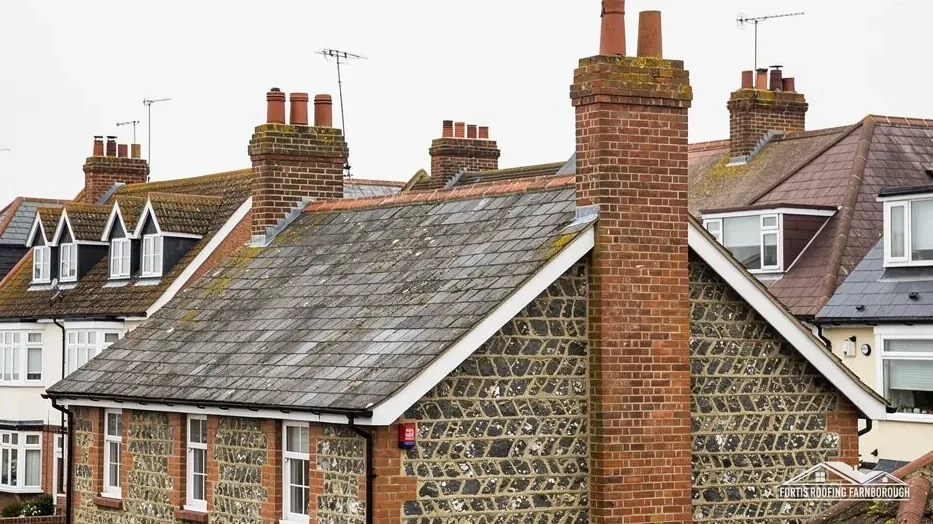
Some old houses have gables of Bargate stone rubble and ornamental brick, the 1911 history records.

Roofs with brick chimneys at the foot of the Surrey Hills
Westcott lies west of Dorking at the foot of the Surrey Hills, with old houses of Bargate stone and a farmhouse of about 1670. We survey each roof and stack.
Some old houses have gables of Bargate stone rubble and ornamental brick, the 1911 history records.

The history notes a farmhouse with fine brick chimneys of about 1670.
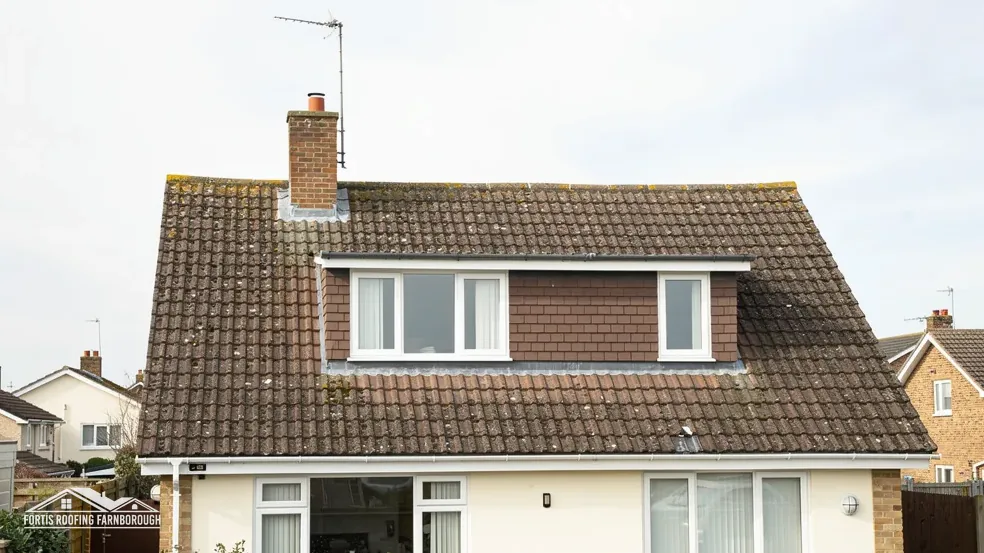
Many houses had been built since Westcott became an ecclesiastical parish with Milton in 1852.
Map of Westcott with Dorking, Abinger, Holmbury St Mary, Effingham marked around it.
Map data © OpenStreetMap contributors. Loads only when you ask for it.
Dorking lies east of Westcott, Abinger and Holmbury St Mary south-west, Gomshall west, Effingham north-west, with Great Bookham and Little Bookham beyond.
About 26 road miles east of Farnborough · Mole Valley District Council and Surrey County Council.
Westcott inside the Surrey Hills
What it means that nearly all the village sits within the Surrey Hills National Landscape, what the 1911 history records about stone gables and 1670 chimneys, and how listings and the church shape repairs.
| No. | Chapter | The figure it turns on |
|---|---|---|
| 01 | A village almost wholly inside the Surrey Hills | 99% inside the Surrey Hills National Landscape |
| 02 | Stone gables, brick chimneys and a medicinal spring | Brick chimneys of about 1670 |
| 03 | Holy Trinity, Guildford Road and the conservation area | Holy Trinity, Grade II*, by faculty |
Chapter 01 of 03
Westcott's setting in four published figures
Westcott is a Mole Valley village at the foot of the Surrey Hills, and 99 per cent of the 1.5 km area round its centre lies inside the Surrey Hills National Landscape, formerly the AONB. For a homeowner that single fact does more than any other to set the ground rules. On designated land of this kind the permitted development right for dormers is switched off, so nearly any extension of a roof here begins with an application to the council.
Mole Valley District Council holds planning, Surrey County Council holds the highway until 31 March 2027, and East Surrey Council then succeeds both. A roof job booked now and finished within weeks sits wholly under today's councils, so for a quick job the change makes no difference at all. For anything that could run across the changeover we raise the question at the survey and put the dates in writing before a scaffold is ordered, so that a council change in mid-job is planned for and never a surprise.
The Planning Portal's two limits settle the building control question for a re-roof: under 25 per cent of the building envelope, and under 50 per cent of the roof. A covering 15 per cent heavier or more breaks the pattern. An application, where one is needed, goes to your building control body, and the survey report names the route that fits your job.
A scaffold on a lane or at the edge of the green comes under Surrey County Council's licensing, charged at £208 per 28-day period, with applications expected at least 10 working days beforehand. The guidance leaves open who files, so the applicant is confirmed before booking. Poles standing wholly within your garden fall outside the licence, and a Westcott plot may well allow that.
When you first ring, say whether the roof belongs to a house, an outbuilding or a barn conversion, and whether it already has dormers or rooflights. In a National Landscape those details decide what can be done without an application, and knowing them early lets us bring the right evidence to the survey and to the council.
Chapter 02 of 03
| Subject | What the history records |
|---|---|
| Old houses | Of the 16th, 17th and 18th centuries, some with gables of Bargate stone rubble and ornamental brick |
| A farmhouse | With fine brick chimneys of about 1670 |
| The parish | Made an ecclesiastical parish with Milton in 1852; many houses built since |
| Dorking | Westcott, also spelt Westcote, was one of the boroughs or tithings of Dorking |
| Mag's Well | In Squire's Wood, a source of the Pip Brook, formerly of repute as a medicinal spring |
In 1911 Surrey's Victoria County History described Westcott as keeping many old houses of the 16th, 17th and 18th centuries, some with gables of Bargate stone rubble and ornamental brick, and a farmhouse with fine brick chimneys of about 1670. It adds that many houses had been built in Westcott since it was made an ecclesiastical parish with Milton in 1852, and that a considerable village existed before then.
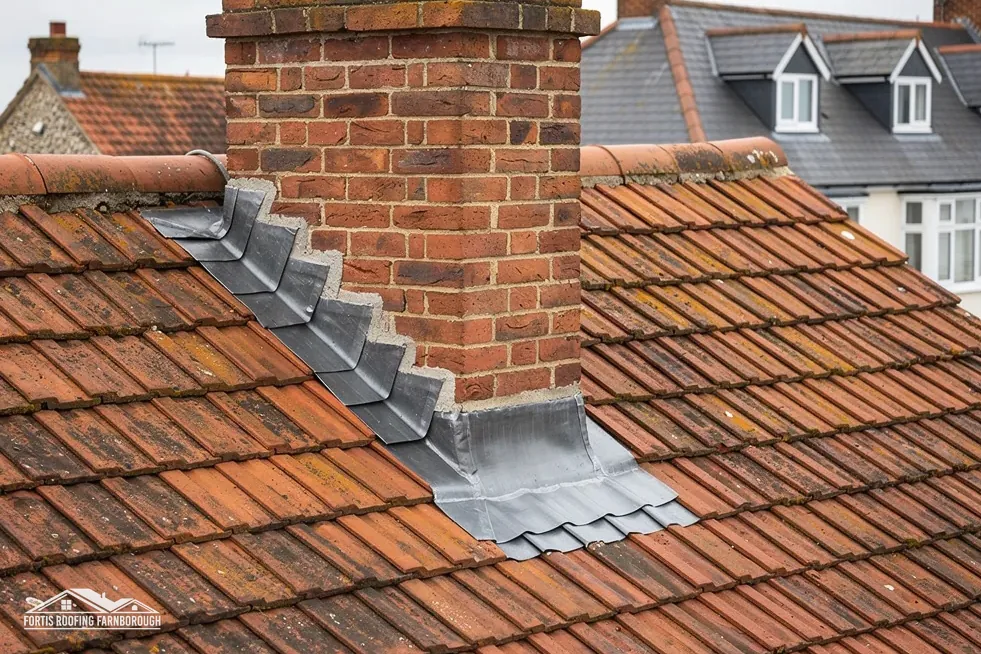
A brick chimney of that age is a feature, a structure and a leak risk all at once. Where it rises through a roof it is sealed with lead or another flashing, and the line between stack and slope is among the first places to let water in. The stack itself can lose its pointing, lean or shed bricks, and its pots and the mortar bed beneath them need attention too. Our chimney repairs page explains how stacks are put right, and the survey records a stack's height, shape and pots before any work begins.
Gables of Bargate stone and ornamental brick bring roofline details of their own: verges, copings and the tiles or slates that finish against them. A verge that has lost its mortar, or a coping that has worked loose, lets water into the wall below, where it shows as damp long after the cause is forgotten. Our pitched roofing page describes how verges, ridges and valleys are mended and how fixings are tested.
Mag's Well in Squire's Wood, south of the village, is one of the sources of the Pip Brook, which runs through Dorking to the Mole, and was formerly of some repute as a medicinal spring. The same history counts Westcott, also spelt Westcote, among the Dorking boroughs. It is a reminder that this is land with water in it. Springs and brooks suggest damp ground, and damp ground makes gutters, downpipes and gullies matter more, so the survey follows each downpipe to the point where it discharges, and notes any gully that is blocked or any pipe that empties against a wall.
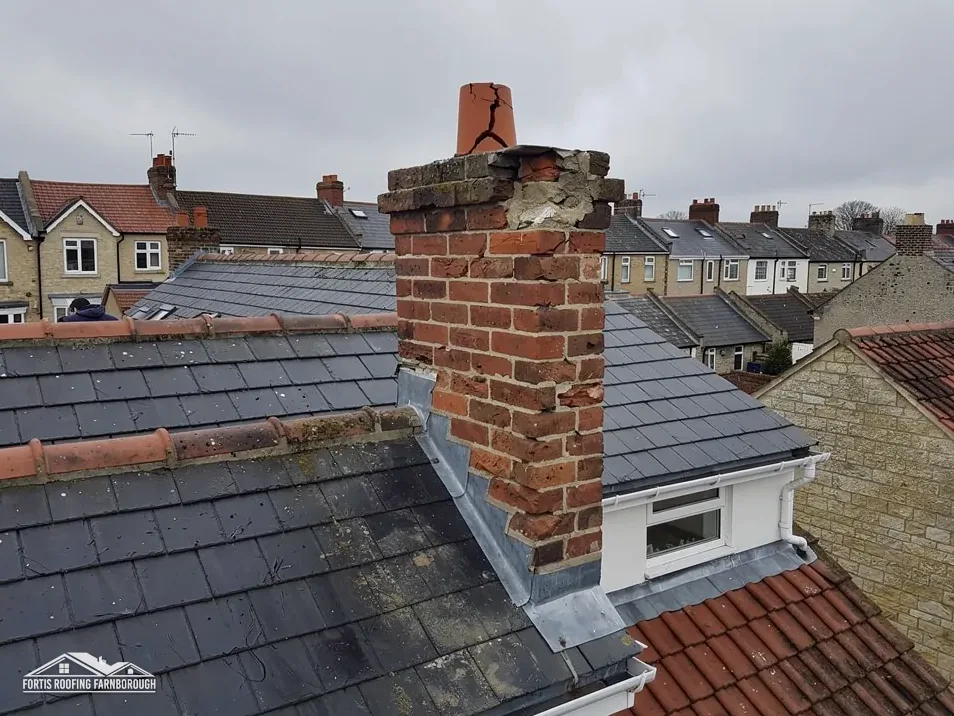
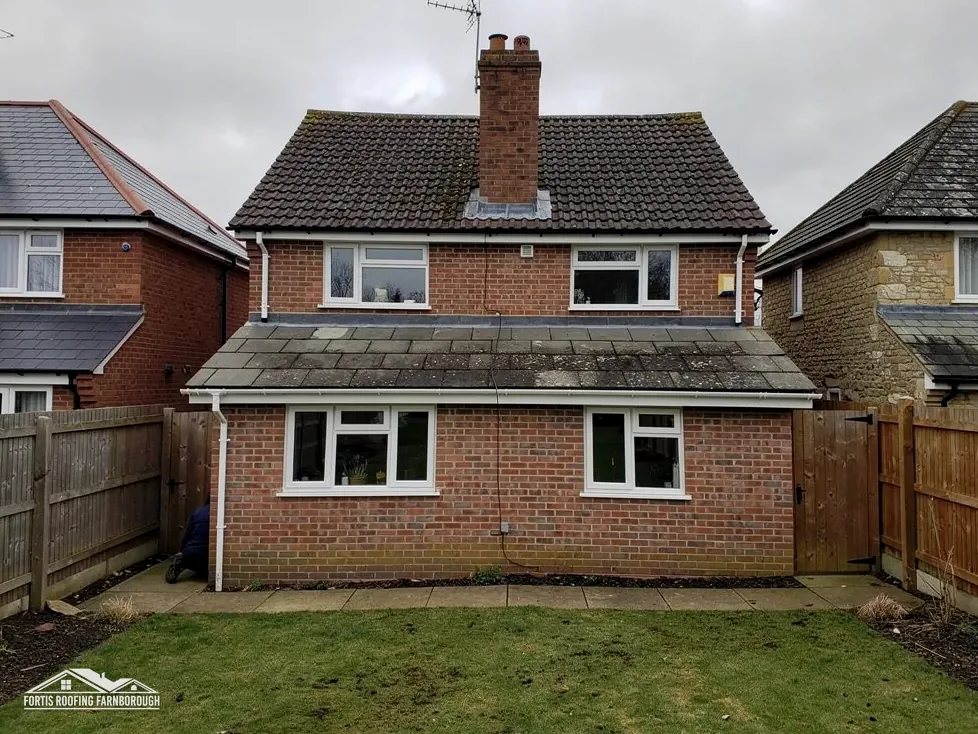
Because the village grew in stages, with houses added after 1852, a single Westcott lane can hold roofs from several periods. No roof is read from its neighbour, and the covering on each slope is set out in the report with pictures, so you can compare it with any other opinion you collect.
Chapter 03 of 03
Westcott's listings and boundaries in four figures
The Westcott conservation area lies within about 0.75 km of the centre, so a fair number of houses may lie within it, and Mole Valley's map shows whether yours is. Combined with the National Landscape, that makes Westcott a village where any visible roof change should be raised with the council early, before drawings or orders. Ask also whether an Article 4 direction applies to your address, because a direction withdraws specified permitted development rights across a defined area, which matters in a village with so many old stacks.
The Church of the Holy Trinity is a Grade II* building that still hosts Anglican worship, so its roof repairs follow the faculty route under the ecclesiastical exemption, outside Mole Valley's consent. Numbers 2 to 7 Guildford Road, Bay Tree Cottage and Heathcote Skeynes House carry Grade II listings; the national list counts 17 listed buildings within 500 m of the centre. If work would change a listed house's character, listed building consent is required, so the council is consulted before a price is given.

Where a house is unlisted, section 55 of the Town and Country Planning Act 1990 sets aside works that leave its outward look materially as it was. Matching repairs are therefore the plain case even within the National Landscape, and our pictures are the evidence of the earlier state. Changing the covering, building a stack higher or enlarging an opening is where the designations start to matter. Our planning permission for roof work guide explains the national rules.
If you look after a listed or older house and are unsure where to begin, send the address and a few lines on the problem. Before we visit we look at the national list and the council's maps, so the survey starts from known facts and the report can say plainly what consent a repair is likely to need, if any.
Many repairs in a village like this are small and entirely routine: a few tiles, a section of lead, a repointed stack. They still deserve the same recorded survey, because a small record today can answer a large question later, when a house is sold or a neighbour wonders what was done.
Loose pointing lets rain into a stack, and frost and wet can then loosen bricks, so it is worth dealing with early, before a few loose bricks become a rebuild. We look at the pointing, the flashing where the stack meets the roof, the pots and the flaunching, and photograph each. A repoint may be enough, and the survey says if more is needed.
Some 99 per cent of the 1.5 km area surrounding the village centre falls inside it. The designation removes permitted development for dormers, so a dormer must go to Mole Valley for planning permission. Repairs that reproduce the roof as it is form a separate category, and a change in appearance is put to the council first.
The church is a separate case. Holy Trinity is a Grade II* church that still holds Anglican services, so the ecclesiastical exemption applies and the faculty system deals with its repairs. Houses such as Bay Tree Cottage and Heathcote Skeynes House need Mole Valley's listed building consent, which we raise first, so you know the route before any price is agreed.
On a road or verge, a Surrey County Council licence costing £208 for each 28-day period, with applications 10 working days or more ahead. Surrey's guidance names no applicant, so we ask first and enter the dates in the plan. Poles that stay wholly within your garden need none, and the survey checks whether they can.
Get your free roof quote
Give us your Westcott address and the stack or slope that worries you, and we will fix a survey date.
10-year workmanship guarantee, in writing.