Houses of a scattered parish
The 1911 county history called Pamber a scattered parish, so roofs here stand apart and vary house by house.
Clay and gravel ground beside the common and the Berkshire border
Pamber Heath lies in the north of a scattered parish, near the Berkshire border and Silchester. Each house gets a full survey, read from the roof itself.
The 1911 county history called Pamber a scattered parish, so roofs here stand apart and vary house by house.
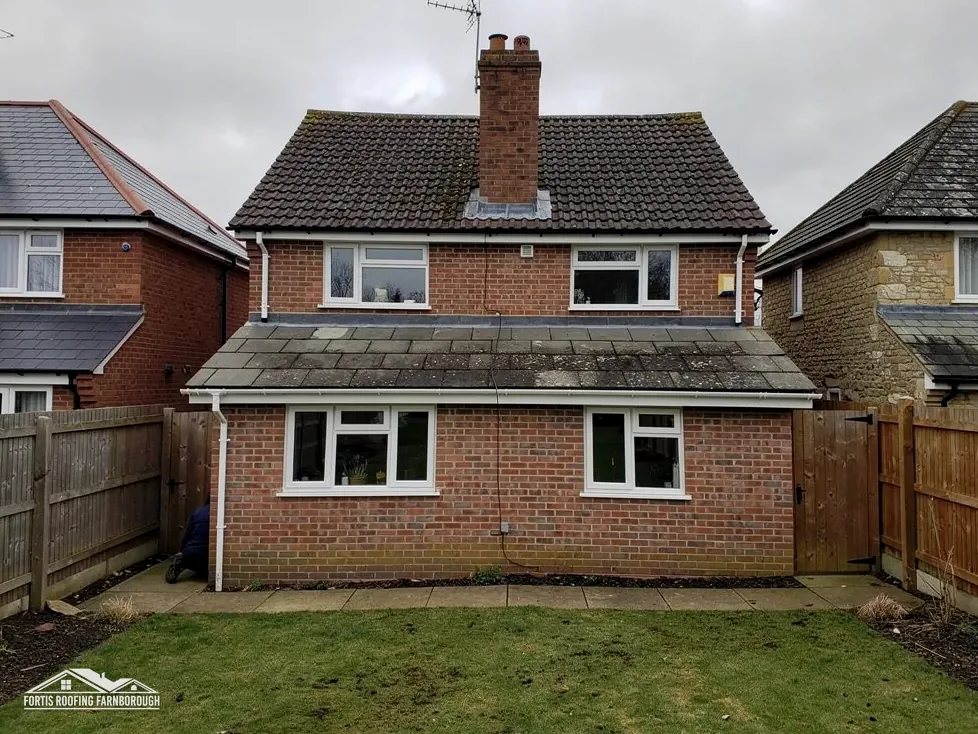
Pamber Common lies at the parish's northern end, where the boundary with Mortimer was marked by the Impstone.

The county history gives the parish's soil as clay and gravel, with common lands inclosed under an Act of 1824.
Map of Pamber Heath with Silchester, Tadley, Aldermaston, Mortimer marked around it.
Map data © OpenStreetMap contributors. Loads only when you ask for it.
Silchester lies close to the east, Tadley to the west, Aldermaston to the north-west, Mortimer to the north-east, Bramley to the south-east, and Burghfield Common to the north-east.
About 23 road miles west of Farnborough · Basingstoke and Deane Borough Council and Hampshire County Council.
Pamber Heath, common and clay
Which councils answer for roof work at Pamber Heath, what the 1911 county history says about the parish's scattered houses, soil and common, and which nearby conservation areas to check.
| No. | Chapter | The figure it turns on |
|---|---|---|
| 01 | Who regulates a roof job in Pamber Heath | First 2 weeks of a licence |
| 02 | Clay, gravel and the common's northern edge | 2,629 residents, Pamber parish |
| 03 | Conservation areas near Pamber Heath to check | Three conservation areas within about 2.5 km |
Chapter 01 of 03
| Role | Body for Pamber Heath addresses |
|---|---|
| District council and planning authority | Basingstoke and Deane Borough Council |
| Building control | Basingstoke and Deane's own Building Control team |
| County council and highway authority | Hampshire County Council |
| Who lodges the scaffold licence | The scaffolding company, for its customer |
| Notice before the start | 10 clear working days, with no extensions |
Pamber Heath belongs to Basingstoke and Deane for planning and building control, and to Hampshire County Council for the highway. That is the same pairing as elsewhere in the borough, but the village lies 23 road miles to the west, reckoned from the A325 in Farnborough, close to the Berkshire border, so a survey is a planned journey and we make it count by settling access and paperwork on the first visit.
The borough's building regulations page mentions renewing roof coverings, flat or pitched, among alterations that could need approval. It sets no percentage, so we hold that wording beside the Planning Portal's test. Jobs reaching under a quarter of the building's envelope and under half the roof sit inside the Planning Portal's usual no-application zone. If the new covering weighs 15 per cent more than the old, or beyond, approval and a structural opinion come into play. We compare old and new weights at the survey and raise any close case with the borough's team before work is booked.
A registered building control approver is the private route, working under rules that began on 6 April 2024. The same photographs and measurements serve either body. For a small job the written price simply follows the survey, with no application in sight.
The scaffolding company, not you, lodges the licence application with Hampshire County Council. Hampshire County Council wants a minimum of 10 clear working days of notice, grants no extensions, and charges £211.90 for the first 2 weeks and £72 for each 2-week period after that. Poles on a private road or drive involve no licence at all.
Since no extension is possible, the length of the licence must fit the real programme. We agree the number of weeks with you at the survey, and a spell of bad weather is allowed for in the plan, not discovered halfway through. Where a repair only needs a ladder, none of this arises.
Where a house has a long drive or an open frontage, there may be room to set a scaffold wholly on your own land. We still mark the exact position on the survey plan, and tell you at once if any part of it might touch a verge or the highway.
Chapter 02 of 03
Pamber Heath in four published facts
Pamber Heath lies in Pamber civil parish, which had 2,629 usual residents at the 2021 Census. The 1911 county history, which names the parish rather than the village, describes Pamber as a scattered parish with Pamber Common at its northern end, where the boundary with Mortimer was marked by the Impstone. It gives the soil as clay and gravel and records that the common lands were inclosed under an Act of 1824.
A scattered parish has no single street whose roofs can be read in a row. Houses of different ages stand apart, each with its own history of repairs, so the survey has to start from the roof itself. The survey notes what covers each slope, the state of the ridge, verges and valleys, and the condition of the gutters and downpipes, with nothing assumed from a neighbour's house.
The soil is part of the picture. Clay holds water and gravel drains it, and where both lie close together, the water that leaves a roof needs somewhere sensible to go. We check where each downpipe discharges, and whether the ground beneath it takes the water away or sends it back towards the wall. Our gutters, soffits and fascias page explains how outlets, falls and joints are checked and renewed.
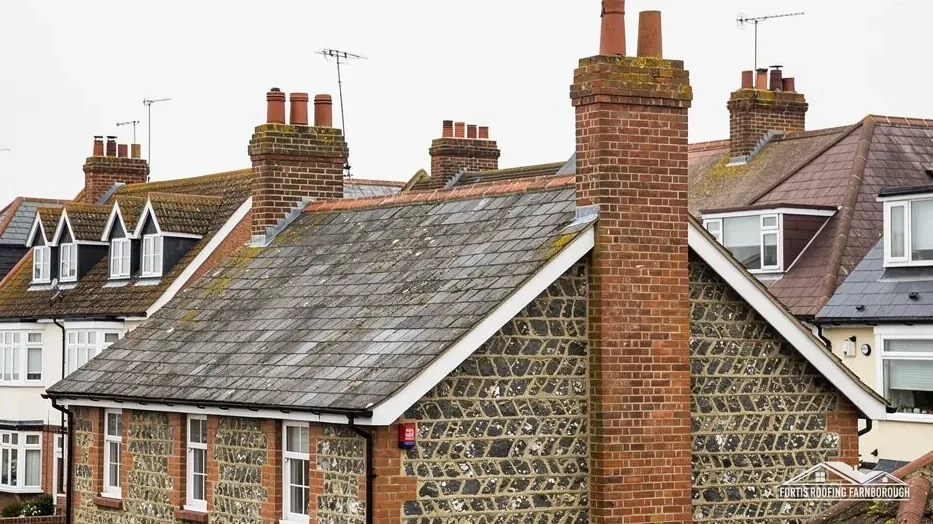
Houses beside open common also get leaf fall, moss and the occasional branch, so we look at the north slope and any shaded valleys with extra care. Where common land meets back gardens, we also look for overhanging branches and for gutters that fill faster than they empty. Shade and damp encourage moss, and a thick mat of it can hold water against the covering, so the survey notes where it has taken hold and why.

Where a Pamber Heath house has a chimney, we examine the stack, its flaunching and the flashings around it, since those junctions fail long before the tiles do. Our chimney repairs page explains the work involved.
A description of a whole parish, however useful, cannot tell us what covers one house today. That is one more reason we look at each Pamber Heath roof from scratch, slope by slope, rather than borrowing conclusions from a neighbour's house.
Chapter 03 of 03
| Place | What the national dataset shows | For roof work |
|---|---|---|
| Church Road, Tadley | Conservation area within about 2.5 km | Check the boundary for your address |
| Silchester | Conservation area within about 2.5 km | Check the boundary for your address |
| Tadley | Conservation area within about 2.5 km | Check the boundary for your address |
| Listed buildings | Searchable by address on the National Heritage List | Listed building consent for works affecting character |
| Article 4 directions | Conservation-area ones cover four Basingstoke town areas | Ask the borough about your address |
The national planning dataset lists the nearest conservation areas to Pamber Heath, within about 2.5 km: Church Road in Tadley, Silchester and Tadley. Whether your house falls inside any of them, or just outside, is for Basingstoke and Deane to confirm for your address, and we ask for that confirmation before pricing anything that would change a roof's appearance from the road.
Inside a conservation area, the visible parts of a roof, such as the covering, the ridge and the chimney, are matters the planning team cares about. Retiling in the same pattern, re-bedding the ridge on the same line and leaving the chimney as built is the low-risk course; a different material or a reshaped stack changes the street scene, and goes to the council before any price is written. Our planning permission guide explains how the routes work.
Anyone can look up whether a house is listed by address on the National Heritage List for England. For a listed house, anything touching its character calls for listed building consent, and its permitted development rights remain as well. The borough's list of directions in force names only four Basingstoke town conservation areas for development controls, not Pamber Heath, but we still check your address, because directions can be added.
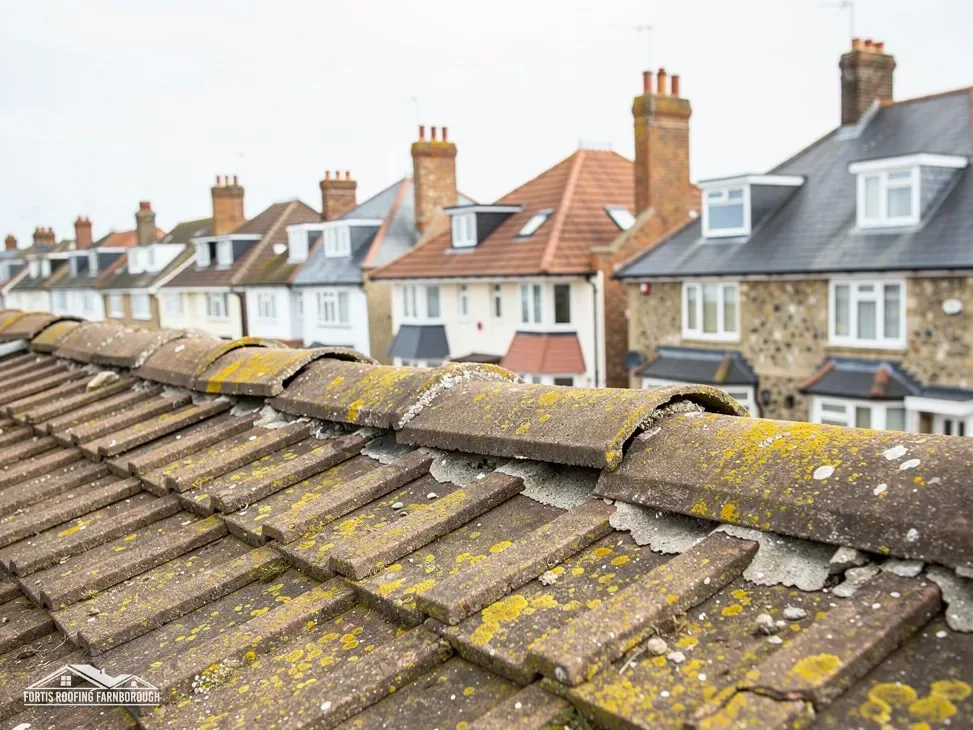
What we hand over is simple wherever your house sits: dated photographs of every slope and junction, a measured note of the area affected, a short description of what lies under the covering where we could lift a tile, and the one written price. If the borough needs to see the roof for a consent, the same set goes to its planning team, and a buyer's surveyor can use it later. The boundary with these designations is never guessed from the road.
Tadley and Silchester lie either side of Pamber Heath. A house near the edge of one of those areas may look as though it belongs to it, but a designation follows a mapped line, not appearances, so the line is checked before design work begins. Where it falls outside, the usual rules for ordinary houses apply. Where it falls inside, the survey record is prepared with the council in mind.
The 1911 county history gives Pamber's soil as clay and gravel. Clay holds water, so where a downpipe empties beside a wall, the ground may stay wet. We check where every downpipe discharges on a Pamber Heath survey, and report whether the water is carried clear of the house or sent back towards it.
The scaffold firm lodges the licence, not you, under Hampshire County Council's rules. Hampshire County Council asks for at least 10 clear working days of notice and gives no extensions. Poles kept entirely inside your boundary involve no highway licence, and a job done from a ladder involves no scaffold.
The national dataset lists Church Road in Tadley, Silchester and Tadley within about 2.5 km of Pamber Heath. Only Basingstoke and Deane can confirm where the boundary falls at your address. We put the question before pricing anything that alters a roof's appearance, and the reply is filed beside your photographs and price.
The borough lists renewing roof coverings among alterations that could need approval, though it sets no percentage. The Planning Portal's limits, under 25 per cent of the envelope and under 50 per cent of the roof, guide us, and a job close to them goes to the borough's building control team before it is booked.
Get your free roof quote
Send us your Pamber Heath road and what has gone wrong up there, and we will find a day.
10-year workmanship guarantee, in writing.