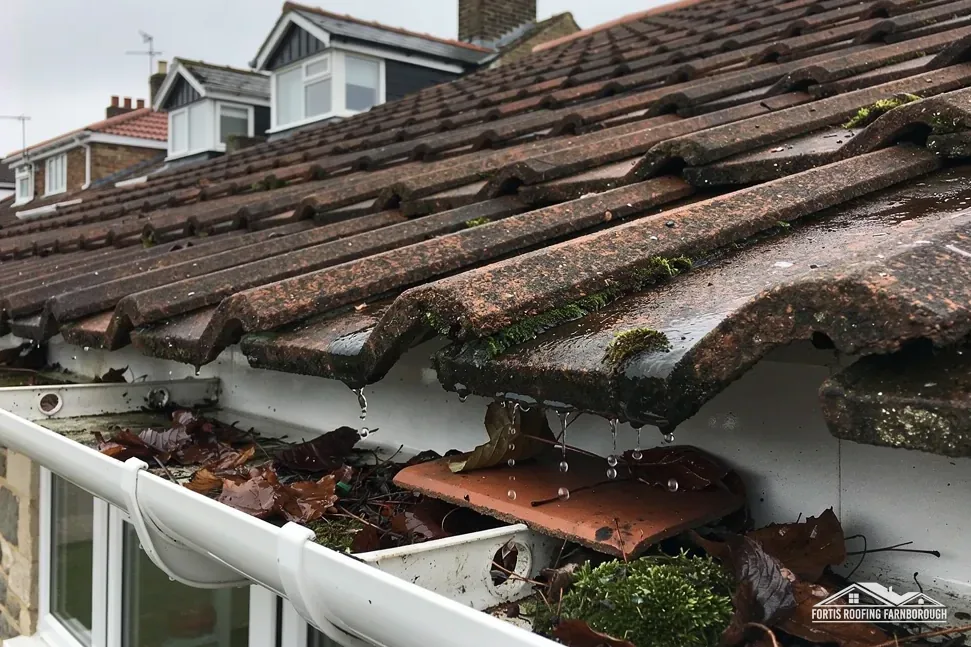
Red-brick cottages
The 1923 county history describes many cottages of red brick among the scattered village's buildings.
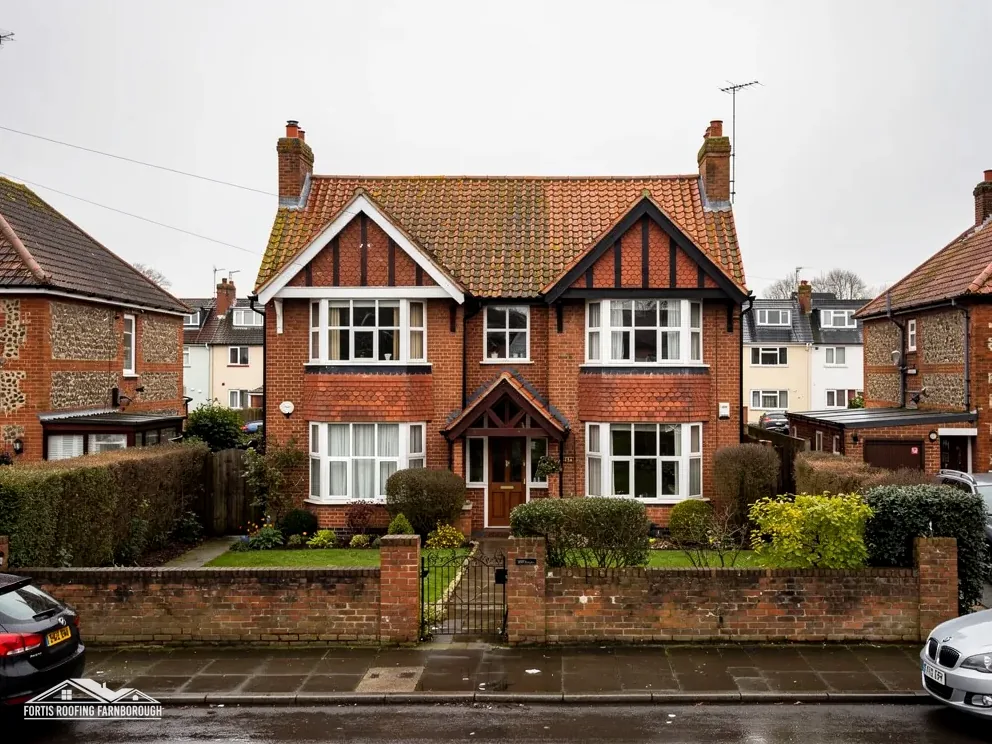
Roofs on Mortimer's red-brick cottages and large houses by the Fair Ground
In 1923 the county history found Mortimer a large, scattered village of red-brick cottages and several large houses. We survey those roofs slope by slope and price in writing.
The 1923 county history describes many cottages of red brick among the scattered village's buildings.
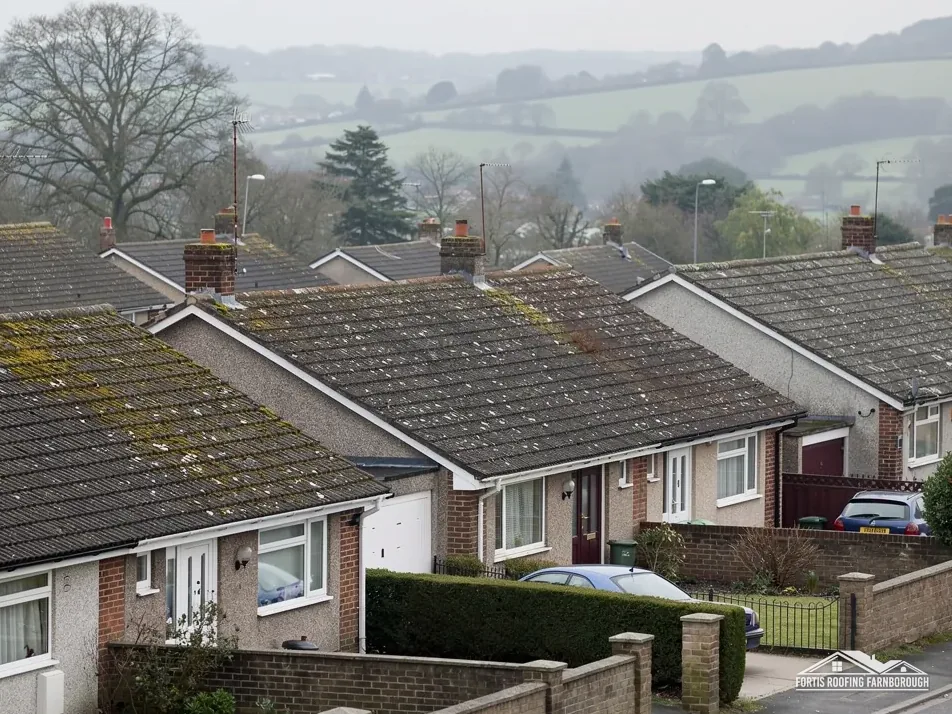
The same history notes several large houses in Mortimer, a village with a station on the Reading and Basingstoke line.
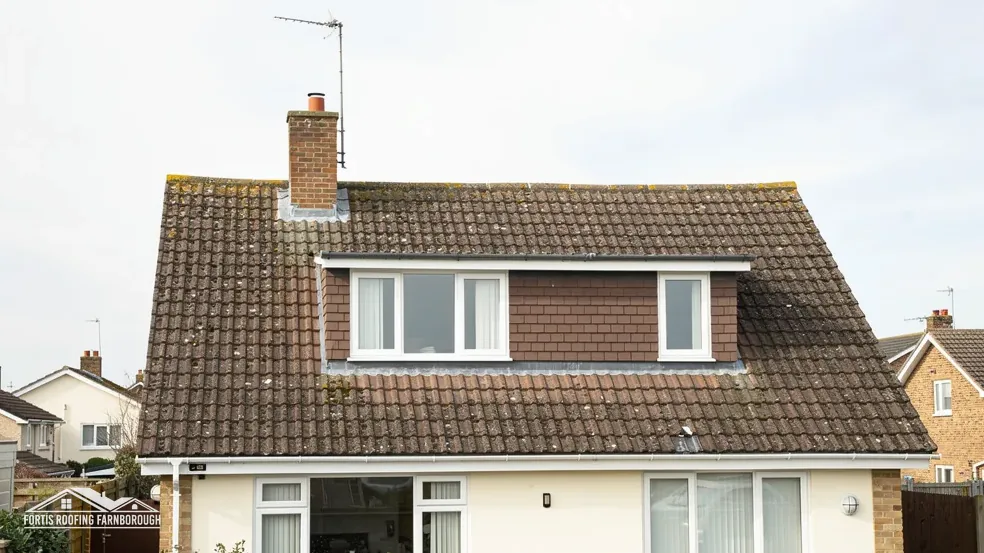
A large open space called the Fair Ground divides the old village from newer buildings by Mortimer Common.
Map of Mortimer with Burghfield Common, Silchester, Pamber Heath, Bramley, Basingstoke and Deane marked around it.
Map data © OpenStreetMap contributors. Loads only when you ask for it.
Burghfield Common lies to the north, Bramley to the south, Silchester and Pamber Heath further south-west, with Tadley beyond them and Aldermaston some distance west of the village.
About 19.7 road miles north-west of Farnborough · West Berkshire Council (unitary).
Mortimer, moss and old commons
Which council deals with a Mortimer roof, what the 1923 county history says about the village, its Fair Ground and the 1804 inclosure, and how moss and roof cleaning should be handled, in line with Marley and the HSE.

| No. | Chapter | The figure it turns on |
|---|---|---|
| 01 | West Berkshire and a village inclosed in 1804 | Common inclosed December 1804 |
| 02 | Red brick, a Fair Ground and a brook-side church | Large houses, many red-brick cottages |
| 03 | Moss, brushes and the biocide rules | Jet washing not recommended |
Chapter 01 of 03
Mortimer: population, railway and the Common
Mortimer is a large village on the Berkshire and Hampshire border, south-west of Reading, standing on gravel over clay. The 2021 Census found 2,929 people in its built-up area. West Berkshire Council has no county council above it, so a single authority covers planning, roads and building control. Its building control comes through Building Control Solutions, a service West Berkshire operates together with Wokingham. For a patch repair nobody needs to ring either of them. For a full re-roof, the service or a registered approver inspects the work, and we explain which route is yours.
According to the 1923 county history, Mortimer Common and other lands were inclosed in December 1804 under an Act of 1802. Inclosure turned open common into fields and plots, which is how a village comes to have a broad open space like the Fair Ground between its older and newer parts.
The consequence for a roofer is simple. Buildings raised at different times on different plots stand next to each other with roofs of different ages and different make. We never assume neighbouring roofs match, and each house is surveyed on its own evidence.
The Planning Portal's national test is the one to measure a re-roof against. Building control is not normally involved when the work touches under 25 per cent of the building envelope and under 50 per cent of the roof. A few tiles or a ridge is a repair, whereas stripping a whole slope or two is a bigger matter.
Whether your own address lies in a conservation area is a question for West Berkshire's planning team, which gets it whenever a visible roof is to look different, and nothing is priced first. Scaffold on a road needs the highway authority's licence, and West Berkshire's process, fee and applicant are put to the council itself, with the reply passed on to you in writing.
Because the village is scattered, travel and access are planned at survey too: a house at the end of a lane needs a different delivery plan from one on the main street. The plan lists where materials are dropped, where waste is loaded and where neighbours should expect to see vehicles, and you receive it in writing before work starts.
Chapter 02 of 03
| Subject | Record |
|---|---|
| The village | Large and scattered, with a station on the Reading and Basingstoke railway |
| Buildings | Several large houses and many cottages of red brick |
| The Fair Ground | A large open space dividing the old village from newer buildings |
| Mortimer Common | Inclosed December 1804 under an Act of 1802 |
| St Mary the Virgin's church | A little south of the main street, near Foudry Brook |
Berkshire's volume of the Victoria County History, dated 1923, calls Mortimer a large, scattered village with a station on the Reading and Basingstoke railway. It held several large houses and many cottages of red brick. A broad open space, the Fair Ground, divides the old village from newer buildings on the edge of Mortimer Common, and St Mary the Virgin's church stands a little south of the main street near Foudry Brook. Brookside ground and old trees are the kind of surroundings in which gutters clog and shaded roofs stay damp, which is why moss comes up later in this read.
The same history records tiled roofs on the parish church. For each Mortimer house, the survey establishes what the roof carries, slope by slope, and notes where an older covering meets a later repair or extension, since those joins are where water most often finds a way in.
A scattered village means varied access. Some houses front a lane with a pavement, others sit at the end of a drive or behind a field gate. How a roof is reached shapes the job: a long drive may allow a lorry, a tower or a small hoist, while a narrow lane may mean carrying materials a few at a time.
Large houses carry large roofs, with many hips, valleys, stacks and dormers. We survey those elevation by elevation, photographing and numbering each junction, so every finding in the survey report has a picture beside it.
Cottage roofs are smaller, but red-brick cottages bring chimney stacks, often leaning a little or cracked at the base. A stack is a brick tower open to rain on all four sides. Its cap of mortar, called flaunching, and its flashing are usually the first parts to give way.
The chimney repairs page describes how a stack is checked and mended.
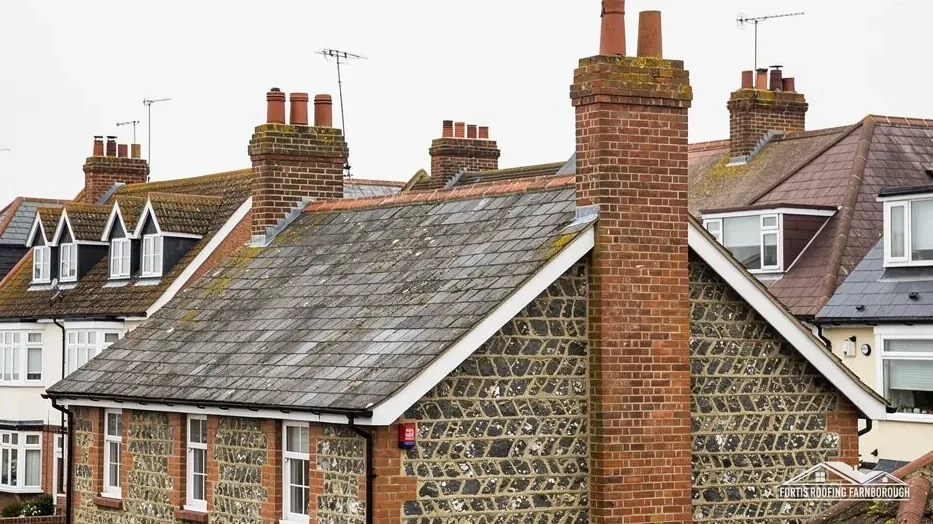
An old outbuilding at the end of a garden often has a roof and gutter of its own, and a leak there is as real as one in the house. The survey covers both, so nothing is left for a second visit. Where an outbuilding shares a roofline or a gutter with the house, the two are surveyed together, and the repair is planned as one job with one scaffold or tower, which keeps the cost of access down.
Chapter 03 of 03
What Marley, the HSE and the law say about roof cleaning
A village on gravel over clay, beside a brook and with trees along its lanes, has plenty of damp shade, and shaded roofs grow moss. Moss keeps water pressed against the covering and lifts the edges of tiles, so cleaning is worthwhile. The method matters, since a harsh one can harm the roof and the law restricts some products.
Marley takes a firm line on this. It advises against powerful jet washes, which can damage the face of a tile or slate and cut its working life considerably. A jet can also push water up beneath the tiles, past the underlay and into the timbers. A roof that looks clean after a jet wash may have suffered damage.
Softer routes exist: brushing, hand scraping, and an approved treatment applied as its label directs. We assess the covering first, since the right method depends on what the roof is and how it has weathered. Old clay tiles, concrete tiles and natural slate each respond differently, and an old, soft tile can lose its face to a stiff brush as easily as to a jet.
A biocide is a chemical that kills moss, algae or lichen. The HSE advises that the public should steer clear of products meant only for professionals, and it treats using, selling, storing or advertising an unapproved product as an offence. Any biocide must also be used within its authorised terms, which are printed on the label.
For a homeowner that means choosing a product sold for household use, reading the label and following it to the letter. Runoff deserves thought too, because treated water should not reach drains or ponds, and a roof beside a brook needs particular care in that respect. We check where the downpipes discharge before any treatment goes on.
Our roof cleaning and moss removal page describes our approach. Cleaning is priced after a survey, since the roof's size, the access and the state of the covering all decide the work. A roof with a thick carpet of moss may need the covering checked once the moss is off, because moss can hide cracked or slipped tiles.
A mossy roof often has a gutter problem too, and clearing the gutter helps stop the moss coming back. Both get checked, and both are photographed.
Marley advises against it. A powerful jet can damage the face of slate or tile, cut its working life and push water under the covering. Soft brushing, or a domestic treatment used exactly as its label says, is the safer choice, and a survey can show what your roof will tolerate.
No. The HSE advises the public to avoid biocides made only for professional users, and using a non-approved product is an offence. Every biocide must also be applied within its authorised terms. Choose only a product sold for household use, and read the label before you start.
Shade and damp let moss take hold, and a village with trees along its lanes has plenty of both. Moss keeps water pressed on the covering and can lift tile edges. We survey the roof, clear the gutters and describe the gentlest method that suits the covering, with photographs to back it.
That is for West Berkshire's planning team to confirm for your address, so the council is asked before a different look for a visible roof is costed, and its answer is kept alongside your survey photographs, your notes and the written price.
Get your free roof quote
Give your Mortimer address and the problem, and a surveyor will come out and photograph every slope and gutter.
10-year workmanship guarantee, in writing.