A red brick church
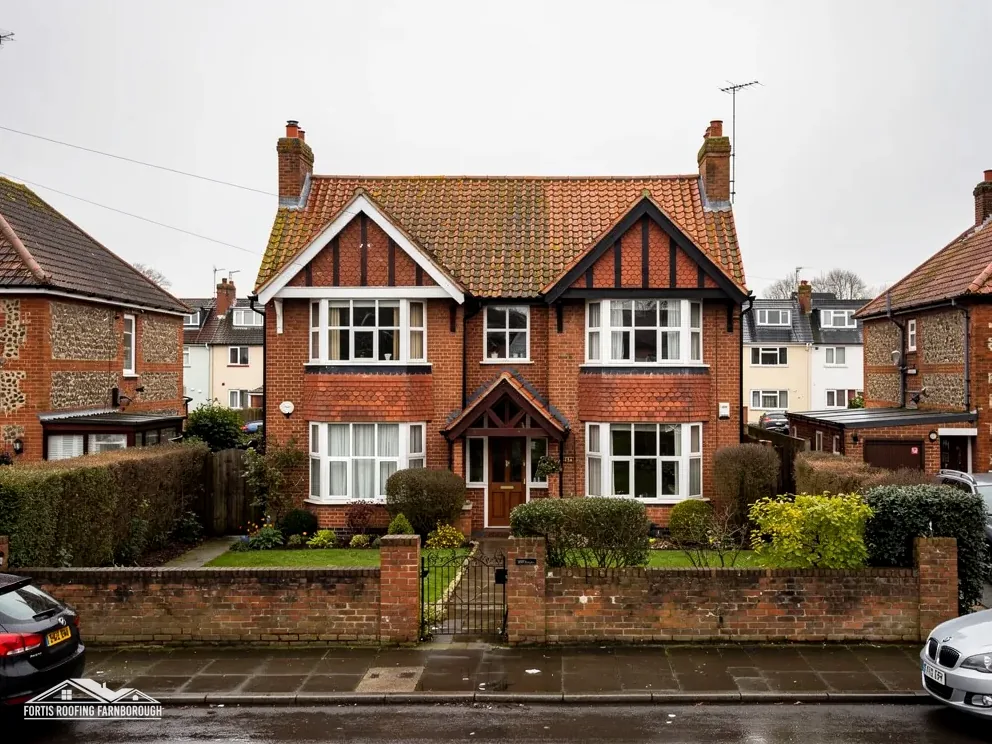
R Plumbe designed St John the Baptist, finished in 1900 and faced in red brick set off by stone dressings.
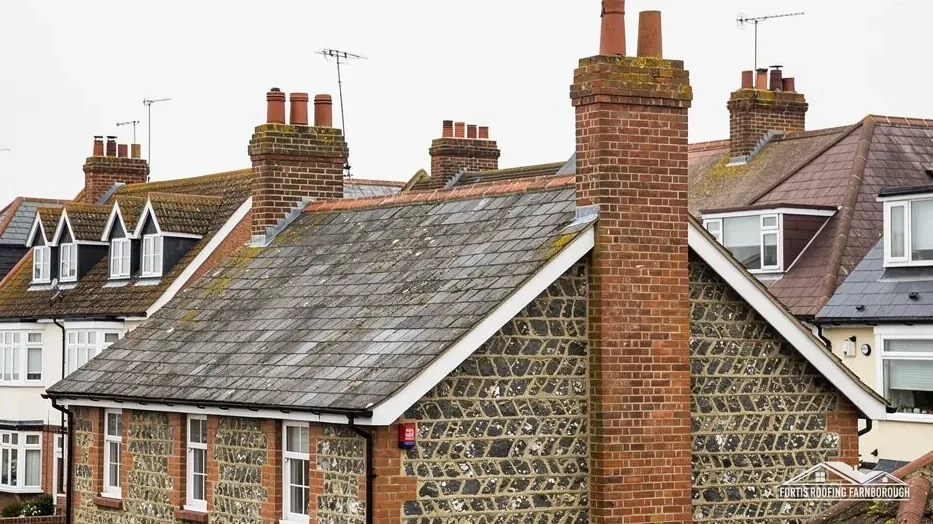
Roofs in a Low Weald village beside the Surrey border
Loxwood grew around a chapel of about 1410, a brick church finished in 1900 and a handful of listed cottages. We survey every roof slope by slope.
R Plumbe designed St John the Baptist, finished in 1900 and faced in red brick set off by stone dressings.

Church Cottage, Box Cottage with Ryley Cottage, and Finches are each listed Grade II.
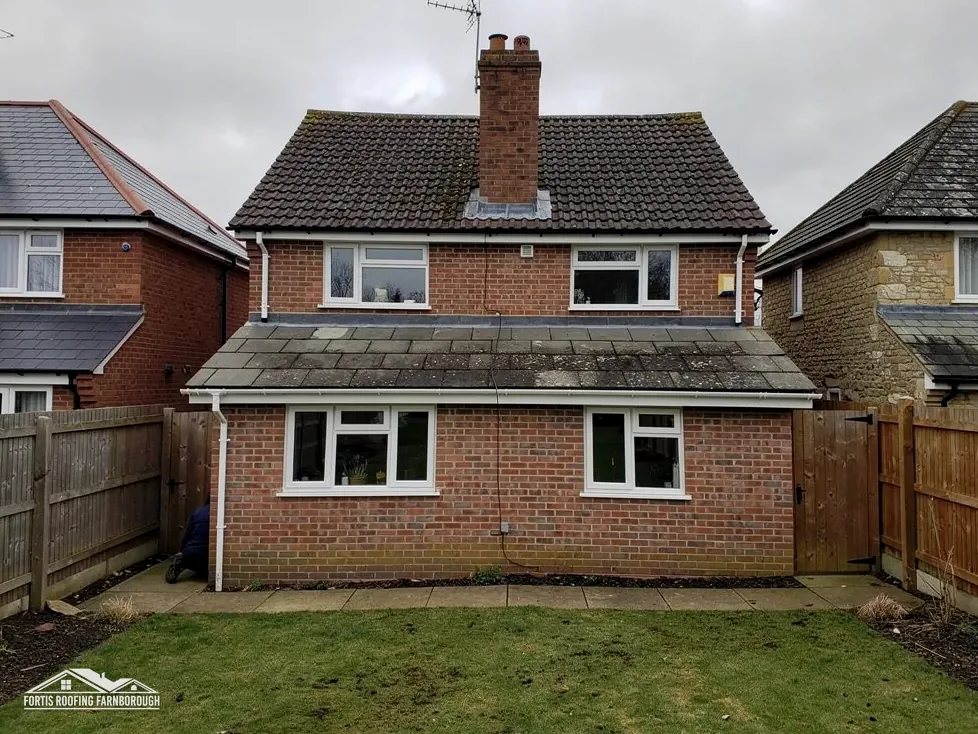
A chapelry of Wisborough Green from about 1410, rebuilt in brick in 1822, Loxwood became a parish in 1873.
Map of Loxwood with Ifold, Alfold, Plaistow, Rudgwick marked around it.
Map data © OpenStreetMap contributors. Loads only when you ask for it.
Loxwood lies close to the Surrey border, with Alfold across it holding the nearest conservation area, and Farnborough 27 road miles away.
About 27 road miles south-east of Farnborough · Chichester District Council and West Sussex County Council.
Loxwood, church and cottages
How Loxwood's councils, its chapel and brick church, and its listed cottages bear on a roof job, set out figure by figure with the source printed beside each.
| No. | Chapter | The figure it turns on |
|---|---|---|
| 01 | Two councils behind a Loxwood roof | Chichester plans, West Sussex is the county |
| 02 | From a 1410 chapel to a brick church | 1,596 residents in Loxwood parish |
| 03 | Listed cottages and the Alfold boundary | 13 listed buildings within 500 m |
Chapter 01 of 03
| Role | Body for Loxwood addresses |
|---|---|
| District council and planning authority | Chichester District Council |
| County council | West Sussex County Council |
| Building control | Your building control body, or a registered approver |
| Scaffold licence on the highway | The highway authority; we arrange it with the scaffolder |
Two councils stand behind a Loxwood roof. Chichester District Council decides planning questions for Loxwood addresses, and West Sussex County Council sits above it as the county council. Repairs seldom reach either desk. The bigger jobs do, and knowing who handles what saves a week of waiting once the roof is open.
The Planning Portal gives the rule of thumb we start from. A Building Regulations application is rarely needed while the work touches under 25 per cent of the building envelope and under 50 per cent of the roof. Think of the envelope as every outer surface of the house taken together. Cracked tiles swapped out, or a ridge bedded again, stay well within those two figures. Stripping and recovering the whole roof passes both, and building control has to be told first.
For a Loxwood house, that check falls to the council's own surveyors or to a registered building control approver, which is a private company on the government's list. Weight is a second trigger: a new covering adding 15 per cent or more brings approval into play, and the Planning Portal points owners towards taking an engineer's or surveyor's view first. We measure the old covering and the rafters beneath it at the survey, so that check starts from figures.
Scaffolding cannot stand on a public road or pavement without the highway authority's licence, which section 169 of the Highways Act 1980 requires. Scaffolding kept wholly inside your boundary escapes it. If a Loxwood job needs the road, the licence is arranged with the scaffolding firm, and we ask who applies because authorities differ on that. A ladder or tower is enough for a small repair. Re-roofs, chimney rebuilds and long gutter runs need more, and you hear each day what is planned and how long the scaffold will stay.
Whichever route a job takes, the survey comes first. We photograph the roof, measure the area affected and give you one written price afterwards, so whether building control is involved is settled on figures before any work is booked. That order matters on a roadside job, where the licence has to be in place before the first pole goes up.
Chapter 02 of 03
Loxwood: chapel, church and parish figures
Loxwood's recorded story begins with a chapel. It was built around 1410 as a chapelry of Wisborough Green, meaning a chapel served from a neighbouring parish. It was rebuilt in brick in 1822, and Loxwood became a parish in its own right in 1873. The present church of St John the Baptist came at the close of the century. R Plumbe was the architect, and work ran from 1898 to 1900 on a church faced in red brick and trimmed with stone. Since 1978 the parish has been linked with Alfold, over the county border in Surrey.
None of those records says what any one house carries on its roof today, and we do not guess. A cottage near the church may have been re-covered once, twice or never, and a front slope can differ from the rear. So the survey checks each slope and records what covers it, in photographs and plain words, before any price is written down.
The 2021 Census counted 1,596 usual residents here, and a village of that size can hold roofs of very different ages standing side by side. A house put up when the brick church was new may sit a short walk from a cottage far older, and the two want different handling. Matching an old tile or a ridge profile takes a closer look than a straight replacement, and the right fix is sometimes a modest repair, not the biggest job on offer.
Where one roof is shared with a neighbour, the line along the party wall is where we look hardest, because a fault on one side can show up on the other. We photograph that junction and report what is visible of the adjoining slope from our own side, without stepping onto it. Any discussion about the other half is for you and your neighbour, with the same pictures in front of both of you.
Parish record
A brick church and an older chapel history also remind us that nothing here is built from one batch. Repairs should respect whatever is already up there, tile by tile, rather than impose a single idea of what a Loxwood roof ought to look like.
Chapter 03 of 03
| Record | Near Loxwood | For roof work |
|---|---|---|
| Grade II listed, 1955 | Church Cottage (NHLE 1222811) | Listed building consent for work affecting character |
| Grade II listed | Box Cottage and Ryley Cottage (NHLE 1239899) | The same consent route |
| Grade II listed | Finches (NHLE 1239901) | The same consent route |
| Conservation area | Alfold, the nearest, within about 2.5 km | Ask Chichester's planning team about your address |
| Listed buildings nearby | 13 within 500 m of the village centre | Check before any work on an older home |
The National Heritage List for England records thirteen listed buildings within 500 metres of the middle of Loxwood. Church Cottage is the oldest listing of the group, made on 22 February 1955, while Box Cottage with Ryley Cottage and Finches followed on 22 May 1985. All three entries are Grade II. A listed house keeps its permitted development rights, yet listed building consent is also required whenever work touches its character. Churches in use follow their own denominational routes instead, which for the Church of England means a faculty. Our planning permission and roof work guide sets the rules out.
On a listed cottage the dividing line is whether the work changes what makes the building what it is. Fitting a matching tile in place of a failed one, re-bedding a ridge on its existing line or renewing a flashing in the correct lead code counts as repair. Fitting a new covering material, moving the ridge line or steepening the pitch counts as alteration, and consent must be in hand before a date is booked. We photograph the original details first, so we can show later that a repair matches them, and we put the question to Chichester District Council's planners rather than assume the answer.
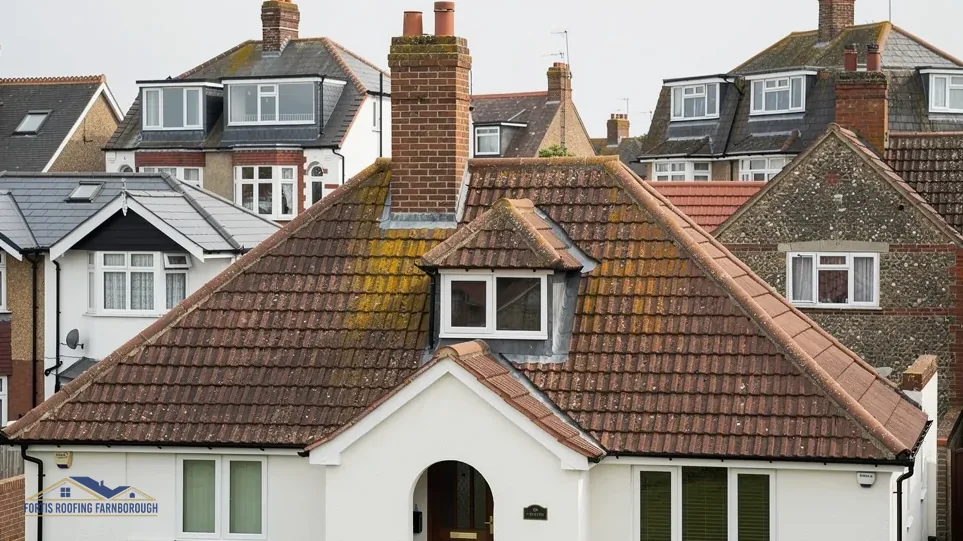
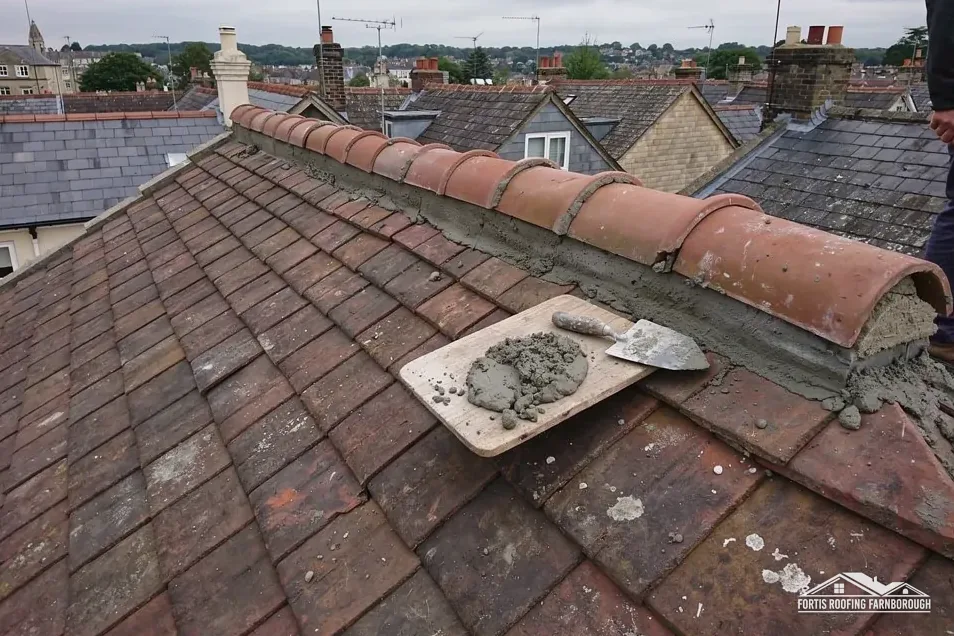
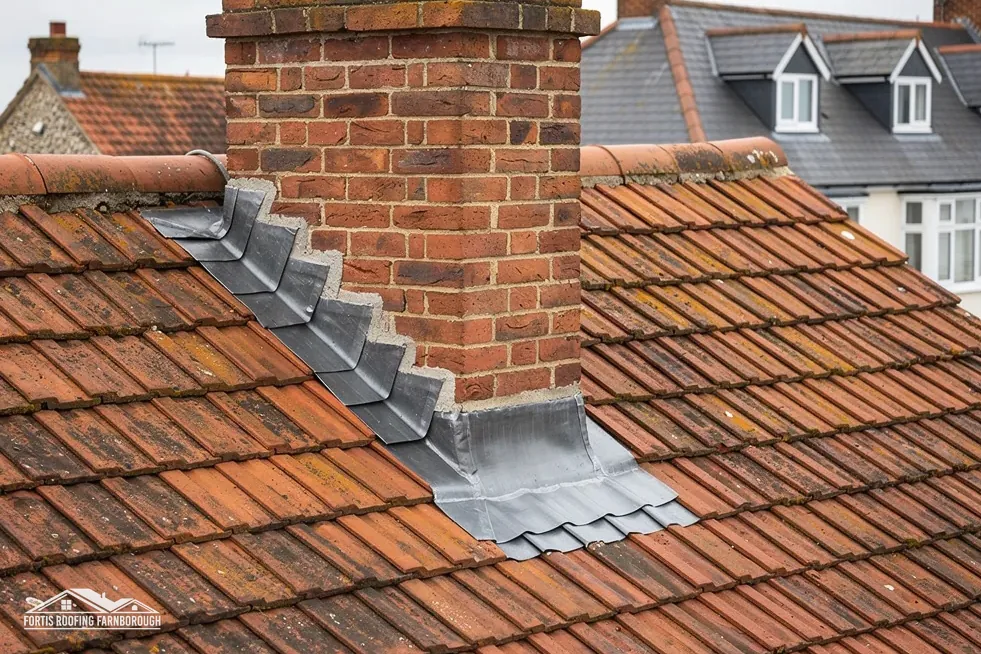
Our lead roofing and lead work page describes the renewal of valleys and flashings on cottage roofs, and chimney repairs covers stacks and their flaunching, which is the sloped mortar cap shedding water from a chimney top. Both come up on cottages of this age.
The record we keep is our own: dated photographs of each ridge, valley, chimney and verge, taken before work starts and held against the finished repair. Should a planning officer ask what stood there before, you can hand over dated pictures.
Alfold holds the closest conservation area on the national map, some 2.5 kilometres from Loxwood at most. That marks the closest boundary, and says nothing about your own address. Chichester's planning map, or a call to its planning team, will say whether your address is inside one and whether an Article 4 direction, which withdraws specified permitted development rights, applies there. That check comes before any Loxwood roof is priced, which keeps the figure you receive honest. If the answer changes after the visit, say because the council reads a boundary differently, we tell you at once and revise the plan before work starts.
Matching tile for tile and keeping the ridge and pitch as they are is repair, not alteration. Changing the covering or the profile affects the character of a listed building and needs listed building consent. Original details are photographed first. Where a change would show, Chichester District Council's planners hear about it before any price is set.
Alfold has the closest, about 2.5 km away, and that alone leaves open whether your own home sits inside one. The boundary map belongs to Chichester's planners, who can also say if an Article 4 direction applies; any job that would alter the roof's look is put to them before it is priced.
Section 169 of the Highways Act 1980 requires the highway authority's licence for scaffold on a pavement or road, but not for scaffold kept on your own land. The scaffolder and we sort the licence out together, and we ask who applies. The written price after the survey allows for scaffold and any licence it needs.
A stain near an outside wall often traces to an overflowing or leaking gutter at the eaves, while a stain under the slope points to the covering, a flashing or a valley. We check both on the survey, test every outlet and photograph each joint, because a fault at one point frequently explains damp somewhere else in the house.
Get your free roof quote
Tell us your Loxwood address and what you have noticed overhead, and a survey date will follow.
10-year workmanship guarantee, in writing.