Plots from the Ifold estate
Ifold House, built in the early 1800s with over 315 acres, was broken into plots sold from 1931.

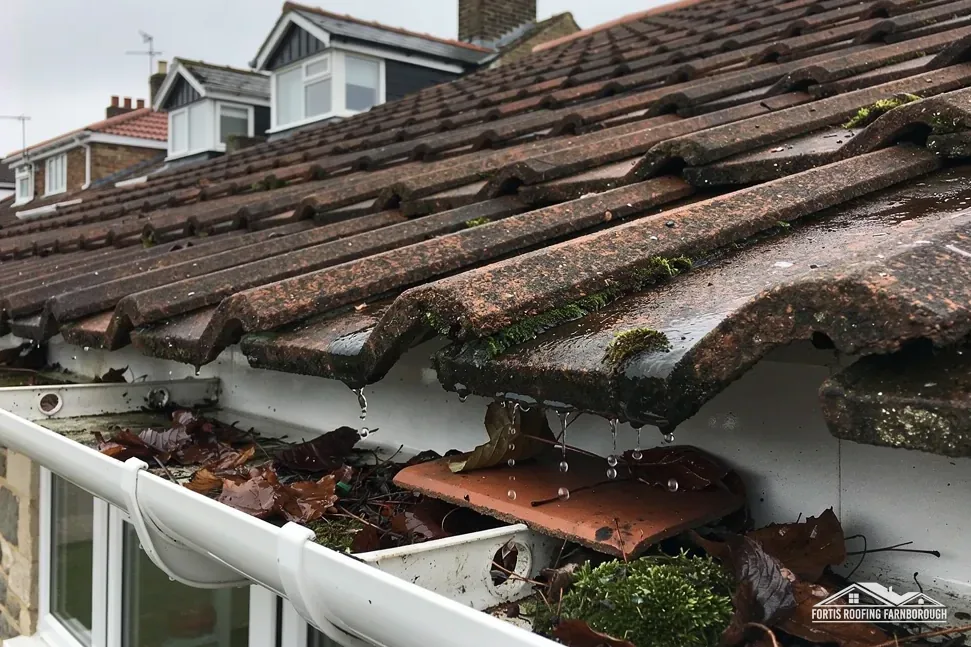
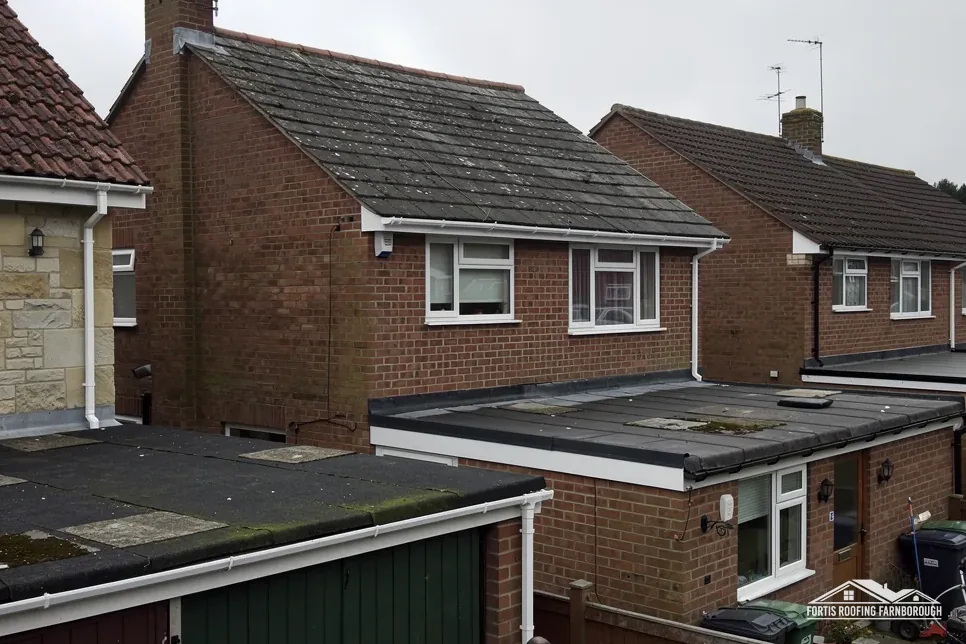
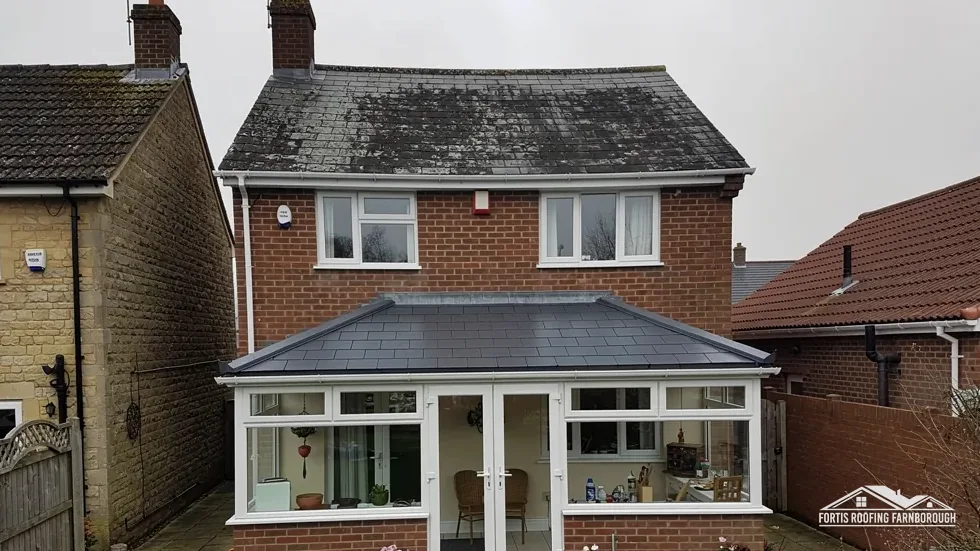
Roofs among the trees of a wooded estate of former weekend plots
Ifold grew from the Ifold House estate after 1931, when its plots were sold for weekend retreats, on roads classified as footpaths. We plan access before we price.
Ifold House, built in the early 1800s with over 315 acres, was broken into plots sold from 1931.
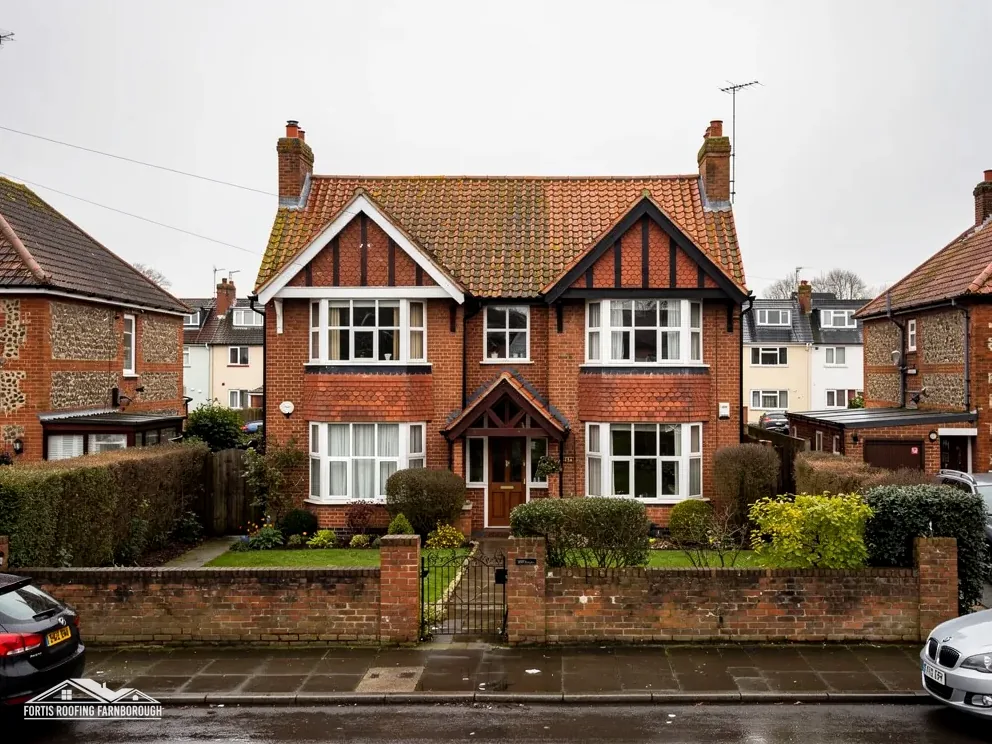
The first owners built basic dwellings as weekend or holiday retreats, none with mains services.

The roads within the Ifold estate are officially classified as footpaths or bridleways.
Map of Ifold with Loxwood, Plaistow, Alfold, Kirdford marked around it.
Map data © OpenStreetMap contributors. Loads only when you ask for it.
Loxwood lies east of Ifold, Plaistow west, Alfold north-east, Kirdford south, Dunsfold north, Rudgwick further east and Northchapel further west.
About 26.8 road miles south-east of Farnborough · Chichester District Council and West Sussex County Council.
Ifold, access and woodland
How access along estate roads classed as footpaths shapes a roof job, what the parish history records about Ifold House and the weekend plots, and what the law says about moss treatment under trees.
| No. | Chapter | The figure it turns on |
|---|---|---|
| 01 | Reaching an Ifold roof along a footpath road | Estate roads classed as footpaths or bridleways |
| 02 | From Ifold House's estate to weekend plots | Plots sold from 1931; house demolished 1936 |
| 03 | Moss under trees and what may treat it | Professional biocides are not for the public |
Chapter 01 of 03
| Role | Body for Ifold addresses |
|---|---|
| Planning authority | Chichester District Council |
| County council | West Sussex County Council |
| Building control | Your building control body, chosen before work starts |
| Estate roads | Officially classified as footpaths or bridleways |
| Parish | Plaistow, with Ifold's built-up area at 1,202 usual residents (Census 2021) |
| Distance from our base | 26.8 road miles south-east of Farnborough, from the A325 |
Ifold is in West Sussex, close to the Surrey border, and the parish council's history says the roads within the estate are officially classified as footpaths or bridleways. For a roofer that is the first fact to deal with. A footpath is not a lorry route, and a tipper full of tiles, a scaffold lorry and a skip all need somewhere to stop. The first visit is therefore partly a journey: we walk the approach, measure its width, note gates, overhanging branches and the surface underfoot, and work out how materials will really arrive.
Chichester District Council decides planning, and West Sussex County Council keeps the county's roads. For building control, any application goes to your building control body, and the survey says whether one is likely. A route classed as a footpath or bridleway is a highway of that kind, so putting a scaffold, a skip or a delivery across it is a question for the highway authority. We ask the office that deals with it before promising a date, and we never assume the answer. If the authority needs notice, the notice period goes into the programme from the start, and you are told how long the wait is likely to be.
Where a vehicle cannot reach the house, materials may be carried or moved in smaller loads, and a mini-hoist or a small tracked carrier may be needed. That adds time on site, and it changes the written price. The access plan goes into the report, with the distance from the nearest place a vehicle can stop, so that you see why the programme is what it is, and so that another contractor quoting for the same job is working from the same facts.
A roof leak does not wait for a delivery route to be settled. If rain is getting in, we cover the roof temporarily first, with sheeting that can be carried in by hand, and plan the permanent repair afterwards. The Planning Portal's re-roofing limits, 25 per cent of the building envelope and 50 per cent of the roof, show whether Building Regulations are involved, and the survey works the figures out for your house.
Chapter 02 of 03
Ifold's history in four published points
The parish council's history of Ifold says the village grew from the estate of Ifold House, built in the early 1800s with over 315 acres of land. Plots on the estate were sold from 1931, Ifold House was demolished in 1936, and by the 1950s all the plots had been sold. The first owners built basic dwellings on them, used as weekend or holiday retreats, and none had mains services.
A house that began as a weekend dwelling and later became a permanent home has probably been altered more than once. Its roof may have been re-covered, extended or patched by different people at different times, and the quality of earlier work can vary. The survey names what lies on every slope, dates and describes earlier repairs where it can, and looks at the structure beneath. Our pitched roofing page covers the repairs that follow, from slipped tiles to ridges and valleys.
The parish history does say that the first dwellings had no mains services, so drainage on an older plot may have been arranged house by house. A roof's gutters and downpipes discharge somewhere, and on a plot without a mains drain that may be a soakaway, a ditch or a butt. The survey follows each downpipe to its end and reports where the water goes, because a pipe that empties against a wall can cause damp that looks like a roof fault. We mark any butt, soakaway or ditch on a sketch of the plot, so the next visitor finds it easily.
Ifold is a wooded residential estate in the Low Weald, and trees overhang many of its roofs. Fallen branches, leaves and moss all work against a covering, and we record what overhangs each slope. Our gutters, soffits and fascias page sets out how outlets and falls are tested, and we clear what we can reach during the survey.
Two Ifold dates
If you buy or sell an Ifold house, our roof report serves both sides: it describes the covering, the repairs found and the access, in words a buyer's surveyor can follow. A history of weekend building makes such a report more useful, not less, because the house's past is less likely to be documented, and the report becomes part of its record.
Chapter 03 of 03
| Subject | What the guidance says |
|---|---|
| Professional-only products | HSE: the public should never use biocidal products meant only for professionals |
| Authorisation | Biocidal products must be used as their authorisation requires |
| Unapproved products | It is an offence to use, store or supply one |
| High-powered washing | Marley: not recommended on slate or tile, as it can damage the surface |
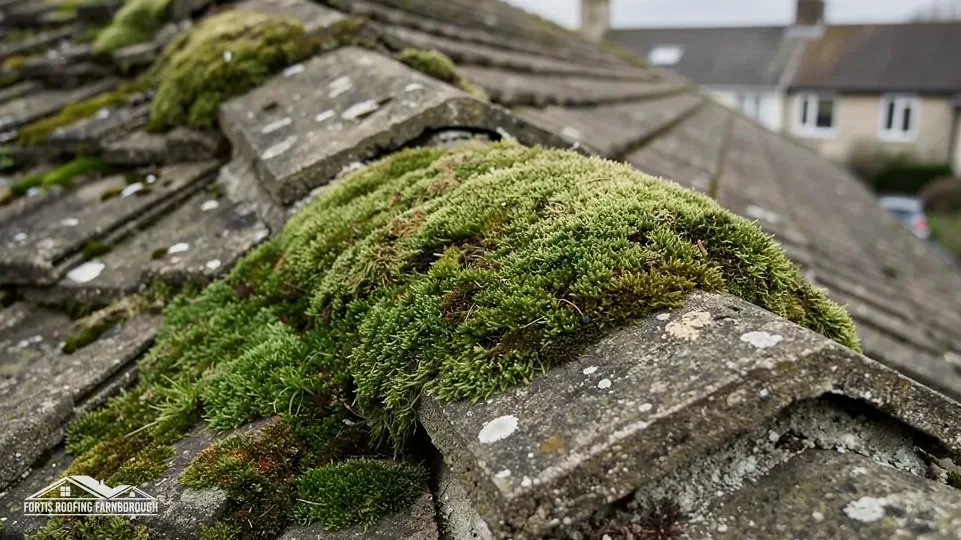
Trees mean moss, and moss means questions about removing it. HSE's guidance is that the public should keep clear of biocidal products meant only for professional users, and the biocides rules require products to be used as their authorisation says. Using, storing or supplying an unapproved product is an offence under the regulations. A homeowner who treats a roof with something bought from a catalogue can therefore be on the wrong side of the rules without knowing it, which is a reason to ask before reaching for a bottle.
Marley's guidance warns that a powerful jet wash can damage the surface of slate or tile and so shorten its life, which is why it is not recommended. Our roof cleaning and moss removal page describes gentler methods. On an Ifold survey we look at the tile first: if the surface is already crumbling, cleaning could do more harm than good, and replacing a few tiles may be the better advice.
The nearest conservation area in the national dataset, within about 2.5 km, is Plaistow. It does not touch the 1.5 km area round Ifold, so most Ifold houses are unlikely to be inside it, but Chichester's planners can confirm an address and say whether an Article 4 direction applies. Keepers, listed Grade II, is the single listed building within 500 m of the centre. For a listed building, work affecting its character needs listed building consent, and we ask first.

On an unlisted house, section 55 of the Town and Country Planning Act 1990 means a repair that leaves its outward look materially unchanged is not development. Our planning permission for roof work guide sets out the national rules. A cleaned and treated roof under trees needs repeat attention, and we tell you how often the evidence suggests, without promising a result.
Gentle cleaning also depends on safe access. A roof that cannot be reached by ladder without crossing soft ground or low branches needs a different method from one with a clear drive. The survey notes both, and the plan chooses accordingly, with the cleaning method named in the written price.
HSE's guidance is that the public should keep clear of biocidal products meant only for professionals, and using an unapproved one is an offence. Marley's guidance also advises against high-powered washing of tiles. We look at the tile surface first and advise on gentle cleaning, or on replacing a few tiles, depending on what we see, and the written price names the method.
The first visit settles it. We walk the route, measure its width and length, note gates and low branches, and decide whether loads are carried, moved in small batches or lifted by a hoist. A scaffold or skip across a footpath or bridleway is a question for the highway authority, which we ask before promising any dates.
The nearest named in the national dataset, within about 2.5 km, is Plaistow, and it does not touch the 1.5 km area round Ifold. Chichester District Council's planners confirm an address and any Article 4 direction. The one listing within 500 m of the centre is Keepers, Grade II, and for a listed house work that affects its character needs listed building consent.
That depends on the Planning Portal's limits: a re-roof under 25 per cent of the building envelope and under 50 per cent of the roof normally needs no application, while a covering 15 per cent or more heavier does. Any application goes to your building control body, and the survey works out which question applies to your roof, with the measurements behind each figure so that you can check them.
Get your free roof quote
Send us your Ifold address and how far the house is from a road, and we will plan the visit.
10-year workmanship guarantee, in writing.