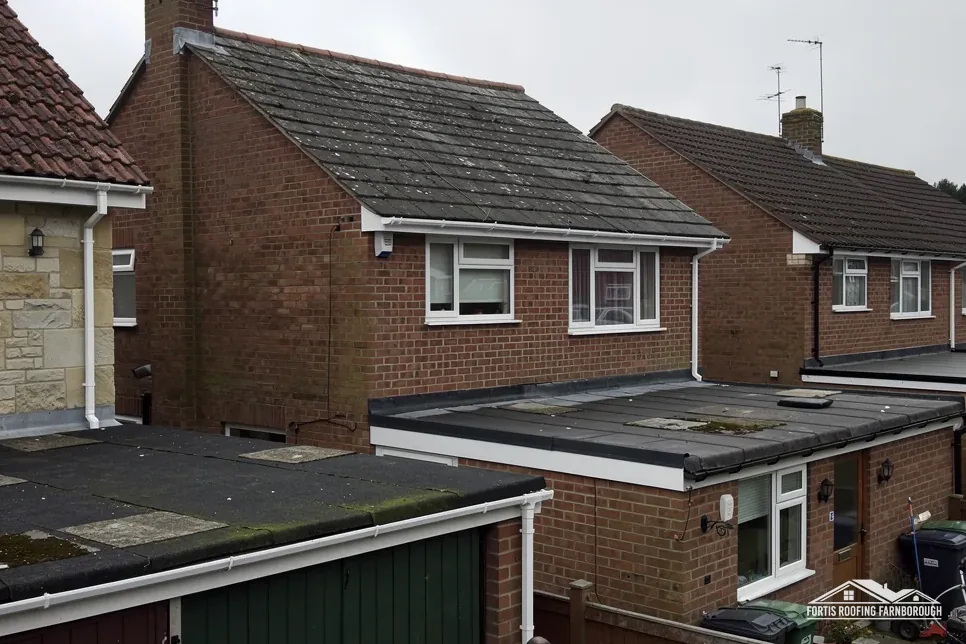
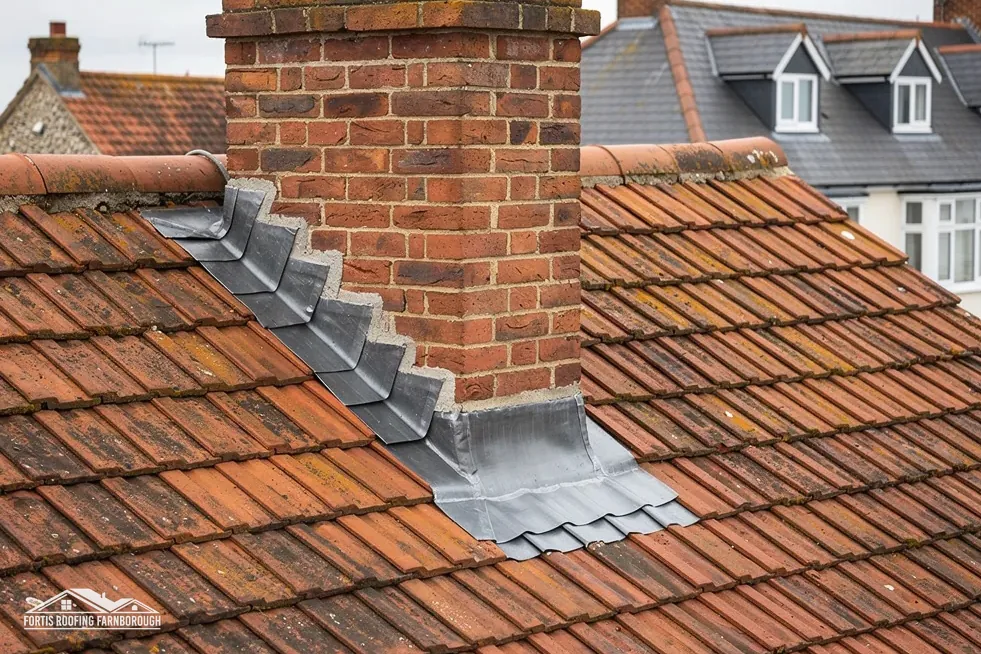
Church Street's riverside group
The surviving 18th- and early 19th-century buildings are mostly in Church Street, beside the London Apprentice.
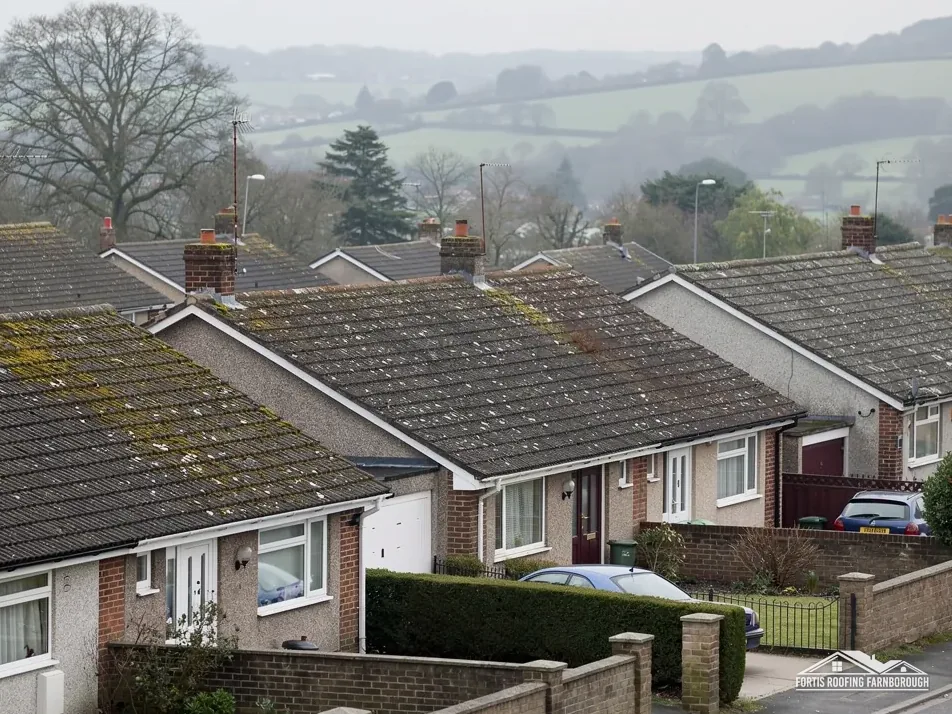
Roofs from Church Street's riverside group to Spring Grove
Isleworth is a Thames-side town opposite Kew, with surviving 18th-century buildings on Church Street and the 1850s Spring Grove laid out beyond. We survey each roof as found.
The surviving 18th- and early 19th-century buildings are mostly in Church Street, beside the London Apprentice.
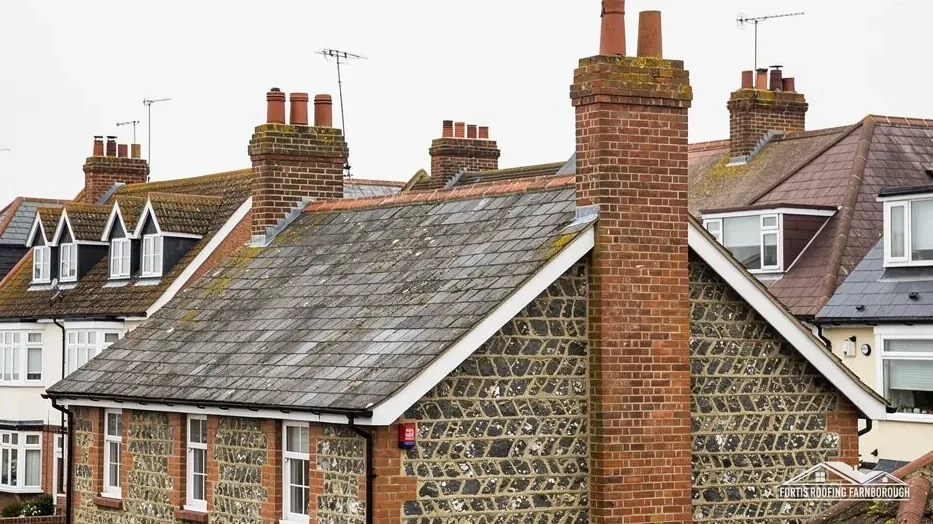
Spring Grove was laid out in the early 1850s, said to be designed chiefly for retired army officers.

Smaller semi-detached houses later surrounded Spring Grove, after the trams came in 1901.
Map of Isleworth with Richmond, Brentford, Twickenham, Hounslow marked around it.
Map data © OpenStreetMap contributors. Loads only when you ask for it.
Richmond lies south-east of Isleworth, Brentford north, Twickenham and Teddington south, Hounslow west, Barnes east and Southall north-west.
About 25.1 road miles north-east of Farnborough · London Borough of Hounslow (unitary).
Isleworth, borough and riverside
One London borough sits behind every Isleworth roof question; this reads what the Victoria County History of 1962 says about the town's streets and Spring Grove, and what five conservation areas and Grade I neighbours mean.

| No. | Chapter | The figure it turns on |
|---|---|---|
| 01 | One borough for planning and building control | London Borough of Hounslow, a unitary council |
| 02 | From two squares to a redevelopment area | About 30 acres redeveloped from 1951 |
| 03 | Five conservation areas and Grade I neighbours | Five conservation areas touch the town |
Chapter 01 of 03
| Role | Body for Isleworth addresses |
|---|---|
| Planning authority | London Borough of Hounslow (unitary) |
| Building control | Hounslow's own building control service, or a registered building control approver |
| Scaffold on a road or pavement | A licence from the highway authority; ask who applies |
| Re-roof test for an application | The Planning Portal's 25 per cent and 50 per cent limits |
| Distance from our base | 25.1 road miles north-east of Farnborough, from the A325 |
Hounslow is a London borough and a unitary council, so one authority answers for Isleworth's planning and for its own building control service. There is no county layer above it. Our home ground is Hampshire, where a district council and a county council divide the work, so for Isleworth we read the borough's pages rather than carry Hampshire's habits across.
The national yardstick comes from the Planning Portal. A re-roof affecting less than 25 per cent of the building envelope and less than 50 per cent of the roof normally needs no Building Regulations application. If a new covering adds 15 per cent or more to the weight, or would perform differently in a fire, approval is needed. Terraces blur the arithmetic: a roof slope may be small, yet walls, windows and roof together make up the envelope, and the survey does the sums for you.
If an application is required, Hounslow's own service can take it, as can a registered building control approver of your choosing. You hear which applies at the survey, and the single written price covers whichever route is needed.
Flat roofs on rear extensions and bay-window roofs are part of the same test. They are small, but the test looks at the whole building envelope, so a bay and a back roof replaced together still count against the figure.
Section 169 of the Highways Act 1980 brings any scaffold on a road or pavement under the highway authority's licence. In a town street the footway is often the only place for one, so a licence is the usual case, not the exception. We find out who files the form and how much notice is wanted, and fit the answer into the schedule before you commit.
A rear roof reached through a back garden or a side passage may avoid the highway altogether. The survey looks at both routes, and notes the width of the passage, because a scaffold tower that cannot get through a gate is no use. Where neighbours share a boundary wall, we also tell them in advance when poles and boards will be on the site, and how long they will stay.
Chapter 02 of 03
Isleworth in four dates and figures
Middlesex's county history, in its 1962 volume, describes where Isleworth stood in 1635. Most houses lay round the two squares, North and South Streets, Church Street and the nearer part of Twickenham Road. The surviving 18th- and early 19th-century buildings are mostly in Church Street, where they form a riverside group with the London Apprentice and the ruined church.
The same history says much of old Isleworth was demolished before the Second World War, more was bombed during it, and more was pulled down afterwards. In 1951 some 30 acres were designated a redevelopment area. The result is a town where very old and much newer buildings stand close together, and where a roof's age cannot be guessed from the street it is on. A house that looks Georgian from the pavement may have been re-roofed in the 20th century, and its back slopes may differ from its front.
Spring Grove, laid out in the early 1850s and said to have been designed chiefly for retired army officers, was one of the area's most ambitious middle-class projects. Smaller semi-detached houses later surrounded it after the trams came in 1901. We use those dates as context only. They do not tell us what any given house carries, so we identify the covering on each slope during the survey and photograph it. Where a slate or tile slope has been patched in a different material, the patch shows on the photographs, and you can see for yourself where the original ends.
Terraces and semi-detached pairs share walls, and roofs often meet at the junction. A leak there can come from either side, so we photograph the party wall flashing and the chimney stack that straddles it. Our lead roofing and lead work page explains how flashings and gutters between roofs are renewed, and our flat roofing page covers the rear extension and porch roofs that a terraced house may have gained since it was built.
Two dates
If the work touches a party wall itself, a party wall surveyor is involved, not building control, and a chimney breast cut away can carry a notice period of two months. We flag that early, so a neighbour's notice does not catch the job out, and we give you the plain facts to pass on.
Chapter 03 of 03
| Designation | In Isleworth | For roof work |
|---|---|---|
| Conservation areas | Isleworth Riverside, Old Deer Park, Richmond Riverside, Spring Grove, St Margaret's Estate | Ask Hounslow whether your street is inside one |
| Grade II* listed church in use | All Saints (NHLE 1358287) | Church of England faculty |
| Grade I listed | Kew Observatory (NHLE 1357729); Syon Park Boathouse (NHLE 1080282) | Listed building consent where character is affected |
| Grade II* listed | Garvin House (NHLE 1261018) | Listed building consent where character is affected |
| Listed buildings | 54 within 900 m of the centre | Check the list for your own address |
Five conservation areas intersect the 1.5 km area round Isleworth in the national dataset: Isleworth Riverside, Old Deer Park, Richmond Riverside, Spring Grove and St Margaret's Estate. Some of those areas take their names from places across the river, so the list shows a heavily designated neighbourhood, not that your own street is covered. The planning team at Hounslow can answer by address and can say whether an Article 4 direction applies. A roof is a prominent part of any street scene, which is why the question comes before the quote. Our planning permission for roof work guide covers the rules.
The national list records 54 listed buildings within 900 m of the centre. Kew Observatory and the Syon Park Boathouse are listed Grade I, Garvin House is Grade II*, and All Saints church is Grade II*. Because All Saints still holds Anglican worship, its roof work goes to the faculty system under the ecclesiastical exemption, not to council consent, and whoever looks after the church will know the procedure. A listed house is different: listed building consent covers work that changes its character, and we put that to Hounslow before we price anything.
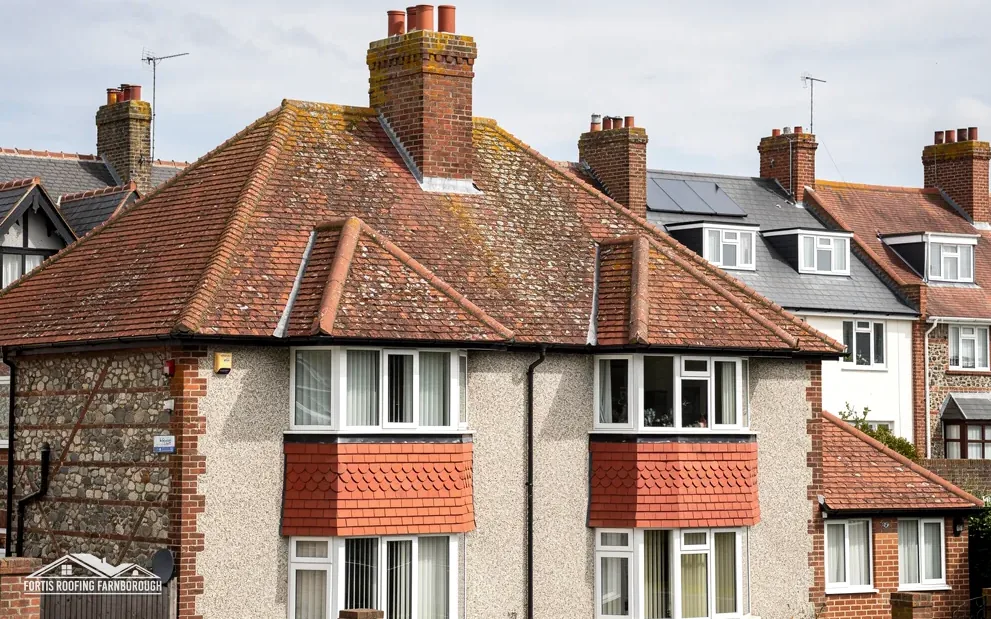
When a house is unlisted, putting back what stood there is the ordinary job, because section 55 of the Town and Country Planning Act 1990 excludes works that keep a building's outer look unchanged from development. A new covering material, a raised ridge or a rooflight is different, and inside a conservation area it is worth a call before anything is ordered. The survey photographs keep a dated record of the roof as we found it, which is useful whatever the council says.
Isleworth's riverside and its older streets are where a designation question is most likely to arise, so mention at the first call if your house is near Church Street, Spring Grove or the river.
Mention at the first call if your home is a flat, since flats lack a house's permitted development rights. Chimney stacks are among the most visible details on a street of terraces. If one leans or has open joints, our chimney repairs page describes repointing, flashing and rebuilding.
Water can travel along a party wall flashing or a shared stack, so the stain is not always under the fault. We photograph the junction from both sides where access allows and report what we see on your roof. Work on a neighbour's side is a matter for you and them, and a party wall surveyor if the wall is affected.
Five conservation areas touch the area round the town: Isleworth Riverside, Old Deer Park, Richmond Riverside, Spring Grove and St Margaret's Estate. Hounslow's planners can say whether a given Isleworth house stands inside one, and whether a dormer or a change of covering needs their approval before anything is ordered.
The church itself does not. All Saints holds a Grade II* listing and still has Anglican worship, so the ecclesiastical exemption applies and the roof work goes through the faculty system. Listed building consent from Hounslow is the route for listed houses and other buildings that sit outside that exemption, and we raise it before pricing.
Poles on the pavement or road need the highway authority's licence, as section 169 of the Highways Act 1980 provides. We establish who files the form and what notice is required before booking, then set the dates in the schedule. A route through the rear garden may avoid the highway altogether, and the survey checks whether it can.
Get your free roof quote
Tell us your Isleworth street and what looks wrong overhead, and we will arrange to survey it.
10-year workmanship guarantee, in writing.