The village round St Dunstan's
In 1911 the older part lay in the south around St Dunstan's church, with newer houses and shops spreading north.
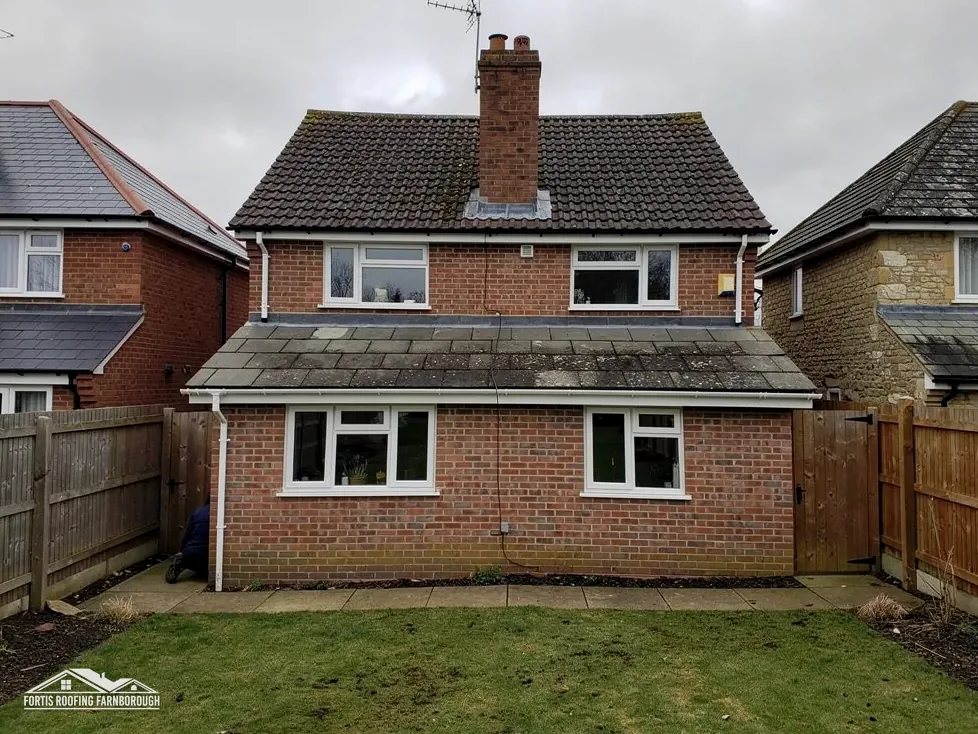
Streets along the Hounslow road, Southville's workmen's rows and St Dunstan's
Feltham began as a long village on the road to Hounslow, and houses and shops filled in around it. We survey each roof for the period it actually belongs to.
In 1911 the older part lay in the south around St Dunstan's church, with newer houses and shops spreading north.

Southville, to the north-west, was two streets of workmen's houses near the station on the Windsor branch in 1911.

Feltham House and the Red Lion Inn are listed Grade II, so roof work there needs consent.
Map of Feltham with Ashford, Sunbury-on-Thames, Hampton, Hounslow marked around it.
Map data © OpenStreetMap contributors. Loads only when you ask for it.
Ashford and Stanwell lie to the west, Sunbury-on-Thames to the south, Hampton to the south-east, Hounslow to the north-east, and Upper Halliford to the south.
About 21.7 road miles north-east of Farnborough · London Borough of Hounslow (unitary).
Feltham, heath and railway
Which council decides roof work in Feltham, how the heath, the road and the railway shaped its streets according to the old county history, and what the three conservation areas and the listings mean for a repair.
| No. | Chapter | The figure it turns on |
|---|---|---|
| 01 | Hounslow handles every Feltham roof question | 25 per cent of the envelope |
| 02 | How a heath became Feltham's suburban streets | Inclosure of the heath in 1800 |
| 03 | Feltham's three conservation areas and listed buildings | Feltham House, Grade II listed |
Chapter 01 of 03
| Role | Body for Feltham addresses |
|---|---|
| Borough council and planning authority | London Borough of Hounslow (unitary) |
| Building control | London Borough of Hounslow building control |
| Highway authority | London Borough of Hounslow |
| Registered private alternative | A registered building control approver, since 6 April 2024 |
Feltham lies in the London Borough of Hounslow, 21.7 road miles north-east of Farnborough by the A325, though the straight-line figure is 17.9 miles. A London borough is a unitary council, so Hounslow decides planning applications, runs the building control service and manages the roads, all from one office. Unlike in Hampshire or Surrey, no county council is involved, so a question about a scaffold goes to the borough directly.
We use the Planning Portal's national yardstick, because it is the published rule for the whole of England. Stay under 25 per cent of the building envelope and under 50 per cent of the roof, and no building control application is normally required, in the Planning Portal's words. A repair to a hip or a ridge, or the replacement of a section of flat roof on a rear extension, usually fits comfortably inside those limits. A whole terraced roof, stripped and re-covered, goes beyond them. And a new covering at least 15 per cent heavier than the old needs approval and a structural check in any case, so the weight of both is noted before a covering is chosen.
Hounslow's own team, or a registered building control approver, can then confirm what is needed. Whichever you choose, the same evidence applies: our survey records the roof area, the slope pitches and the existing covering, with photographs, and it shows how much of the roof the job touches.
Scaffold on a Feltham pavement is licensed under section 169 of the Highways Act 1980, and the London Borough of Hounslow's highways team is the body to ask. Who lodges the form, and at what fee and notice, is for Hounslow to say, so we put the question to the scaffolder during the survey and record the answer before any start date is given. Scaffold inside your own boundary is a separate case, and a small repair done from a ladder needs no licence at all.
Where a terrace or a semi has a flat-roofed extension behind it, a job can need access to the back as well as the front, so the route to the rear is checked at the survey.
Chapter 02 of 03
Feltham's building history in four dates and miles
The 1911 county history of Middlesex describes Feltham as a long, straggling village stretching for over a mile along the road to Hounslow, with the older part in the south around St Dunstan's church and more modern houses and shops to the north, increasing year by year. Until the inclosure of 1800, Hounslow Heath extended over the eastern part of the parish, and the principal road from the village to Hounslow was not built until after that date. In 1911, Southville, to the north-west, consisted of two streets of workmen's houses within easy reach of the station on the London and South Western Railway's Windsor branch.
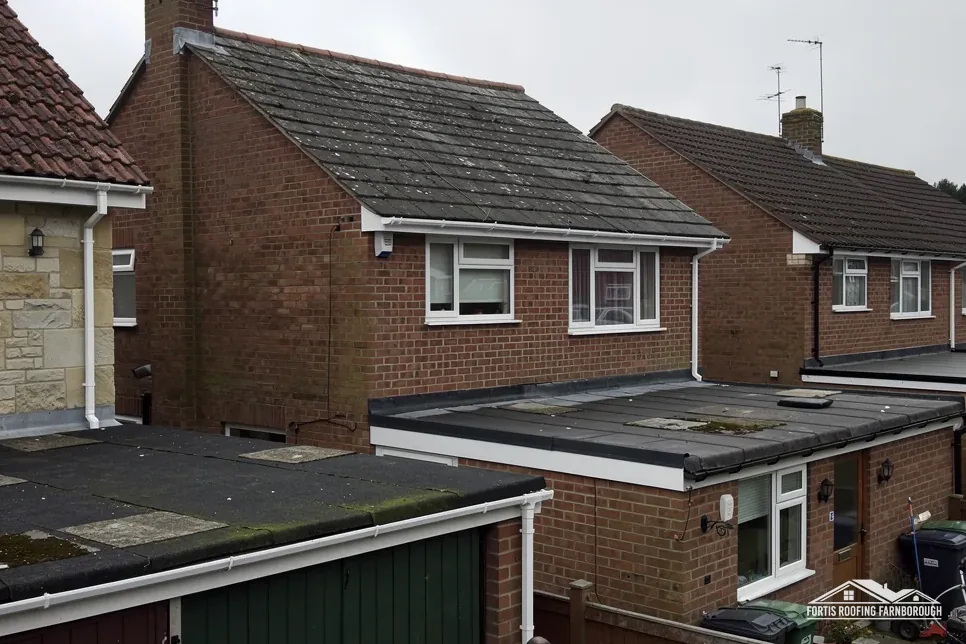
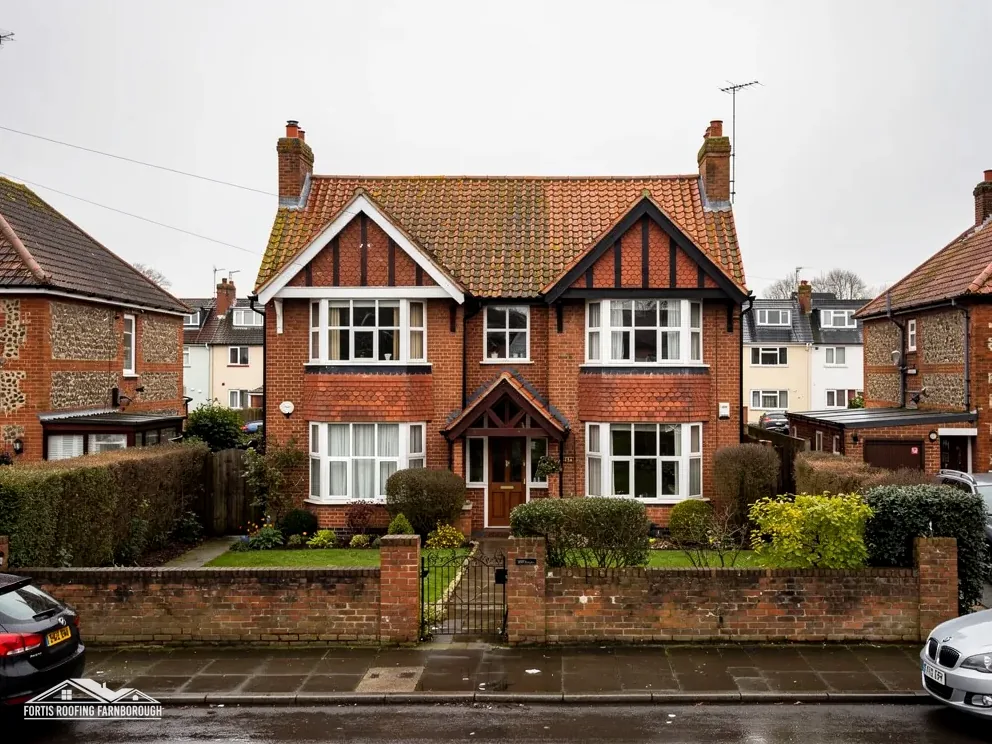
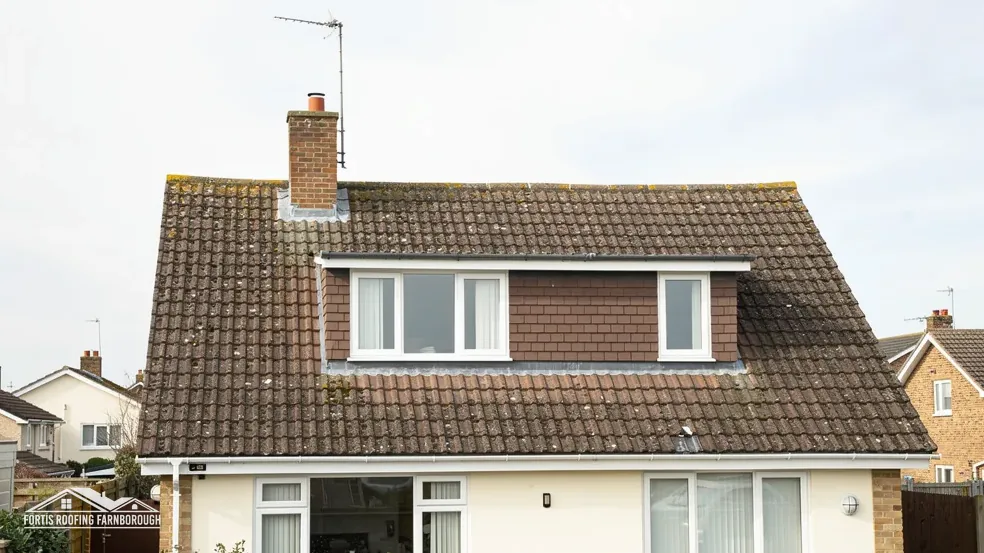
A place that expanded along a road, then outwards from a station, is made up of houses of different ages built by different hands. Streets of terraced houses, such as the Southville rows, share structure: a party wall, a continuous ridge, a run of gutter. We photograph the line where one house's roof meets the next, because that is where a defect on one side shows on the other. Newer houses along the main road come with their own extensions, and the flat roofs on rear additions and garages are checked separately from the pitched roofs above them.
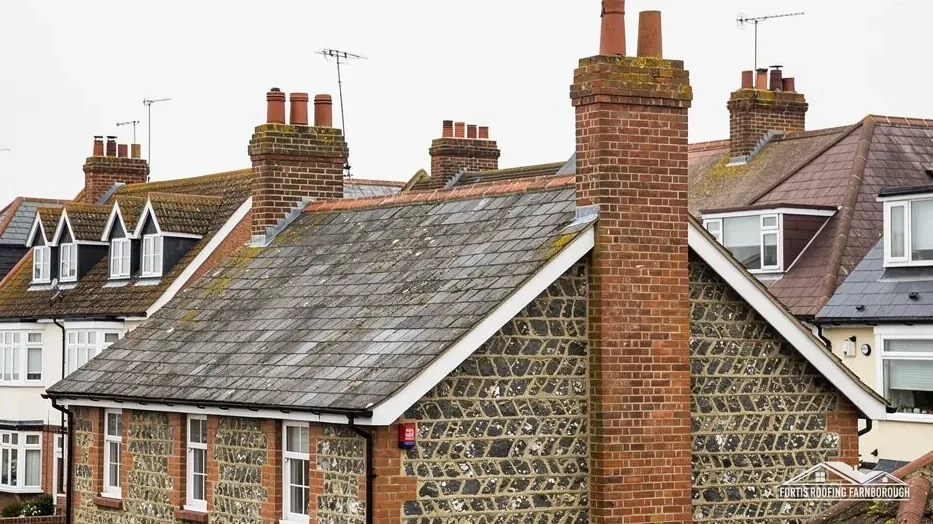
The county history also describes St Dunstan's church as having a nave and chancel built in 1808 and a west tower with a wooden spire, with aisles added in 1853, the whole built of yellow and purple stock bricks. Brick chimneys, parapets and verges meet the roof at joints, so those are inspected on a Feltham survey.
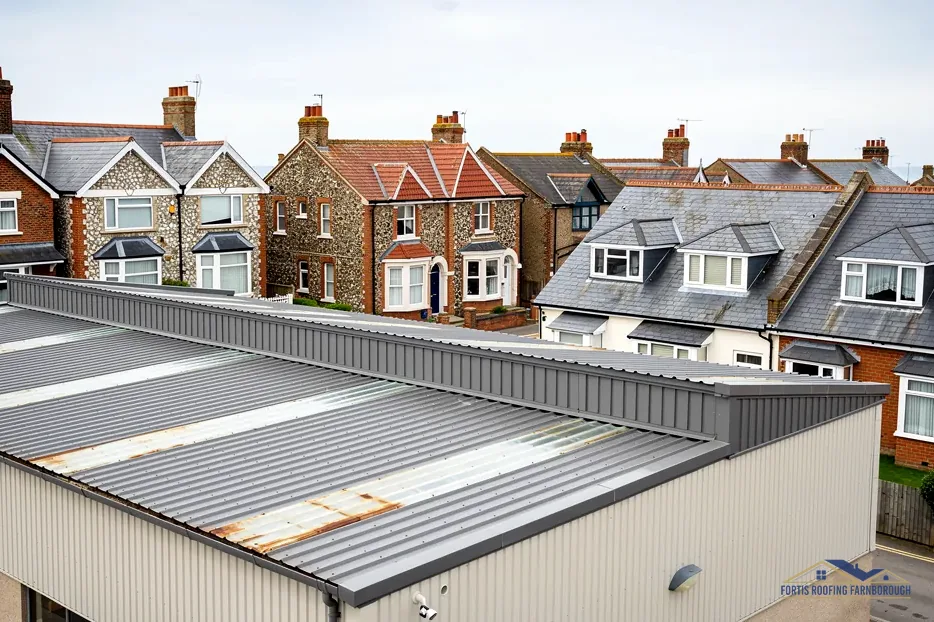
The history also notes shops among the newer building to the north. A shop with a flat or low-pitched roof and a parapet gutter is inspected differently from a house: the outlets, the lead or membrane along the parapet, and the access for a safe look all matter. Our commercial roofing page covers those buildings.

None of the old record tells us what covers a particular house today. Each house has been re-covered on its own timetable, so a 1911 description cannot stand in for a survey. We note the actual covering, count the damaged areas, and photograph the battens and underlay where a tile has been lifted. Our flat roofing page explains how extension roofs are repaired and replaced, and our gutters, soffits and fascias page covers the rainwater side.
Chapter 03 of 03
| Designation | In Feltham | For roof work |
|---|---|---|
| Conservation areas | Feltham Town Centre; Hanworth Park; St Dunstan's | Changes to the look checked with Hounslow |
| Grade II listed | Feltham House (list entry 1189466) | Listed building consent for works affecting character |
| Grade II listed | Red Lion Inn (list entry 1080307) | Listed building consent for works affecting character |
| Grade II listed | Feltham War Memorial (list entry 1457400) | Listed building consent for works affecting character |
| Grade II listed | Tower and spire of former church of St Catherine (list entry 1260937) | Listed building consent for works affecting character |
The national planning dataset records three conservation areas in and around Feltham: Feltham Town Centre, Hanworth Park and St Dunstan's. The boundaries are the council's, and we check each address against them with Hounslow, since a street can sit inside or outside by a few doors. In a conservation area the roof's appearance is a planning matter, though repair stays possible. A repair that changes nothing about how the building looks sits outside the definition of development in the Town and Country Planning Act 1990, section 55(2)(a). A new covering, a different ridge, a rebuilt stack or a fresh rooflight can change that look and go to the council first.
Historic England lists Feltham House and the Red Lion Inn at Grade II, as well as the Feltham War Memorial. Works affecting a listed building's character need listed building consent. A listed house also holds its permitted development rights; the consent is added to them. A pub or a large house means a large roof, and a re-cover is a major change that Hounslow decides. Our planning permission guide explains the routes.
The tower and spire of the former Church of St Catherine are listed Grade II. Its present use decides the consent route, so we would ask what the building is used for before saying which route applies. A former church falls under listed building consent, where a church still in Church of England use goes to the faculty system.
Whether an Article 4 direction applies to your address is a question for Hounslow, and we check it before pricing anything that changes the roof's appearance.
Because three areas share the town, we ask for the boundary in writing when an address is near an edge. Hounslow's planning team can confirm which designation, if any, applies, and its reply sits in your file beside the survey photographs, the written price and, after the work, the finished-roof photographs. That file is what a buyer's solicitor or a lender's surveyor will want to see if the house is sold.
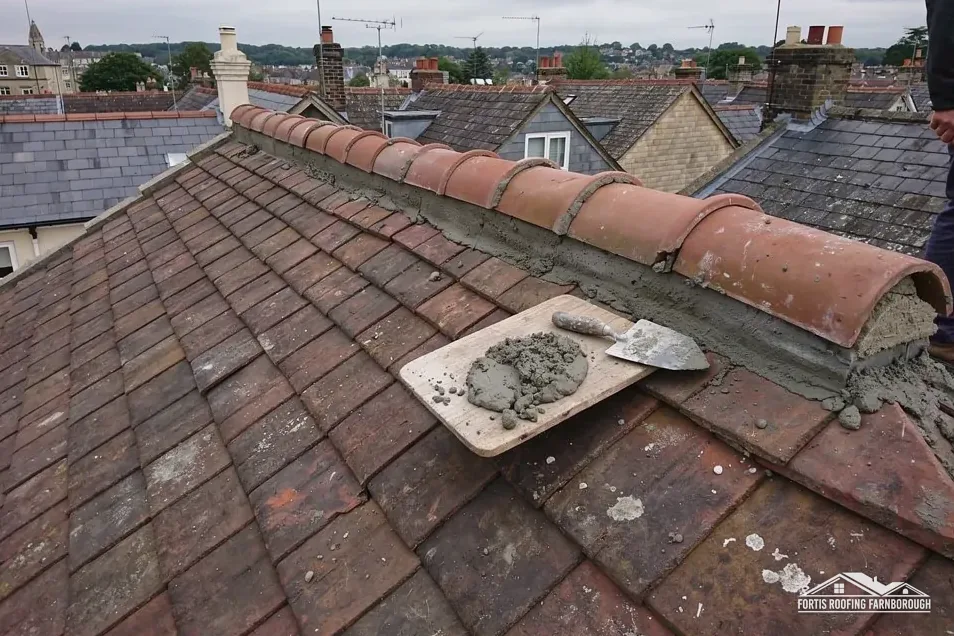
For most Feltham houses, in or out of those areas, the work is ordinary: slipped tiles refixed, a ridge re-bedded, flashings renewed, a flat roof relaid. The difference in a protected setting is the record we keep and the council conversation we have first.
Terraces share a ridge, a party wall and gutter runs, so a fault at the junction can affect two houses. We photograph where the roofs meet and report how the next-door slope looks from your side. If the neighbour's roof needs work too, the photographs give both owners one starting picture.
Yes. A flat extension roof has its own covering, falls, outlets and upstands, so we survey it separately from the pitched roof above. The same Planning Portal test applies to the whole building envelope, so the extension counts toward the share of the roof affected by a re-roof. It is priced within the one written total.
The highway authority, which for Feltham is the London Borough of Hounslow, under section 169 of the Highways Act 1980. Who lodges the form, and the fee and notice, are Hounslow's to state, so we ask the scaffolder at the survey and write the answer into your report before a start date is given.
No, but in a conservation area the roof's appearance becomes a planning matter. A repair that changes nothing about how the building looks is not development, whereas a different covering or ridge can alter it. We check the address against Hounslow's boundaries and put any visible change to the council first.
Get your free roof quote
Send us your Feltham street and what is troubling the roof, and we will arrange the survey.
10-year workmanship guarantee, in writing.