Eton Square almshouses
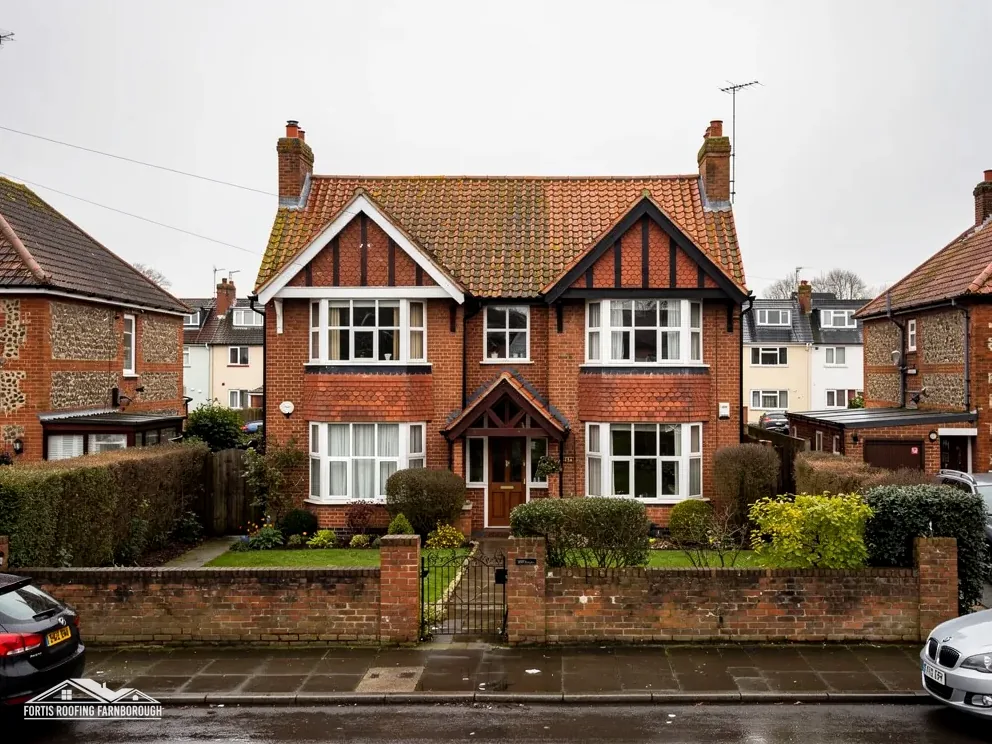
The almshouses in Eton Square are early 18th-century brick cottages with a clay tile roof.

Roofs on Eton's terraces and courts, almshouses and High Street houses
Eton spread east and west of the High Street between 1800 and 1871, with small densely built courts. We survey roofs and shared stacks here and give one written price.
The almshouses in Eton Square are early 18th-century brick cottages with a clay tile roof.
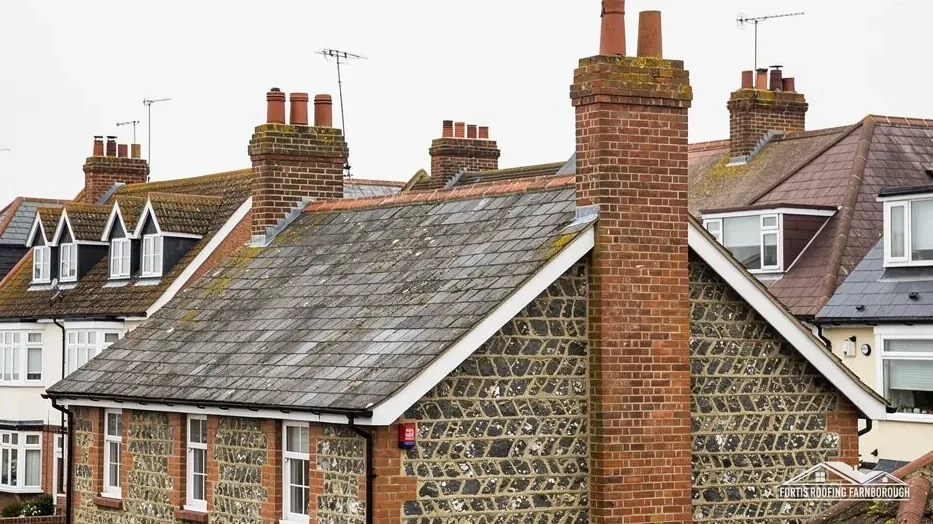
Houses in Tangier Lane and Brocas Terrace grew up as the town spread out from the High Street.
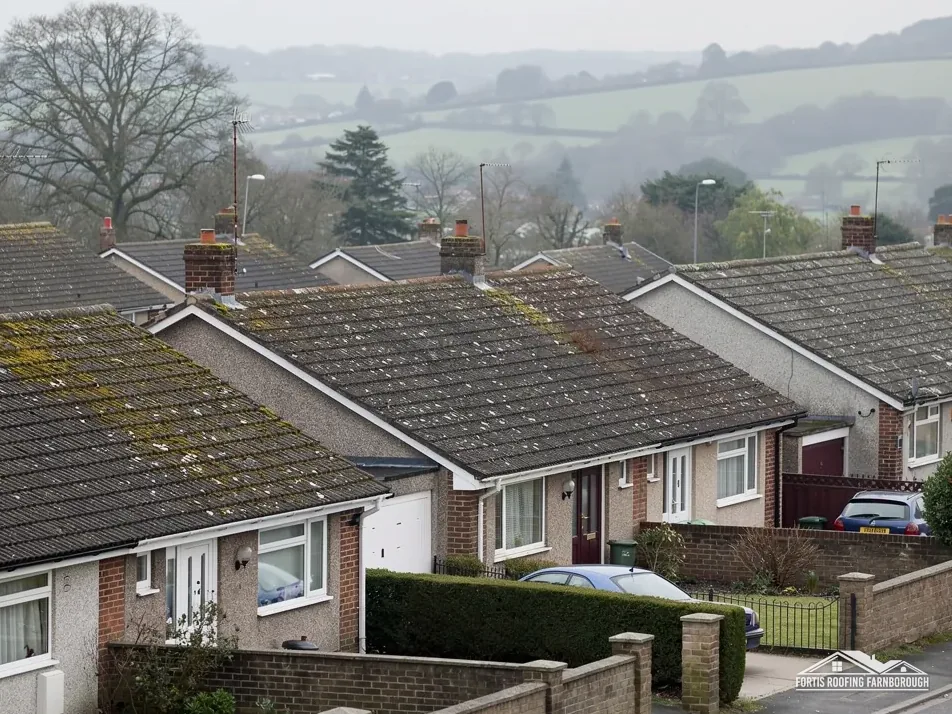
The Eton appraisal records small densely built courts among the housing added between 1800 and 1871.
Map of Eton with Windsor, Eton Wick, Datchet, Slough marked around it.
Map data © OpenStreetMap contributors. Loads only when you ask for it.
Windsor lies just south over the bridge, Eton Wick to the north-west, Datchet to the east, Slough to the north-east, Dorney further north-west and Old Windsor to the south-east.
About 20 road miles north-east of Farnborough · Royal Borough of Windsor and Maidenhead (unitary).
Eton, courts and shared walls
How the Party Wall Act touches a roof or chimney job in Eton's terraces and courts, what the borough's conservation appraisal says about its materials and growth, and how 197 listed buildings shape a repair.
| No. | Chapter | The figure it turns on |
|---|---|---|
| 01 | Courts, terraces and the Party Wall Act | Two months' notice for a chimney breast |
| 02 | Almshouse tile, slate and a limited palette | Brick, slate and clay tile |
| 03 | Three Grade I buildings and 197 neighbours | 197 listed buildings within 900 m |
Chapter 01 of 03
| Question | What the law and GOV.UK say |
|---|---|
| What the Act allows | Cutting away a projecting chimney breast, jamb or flue from a party wall |
| Notice before the work | At least two months before it begins |
| Silence from a neighbour | Cannot be assumed to mean agreement |
| If you cannot agree | You must appoint a surveyor |
| Who advises | A party wall surveyor, not building control |
Eton is a compact town on the flat flood plain of the Thames's north bank, linked to Windsor by a bridge, and the 2021 Census counted 5,122 people in the civil parish. Windsor and Maidenhead's Royal Borough is a unitary council, so one office handles planning, roads and building control here. This chapter concerns something no council deals with at all: the wall you share with next door.
The borough's conservation appraisal says Eton's population grew between 1800 and 1871 and spread east and west of the High Street, with houses such as those in Tangier Lane and Brocas Terrace and small densely built courts. Houses packed in a row share walls, chimney stacks and sometimes roof timbers. A job on your roof or stack is often a job that touches your neighbour's.
Under section 2 of the Party Wall etc. Act 1996, an owner may cut a protruding chimney breast, jamb or flue back out of a shared wall. Section 3 asks for a written notice served two months or more ahead of the start. GOV.UK warns that a neighbour's silence does not count as a yes, and that a dispute means appointing a surveyor.
Those rules concern the structure inside, not the tiles on top. A roofer cannot serve a notice for you or resolve a dispute. A party wall surveyor does that. Building control is a separate question again: the Planning Portal treats a chimney breast as part of the structure and says approval will always be needed to remove one.
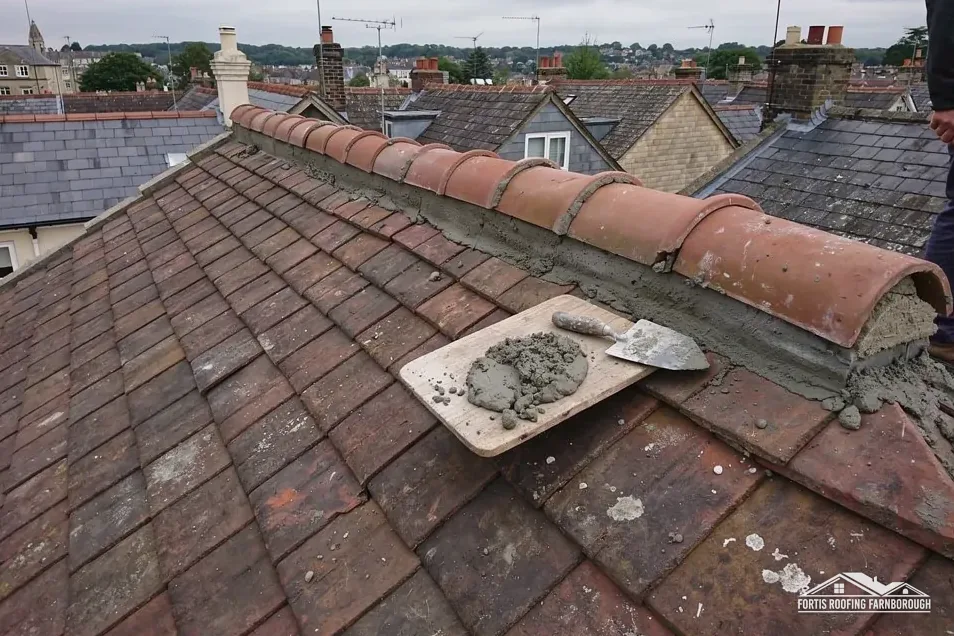
Before any chimney or party-line work, we photograph the stack from the roof, its flaunching, its flashings and the condition of the brick. We record where our roof meets the neighbour's, from our own side only, and report what is visible. Those pictures give both households one set of facts to discuss, and they often shorten the conversation. Photographs taken before work also protect you if a crack appears later and someone asks when it began.
Scaffold in a narrow court may need to straddle a boundary or sit on shared ground, so access is talked through with both households before any date is booked, and each is told what to expect each day. Our chimney repairs page describes the work on a stack itself.
Chapter 02 of 03
Eton: people, growth and redevelopment
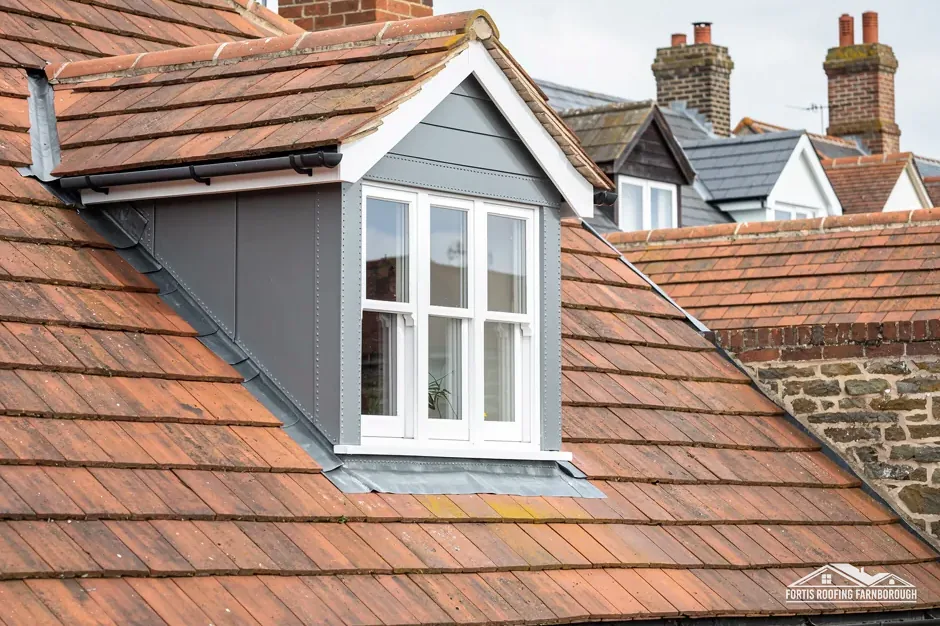
The borough's appraisal says Eton's buildings share a limited palette of materials, with red and yellow-brown brick for facing and slate and tile for roofs. The almshouses in Eton Square are early 18th-century brick cottages with a clay tile roof. Lammas land and College land restricted new housing in the 20th century, so new housing was mostly placed at Eton Wick, while Atherton Court, west of the High Street, was redeveloped in the 1960s.
That description belongs to the conservation area. It names brick, slate and clay tile as what its buildings share, and it shows what a repair there must respect. The covering of each house is established on the survey, and a modern covering laid on an old frame is noted as such.
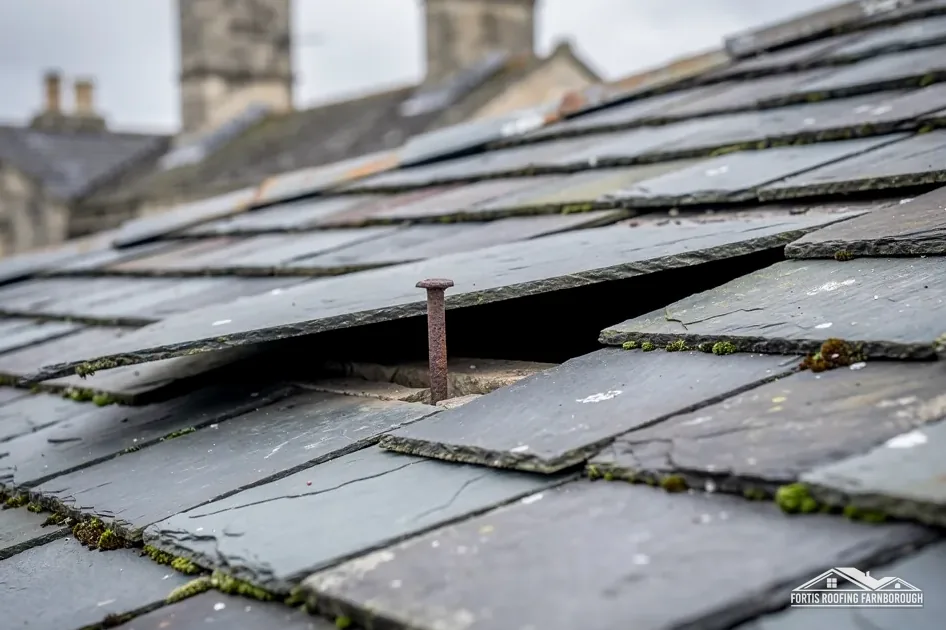
Slate and clay tile age differently. A clay tile weathers by absorbing water and can crack in frost when it becomes saturated, so cracked or crazed tiles are a common sign. Slate is stone: it rarely wears through, but the fixings behind it do, and a slate slips when its nail rusts.
On a survey we therefore look for different faults. On tile we look for cracking, delamination, broken nibs and failed ridge bedding. On slate we look for slipped slates, rust staining, broken slates and failed lead. On both we look at the underlay, battens and valleys.
A town built over a century and a half has roofs of mixed ages. A terrace might have a slate front slope and a tiled rear, with a rear extension in a third covering, so our survey notes list every slope on its own, with photographs of each.

Mixed coverings also meet each other in valleys and at abutments, and those meeting points need lead or another flashing to keep water out. The survey photographs each one, since a leak from a junction is easy to blame on the wrong slope.
The slate roofing page explains how slates are sorted and re-fixed, and the pitched roofing page covers tile repairs.
Gutters on a terrace often share downpipes, and a blocked shared downpipe can flood two houses. We trace each and note which house it serves, so any repair is agreed with the right neighbour.
Chapter 03 of 03
| Designation | Where | For roof work |
|---|---|---|
| Grade I listed | Eton College (NHLE 1290278) | Listed building consent |
| Grade I listed | Guildhall (NHLE 1117752) | Listed building consent |
| Grade I listed | Windsor Castle and buildings within its walls (NHLE 1117776) | Listed building consent |
| Conservation area | Eton, designated 1971 by Buckinghamshire County Council | Ask RBWM before changing the look |
| Nearby conservation areas | St Bernard's School; Sussex Place and Clifton Road; Upton Park | Check your address |
The National Heritage List shows 197 listed buildings within about 900 metres of the centre of Eton, a density found in few places. Eton College, the Guildhall and Windsor Castle with the buildings within its walls are each listed Grade I. The Eton conservation area was first designated in 1971 by Buckinghamshire County Council, and the national dataset names St Bernard's School, Sussex Place and Clifton Road, and Upton Park and Upton Village as the nearest others.
In practice, a great many Eton houses sit inside the conservation area or within the setting of a listed building. Listing leaves permitted development rights in place, yet work touching a house's character calls for listed building consent as well, and the Royal Borough's conservation team judges the application. Setting matters even for an unlisted house next to a Grade I neighbour.
Council officers read a roof application for what it keeps and what it changes. A like-for-like repair, with the same material, the same fixings and the same pattern, keeps the character. A different tile, a raised ridge, a new rooflight or replaced lead in a different metal changes it.
So every repair we propose in Eton comes with a written description of what is being kept: the covering, the ridge, the verges, the stacks, the lead. If a replacement tile is needed, we record the size, colour and surface of the old, and look for a match.
No materials are bought before the consent position is settled. If the building is listed or inside the conservation area, the survey record is part of the application, and a short heritage note, written in plain words, explains what the roof is and why the repair suits it.
Where a roof of a listed building needs urgent attention, a temporary cover protects the building while consent is sought, and the temporary work leaves no mark when it is removed. The cover is photographed going on and coming off, so the record is complete, and the permanent repair is then planned without time pressure.
Our emergency and general repairs page describes the make-safe approach used on older roofs.
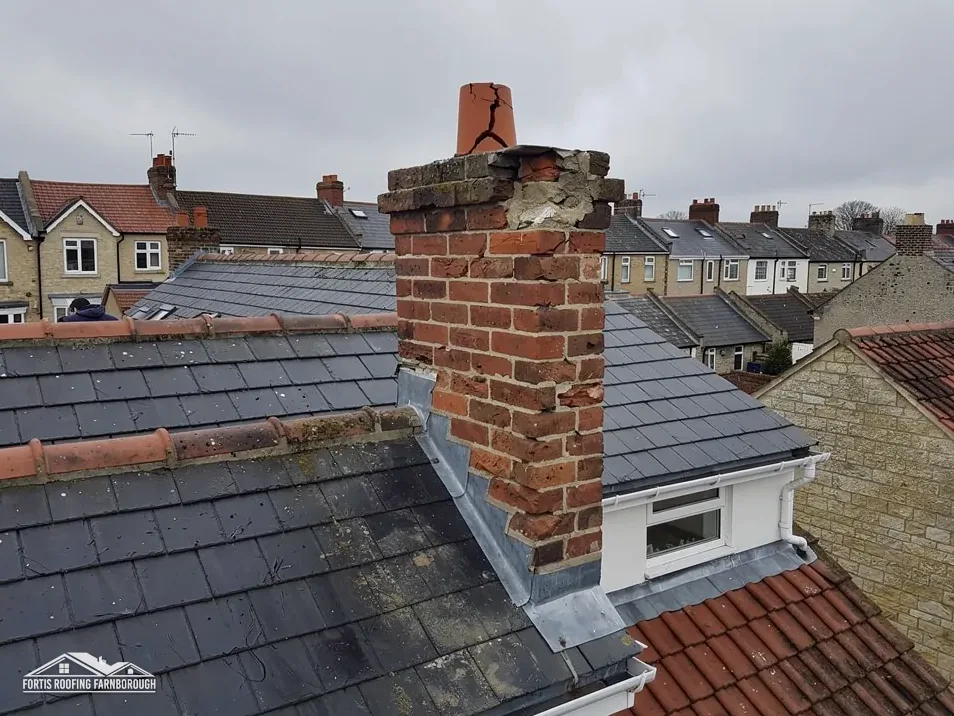
The flashing and flaunching at the base belong to the roof, so the stack is photographed from our side and its condition reported. If work reaches the party wall inside, such as cutting back a breast, the Party Wall Act can apply, and a party wall surveyor advises on the notices.
It can, where the work touches a party wall or a shared structure, such as cutting into a wall to fit a flashing or removing a chimney breast. A party wall surveyor, not a roofer or building control, advises on that. We photograph the junctions from our own side and report what is visible.
Possibly. Eton was first designated a conservation area in 1971, and three more lie within about 2.5 km. RBWM's planning team can confirm for your address in a short reply, and it is asked before any alteration to a visible roof is priced, with the answer filed alongside your photographs.
Clay tile absorbs water and can crack or delaminate in frost, so cracked tiles are the usual sign. Slate is stone and rarely wears through, but its nail fixings rust and slates slip. We look for different faults on each, photograph them slope by slope and tell you which repair each slope needs.
Get your free roof quote
Name your Eton street and what is leaking, and we will come out and photograph the roof, stack and shared junctions.
10-year workmanship guarantee, in writing.