Harvest Road's Victorian streets
Runnymede's appraisal says a mid-19th-century settlement grew around Harvest Road, South Road, Victoria Street and Priest Hill.

Roofs on Harvest Road, the Green and Coopers Hill Lane villas
Englefield Green is a village above the Thames valley beside Windsor Great Park, with a Victorian quarter once called New Egham. We survey every roof from the ladder.
Runnymede's appraisal says a mid-19th-century settlement grew around Harvest Road, South Road, Victoria Street and Priest Hill.

The appraisal describes Victorian villas of buff brick with corbelled brick eaves and carved brick panels.
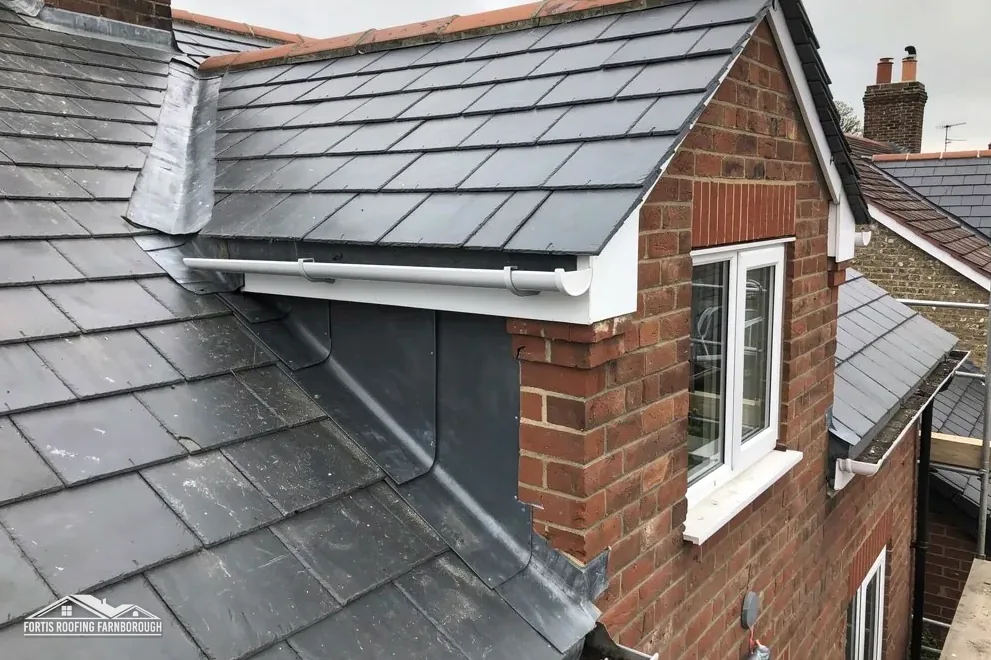
The Church of Saint Simon and Saint Jude and a pair of mausolea are both listed Grade II*.
Map of Englefield Green with Egham, Virginia Water, Old Windsor, Wraysbury marked around it.
Map data © OpenStreetMap contributors. Loads only when you ask for it.
Englefield Green stands on Bagshot sand above the Thames valley, beside Windsor Great Park, and Farnborough lies 14.2 road miles beyond it, south-west of the village.
About 14.2 road miles north-east of Farnborough · Runnymede Borough Council and Surrey County Council.
Englefield Green, the 2023 appraisal
Who handles each part of an Englefield Green roof job, what Runnymede's 2023 conservation area appraisal and the 1911 county history record about the village's buildings, and how two Grade II* listings and the 1970 designation shape repairs.
| No. | Chapter | The figure it turns on |
|---|---|---|
| 01 | Runnymede's village on Surrey's highways | Runnymede plans and inspects |
| 02 | New Egham, a cottage hospital and a school | A mid-19th-century settlement |
| 03 | A 1970 conservation area and two Grade II* listings | Designated in January 1970 |
Chapter 01 of 03
| Responsibility | Held by |
|---|---|
| Planning decisions | Runnymede Borough Council |
| Building control | Runnymede Borough Council's own team |
| Scaffold on the highway | Surrey County Council (until 31 March 2027) |
| Parish status | Runnymede, unparished area |
| Distance from Farnborough | 14.2 road miles north-east, measured from the A325 |
Englefield Green is in Runnymede, and Runnymede Borough Council handles both its planning and its building control, with its own team. Surrey County Council keeps the highways until 31 March 2027, when West Surrey Council becomes the authority for the area. The village is in the unparished part of the borough, and it stands 14.2 road miles from Farnborough, measured from the A325 Farnborough Road like every mileage on this site.
No re-roofing percentage appears on Runnymede's pages, so the Planning Portal's two numbers are the guide: 25 per cent of the building envelope and 50 per cent of the roof. Keep a re-roof below both and an application is not the norm. Weight is a second test, and a covering that comes out 15 per cent heavier than the old brings Building Regulations approval and a structural check. Where slate is replaced by a heavier concrete tile, that is the swap that raises the question, since the rafters below were set out for the old load.
The survey weighs the old covering and the new, and you are shown the sums. Private building control by a registered approver is the other route.
Ask any roofer who quotes what the figure assumes about scaffold, VAT and clearing the old covering away. A quote that is silent on those is short of a total, and the gap tends to appear on site. Ours is one written price, after the survey, and it says what it covers.
Think of Surrey County Council's licence as a 28-day meter that runs at £208 a period, and that costs the same again when you renew. Until April 2027 it is the licence for any pole that stands on the public carriageway or footway, the council wants 10 working days' notice, and the application fee is lost if you withdraw. Nothing on its page says who completes the form; put the question to the scaffolder at booking.
A house that sits close to the pavement may have little ground in front, and then the poles stand on the highway. A house set behind a garden wall might keep its scaffold on its own ground. We measure at the survey and tell you which applies, so that the booking date reflects the notice period, or the lack of one, before you commit to any date.
Chapter 02 of 03
Englefield Green's recorded growth
Runnymede's appraisal explains that, immediately south of the Green, the Victorian settlement of Englefield Green began as a mid-19th-century development around Harvest Road, South Road, Victoria Street and Priest Hill, known on some maps as New Egham. The 1911 county history adds that the Cottage Hospital opened in 1880 with sixteen beds, and that the village National school, built in 1864, had been enlarged in 1885, 1896 and 1899. The same history records that the chapel of ease of St Simon and St Jude was built in 1859, of stone in 13th-century style with a west tower.
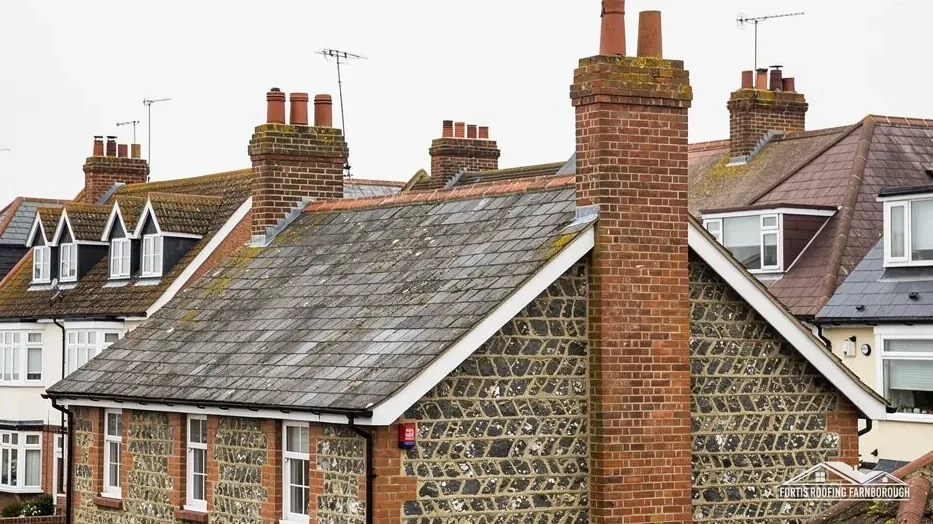
The appraisal describes brick as the dominant walling in the conservation area, red or orange for the most part, while the Victorian villas on Coopers Hill Lane use a buff brick with brick corbelled eaves and carved brick panels. It records slate and clay tile roofs among the buildings. Those corbelled eaves matter to a roofer: a corbel is a course of brick stepped out to carry the eaves, and the gutter and fascia sit against it, so a failed gutter can soak the very brickwork that gives the house its look.
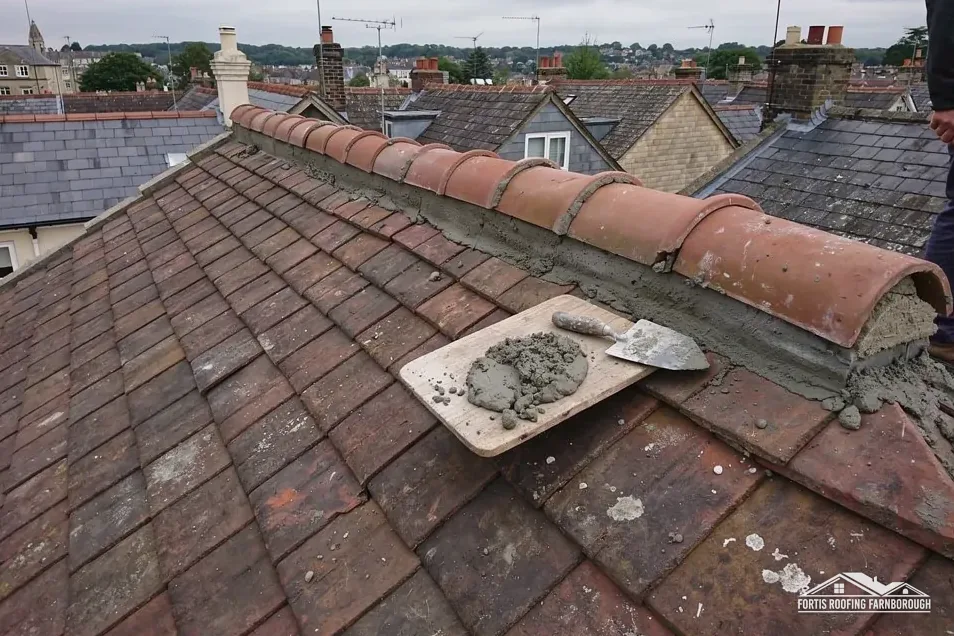
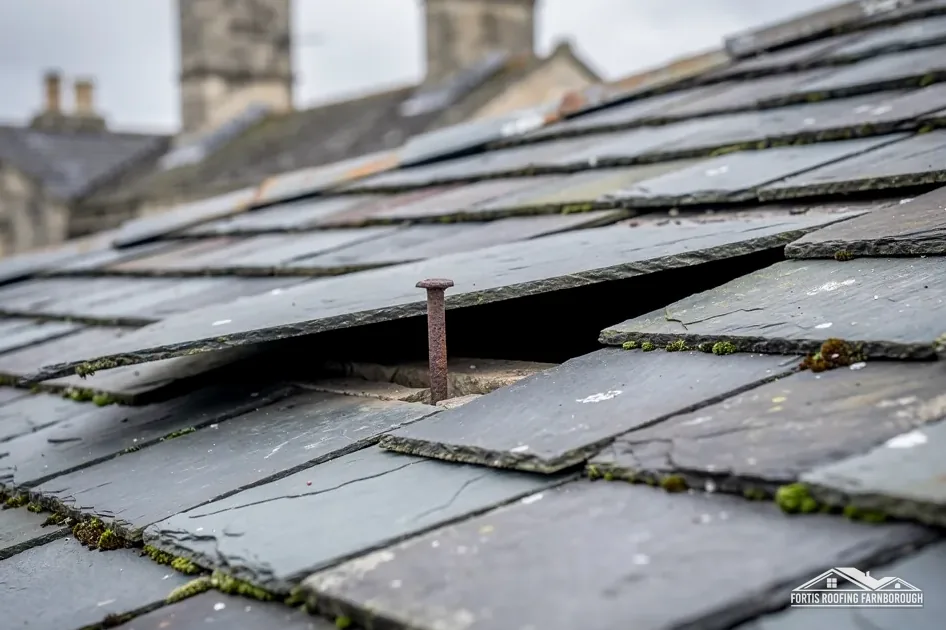
For a Victorian roof of this kind, we look first at the covering and the ridge, then at the valleys and the chimney flashings, and finally at the gutters and the eaves. A slate that has slipped is a small repair. A run of slipped slates points to nail fatigue, and then the better answer may be to strip and refix a slope. We say which it is, with photographs.
Larger buildings, such as the hospital and the school the history mentions, have bigger roofs than any house, and they have been extended in stages. Every extension meets the old roof at a valley or a wall abutment, and water tends to find those meetings first. A building that grew in three enlargements has three such joins, and we would look at every one.
Two Victorian dates
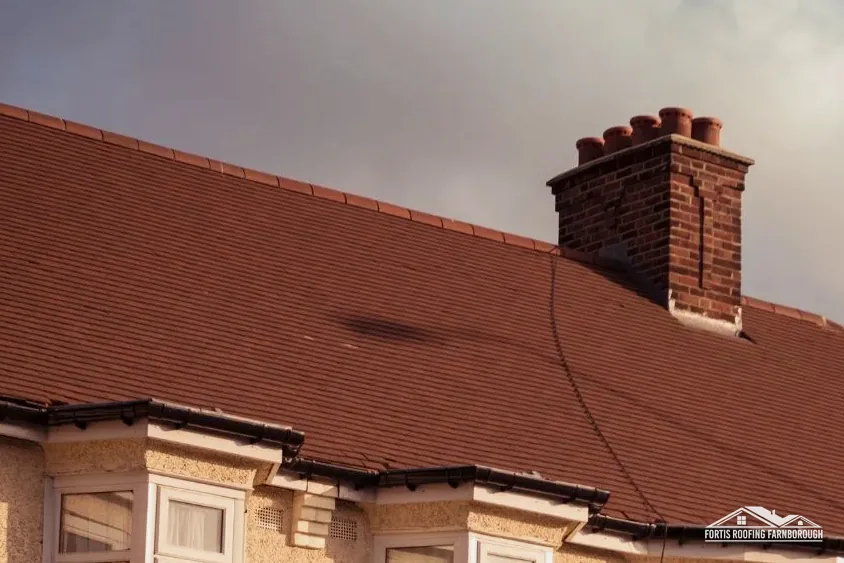
Chimneys on a Victorian terrace are tall, and the stacks on neighbouring houses are often joined. A failing stack on one house can affect its neighbour's roof, so we photograph the junctions at party walls and report what we can see, without stepping onto the next-door roof. Our slate roofing page explains how slate roofs are repaired.
A record describes the village. For your own roof we look, lift a slate or two and write down what is really there before we match anything.
Chapter 03 of 03
| Designation | In Englefield Green | For roof work |
|---|---|---|
| Conservation area | Englefield Green, designated January 1970 | Changes to the look checked with Runnymede |
| Grade II* listed | Church of Saint Simon and Saint Jude (NHLE 1028958) | Church or listed building consent |
| Grade II* listed | Pair of Mausolea (NHLE 1242772) | Listed building consent |
| Grade II listed | 48 and 49 Harvest Road (NHLE 1028970, 1378030) | Listed building consent |
The Englefield Green conservation area was designated in January 1970, and Runnymede adopted its current appraisal and management plan in 2023. The council has also published guidance on permitted development in conservation areas, which is worth reading if you plan more than a like-for-like repair. A conservation area does not forbid repair. It raises the standard for matching, and it makes any change of material or roofline a conversation with the planners.
Check whether an Article 4 direction applies with Runnymede Borough Council; we raise it with the council before pricing anything that would alter how the roof looks. Where a repair copies the existing roof, tile for tile and slate for slate, that conversation is short, and the photographs we take at the survey give the council what it needs.
The Church of Saint Simon and Saint Jude and the Pair of Mausolea are each listed Grade II*, and 48 and 49 Harvest Road are listed Grade II. Six listed buildings stand within 500 m of the village centre. For the mausolea and the houses, listed building consent from Runnymede is needed for any work that would affect character. Where the church is used for Anglican worship, its roof is dealt with through the faculty system, and Runnymede's consent is not the route.
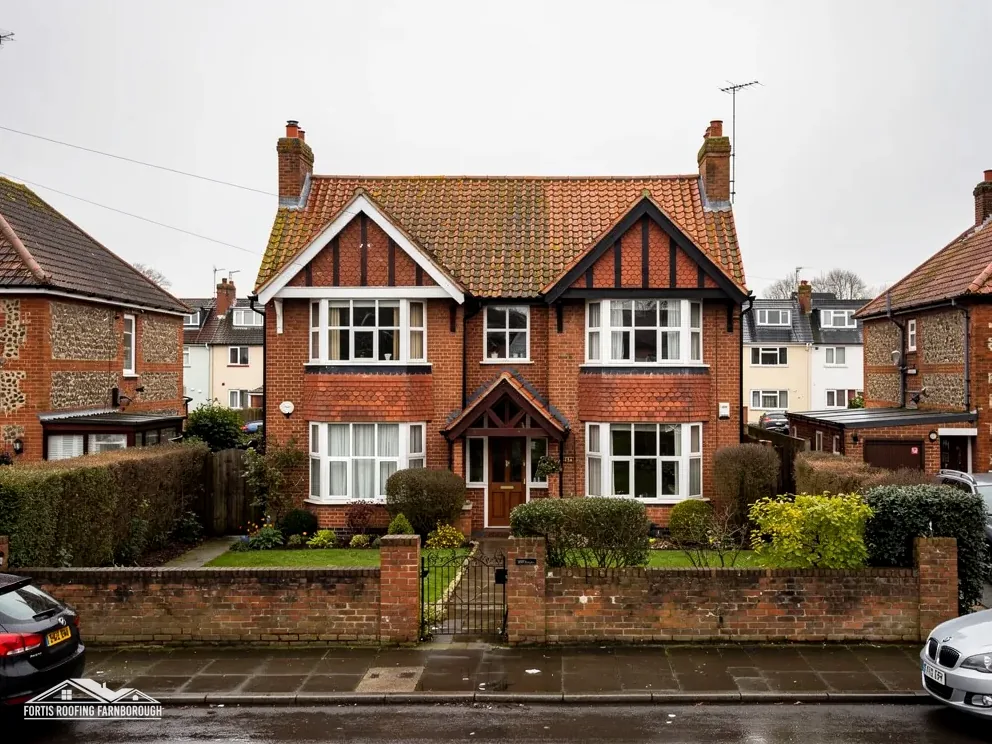
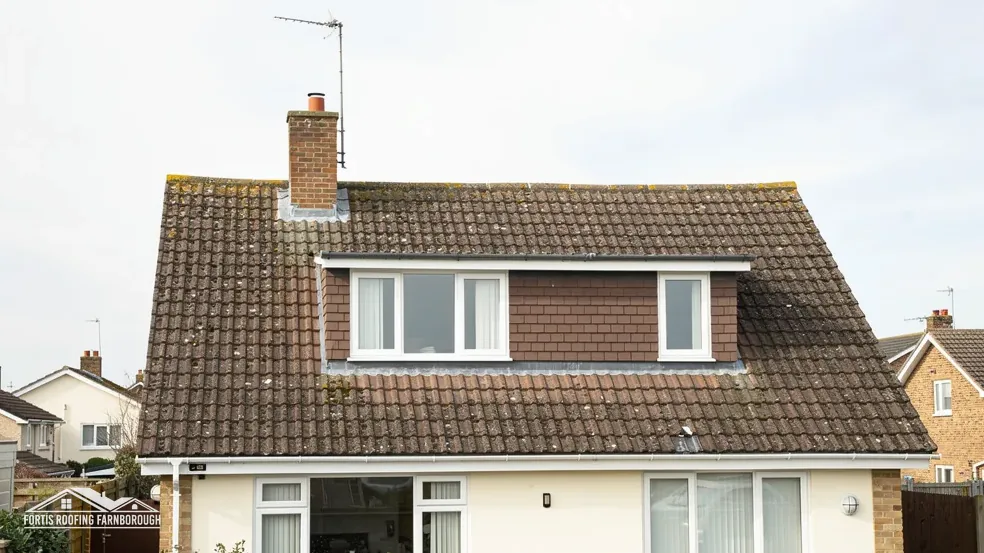
In any conservation area the roofline is part of what the designation protects. A new dormer, a front-slope rooflight or an altered ridge shows from the road and to every neighbour. Where a change like that is wanted, we measure the existing roof and prepare photographs, so the planners see the building as it stands.
An Englefield Green owner can help the process by keeping dated photographs of the roof. A buyer's surveyor, an insurer or a council officer will ask what has been done and when, and a clear record answers that in a minute. Our chimney repairs page explains how stacks are rebuilt or repointed, work that conservation areas often scrutinise.
If your house is unlisted and outside the area, you have more freedom, but the same habit of matching keeps a street looking as it should. You get our findings in a short written report before any price is given.
It is worth fixing soon, before the next wet winter. Water running over a gutter soaks the brick corbels, the fascia and the timber behind them, and stained or frosted brick is slow to recover. We check the gutter's fall, the joints and the outlets, photograph the damage and repair the run before it harms the brickwork.
It does not forbid repair, but a change of material alters the building's character, and in a conservation area that is a question for Runnymede's planners before any pricing. A slate-to-tile change also adds weight, and a rise of 15 per cent or more needs approval. We record your slates and weigh both coverings first.
Both are listed Grade II*. For the mausolea, listed building consent from Runnymede Borough Council is needed. For the church, the answer turns on use: a building in Anglican worship use comes under the faculty system, through the ecclesiastical exemption. The church is the place to confirm the route before anyone is instructed.
Yes. Until April 2027 each Surrey County Council licence covers 28 days at £208, and renewing costs the same, so an overrun is paid for again. Ten working days of notice are expected, and the form's author is not named, so ask who applies. Poles inside your own boundary need no highway licence, and a house behind a garden wall often has the room, so the frontage is measured first and you learn which case is yours.
Get your free roof quote
Tell us which Englefield Green road you are on, and we will visit, climb up and photograph the roof.
10-year workmanship guarantee, in writing.