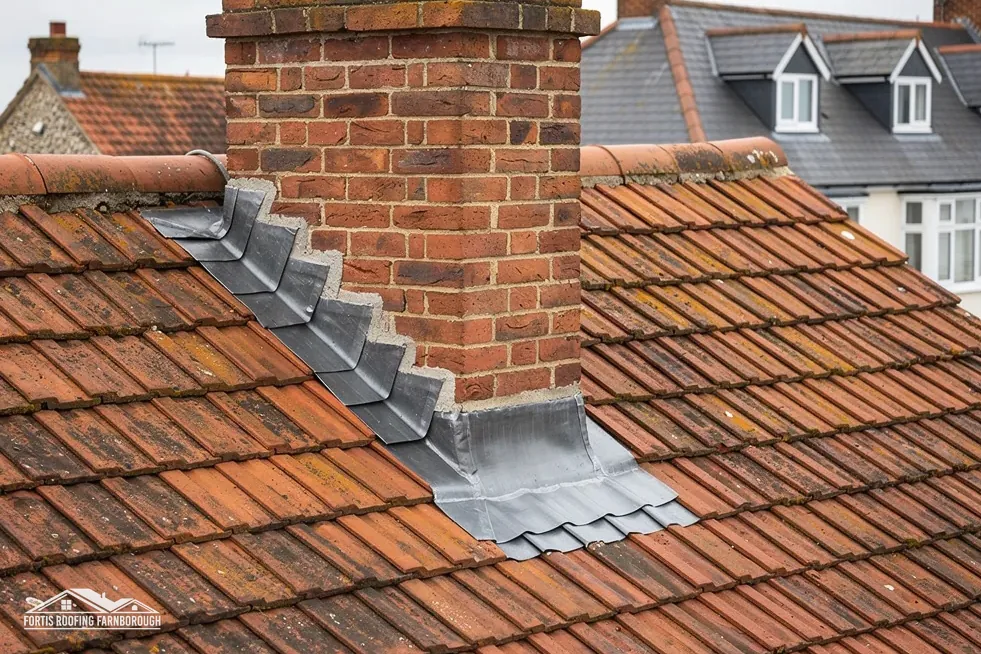
Early houses with plain tiles
The council's appraisal describes early red-brick and timber-framed houses with plain roof tiles around St Peter's.
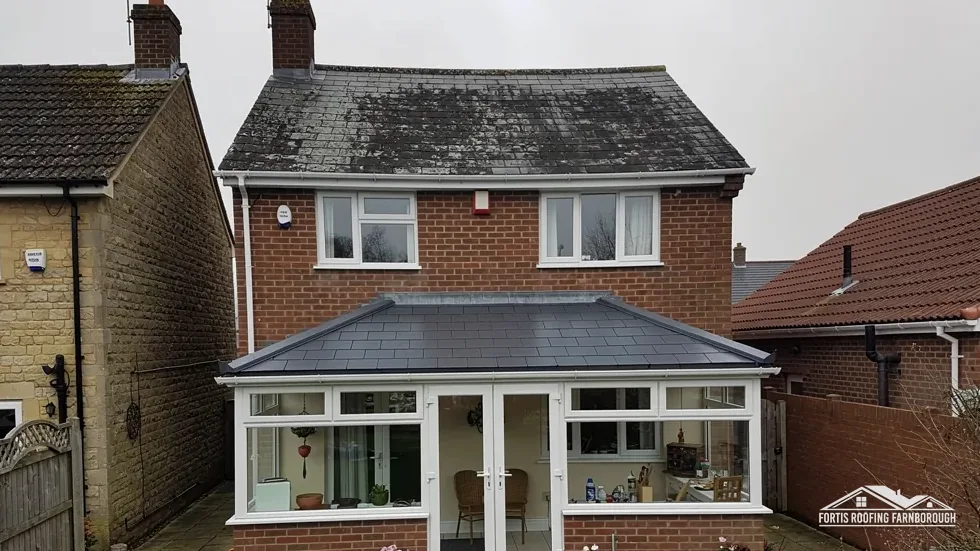
Plain tile and slate roofs round St Peter's Hill and Church Road
Caversham joined Reading in 1911. In the St Peter's conservation area, early red-brick and timber-framed houses with plain tiles stand beside Victorian and Edwardian brick with slate.
The council's appraisal describes early red-brick and timber-framed houses with plain roof tiles around St Peter's.
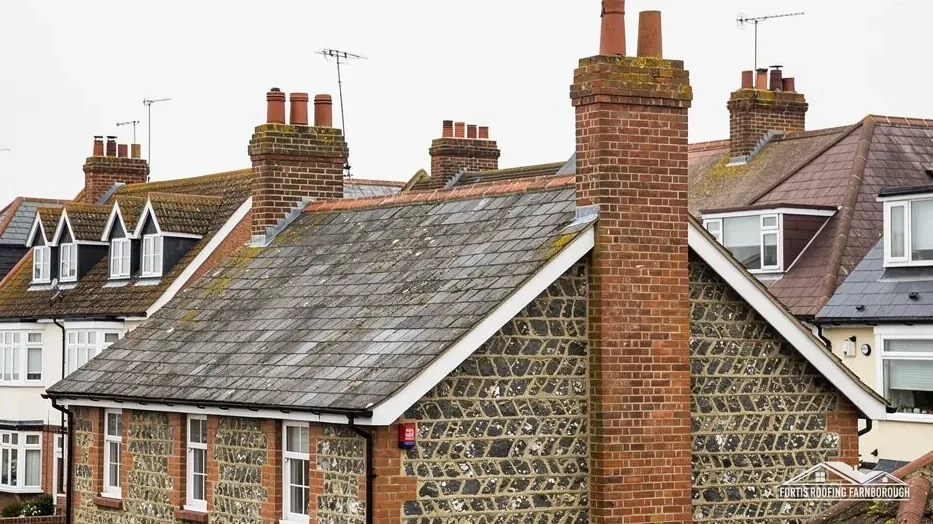
Later Victorian and Edwardian brick buildings in the same conservation area have slate roofs, the appraisal says.
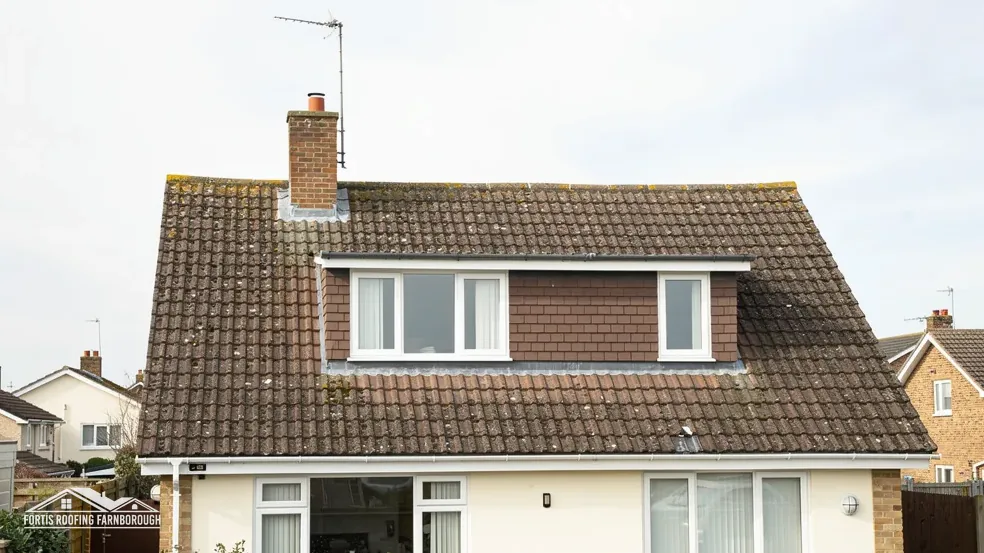
Red brick and flint boundary walls run down St Peter's Hill into Church Road.
Map of Caversham with Reading, Earley, Sonning, Kidmore End marked around it.
Map data © OpenStreetMap contributors. Loads only when you ask for it.
Reading lies to the south, Earley to the south-east, Sonning to the east, Kidmore End to the north, and Tilehurst and Purley on Thames to the west.
About 21.4 road miles north-west of Farnborough · Reading Borough Council (unitary).
Caversham, tile, slate and flint
Which council handles roof work in a Reading suburb, what the council's St Peter's appraisal says about tile, slate and flint, how long those coverings last, and what the church and listed buildings mean for a repair.

| No. | Chapter | The figure it turns on |
|---|---|---|
| 01 | Reading took Caversham in 1911 | 1911, Reading's boundary enlarged |
| 02 | Plain clay tile and Welsh slate on Church Road | Clay tile 60-80 years |
| 03 | St Peter's Church, listed houses and the Baptist church | St Peter's, Grade II*, partly 12th century |
Chapter 01 of 03
| Role | Body for Caversham addresses |
|---|---|
| Council and planning authority | Reading Borough Council (unitary) |
| Building control | Reading Borough Council's own service |
| Boundary change | 1911, urban district of Caversham taken in |
| Scaffold licence on the highway | Licence from the highway authority; ask who applies |
| Roof-related Article 4 direction | Check with Reading Borough Council |
Reading Borough Council is a unitary authority, and the county history of Berkshire records that in 1911 the borough's boundaries were enlarged to take in the urban district of Caversham. Planning, building control and the roads are therefore all questions for Reading. The council runs its own building control service. A clear file helps either body: photographs of each slope, a sketch of the roof with areas marked, and a short note of the work proposed. Caversham lies 21.4 road miles north-west of Farnborough, measured from the A325, and 15.2 miles in a straight line, on the Thames's north bank.
A re-cover on a Caversham house goes either to Reading's service or to a registered building control approver, a private business on the national register, a regime in force since 6 April 2024. Both look first at the Planning Portal's test. A re-roof affecting under 25 per cent of the building envelope and under 50 per cent of the roof does not normally call for an application, so refixing tiles, renewing a valley or re-bedding a ridge are comfortably inside it. A full strip and re-cover is not.
The measurement is the thing to have ready. We work out the area of each slope, record what share of the whole roof a repair covers, and put those figures in the report, so an enquiry to either body is answered with numbers instead of descriptions. Where a house has a main roof and a bay or an extension, each is measured on its own.
The Highways Act 1980, section 169, bars scaffolding that obstructs the highway unless the highway authority has licensed it. The pavement or carriageway outside a terraced Caversham house is that kind of ground. We ask Reading's team who lodges the application, put the reply in your paperwork, and set the start date so that the notice period is covered. Scaffolding standing entirely on private land needs no such licence, and the report states which case holds, with a sketch showing where the tower and the base boards would go.
Deliveries and skips follow the same logic, and the plan for each day goes to you in advance.
Chapter 03 of 03
| Designation | In Caversham | For roof work |
|---|---|---|
| Conservation area | St Peter's | Changes to the look checked with Reading |
| Grade II* listed church | Church of St Peter (list entry 1303560) | Denomination and use decide the consent route |
| Grade II listed | 1 to 5 Church Road (list entry 1113442) | Listed building consent for works affecting character |
| Grade II listed | 10 Church Street (list entry 1248745) | Listed building consent for works affecting character |
| Grade II listed church | Caversham Baptist Free Church (list entry 1113562) | Own denominational route likely; ask first |
Historic England lists St Peter's Church, on Church Road, at Grade II*, first listed on 22 March 1957. Reading's appraisal says it dates in part from the 12th century and was constructed in flint with stone dressings, under an old tile roof. A building of that age and listing is not a candidate for a quick repair: its roof work is controlled by whichever system governs the church, and we would ask that body, not guess, before giving any roof price.
Caversham Baptist Free Church is listed Grade II, and mapping data records it as a Baptist place of worship. The ecclesiastical exemption takes churches of some denominations in use, among them the Church of England, Roman Catholic, Methodist, United Reformed and certain Baptist churches, out of listed building consent and into their own approval systems. Other buildings use listed building consent. We ask which applies before any roof work on the church is priced, and the answer goes to you in writing.
Numbers 1 to 5 Church Road and 10 Church Street are each Grade II. Where a change would reach the listed fabric, listed building consent is the route, and Reading decides what that means for a roof. Our planning permission guide sets out how the planning routes connect.
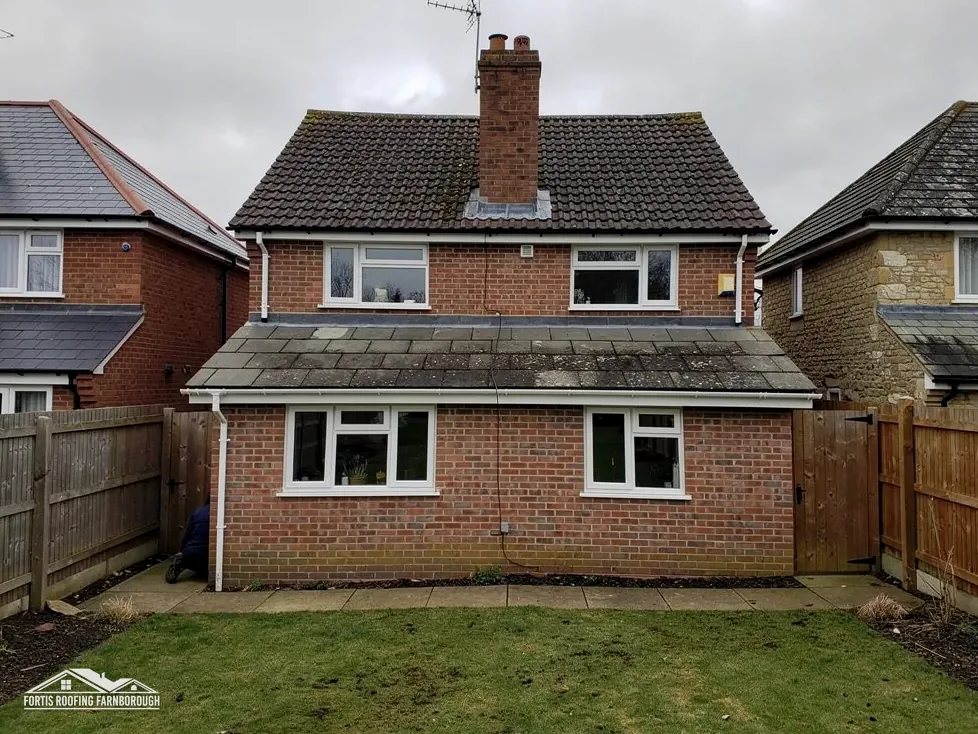
Caversham's mix of flint, brick and tile also shows in its chimneys. Brick stacks carry flaunching and flashings that fail before the brick does, and our chimney repairs page explains how they are renewed. Where the survey finds that a repair would touch a boundary wall in flint, we flag it separately, since walls and roofs may have different consent routes and different owners.
St Peter's in two dates
The conservation area adds a second layer. Reading's appraisal describes the area's roofs as plain tile and slate, so a repair that keeps the covering, the pitch and the chimneys needs the least discussion. A change of material or a new roof window on a street-facing slope is the kind of work to put to the council before a price is fixed. We photograph the street elevation square on and record the ridge, the verge and the stacks, so any proposal can be compared with the roof as it is.
Plain tiles are small, so a slope holds many fixings, and the nails or pegs often fail before the clay does. The St Peter's appraisal describes early houses with plain roof tiles. We lift a few on each slope, photograph the battens and nails, and say whether refixing will do or the slope needs more.
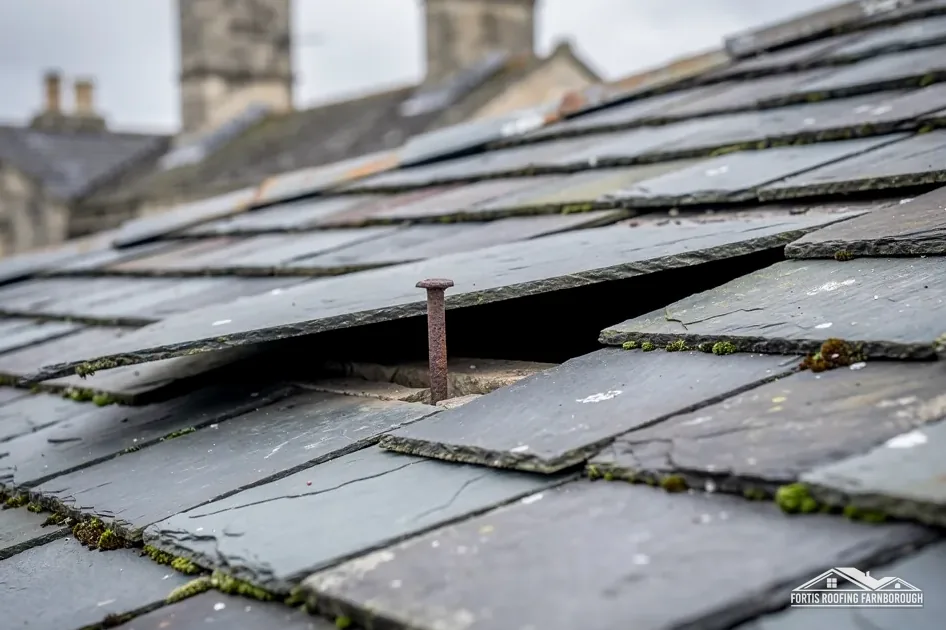
A slipped slate can be a single failure or a sign that nails across the slope are rusting, because slate often outlasts its fixings. We check several slates, record the battens beneath, and report which it is. A small repair is sensible when the evidence says so, and a re-cover only when it does not.
It depends on the denomination's own system. Caversham Baptist Free Church is listed Grade II, and mapping data records it as Baptist. Some denominations approve changes to buildings in use through their own process, while others use listed building consent. The right route is confirmed before any roof work on it is priced.
No. The national dataset records St Peter's as the conservation area for this part of Caversham, and Reading Borough Council holds the boundary. The appraisal places it around Church Road and St Peter's Hill, the old village core. We ask the council to confirm whether yours is inside, and hold any price for a visible change to the roof until it replies.
Get your free roof quote
Name your Caversham road and the roof fault, and we will propose dates.
10-year workmanship guarantee, in writing.