Jesus Hospital's tiled roofs
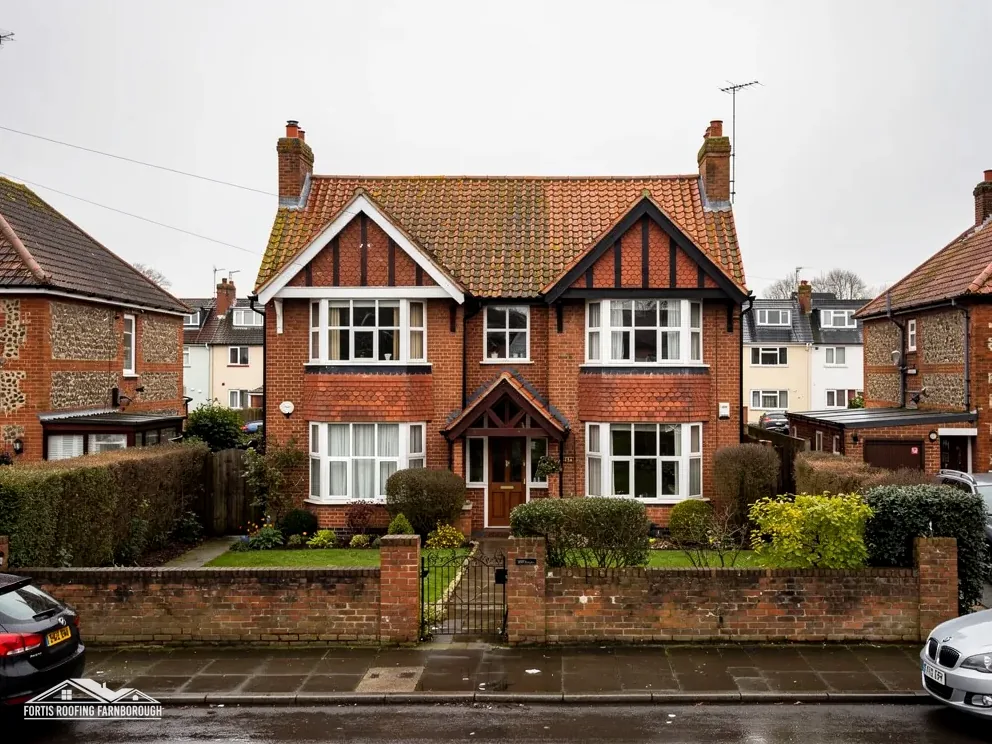
Jesus Hospital, founded in 1627, has forty almshouses round a quadrangle, built of red brick with tiled roofs.

Roofs round Bray's almshouses, flint-towered church and handmade clay tile
Bray's conservation area appraisal describes handmade orange-red clay tiles, slate on some later buildings and tile-hung houses. We survey every slope and write up what we find.
Jesus Hospital, founded in 1627, has forty almshouses round a quadrangle, built of red brick with tiled roofs.

The appraisal describes handmade orange-red clay tiles in the village's oldest part, with machine-made red tiles and tile-hanging elsewhere.
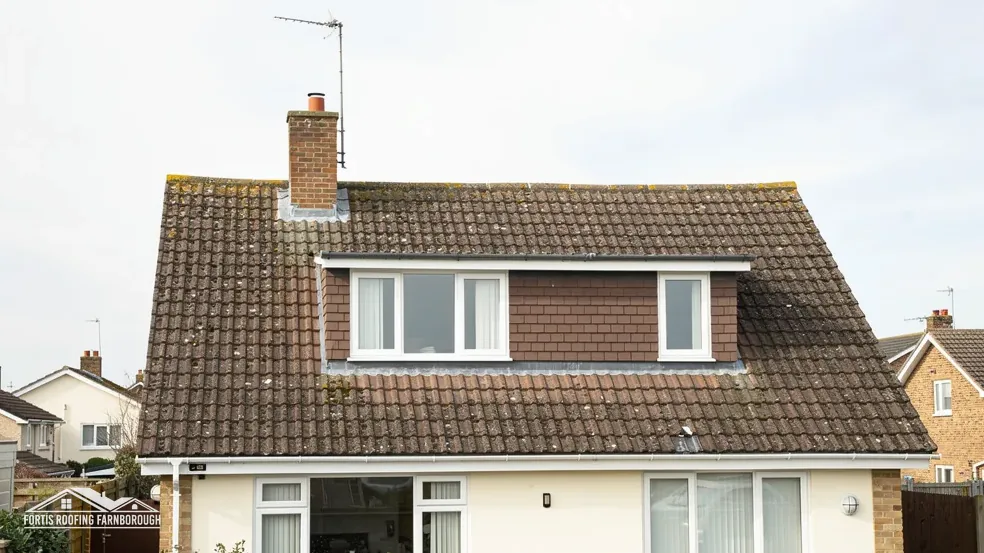
The Crown and the Hind's Head kept half-timber work in 1923, the latter cased with brick.
Map of Bray with Holyport, Maidenhead, Taplow, Dorney marked around it.
Map data © OpenStreetMap contributors. Loads only when you ask for it.
Holyport lies to the south-west, Maidenhead to the north-west, Taplow to the north, Dorney to the east, Cox Green further west, Burnham to the north-east and Eton Wick beyond.
About 19.8 road miles north of Farnborough · Royal Borough of Windsor and Maidenhead (unitary).
Bray, almshouses and clay tile
What RBWM's conservation area appraisal and Article 4 list say about Bray, what the county history records of Jesus Hospital and the village inns, and how long clay, slate, lead and zinc are published to last.

| No. | Chapter | The figure it turns on |
|---|---|---|
| 01 | Jesus Hospital and 26 listed buildings nearby | 26 listed within about 500 m |
| 02 | Handmade clay tile in a village roofscape | Orange-red handmade clay tile, some slate |
| 03 | How long clay, slate, lead and zinc last | Clay 60-80 years, lead flat roof 60-100 |
Chapter 01 of 03
Bray: people, almshouses and listings
Bray is a Thames-side village on the B3028 just off the A308 between Maidenhead and Windsor, on the river floodplain. The 2021 Census counted 9,421 people in the parish. The Royal Borough of Windsor and Maidenhead has no county council above it, so it is the planning authority, the highway authority and the provider of building control for Bray addresses.
RBWM's list of withdrawn permitted development names three areas in Bray parish. Fifield covers land either side of Fifield Lane, for means of enclosure and access and for agricultural buildings. The New Lodge Estate, Drift Road, covers land west of Braywood House for agricultural buildings. The third is the Bray Conservation Area itself, where, for certain defined properties, planning approval is required for most minor development to front elevations.
That last wording is RBWM's own, and it matters for a roof. A front roof slope is part of a front elevation, so a change to a covering, a rooflight or a dormer on a defined property may need approval that would not be needed elsewhere. Which properties are defined is a question for RBWM, and we ask about your address before pricing any change that can be seen from the road.
Jesus Hospital, with its chaplain's house, almshouses and chapel, is listed Grade I. St Michael's church carries a Grade II* listing and Chauntry House Hotel a Grade II one. In all, 26 listed buildings stand within about 500 metres of the village. Listing leaves permitted development rights in place, yet listed building consent is also required wherever work would change a building's character. If St Michael's is in use by the Church of England, its roof work goes through the faculty system rather than listed building consent, and that is confirmed with its custodians first.
In a village where so many buildings are listed, the sequence matters: survey, written method, any consent, then scaffold. Asking first keeps the work on the right side of the consent rules, and the written method shows exactly what is proposed. A survey also records the position of every stack and rainwater pipe, so any consent application describes the whole roofline, not just the slope that leaks.
Scaffold on a Bray road needs permission from RBWM as highway authority, and the question of who applies is settled with the scaffolder before any date is promised. Village lanes near the river can be narrow and subject to events, so we check the road's use as well.
Chapter 02 of 03
| Feature | Record |
|---|---|
| Roofscape | Handmade orange-red clay tiles in the oldest part; machine-made red tiles elsewhere; slate on some 19th and 20th century buildings |
| Houses | Some tile-hung |
| Jesus Hospital | Red brick with stone dressings and tiled roofs |
| The Crown and Hind's Head | Half-timber surviving in 1923; the latter cased with brick |
| Church tower | Flint rubble with chalk dressings |
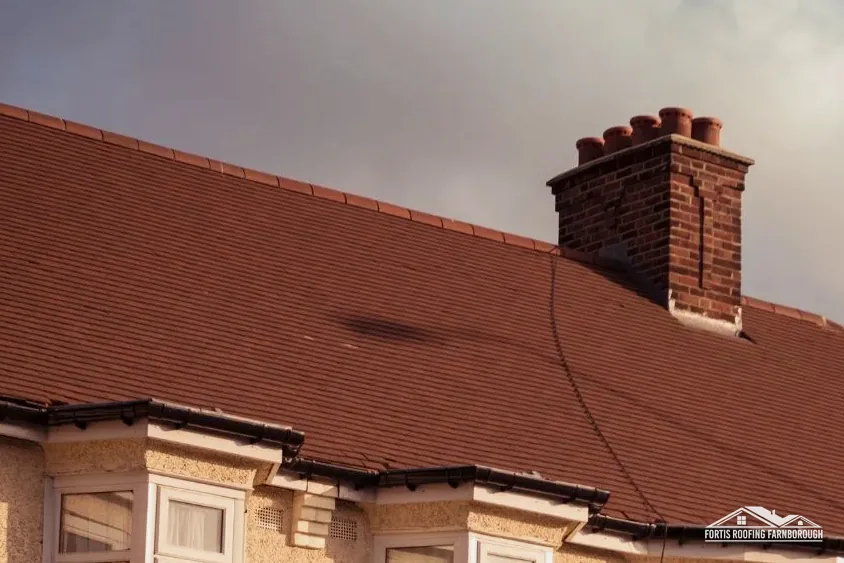
RBWM's Bray Village Conservation Area Appraisal describes handmade orange-red clay tiles in the oldest part of the conservation area and machine-made red tiles in much of another, with slate appearing less often, on some 19th and 20th century buildings, and with some houses tile-hung. The church tower is built of flint rubble with chalk dressings. The county history of 1923 describes Jesus Hospital as having forty almshouses round a large quadrangle, built of red brick with stone dressings and tiled roofs, and records that the village houses were largely modernised by then, with some half-timber work surviving, chiefly the Crown and the Hind's Head inns.
These descriptions belong to the conservation area and its landmarks, not to every Bray roof. They show what a repair in the village has to respect, and they serve as a guide rather than a statement about any particular house. Other parts of the parish, including newer streets, are not described by them at all, and each of those roofs is surveyed on its own evidence.
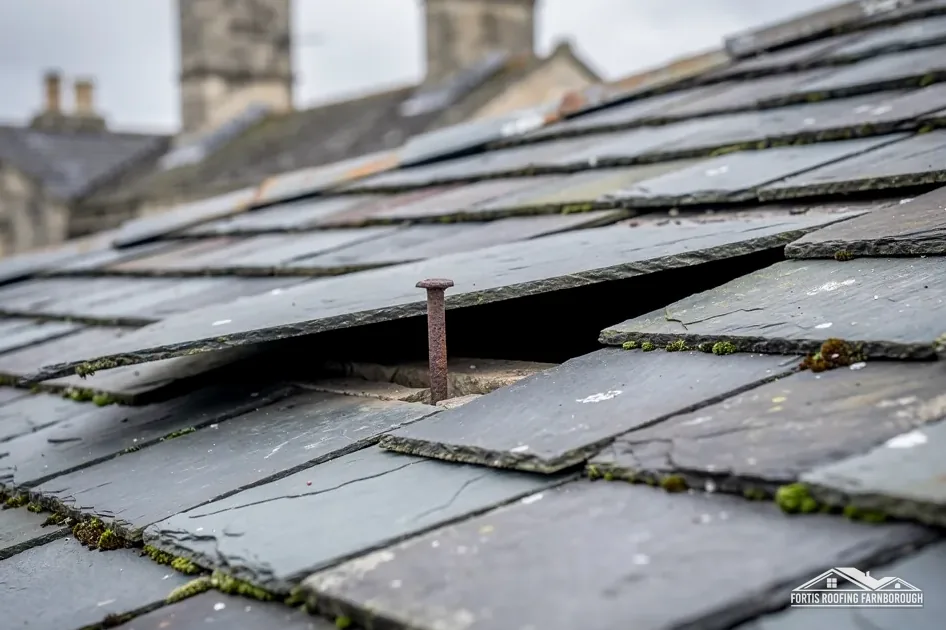
A handmade clay tile is not a uniform product. Each has a slight curve, a different shade and a rough face, and that variation gives an old roof its character. A new machine-made tile beside it looks flat and uniform, and the patch shows for years.
So a Bray repair starts with matching. We photograph the existing tiles, note their size and colour range, and look for reclaimed tiles of the same kind, often from a less visible slope or from a salvage yard. Where new handmade tiles are needed, they are laid among the old in a mix, not in a block, and the plan is drawn on a photograph of the slope so you can see where each goes.
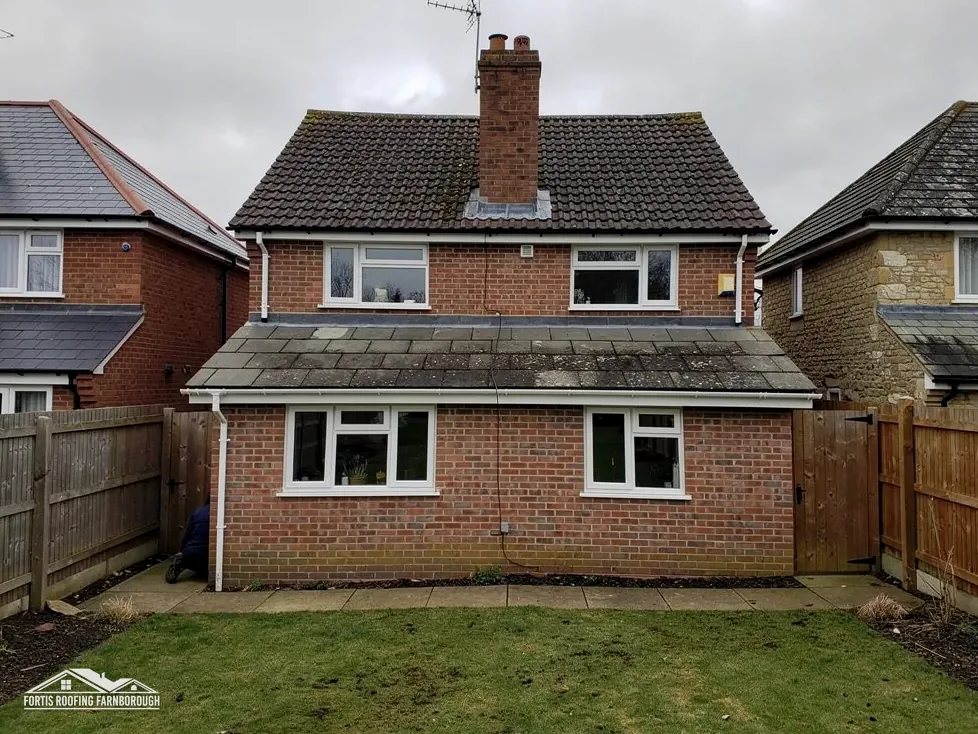
Slate repairs need the same care. Slates differ in thickness, colour and size, and the fixings matter as much as the stone. Tile-hung walls need the right shape, since curved or shaped bottoms make a pattern, and a replacement must follow it.
The pitched roofing page describes tile repairs in detail, and the slate roofing page covers natural slate. A repair in a conservation area is more convincing when it is recorded, so photographs of the roof before and after go in your file, with notes on what was kept and what was replaced. A buyer's surveyor or an insurer can then see the history at a glance.
Possibly. For certain defined properties, RBWM says planning approval is required for most minor development to front elevations. Whether yours is defined is for RBWM to confirm, so we ask before pricing any change to a front slope, and keep the council's reply with your survey photographs and the written price.
Often, yes. We measure the existing tiles, note their colour range and look for reclaimed tiles of the same kind, then lay replacements among the old so the roof does not look patched. The survey photographs show what has slipped and what is sound, and the written price covers only the tiles that need to change.
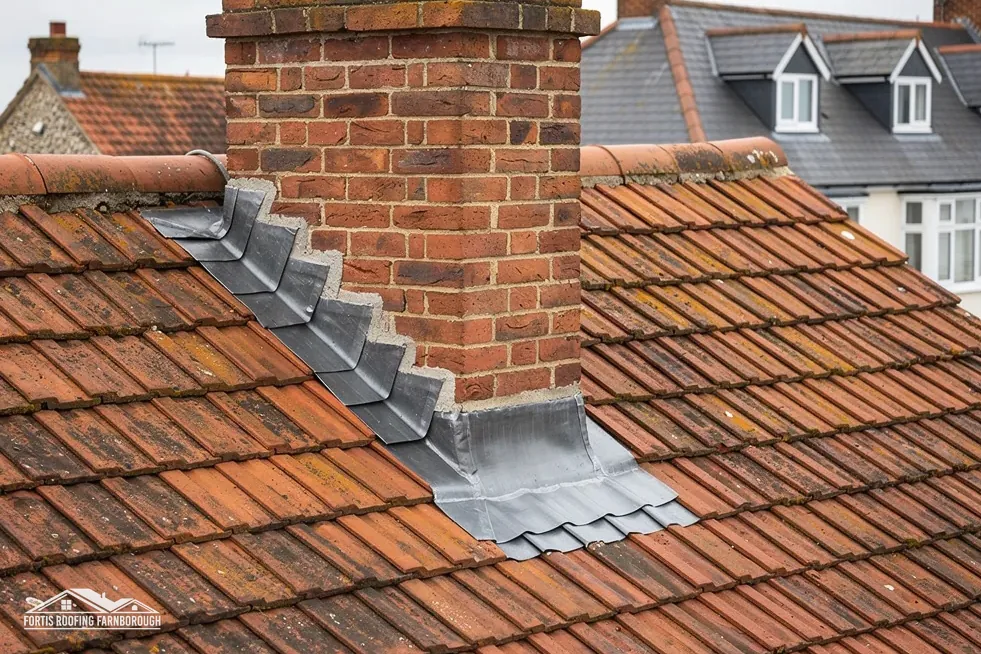
MyJobQuote puts lead flashing at over 80 years, and HomeBuilding gives a lead flat roof 60 to 100. Both are lower or typical figures, not promises. Flashings split at folds and lift at fixings, so we photograph each one and renew only those that have failed, leaving sound lead alone.
Yes. RBWM's page says permission is necessary for scaffolding on the highway and can be obtained from the council. It names no applicant and no fee, so we settle with the scaffolder who applies and confirm the licence in writing before a date is given, so nothing goes up unlicensed, and the licence is kept on file.
Get your free roof quote
Give your Bray address and the problem, and we will check the conservation area and photograph each slope.
10-year workmanship guarantee, in writing.