The short answer
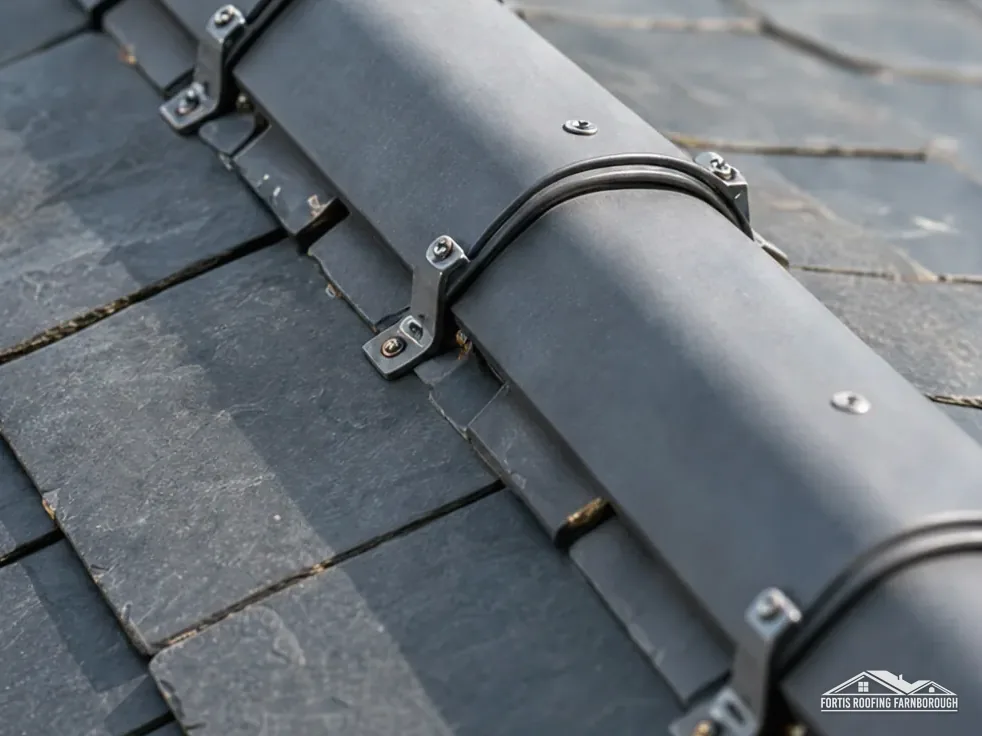
A tingle is a short band of copper or lead that anchors a replacement slate where no nail can be driven from above. One end is fixed to the batten, and the other is turned up and over the slate's lower edge. A tingle or two is a normal repair, but a slope studded with them often signals failing nails.
Why a replacement slate needs one
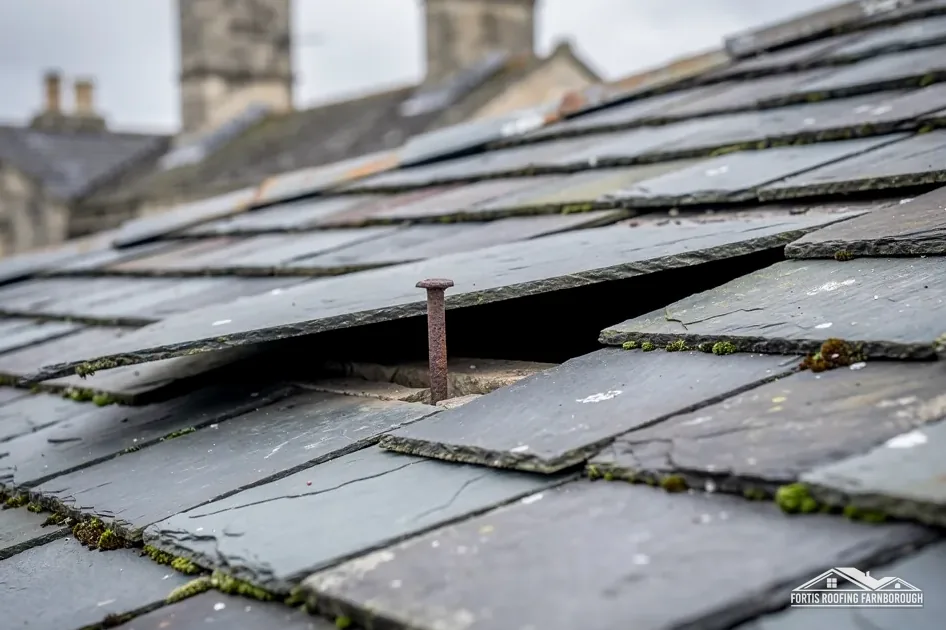
Slates are nailed near their heads, and the next course up then covers those nails completely. That is a good design for keeping water out, and a poor one for repairs. When one slate fails, a roofer cannot put a nail through its replacement without lifting the slates above and disturbing sound ones.
The tingle gets round that. After the old nail is cut and the broken slate is drawn out, the new slate is slid up into position. A strip of metal then does the work of the missing nail. Its lower end is nailed to the batten, passed through a joint in the row beneath, and its upper end is dressed over the new slate's tail, pressing it against the roof.
The method leaves the surrounding slates alone, costs little in materials and takes minutes. That is why it is so common, and why many roofs that have had repairs carry a few small metal tabs.
The hold is at the tail of the slate, rather than at its head. That is a different hold from a nailed slate, and it is sound for a single slate in sound surroundings.
A slate can need replacing after an impact, foot traffic or a failed nail.
Copper, lead and other options
Copper is the traditional material. It folds easily, does not rust and lasts. Lead is the other regular choice. It dresses even closer to the slate, and MyJobQuote reckons lead flashing "can last for over 80 years". Roofers usually follow whatever metal is already on the roof, so that two metals do not sit side by side and corrode.
Another repair fixing is the slate hook, a stainless clip that supports the slate's lower edge. It is neat and leaves the slate unpierced, but Cupa advises against them on pitches under 25 degrees, which makes the tingle the safer choice on a shallow roof. Our answer on the minimum pitch for slate gives the pitch figures.
Size and shape matter. A strip that is too thin tears in a gale, and one with a sharp fold can cut into the slate. A good tingle is folded in a smooth curve and pressed flat, so it hugs the slate and does not catch the wind or collect water.
Looks are a minor trade-off. Copper darkens and lead turns grey, so one tingle hardly shows from the road, whereas a long row stands out.
Fine in moderation, a warning in quantity
For an isolated fault, a tingle is a sound, lasting repair. A slate broken by a falling branch, cracked by a ladder foot or knocked loose in a storm can be replaced this way, and the repair can last for years if the rest of the roof is healthy.
A different picture emerges when tingles are everywhere. A slope with dozens of them has been repaired again and again, and the likeliest reason is nail sickness, where iron nails have rusted away across the whole area. Each tingle patches one slate while its neighbours slip on the same tired nails. Our guide to nail sickness explains how the fault spreads.
Tingles carry a limit of their own. Each depends on one nail and a bent strip. On a very exposed spot, or with a large heavy slate, the fixing can be weaker than the original. They suit repairs and are no way to rebuild a roof.
Warning signs include rows of tabs, slates out of line, rust staining under the courses and a new slip right beside an old repair. A roof showing these needs a survey and not another tingle.
As a guide to cost, MyJobQuote (Oct 2026) says replacing five roof tiles averages around £215, although a slate repair is its own job.
How we decide on a slate repair
Our survey counts the tingles in view and lifts a few slates to inspect the nails behind them, with photographs of each. If the nails are sound and the tingles few, the answer is a repair. If nails are rusting right across a slope, the answer leans toward re-slating, as our guide to re-slating a roof explains.
For a single slate the work is quick. The replacement is chosen to match in size, thickness and colour, a copper or lead tingle holds it, and nearby slates are tested for looseness so a second visit is not needed.
Getting to the slate is what costs most on a small job. A low position may be reached by roof ladder, but a high one, or one over a pavement or lean-to, may need a tower or scaffold.
If rain is coming in, the opening is covered first and the replacement slate follows. A single slate deserves a single-slate repair, and a re-roof is for when the evidence calls for it.
The survey ends with one written total. See slate roofing for the wider service.