The short answer
Both lead and zinc are long-lived metals for roofs. HomeBuilding (Sep 2025) gives lead on a flat roof 60 to 100 years, and VMZinc quotes the BRE Environmental Product Declaration as stating 100 years for zinc. Lead is soft, heavy and easy to shape around detail, so it is the usual metal for flashings. Zinc is lighter and is used more as a covering across larger areas.
What the published lifespans say
Two sources are useful here, and they are not measuring the same thing.
For lead, HomeBuilding & Renovating (Sep 2025) lists "60-100 years" as a typical life when the metal is the covering of a flat roof. MyJobQuote (Sept 2026) puts lead flashing at "over 80 years", which is a lower bound for a flashing, not a range for a roof.
For zinc, VMZinc's FAQ page states: "The BRE Environmental Product Declaration states 100 years." The page belongs to a zinc manufacturer, so treat it as the maker's published position and not as a survey of zinc roofs already in place.
Read together, the two metals sit in the same band of very long life. Neither figure is a promise, and neither is a warranty. A warranty comes from whoever fitted the work, in writing, and is a separate document from any lifespan.
In practice, how a roof is detailed and fixed has more influence over its life than the metal choice. A badly fixed lead roof or a badly drained zinc roof will fail earlier than either number suggests, and a well-detailed one gives the metal its best chance. This is why the survey looks at falls, fixings and drainage as closely as at the metal.
Weight, softness and shaping
Lead is the denser metal and the softer one. Royston's brochure puts Code 4 sheet at 20.41 kg per square metre and Code 8 at 40.26 kg, which is substantial for a roof. That weight is what lets lead lie flat and stay put, and it is why a deck under a lead roof needs to be sound.
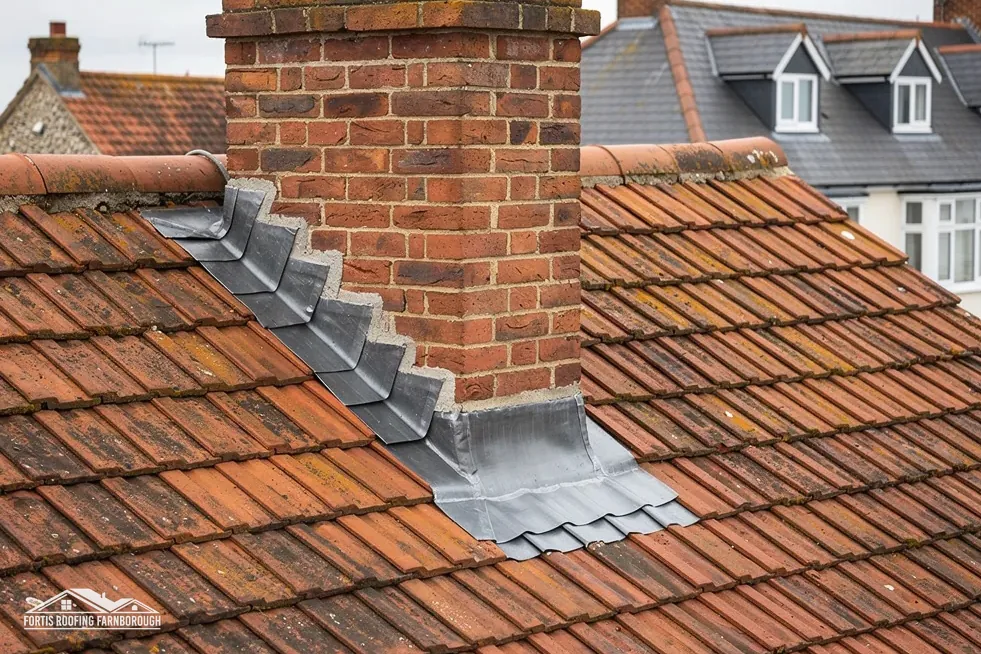
Softness is lead's other great quality. It can be hammered and dressed into awkward corners, around chimneys and over timber rolls, and it holds the shape it is given. That is why flashings, soakers and valley gutters are lead jobs.
Zinc is lighter and stiffer. It is formed into sheets or panels with seams, and these are usually made in a workshop or on site to a drawn pattern, not dressed by hand around each brick. It suits plain, regular shapes well and is less forgiving of improvisation on an awkward detail.
For any given roof, weight matters in a practical way: a lighter covering puts less load on the timbers, and a heavier one needs them to be in good order. Our page on how thick roofing lead is has the full weight table.
Look and weathering
Both metals change colour after fixing. New lead is bright and quickly dulls to a soft grey, and zinc also settles to a grey finish. In both cases the surface you first see is not the one you will live with, so a sample against the old work tells you more than a catalogue photograph. Ask to see a weathered piece of each metal beside any existing lead or zinc on your building.
That matters on listed and conservation-area buildings, where the appearance of the metal is part of the consent. Lead has a long record on older buildings, and matching what is there is often what the consent process looks for. Our page on lead on listed buildings explains the route.
Zinc suits modern designs, and its seams give a crisp, straight-lined look to a new extension or a rear addition. Where an extension is joined to an old house in lead, the junction between the two metals needs thought, since the detail where they meet has to shed water without trapping it.
None of this is a matter of one metal being better. It is a matter of what the building is, what is already on it and what the owner wants it to look like in ten years.
Where each is used and how to decide
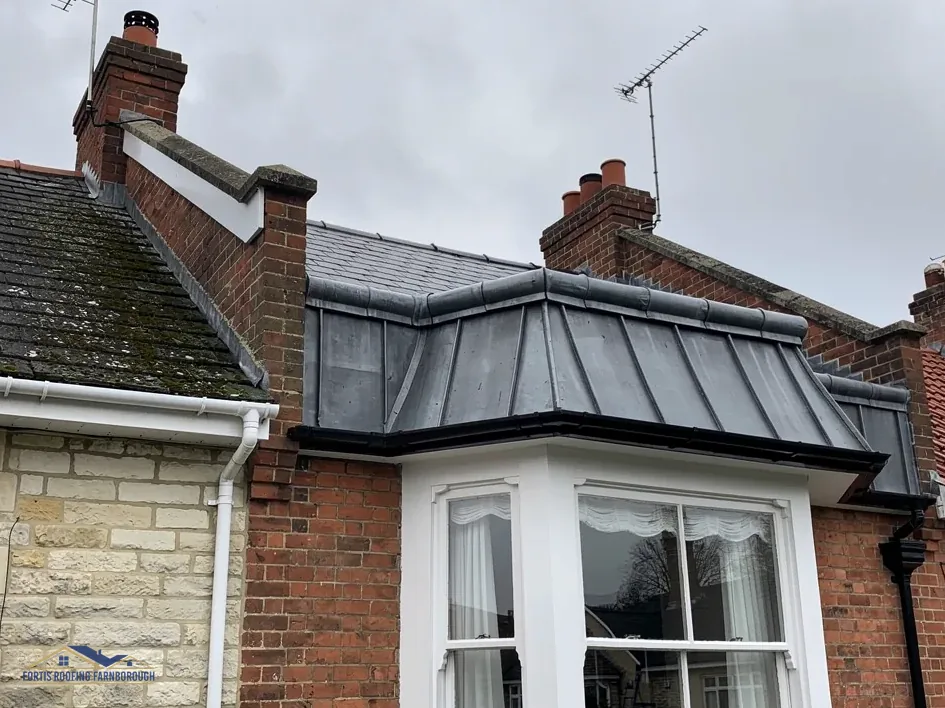
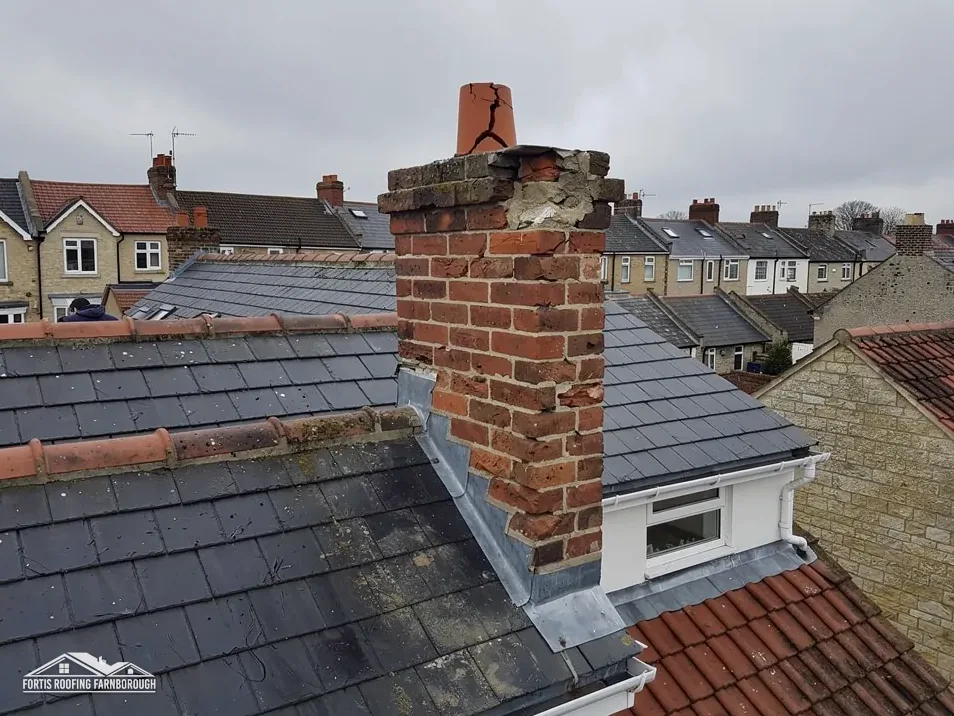
Where a pitched roof in Farnborough or the towns around it needs metal at its joints, lead is the usual answer: chimney flashings, valleys, dormer cheeks, bay roofs and porch coverings. Those details are small and awkward, and soft sheet is the material that suits them.
Zinc can serve as the whole covering on a flat or shallow roof, a dormer or an extension, and is chosen where a clean, modern look is wanted over a plain shape.
When we are asked to compare them, the survey comes first. We look at the roof, its age, its neighbours, its structure and the detail to be done. We then tell you which we would recommend, show the photographs behind that view and give a single written total, so the choice rests on your actual roof and not on a brochure.
If your roof has lead on it already, the likely choice is to keep to lead. Our lead flashing alternatives page covers what other materials can do at the same junctions, and the lead roofing hub sets out how our leadwork is organised.