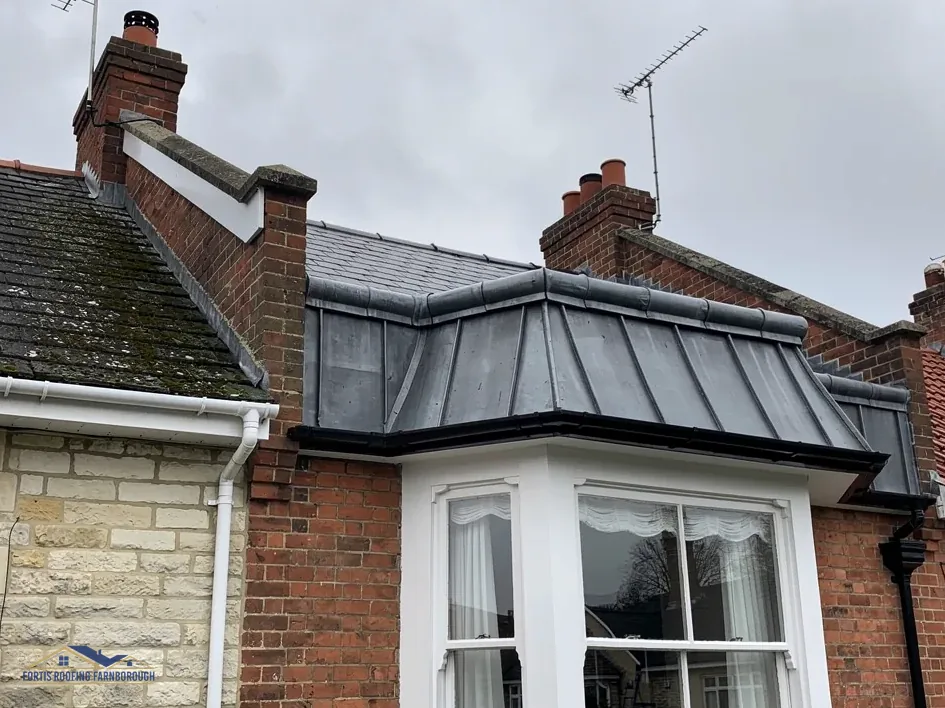
Lead roofing suits listed and period buildings because it is what many of them were built with. Sheet lead covers flat roofs, valleys, parapet gutters, bay roofs and flashings on houses, chapels, halls and churches across the area, and it ages into a soft grey that blends with old stone and brick. On a protected building, replacing it with something else can change the character that the protection is there to keep.
The law adds a layer to the work that an ordinary house does not have. A listed house keeps its usual permitted development rights, yet it also needs listed building consent for work that touches what makes it special, a separate approval from the council. Conservation areas and Article 4 directions can restrict work further. Churches follow different systems altogether, depending on the denomination, and scheduled monuments need their own consent. Starting before the right approval is in place can mean undoing finished work.
This guide explains how consent works for lead roof repairs and replacements, why like-for-like repair is usually the safest route, how conservation areas and Article 4 directions fit in, what applies to church roofs and scheduled monuments, and what the survey and application need. Treat it as a general guide: the council, or the church body for your building, has the last word.
Listed building consent and lead
Listing protects a whole building, inside and out, and its roof is part of it. Under section 7 of the Planning (Listed Buildings and Conservation Areas) Act 1990, any work that alters the special interest of a listed building needs listed building consent.
What that means for lead
Whether a lead job needs consent depends on what changes. Repairing a flashing with matching lead in the same way is normally a repair that leaves the character alone. Renewing a whole lead roof in a different code, with a different pattern of rolls or in another metal, alters the historic material, so the council's heritage specialist will want to see the proposal. Putting a different material on a roof that has always had lead is the clearest case where consent is needed.
Permitted development as well
A listed house keeps the permitted development rights that the General Permitted Development Order gives to dwellinghouses, including those for roof alterations. Those rights do not remove the need for listed building consent. A house in a conservation area, or under an Article 4 direction, may have rights removed. The two systems run side by side, and a job can need both.
The sensible first step
Put the question to the council's conservation officer before any work starts, and file the answer. The survey photographs the existing lead, notes its code where it can, measures the roof and describes the proposed work, so the question goes in complete. Until the route is clear, nothing is priced or started.
Our answer on repairing or replacing old leadwork looks at how that decision is made.
Like-for-like repair: why it is the safe route
On a protected building, the aim of any repair is to leave the roof as it was in material, pattern and appearance, so that the character is untouched. That is what like-for-like repair means, and it is the route least likely to need an application.
What like for like involves
- Same material: lead replaced with lead, not zinc or a bitumen strip.
- Same pattern: rolls, drips and laps put back as the original was laid, not changed to suit a new fashion.
- Same position and detail: flashings set into the same chases, valleys in the same lines.
- Compatible fixings: lead, copper or stainless fixings, avoiding metals that corrode lead or the stone.
Where the lead code comes in
Lead sheet comes in codes of different thickness. Code 4 is 1.80 mm and Code 5 is 2.24 mm. A replacement is usually matched to the thickness of the original, or to a code that suits the position, and the choice is recorded. Where the original was a lighter code than we would specify today, a heavier one may be sensible, so put the idea to the conservation officer before anything is ordered.
Why repair beats replacement
Lead can last for decades, and old lead that has weathered well has its own value. HomeBuilding gives lead on a flat roof 60-100 years, and MyJobQuote's lead guide puts flashing at over 80 years, a lower bound. A repair that keeps sound old lead respects the building and avoids a bigger consent question.
Our guide to lead flashing repair describes the repairs that keep existing lead working.
Conservation areas and Article 4 on lead work
A conservation area is a place whose character the council has chosen to protect. It counts as article 2(3) land in the permitted development rules, so some rights, such as those for dormers, do not apply. Lead repairs in a conservation area are not usually a problem if they match, but the rules around the building tighten.
Local examples with roof detail
Rushmoor has nine conservation areas, and two of its Article 4 directions touch roofs: Cargate in Aldershot, which reaches chimneys and flues, and Wellesley, which reaches aerials on a front slope. Neither names lead, though chimney work often involves lead flashings. Hart's 1998 directions reach the front roof slopes and the chimneys in the bulk of its conservation areas. Guildford's own page says a chimney needs permission to be removed or changed wherever one of its directions applies. In four town-centre areas, Basingstoke and Deane's directions put any alteration to a roof under planning control, and the original slate and clay must stay.
Everywhere else
Elsewhere, the council alone can say whether a direction covers your address, and a neighbour's roof is no guide to what is allowed.
Trees and other points
Conservation areas also bring notice requirements for work to trees. In Rushmoor the notice is six weeks, for any tree whose stem measures 75 millimetres or more at 1.5 metres. A scaffold or access route that needs a branch moved may therefore need that notice.
The lead roofing page sets out the period roof work we take on.
Church roofs and the ecclesiastical exemption
Churches are a special case: which route applies turns on the denomination and on current use, and owners are often caught out.
The exemption
Section 60 of the 1990 Act sets aside the usual listed building controls for an ecclesiastical building that is in use for ecclesiastical purposes. The Ecclesiastical Exemption (Listed Buildings and Conservation Areas) (England) Order 2010 limits the exemption to certain denominations. Guidance from the Department for Culture, Media and Sport adds that no other faiths or denominations currently benefit.
| Building | Route |
|---|---|
| Church of England church in use | Faculty system |
| Roman Catholic, Methodist, URC, Schedule 1 Baptist | The denomination's own system |
| Unitarian, Quaker and other buildings | Listed building consent |
| Closed church, or Churches Conservation Trust building | Listed building consent |
| Scheduled monument | Scheduled monument consent |
Local example
In Farnborough, St Michael's Abbey is a Benedictine monastery, which makes it Roman Catholic. Roof work on its church, while in use, follows the Catholic Church's own approvals in place of council listed building consent, and the owner confirms the route.
Scheduled monuments
A scheduled monument needs scheduled monument consent for works, and carrying them out without it is an offence under section 2 of the Ancient Monuments and Archaeological Areas Act 1979, unless the works are authorised.
On a church roof, the first question is which route applies.
What the survey and the application need
Whichever route applies, the approval body will want to see what exists and what is proposed. A good survey supplies most of it.
On the roof
We record the extent of the lead, its condition and any splits, lifts or past repairs, and photograph each area. We note the pattern of rolls, drips and laps, the flashings and their chases, the gutters and the outlets. Where it is safe, we measure the thickness of the lead or note its apparent code. We look at the deck beneath from inside where we can.
What goes in an application
- Photographs of the existing roof, with the faults marked.
- A description of the proposed work: repair, replacement of lengths or a whole re-cover.
- The lead code and the pattern of rolls and drips proposed.
- A statement of why repair is not enough, where replacement is proposed.
- Any structural or condition report on the deck and timbers.
Timing and access
Consent takes time, and scaffold takes notice. Scaffold over a pavement or road falls under Highways Act 1980 section 169, with a licence and notice. We build the consent period into the programme, and we tell you what to expect.
Standards and building control
The lead work itself follows BS 6915, and the Building Regulations still apply to a renewed roof where the test is met. Listed status does not remove them. Our lead sheet thickness answer covers the codes and how they are chosen.
One written total follows, naming the route, the lead and the access.
Matching old lead and avoiding common mistakes
Where an old lead roof is being repaired, a few habits keep the work in character and out of trouble.
Matching the old work
New lead is bright and weathers over months to match the old. Where a section is replaced, the join should be lapped and dressed so that the pattern runs on. Patination oil, an application that speeds the formation of a grey surface, is sometimes used to reduce the contrast, and it can help where appearance matters. A conservation officer can say whether a treatment is acceptable.
Mistakes to avoid
- Sealant over lead: it hides failures, cracks and spoils the surface, and it is not a lead repair.
- Substituting materials: bitumen strips and other lead-free flashings are not like for like, and may need consent on a listed building.
- Starting before consent: works to a listed building without consent can be an offence, and the cost of reversing them falls on the owner.
- Hiding a fault: covering a roof with new material without finding the cause leaves the cause in place.
Looking after it
Check the roof from the ground after storms, keep gutters and outlets clear and keep records of work done and approvals given. A file of photographs, consents and specifications is useful to the next owner and to the council.
Getting started
Send photographs and the address, and say whether the building is listed, in a conservation area or in use as a church. We will tell you what we need to survey it and which approval we think applies, then confirm it with the council or the relevant body.
The aim is to keep the lead that is sound, replace only what has failed and leave the building as it was.