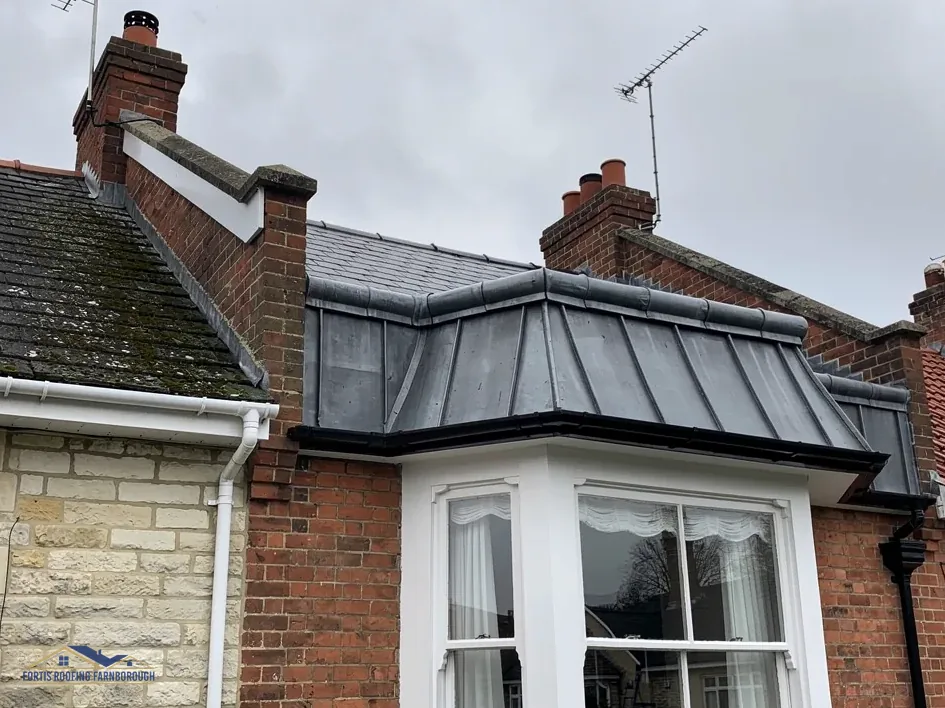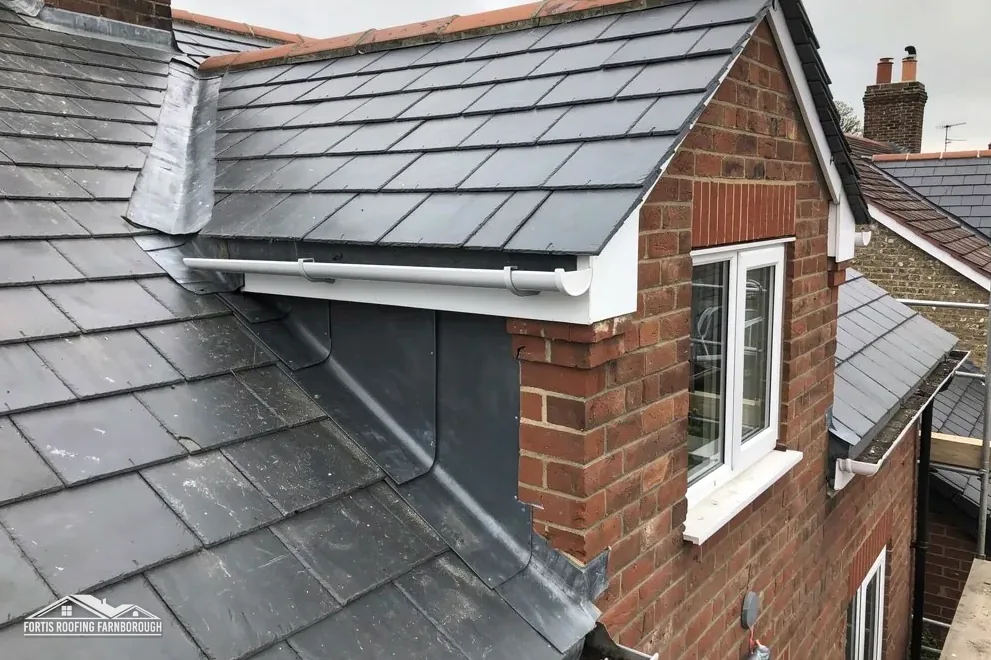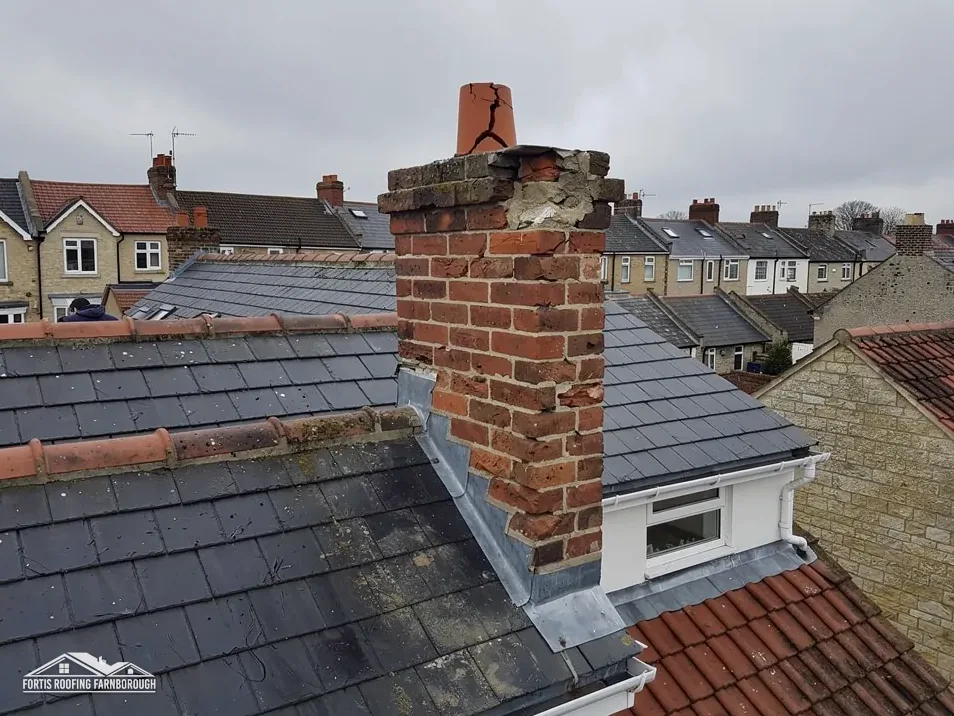
Flashing is the strip of metal or other sheet that seals the join between a roof and a wall, a chimney or a dormer. Lead has been the usual material for centuries because it is soft enough to dress into any shape, lasts a very long time and does not rust. Some homeowners ask about alternatives, for reasons that range from the appearance of new lead to worries about theft, so it is fair to ask what else will do the job.
The honest answer is that several materials can seal a joint, and each trades something. Zinc and aluminium are harder to shape. Bitumen-based strips are quick to fit but depend on how well they stick. Lead costs a good deal as a material, yet is the easiest to work into the awkward details that make up most real roofs. None of these choices is a sales matter. The best flashing is the one that suits the position, the building and how long you want it to last.
This guide sets out how lead compares with the main alternatives on life, appearance, workability and theft, where an alternative suits and where lead is the sounder choice, and what to ask a roofer who proposes one. It does not push the dearest material, and it does not treat the lowest price as a saving.
What flashing has to do
Whatever material is used, flashing has the same task. It must shed water away from a vulnerable joint for the whole life of the roof, and it must keep doing so as the building and the weather move it.
The demands on a flashing
- Watertightness: a lap or fold that rain cannot get behind, even when driven by wind.
- Movement: metals expand and contract with temperature, and a flashing must allow for that without splitting.
- Fixing: the top edge is set into the wall and held, and the bottom edge sits on the roof covering.
- Shape: chimneys, valleys and dormer cheeks all need bends and folds.
- Weathering: sun, frost, rain and pollution all age the surface.
How lead meets those demands
Lead is heavy, soft and ductile, so it can be dressed, folded and stretched into place with hand tools. It lies tight to a surface, so it resists wind lift. It forms a stable grey coating of oxide, which protects it. According to MyJobQuote's leadwork guide, lead flashing lasts over 80 years, and that figure is a lower bound. That life depends on the correct code, fixing and detail.
Where the alternatives come in
Alternatives replace some of those strengths with others. They may weigh less, cost less to buy, look different or resist theft. In return, some are harder to shape, some rely on adhesives and some age differently. Our guide to lead flashing repair shows how traditional lead is mended, which is the benchmark for comparison.
Zinc and aluminium: harder metals
Zinc and aluminium are the two metals most often suggested in place of lead. Each has a good record in its own right, and each suits some details better than others.
Zinc
Zinc forms a protective surface layer and lasts a long time. The maker VM Zinc states that its environmental product declaration, which rests on the BRE method, gives a life of 100 years. That figure comes from a manufacturer, so it should be read as a maker's claim and a typical range, not a promise. Zinc is stiffer than lead, so it is harder to dress tightly into small angles, and it needs fixings and joints that let it move. It is widely used on roofs and cladding, and it suits long straight runs better than awkward shapes.
Aluminium
Aluminium is light and does not corrode in the usual way, and it can be supplied pre-coloured. It is springy, so it is harder to dress than lead, and it can crease if it is bent too often. It also expands more than some metals, so joints must allow for movement. It works for straight flashings and trims more than for the folds of a chimney or a dormer.
What both mean in practice
Both can seal a joint well when the detail is right. Both depend on the roofer's skill with shaped details, and on fixings that allow movement. Both look different from lead: zinc weathers to a grey, and aluminium keeps its finish.
Our answer on lead against zinc for a roof compares the two as roof coverings as well.
Bitumen-based and other lead-free flashings
Beyond metals, there is a range of lead-free flashing products, often sold as an easier, lighter or lower-cost alternative. They behave very differently from sheet metal, and their weak points differ too.
Self-adhesive and bitumen strips
These are flexible strips that stick to the wall and the roof and mould to the shape. They are quick to fit and need less skill than lead. Their performance depends on the adhesive, the preparation of the surface and the exposed edge, which can lift and crack in sun and frost. Where the strip is covered by tiles or a cover flashing, it is protected. Where it is exposed, it ages faster.
Pre-formed and polymer flashings
Moulded flashings for specific details, such as pipes or chimneys, can be useful where the shape is standard. They are less adaptable on irregular junctions.
Sealants and mortar fillets
These are not flashings. A fillet of mortar or a line of sealant between roof and wall is a short-lived seal that cracks as the building moves. Our guide to why sealant is not a lead repair explains why they are not a lasting substitute for metal.
Looking beyond the sales language
Lifespans for these products come from makers, and they are not always independently tested. Ask for the data sheet, the stated service life and the conditions it assumes, and be wary of any product described as a maintenance-free replacement for lead.
Where an alternative suits a position, we tell you so rather than push lead where it adds nothing, and where lead is the sounder choice, we give the reason.
Life, appearance, workability and theft
The four things people weigh up most often are how long it lasts, how it looks, how easy it is to work and whether it will be stolen. Here they are side by side, in general terms.
| Factor | Lead | Zinc or aluminium | Bitumen-based strips |
|---|---|---|---|
| Published life | Over 80 years for flashing (MyJobQuote) | Zinc 100 years (maker's declaration) | Maker's own range |
| Look | Grey oxide, traditional | Grey zinc or finished aluminium | Black or grey, often covered |
| Shaping | Dresses into any angle | Stiffer, needs skill | Easy to mould |
| Theft risk | Has scrap value | Lower scrap value | Little scrap value |
Life
Treat any published life as a typical range rather than a promise; even so, lead's lower bound of over 80 years is among the longest available.
Look
On a period building, the grey of lead blends with stone and brick. On a modern house, appearance may matter less than cost or speed.
Theft
Lead has a scrap value, and some owners worry about theft from exposed roofs. Alternatives can lower that risk, but theft depends on the building and its access. Where lead is used, fixing detail and, on some buildings, alarms or marking are options.
Cost
Lead costs more as a material, yet the lowest-priced flashing is not always the lowest cost across the roof's whole life. The written quote after the survey states the material and its code.
Where an alternative suits, and where lead does
No material is best in every position. The sensible approach is to match the flashing to the junction.
Where an alternative can suit
- Long, straight runs, such as a flashing along a wall, where zinc or aluminium can be formed in lengths.
- Modern buildings where appearance is not a factor, and a lower material cost matters.
- Concealed details under a cover flashing, where a bitumen strip is protected.
- Positions where theft is a real risk and lead cannot be secured.
Where lead is usually the sounder choice
- Chimneys, with their steps, aprons and back gutters, where the shapes are complex.
- Valleys and dormer cheeks, where dressing into angles is the key skill.
- Soakers and step flashings under tiles at a wall, where each piece is small and shaped.
- Listed and period buildings, where like-for-like materials are expected, as the lead roofing page explains.
Listed buildings and conservation areas
For a listed building, changing the material of a flashing can affect its character, and listed building consent may be needed under section 7 of the Planning (Listed Buildings and Conservation Areas) Act 1990. Ask the conservation officer before substituting. Conservation areas and Article 4 directions add their own checks.
Mixed solutions
On one roof, lead may go on the chimney and zinc on a long wall. A mix is fine so long as the metals are compatible and the junctions between them are detailed to stop water getting behind or one metal staining the other.
What to ask a roofer who proposes an alternative
If someone suggests a lead-free flashing, a few questions will show whether the choice is sound, or whether it is a way of lowering the quote.
Questions to ask
- Which material, and what is its published service life, from whom?
- How is it fixed, and how does the detail allow for movement?
- Why is it better than lead for this position?
- What happens at the edges and the laps, and what protects them?
- What do you do about a chimney, valley or dormer, where shaping is complex?
- Is the material suitable for a listed or conservation area building, and has consent been considered?
Not a cost upsell
We do not treat the choice as a sales point. Lead costs more as a material, but it is not always the right answer, and the lowest-priced alternative is not always the right answer either. We explain what each does and recommend what suits the junction, with the reasons.
What the survey records
The existing flashings are photographed, measured and described, so you know what sits on the roof today and what each option would replace. If lead is failing early, we look for the cause, such as poor fixing or the wrong code, so the new one does not repeat it.
The quote
You receive one written total price that names the material, the lead code if lead is used and the details. If two options suit, we say what each costs and offers, and you choose. Our answer on how long lead flashing lasts gives the published figures.