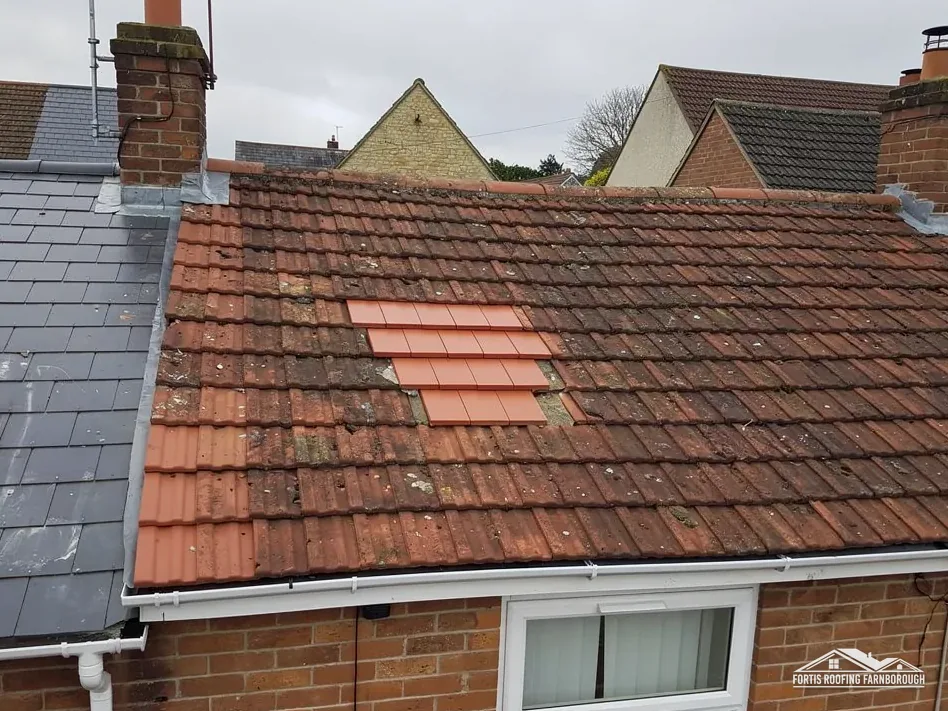
If a roofer is hurt working on your home, the starting point in the construction safety rules is that the contractor carries the main duties on a domestic job. The Construction (Design and Management) Regulations 2015, known as CDM, treat you as a domestic client and move most client duties on to the contractor or, where there is more than one, the principal contractor. That is why a careful roofer plans access, edge protection and the working method before climbing a ladder.
It is not the whole story. Every accident has its own facts, and no guide can promise a homeowner freedom from all risk. The questions that decide a case, such as who controlled the work, what was agreed and what hazards the homeowner knew about, depend on the situation. So treat this page as a general guide, not legal advice, and take a serious worry to a solicitor or the HSE.
This guide explains who counts as a domestic client, what CDM asks of the contractor, what a construction phase plan is and when it is needed, how access and scaffold fit in, what to check on your own policy and what to ask any roofer before they start.
Who counts as a domestic client
CDM 2015 sorts the people involved in building work into roles. The client is the person who has the work done, and the label decides who carries which duties. Knowing your own role is the first step to asking sensible questions. A domestic client is a particular kind: an individual who has construction work carried out on their own home, or on a family member's home, where the work is not part of a business.
What that covers
A homeowner who pays a roofer to repair or replace the roof on their house is a domestic client. A homeowner who lets out the house is in a different position, because the work then connects to a business, and the full client duties may apply. A landlord, a managing agent or the owner of a shop or block should not assume that the domestic rules cover them.
Why the label matters
The Health and Safety Executive publishes guidance for domestic clients, and the regulations treat them differently from commercial clients by passing the main duties along. You are still the person who commissions the job, and you can ask sensible questions, but a homeowner is not expected to run a construction site.
If you are unsure which category applies to you, ask the HSE, or your solicitor, before the work starts. Do not assume that being a homeowner is enough. Our guide to roof repair cost notes how the size and access of a job shape what a quote must cover, which also tells you how much planning the work involves.
How the duties pass to the contractor
Regulation 7 of CDM 2015 deals with domestic clients. Its effect is that the client's duties, other than those that a domestic client keeps for themselves, are treated as duties of the contractor, or of the principal contractor if there is more than one contractor on the project. In plain terms, the roofing contractor takes on the safety planning that a commercial client would otherwise arrange.
What that means on a roof
The contractor is responsible for planning how the work is done safely. On a roof, that includes how people reach the roof and move around on it, how edges are protected, how materials are lifted, and how the public and your household are kept away from falling objects. It also covers the condition of the equipment used, such as ladders and scaffold.
One contractor or several
Under regulation 5(1), once a second contractor joins, a principal designer and principal contractor have to be appointed. On a domestic job the duties of those roles pass to the contractor in charge of the work. If you hire a roofer and a separate electrician and a scaffolder directly, you could find yourself with more than one contractor on site, and it is then sensible to ask who is in charge of safety. Our usual arrangement is that we arrange access, including any scaffold, and tell you who is doing what each day.
What stays with you
Being a domestic client does not mean you can ignore a plain hazard on your own property. If there is something the roofer could not have known about, such as a weak part of the structure, tell them before work starts.
The construction phase plan
A construction phase plan is a short document that sets out how the work will be organised so that it is done safely. For a roofing job it can be a few pages: where the work will happen, how people will get up, what protection is in place and what the arrangements are for the day.
When one is needed
Under regulation 15(5), a project with a single contractor leaves that contractor to write the construction phase plan. That is the usual case for a roof repair or replacement on a house. If several contractors are involved, the principal contractor prepares it instead. The duty rests on the contractor, not on you.
What it contains
- A description of the work and where it will take place.
- The arrangements for access to the roof, including any scaffold, tower or ladder.
- Protection against falls from edges, openings and fragile surfaces.
- How materials and waste will be handled and removed.
- How neighbours, household members and passers-by will be kept safe.
- Emergency arrangements, such as what to do if someone is hurt.
What you can ask
You are entitled to ask the roofer to explain the plan in plain words. A roofer who can describe how they will reach the roof, protect the edge and keep your family away from the work is showing that the planning has been done. A vague answer is a warning. On our jobs the survey includes the access arrangements, and you are told the daily plan before work begins. For the wider context, see our roof repairs page.
Scaffolding, access and who is responsible
Falls from roofs are among the most serious accidents in construction, so access is where the safety planning shows most clearly. How the roofer gets onto your roof, and what stops them falling off it, is a decision the contractor makes.
Matching the access to the job
A small repair on a low roof may be done from a ladder, with the ladder secured. A larger job, or one on a high roof, usually needs scaffold with edge protection, or a platform tower. Highways Act 1980 section 169 brings a licence for scaffold erected over a pavement or road; private land is outside it. In the Hampshire County Council area, the scaffolding company applies on the customer's behalf. Our answer on whether roof repairs need scaffolding explains how the choice is made.
Responsibility for the scaffold
The scaffold is normally put up by a scaffolding company that carries its own responsibility for its design and erection. Hampshire County Council's licence page makes public liability insurance a condition for scaffolding companies, which shows how seriously the risk to the public is treated. Your role is to make sure the contractor has arranged it, and to keep children and pets clear.
Your property and neighbours
Scaffold or a roofer's materials may cross a boundary or overhang a neighbour's land. Talk to neighbours early and agree what will happen. A party wall matter is for a party wall surveyor, not building control.
A roof is not a place for a homeowner to supervise. If you want to see progress, ask for photographs at the end of each day.
Insurance: what to check and what to ask
Insurance is the practical protection behind the rules, and it is worth understanding in general terms. This is general guidance on what to ask, and no one should read it as a statement about any particular firm's cover.
The roofer's cover
It is reasonable to ask any roofer what insurance they hold for injury to workers and to others, and to see the certificate with its dates and limits. A roofer who works alone, or who uses subcontractors, may have different arrangements, so ask how each person on your roof is covered. A written answer is better than a verbal one.
Your own policy
Some home insurance policies include liability cover for accidents on your property, and some set conditions for building work. We cannot say what yours covers. Read the wording, or phone your insurer before the work and ask whether a roofing job changes anything. If you plan to claim for the damage the roof work is repairing, tell the insurer at the outset, and hold on to photographs and receipts.
If something goes wrong
If someone is hurt, the first job is to get medical help. Then record what happened with dated photographs and notes, and tell your insurer. The HSE is the regulator for construction safety. A solicitor can advise on any claim. The Citizens Advice consumer helpline, 0808 223 1133, can advise on a dispute with a trader over work, but it is not a substitute for legal advice on an injury claim.
The rules put the main safety duties on the contractor, but they do not remove every risk from the homeowner, so ask questions before work starts.
Questions to ask before the work starts
Most of the protection comes from asking the right questions at the start. A good roofer will welcome them and answer in plain words.
A short list
- How will you get onto the roof, and what stops a fall from the edge?
- Is scaffold needed, who is putting it up, and who arranges any licence?
- Is there a written plan for the work, and can you explain it to me?
- Who else will be working on the site, and who is in charge of safety?
- What insurance do you hold, and can I see the certificate?
- How will you protect my family and my neighbours while you work?
- What happens if bad weather stops work part-way through?
What we do
Every job starts with a survey, and the survey records the access: where a ladder or tower can stand, whether scaffold is needed and where it would go. The daily plan is explained to you, the site is kept tidy and safe, and waste is taken away. If the access means the price changes, you know before work begins.
Choosing the roofer
Citizens Advice recommends collecting three written quotes. When you compare them, put the safety questions above to each firm. A cheaper quote that has no plan for access is not cheaper if the work stops or someone is hurt. Our guide to what a roof inspection includes explains how the survey side of a job works.