The short answer
It depends on the repair. A small fix reached by ladder, such as a few replacement tiles, is a short visit, while a repair that needs scaffold carries extra lead time, because scaffold has to be ordered and, where it stands on the highway, licensed first. We give a programme in writing after the survey, and the weather and what is found under the covering can move it.
Small repairs and scaffold jobs
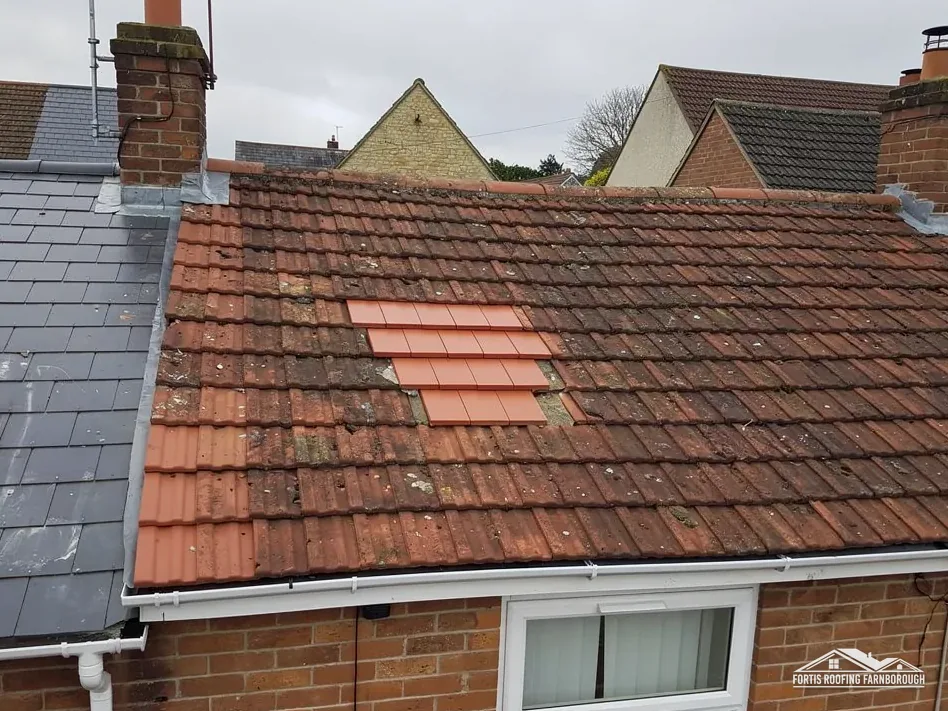
The biggest divide is access. A repair reachable by ladder or low tower, such as renewing a few tiles or bedding down a loose ridge section, is normally a single visit. The roofer arrives with the materials, makes the repair and clears away.
A repair that needs scaffold is a project. Someone has to measure up, order the frame, book a build date, and later return to take it down. The repair itself may be quick, while the days around it are set by the scaffolder's diary.
Scope matters as well. Patching a flat-roof blister is short work, and renewing a valley gutter or rebuilding a section of chimney flashing takes longer because each layer has to be stripped, repaired and sealed in order.
Concealed damage causes most of the overruns we see. Once the covering is lifted, a rotten batten, damp felt or a cracked rafter foot can turn up, and the roofer must decide whether to carry on or stop and discuss it with you. A good survey, with the loft checked from inside, reduces such surprises but cannot remove them.
For that reason, we describe the programme as an expectation and not as a promise.
Licence notice periods
Scaffold on the footway or carriageway needs a licence, and the councils concerned want warning before the start. That lead time sits in the programme before any roofing happens.
Hampshire County Council requires ten clear working days between its application and the intended start, and issues no extensions. Surrey County Council, which remains the authority for Surrey addresses until 31 March 2027, asks for applications at least 10 working days ahead and tells applicants to ring if an unsafe structure creates an emergency. Wokingham Borough Council asks for a minimum of 10 working days. Bracknell Forest Council issues licences covering a period of 6 weeks, after which a new one is needed.
The practical lesson is that a repair needing a roadside scaffold cannot start the next morning in the ordinary course. A leak that cannot wait gets a make-safe from a ladder or a tower first, with the lasting repair following once licence and scaffold are in place.
Where the frame stands wholly on your own drive or garden, no licence is involved, so the same job can move faster.
Weather and the order of work
Roof repairs are open-air work, and rain, frost and wind all decide which day a job can go ahead. Wet slates and tiles are slippery and mortar will not set properly in a downpour, while single-ply and felt coverings need dry surfaces to bond. A roofer who presses on in poor conditions is trading your repair for the calendar.
The order of work also matters. The roofer strips back to sound material, repairs the layer beneath, then rebuilds the covering and finishes with flashings, ridge pieces and clean-up. Each step depends on the one before, and a missing material, such as a matching tile or a length of lead, can pause the work until the order arrives.
Matching existing materials is a frequent cause of delay on older homes. A slate or clay tile that suits the roof may have to be sourced from a specialist or reclaimed stock, and that takes longer than a standard concrete tile from a merchant's shelf.
A sensible roofer therefore separates what can be done at once, such as making safe, from what needs the right materials and the right weather. Our page on repairing roofs in the rain explains which work will not wait.
What we put in writing
Once we have measured up, the written total comes with our expectation of how the job will run: whether it is a single visit or needs scaffold, what lead time a licence adds where one applies, and which stages depend on dry weather.
We keep to the evidence. If the survey shows a repair will hold, we tell you that and do not suggest a larger job. If it shows the covering has failed more widely, we show you the photographs and measurements and explain why a bigger programme is the better buy.
If something unexpected turns up during the work, we stop, show you what we found and agree the next step with you before going on. You never meet a larger bill with no explanation attached.
We do not promise a response time or a completion date, because the things that decide them, such as the weather and the licence office, are outside our control. What we can do is plan around them and keep you informed at each stage.
The do roof repairs need scaffolding page explains how access is chosen, and the roof repairs hub covers the full range.