The short answer
Partly. A temporary make-safe, such as sheeting over an open area, can be fitted in poor weather if it can be done safely, because stopping water getting in comes first. Permanent repairs usually need a dry roof, since mortar, adhesives, sealants and many membranes will not bond properly when wet, and slippery surfaces make working at height far more dangerous.
Make-safe work and permanent repairs
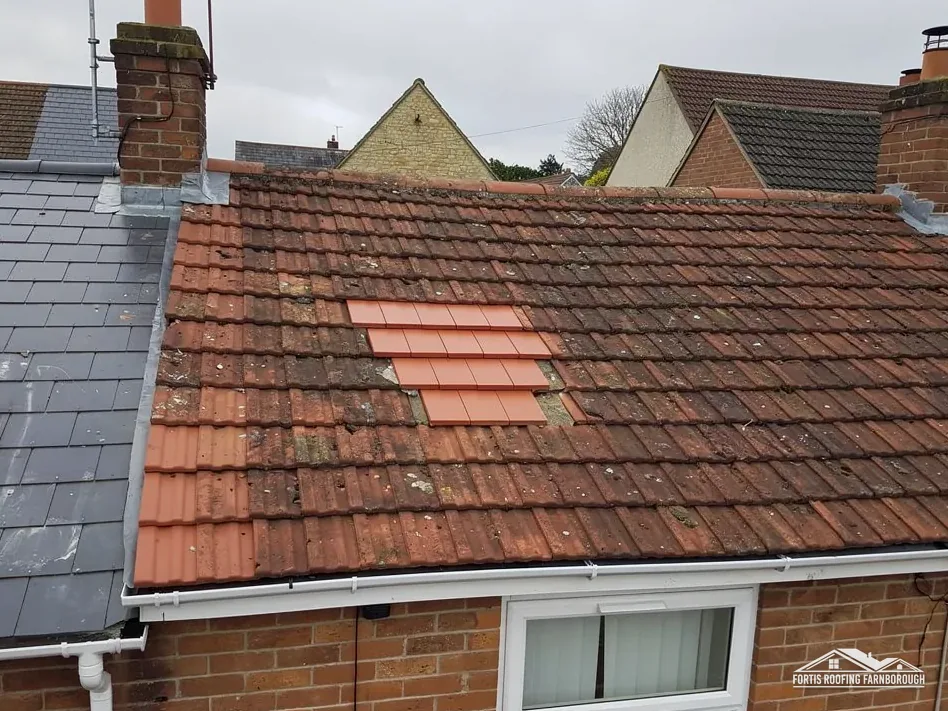
There are two different jobs here, and the weather affects them differently. A make-safe is a quick, temporary step to stop damage spreading: sheeting or boards over a hole, a temporary seal over a failed section or a tile pushed back into place. A permanent repair is the lasting fix: new tiles, relaid flashing, re-lined valley, patched membrane.
A make-safe is worth attempting in the rain when water is coming in and the work can be done without undue risk. Waiting for a dry day while a ceiling soaks and insulation saturates costs more than a rushed cover. The roofer's judgement is whether access is safe, because a wet ladder or slope is a serious hazard.
A permanent repair is different. Most need dry materials and dry surfaces, and doing them in the wet usually means doing them twice. A good roofer separates the two steps, makes the roof safe now, and returns for the lasting work when conditions allow.
That is also the right approach for you. With the cover in place, you can study the survey photographs, think about the options and decide without a dripping ceiling hurrying you.
Materials that need a dry roof
Many roofing materials depend on a clean, dry surface. Mortar for bedding ridge tiles or verges will not set properly if it is washed out by rain, and it weakens the joint. Adhesives and sealants need dry, clean faces to grip, and a wet surface produces a bond that looks fine on the day and fails in a few weeks.
Flat roof coverings are even fussier. Felt that is bonded to a damp deck traps moisture beneath it, which later blisters and breaks the bond. Single-ply membranes, GRP laminates and their adhesives all need a dry substrate and, often, a minimum temperature, which the product data sheet sets out.
Lead work depends on dry timber beneath the metal, since trapped damp can corrode the underside and rot the boards, and tiles laid on wet battens trap moisture that should have been left to dry.
Met Office averages for South Farnborough (1991 to 2020) show about 118 wet days a year, so the weather is a normal part of the planning. A sensible roofer keeps a short list of work that can proceed in light rain, such as clearing gutters, and a longer list that waits for a dry spell.
Our page on temporary roof repairs explains what a make-safe involves.
Safety on a wet roof
Water makes slates, tiles, moss and metal slippery, and the effect gets worse with algae and lichen. A foothold that is safe on a dry day can slide on a wet one, and a fall from a roof is among the most serious accidents in the home.
Wind often comes with the rain, and it makes ladders unstable, sheets difficult to hold and materials liable to be blown away. Poor light and cold hands add to the risk. A roofer who will not climb in these conditions is behaving sensibly, and you should be wary of anyone who offers to do a full repair on a wet slope.
The same caution applies to you. Leave the roof and the ladder alone, and do not try to cover a leak yourself. Do what you can indoors: move belongings, put out a bucket and keep away from any bulging ceiling.
The HSE's domestic client guidance and the CDM rules expect whoever does the work to plan it safely, and that covers access and weather. Even one contractor working alone needs a written construction phase plan, and a firm with one can tell you how the day will run.
If water is near electrics, the page on when to call an emergency roofer says why that cannot wait.
How we handle a leak in bad weather
When we are called to a leak during heavy rain, the first question is whether it is safe to go up. If it is, we fit a temporary cover and describe what we have done. If it is not, we tell you what you can do indoors, and we plan the cover for the first safe window.
The permanent repair is booked for dry weather. The survey covers the outside of the roof and the loft, with photographs and measurements of the damaged area. The lasting repair is then quoted as a single written total.
If the roof needs scaffold, there is also the licence notice to allow for, as the page on whether roof repairs need scaffolding explains. That is another reason a make-safe comes first.
No response time or finishing date is on offer from us, since the sky and the council are beyond our control. What you do get is a plan built around them, plain updates and no permanent repair that is doomed to fail.
The roof repairs hub lists the jobs we take on.