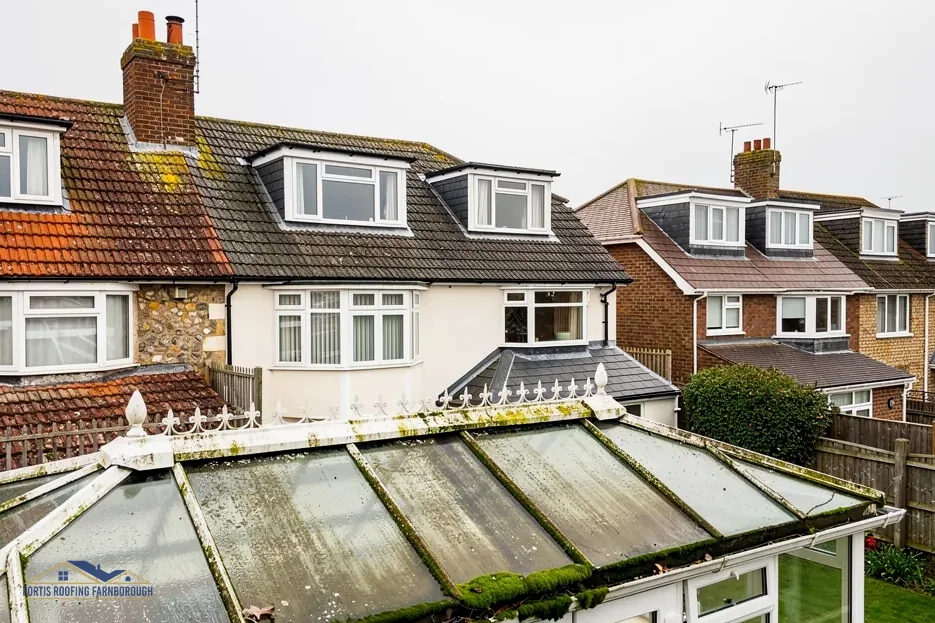
A polycarbonate conservatory roof is made of twin-wall plastic sheets, fixed to the frame with glazing bars and sealed at the edges. The sheets are light, cheap to make and easy to cut to size, which is why they were used on so many conservatories built over recent decades. They keep the rain out and let daylight in, and a sound one can do that for years.
The same qualities cause the complaints. Thin plastic carries sound, so rain drums. It passes heat both ways, so the room is hot in July and cold in January. Over time the surface clouds, the seals dry out and the sheets can crack at the fixings. Published lifespans are short compared with other roof coverings: HomeBuilding gives a typical life of 10 years and The Eco Experts about 10 to 15 years. Both are typical ranges, never promises.
This guide covers how these roofs age, what noise and heat problems come from, when a repair does the job, and when it makes sense to replace the sheets or move to a different system. Cost has a guide of its own, and a survey comes before any quote.
What a polycarbonate roof is made of
Each sheet is a flat plastic panel with hollow channels running down its length, like the cells of a honeycomb laid on its side. The channels trap a little air, which gives some insulation. The sheets are cut to the width between rafters or bars and sit in gaskets and capping strips, with the ridge and the wall junction finished in flashing or aluminium trim.
The parts that fail first
- The edge seals: tape or end caps that close the hollow channels. When they fail, water and dust get into the cells.
- The glazing bar gaskets: rubber strips that harden and shrink, leaving a gap along the bar.
- The sheet surface: a coating that protects against sun. When it wears, the sheet turns cloudy or yellow.
- The fixings: screws through the sheet or bar caps, which loosen with expansion and cooling.
Why sheets are chosen
They are light, so the frame carries little load, and no heavy lifting equipment is needed. A roof can come off and go back on in a day on a small conservatory, weather allowing. That ease is the main reason polycarbonate suits budgets and quick fixes. Our guide to conservatory roof replacement cost sets out the typical UK ranges for the whole job.
The lightness is also the reason these roofs feel flimsy. There is little mass to absorb sound, little insulation to hold warmth and little depth to block the sun. A plain sheet roof on a south-facing wall shows all three faults in the same afternoon.
How long they last, and what shortens it
Cost guides put the lifespan at around ten to fifteen years. HomeBuilding says "a typical lifespan of 10 years", and The Eco Experts says about 10 to 15 years. That is a published range, not a promise, and a roof on a sheltered, north-facing wall will behave differently from one facing south over open lawn.
Sun and weather
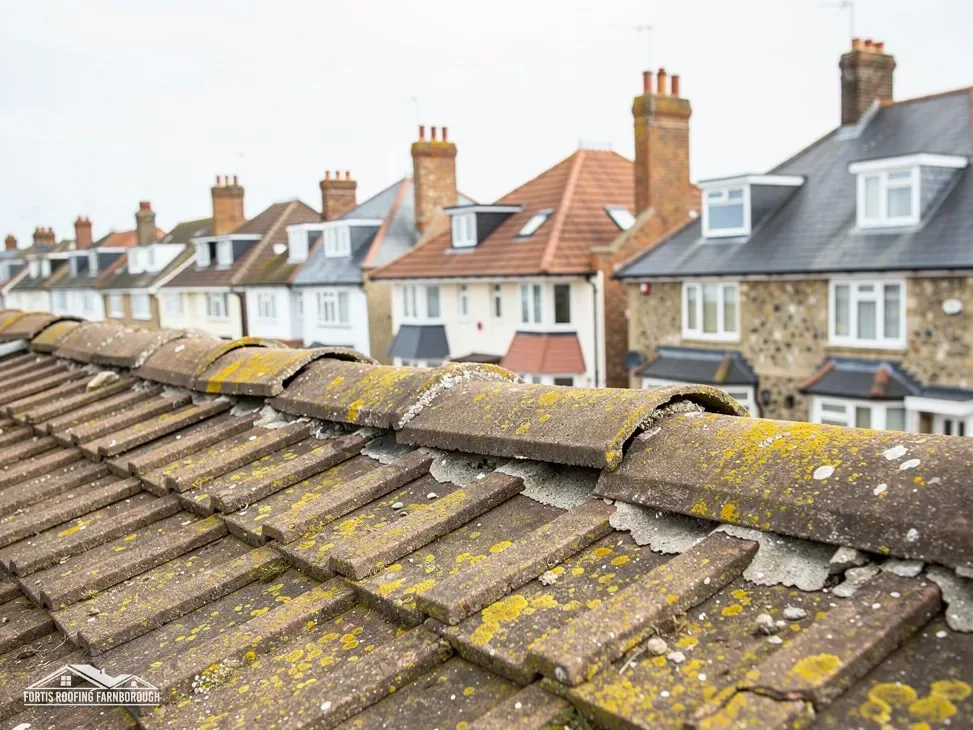
Ultraviolet light is the main ageing force. It slowly breaks down the plastic and the coating, which is why south and west facing roofs often cloud first. Warm and cold cycles move the sheets against their fixings, which opens gaps. Moss and algae grow in the grooves and trap damp against the seals. A wet, frosty year puts the seals through repeated wetting, drying and freezing, and the gaps they open are small at first.
Damage from people
Scrubbing with a stiff brush scratches the coating, and jet washing can force water under the seals. Marley, writing about roof tiles, does not recommend powerful jet washing, because the surface can be damaged. The same logic holds here, and a soft brush with plain water is gentler on plastic. Never stand on the sheets: a crack runs the length of a channel.
How to tell yours is near the end
Look for yellowing, cloudy cells with moisture inside, hairline cracks at the fixings, gaps along the glazing bars and drips on the inside edge. One or two of those can be repaired. A roof with all of them, across several sheets, is nearing its end. Our answer on a conservatory that is too hot covers the heat side, which often prompts the replacement.
Why polycarbonate roofs drum and overheat
Two complaints bring owners to the point of changing the roof: the noise of rain and the swing in temperature. Both are physics, and neither can be fixed by tightening a screw.
Noise
Sound travels through a thin, light sheet easily, and rain on it sounds like drumming. The thinner the sheet and the larger its unsupported span, the louder it is. Thicker sheets, with more internal walls, are quieter than thin ones, but they are never silent. Our answer on a noisy conservatory roof goes through what can be done short of a new roof.
Heat in summer and cold in winter
A polycarbonate roof has little thermal mass and only modest insulation. Sun heats the room fast, and at night or in frost the warmth goes out as quickly. Heat-reflective sheets, coloured or opal tints and blinds soften the summer problem. They do nothing for winter heat loss, and they darken the room.
The condensation side
On cold mornings, warm room air can condense on the inside of the sheet. In a well-ventilated conservatory it passes. In a closed, damp one, it drips and marks the frame. Opening roof vents, running a dehumidifier or opening doors briefly all help, and a conservatory kept shut for days does the opposite. Moisture inside the cells is different, and it means the edge seal has failed. A wipe-down of the inside face each season also shows whether the water is coming from the room or through the roof.
If the noise and heat are the real complaint, replacing polycarbonate with polycarbonate will not change them much. That is the signal to think about upgrading the roof system.
Repair, replace the sheets, or change system
There are three sensible routes, and which suits depends on the condition of the frame, what bothers you about the room and how long you plan to stay in the house.
Repair
When the sheets are sound and the fault is a failed gasket, a loose bar cap or a blocked gutter, repair is the right call. New seals and a re-sealed ridge can bring a tired roof back to dry. The survey photos show where the water was entering and what was done about it. A repair can be the better buy when the sheets are less than halfway through their typical range, because there is life left in the roof to protect.
Replace the sheets
If the sheets have clouded, cracked or filled with damp but the frame is square and sound, new sheets on the same bars give you the same roof renewed. A thicker sheet, with more internal walls, improves sound and warmth a little. It is the least change and usually the lowest-priced route, but it repeats the original limits.
Change the system
A glass roof offers better clarity, weight and sound reduction. A solid, insulated tiled roof gives a room that behaves like part of the house. Both ask more of the frame and bring the Building Regulations into play. A replacement that weighs 15 per cent or more above the polycarbonate needs approval and a structural check.
One way to decide: if the complaint is a leak, repair; if the sheets are worn but the room is fine, replace the sheets; if the room itself is the problem, change the system.
New sheets on a tired frame will leak at the same joints as the old ones, so the frame is checked first.
What an upgrade to a better roof involves
Upgrading is a bigger step than replacing. It starts with the frame, because the existing frame was built for the polycarbonate roof that is coming off.
Strip and survey
With the sheets off, the frame can be checked properly. We check the ridge, the bars, the eaves beam and the brick base below. Rotten timber, split uPVC or a bowed ridge are dealt with before the new roof arrives. Where the frame cannot carry a heavier roof, it is strengthened or the choice of system changes.
Planning and Building Regulations
A new roof of the same outline and height is judged against planning law on how it looks from outside. A change of shape or a solid roof needs a conversation with the planning team, and a new roof has to meet Building Regulations on structure, energy and ventilation. Our conservatory roofs page sets the process out.
Finishing the edges
The details matter as much as the covering. New flashing at the wall, new gutter and fascia fixings, and sealing at the ridge decide whether the roof stays dry. Old sheets leave on a waste carrier's vehicle, not in the household bin or the back garden, and the bars and trim that go with them are cleared at the same visit.
The work is usually quick compared with a house roof, and for most conservatories the room is usable again within days. Each day's plan is explained before the work starts, and the site is left tidy.
Choosing sheet thickness and the right questions
Sheet thickness is the one choice that changes the performance of a polycarbonate roof directly, so it is worth understanding before you order. Sheets are made in different thicknesses and with different numbers of internal walls. More walls mean more trapped air, a stiffer sheet and a modest gain in both warmth and sound reduction. Thicker sheets also need deeper glazing bars, so they are not always a drop-in swap on an old frame.
Tints and finishes
Clear sheets give the most light. Opal sheets diffuse it and cut glare. Bronze and solar-control sheets cut some of the sun's heat, and each darkens the room. None of them turns polycarbonate into an insulated roof. They shift the balance between light and heat, and you pick the compromise that matches how you use the room.
What to ask for in writing
- The sheet thickness and the number of internal walls.
- The maker's published lifespan range, as a typical figure and not a promise.
- Whether the glazing bars and gaskets are new or retained.
- How the wall junction and the ridge are sealed.
- Who takes the old sheets away, and where they go.
Get more than one written quote, and compare the sheet specification as well as the total. A lower total with thinner sheets and reused bars is not the same offer as a higher one with new bars and gaskets.