The short answer
Roof edge protection is a barrier fixed around the perimeter of a roof to stop people and materials falling off. On a commercial job it is planned before work starts, normally supplied by the principal contractor or the roofing contractor, and recorded in the construction phase plan required by the CDM Regulations. It works alongside protection over fragile surfaces and safe routes onto the roof.
What edge protection is
Edge protection is a physical barrier along the open edges of a roof. It stops a person who stumbles, slips or loses balance from going over the side, and it stops tools and materials from dropping on those below.
The usual forms are a guard rail system, a scaffold that continues above the eaves line, or proprietary barriers clamped or weighted at the roof edge. A typical guard rail has a top rail, an intermediate rail and a toe board, set at heights that prevent a person falling under or over, and the toe board keeps small items from rolling off.
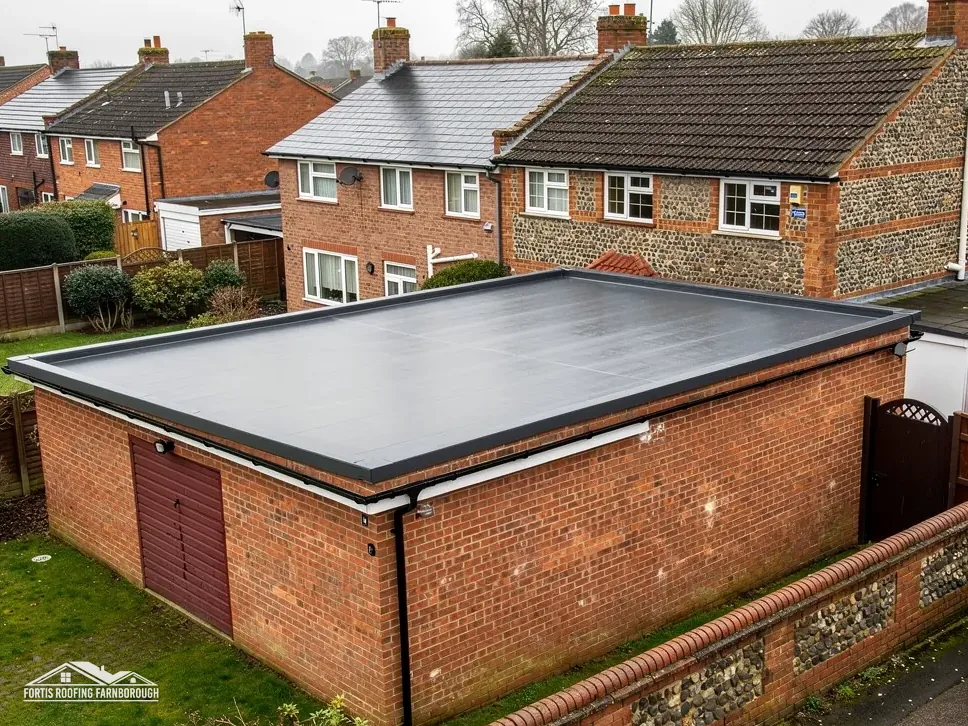
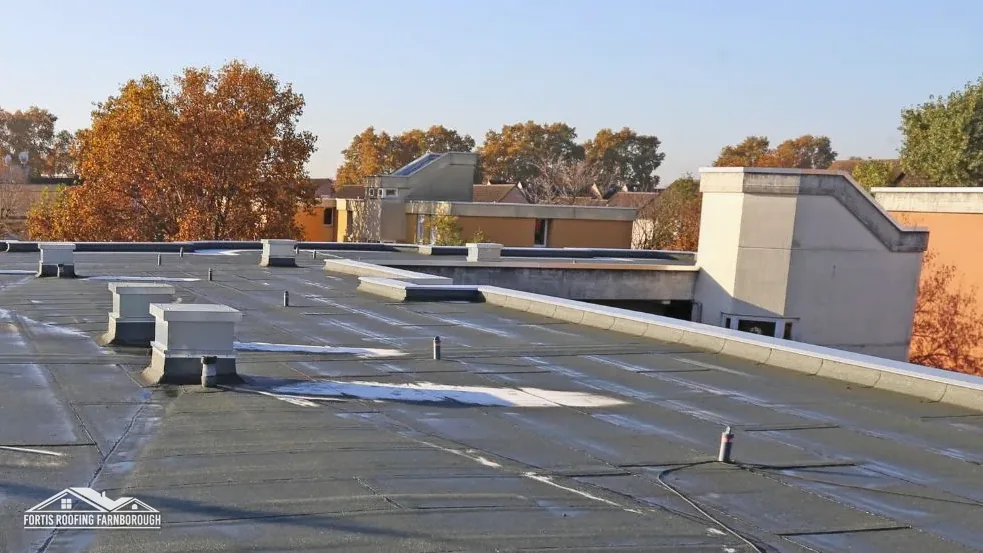
Which type suits a roof depends on its form. A flat roof with a parapet may need little more than raised parapet sections. A pitched or sloping roof needs edge protection at the eaves and often a scaffold platform from which tiles or sheets are handled. A large industrial roof may be protected by perimeter barriers all round, and by staging or nets for internal areas.
Edge protection deals with falls at the perimeter. Other hazards need other controls, particularly fragile surfaces, openings and rooflights in the middle of the roof, which need covers, guard rails or nets. A roof with perfect edge protection can still be dangerous in the middle.
Our guide to fragile roof safety sets out the controls for those hazards.
Who provides it
Responsibility depends on how the project is organised. On a commercial building, there are usually several parties: the client, who owns or manages the building; the roofing contractor; sometimes a main or principal contractor coordinating other trades; and a scaffold contractor.
Where a roofing firm is the only contractor, it plans and provides the protection needed for its own work. That can be its own scaffold or a hired system, and the construction phase plan records what is installed and who erects it. Edge protection is normally built by trained people, and inspected before use and at intervals afterwards.
Once a second contractor arrives, a principal contractor takes on the planning and coordination of site safety, including shared protection such as perimeter barriers. The roofer then works within that arrangement. Our answer on CDM on commercial roofing explains the roles.
The client has a part to play. A commercial client has duties to make suitable arrangements for the project, to provide pre-construction information, including what is known about the building and its hazards, and to allow enough time and resources. Telling contractors what you know about fragile roofs, asbestos or access limits is part of that.
A scaffold that stands on the highway needs the highway authority's licence, with a lead time to allow for.
How it fits into the CDM plan
The CDM Regulations 2015 call for a construction phase plan on every project. A lone contractor drafts it, and where two or more firms are involved the principal contractor does.
For roof work, edge protection is a central part of the plan. It records the hazards identified, the control chosen for each and who is responsible. The plan should answer the practical questions:
- where the edges are, and which sections of the perimeter need protection;
- what system is used, who erects and inspects it, and when;
- how people reach the roof and how materials are lifted without leaning over the edge;
- what protects fragile areas and openings away from the edge;
- how the public and building users are kept clear below.
The plan is a working document. If the job changes, for instance when rotten decking is found or the weather turns, the plan is reviewed, not ignored.
Commercial clients are entitled to see it, and should ask. A roofer who cannot explain how the roof edge will be protected has not planned the job.
The same discipline applies on smaller commercial jobs, and a short written plan in proportion to the work is still required.
Planning it into the job
Edge protection takes time to put up and take down, and it costs money. That is a reason to plan for it from the start, not to treat it as an afterthought. Leaving it out saves a little at the beginning and risks a great deal.
The survey is where planning begins. We look at the edges of the roof, the way up to it and the ground below, noting parapet heights, the condition of any existing guard rails and what stands beneath. We photograph the lot, so the plan is based on evidence.
Existing roof edge systems are not always safe to rely on. A rail that has corroded, a parapet that is low or loose, or a fixed ladder with a rusted anchor all need checking before use, and the survey records them.
If the building stays open, the ground below the roof edge is closed off or covered, and deliveries and pedestrian routes are diverted. Our answer on roof work on an occupied building covers that side.
The written price covers the job with access and protection inside it, so nothing is added midway. The commercial roofing hub lists the services we offer.