The short answer
A crack in a chimney stack can mean anything from surface weathering to real movement, and the pattern decides which. Hairline cracks in mortar joints are common and often a repointing job. Wide, stepped or growing cracks, or a stack that is also leaning, need a prompt survey, because a stack that fails can fall through the roof.
Reading the crack
Cracks tell you something about their cause, and the first job is to read them. Four features matter: where the crack runs, how wide it is, whether it is still moving and whether the stack is leaning.
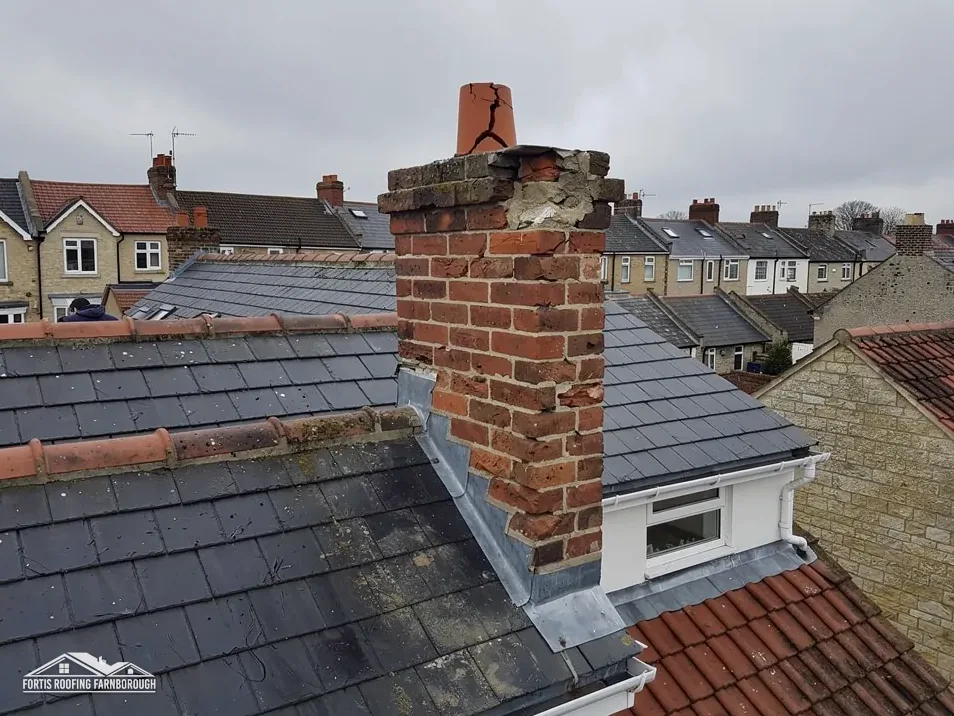
A crack that follows the mortar joints, stepping up in a staircase pattern across the bricks, is usually a joint failure. The mortar has weakened and the bricks are separating along it. That is often a matter of age and weathering, and it can be put right by repointing.
A crack that runs through the bricks themselves, or splits a pot, is a different thing. It suggests that something has put stress on the masonry: frost, heat from the flue, uneven settlement or, in the worst case, movement of the stack itself.
Width tells you about severity. A hairline crack that you can barely feel with a fingernail is far less worrying than a gap you could slide a coin into. Direction of change matters most. A crack that has grown since last year is still moving, and moving cracks deserve prompt attention.
Photograph any crack with a ruler or a coin beside it and the date, then look again in a few weeks to see if it has changed.
How urgent is it
Urgency depends on the combination of signs, not on any one of them.
At the low end sits a hairline crack in a joint with no lean, no staining and no sign of growth. It is worth booking a survey, but there is no need to panic. The repair is routine and a few weeks' wait does no harm.
In the middle sits a crack with signs of water getting in: dark staining, damp on the breast inside or mortar washed out. This should be dealt with before winter, since water and frost widen cracks and speed up the damage.
At the high end are the signs of movement. A stack that leans, a crack that is wide or stepped through the full thickness, bricks that have slipped out of line or a pot that is visibly out of true. Any of these can mean the stack is on its way down. Keep clear of the area below, do not use the fireplace and arrange a roofer's survey promptly.
If you suspect danger, say so when you book. The stack can be made safe first, by taking down the unstable top courses or by bracing, and rebuilt properly afterwards. Our guide to a leaning chimney covers that case.
What causes cracking
Most causes are familiar, and knowing them helps you judge what is going on.
Water and frost are the most common. Rain gets into open joints and soaks the brickwork, and in a cold snap the trapped water freezes and expands. Repeated over winters, this breaks up mortar and, eventually, the bricks. The Met Office climate station at South Farnborough (1991 to 2020) shows around 53 air-frost days a year, so freeze and thaw are a regular part of the local winter.
Heat and flue gases are the second cause. A flue that serves a fire or a boiler gets hot, and the brickwork expands and contracts with use. Old flue linings that have cracked can let gases attack the mortar from inside.
Movement of the stack as a whole is the third. A chimney is tall and thin, so wind loads and the weight above act on its base. Settlement of the building, or loss of support from a removed breast below, can leave a stack unevenly supported.
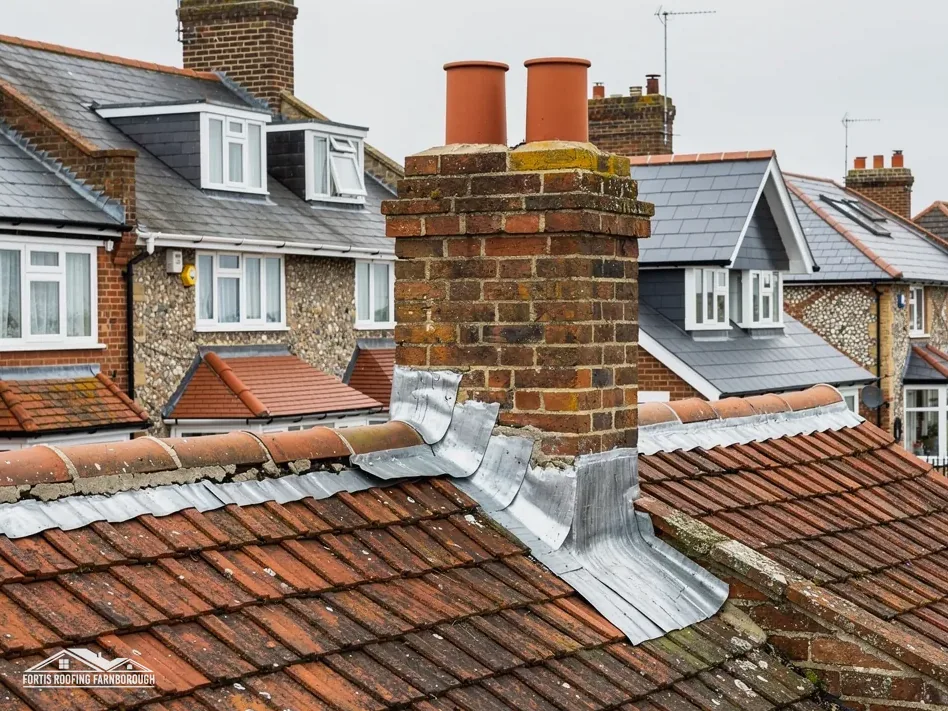
Lastly, there are the weak points where materials meet: the junction between brick and lead flashing, or between pot and flaunching. A crack there often means the surrounding materials are moving at different rates. Our survey photographs each of these places so you can see where the problem starts.
Repair, rebuild and what to expect
The remedy matches the cause. Where the cracking is limited to the joints, the answer is raking out the weak mortar and repointing, with the joint profile and mortar matched to the original. Individual cracked bricks can be cut out and replaced. Our guide to chimney repointing describes the work.
Where cracks run through the structure, or the stack leans, the top part may have to come down and be rebuilt. The roofer takes the stack down to sound brickwork, relays it in matching brick and renews the flaunching, pots and lead. That is a bigger job and usually needs scaffolding. Our chimney rebuild guide explains the stages.
Stitching with steel ties or bars is sometimes used for a straight crack in an otherwise sound stack, but it depends on a proper survey and is not a patch for a failing structure.
You get photographs of what we find, a plain explanation of the cause and a single written price for the repair. If the stack is unsafe, we make it safe first. The work needs a dry spell if mortar is involved, so the timing follows the forecast. Our chimney repairs hub lists the full range.