The short answer
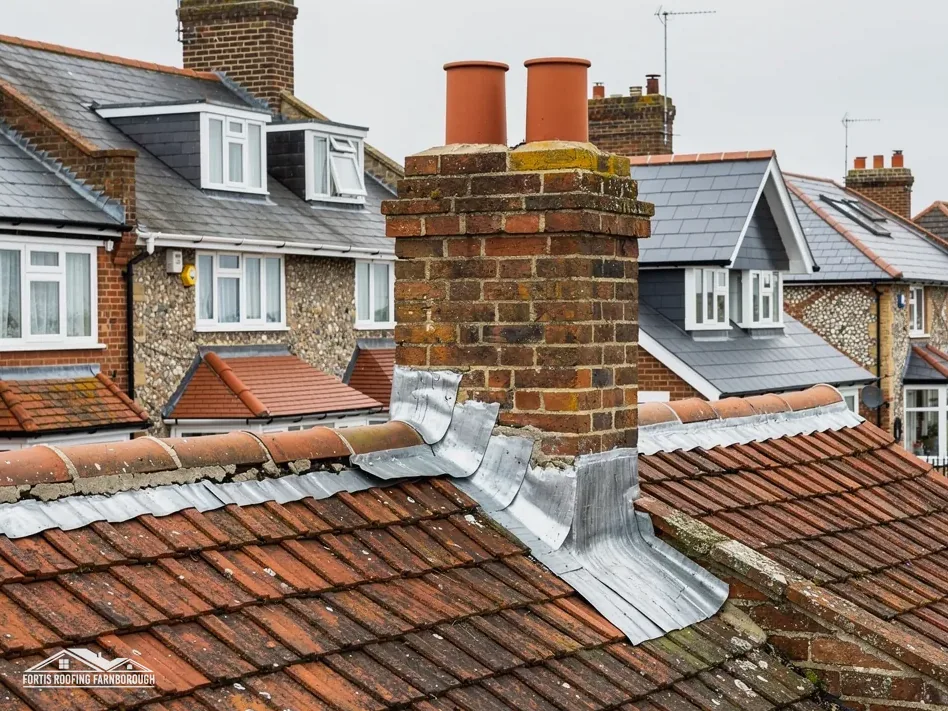
A chimney back gutter is a shallow trough, normally lead, that sits behind a chimney on the high side of a pitched roof. It collects what runs down the slope towards the stack and sends it round both sides, so the chimney cannot dam it. Failure shows as damp on the chimney breast below, split or lifted lead, and debris in the trough.
Where the back gutter sits and what it does
A chimney stack stands on a sloping roof like a small wall. Rain running down the slope meets the upslope face of that wall, and without a way round it would pool there and press against the brickwork. The back gutter is that way round.
It is a trough of sheet lead, formed so that it lies against the stack's back face, with its edges turned up to the brickwork. The floor of the trough is laid with a slight fall to each side, and the water follows it to the corners, then runs out over the tiles or slates on either side of the stack. A short lead tray above it, sometimes called an apron or back flashing, finishes the joint at the brickwork.
The other parts of the leadwork have their own jobs. The front apron seals the downslope face, and stepped or soaker flashings seal the sides, where the roof meets the stack at a rising angle. Together they form a complete waterproof collar. Our guide to chimney flashing covers the whole collar.
The back gutter does the heaviest work of any of them, since it takes the full flow from the slope above the stack. A wide stack on a long slope takes the most.
Lead thickness and the codes
Rolled lead comes in numbered codes, and each code fixes the thickness and the weight. A heavier code is thicker and stiffer, and it is chosen to suit the job.
Royston Lead's cast-lead brochure sets out the main codes with the uses it recommends:
- Code 4 is 1.80 mm thick, weighs 20.41 kg/m² and is coloured blue. Royston lists it for soakers, flashings, dormers and pitched valleys.
- Code 5 is 2.24 mm thick, weighs 25.40 kg/m² and is coloured red. Royston lists it for flashings, dormers, valleys and the heavier parapet or box type of gutter.
- Code 6 is 2.65 mm thick, weighs 30.05 kg/m² and is coloured black, with the same uses as code 5.
The brochure does not name chimney back gutters as such, so the choice between codes is a judgement for the roofer, based on the width of the stack and the length of the slope feeding it.
Standards matter here as well. Approved Document C refers roofers to BS 6915 for lead, and BS 6229 does not cover lead at all. Lead sheet can last for a long time when it is well laid. A MyJobQuote leadwork page puts lead flashing at over 80 years of life, a floor and not a promise.
Signs that the back gutter is failing
A back gutter is out of sight, so the first warning is usually inside the house. These are the signs, roughly from earliest to latest:
- a brown or yellow stain on the chimney breast, in the loft or the upstairs room, that darkens after heavy rain;
- damp or flaking plaster on the breast just below the roof line;
- plants or moss growing at the back of the stack, which means the trough is holding silt and water;
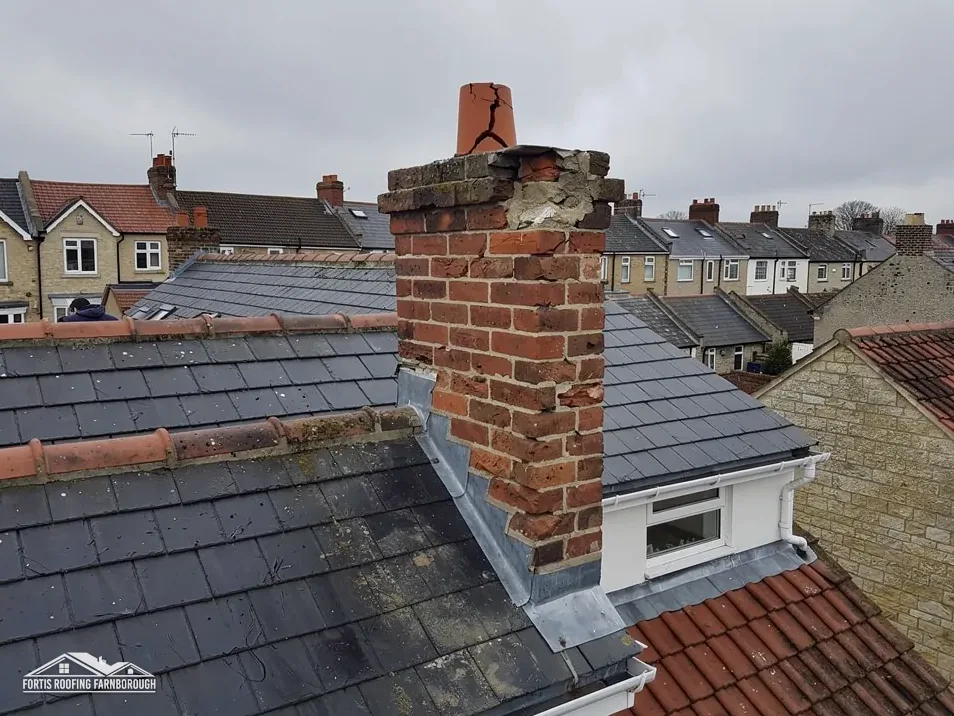
- lead that has cracked along a fold, lifted off the brickwork or slumped onto the tiles;
- a hollow sound or visible gap where the lead meets the stack.
Debris is a common cause. Leaves, moss and grit collect in the trough, hold water against the lead and speed up the failure. Lead also moves with temperature, expanding in warm weather and contracting in the cold, and a rigid or badly formed joint will crack over the years.
The stain does not always appear below the failure. Water can run along a timber or a course of brick before it shows. For this reason the survey covers the whole stack, and our answer on a chimney leaking in heavy rain explains how the source is traced.
Repair or replace, and what we check
A small split in an otherwise sound gutter can sometimes be repaired. A larger failure, or lead that has aged and cracked in several places, is better replaced, because a patch on tired lead soon fails again. Sealant smeared over a split is a stopgap that hides the fault without curing it.
Replacing a back gutter means lifting the tiles or slates beside the stack, removing the old lead, checking the timber boards beneath and forming a new trough with its apron. Lead is dressed into the mortar joints of the stack, and the joints are pointed afterwards. On a tall stack this usually needs scaffolding or a tower, which affects the price.
On the survey we photograph the leadwork from the roof and the loft, measure the stack and note the lead's condition. You see the pictures and the findings, then receive a single written price for the repair or the replacement.
If the stack itself is cracked or leaning, the leadwork is only part of the picture, and the chimney repairs hub covers the full range. For stains with no obvious cause, our guide to a damp chimney breast may help.