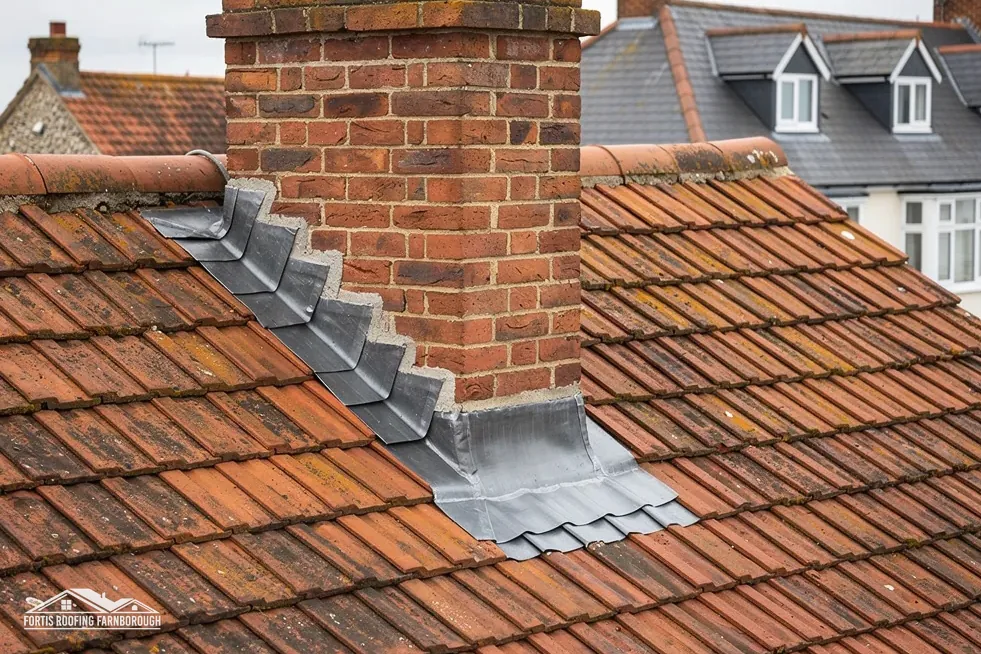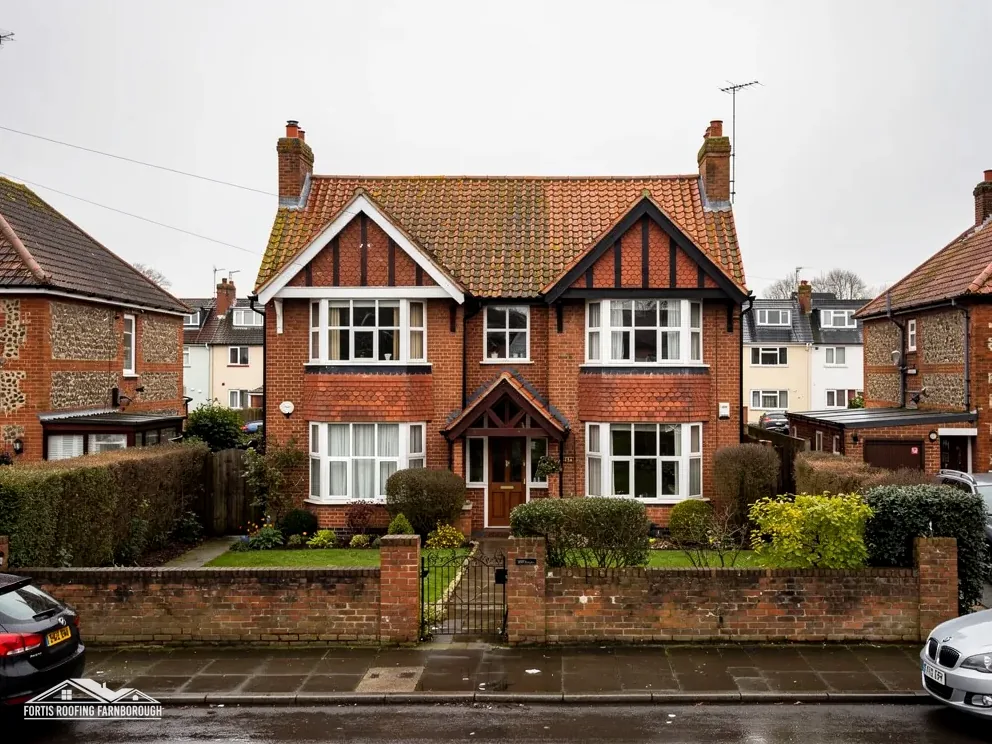
Cottages along the old road
In 1911 the county history found the village scattered along a north-south road, with many old cottages below Clandon Downs.
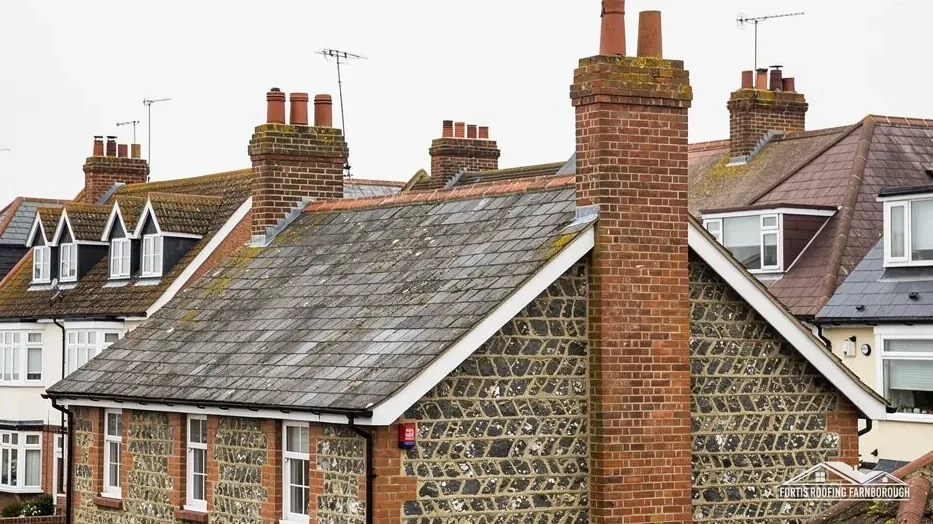
Roofs strung along the A247 beneath Clandon Downs
West Clandon sits where the Downs fall away to a Georgian park house, a turnpike road and a water works. Every roof here gets its own careful survey.
In 1911 the county history found the village scattered along a north-south road, with many old cottages below Clandon Downs.

The Onslows' house was built in 1731 by the second Lord Onslow to designs by Giacomo Leoni, in red brick with stone dressings.
A barn north of Summers, Brownlow Cottage and Cranley Cottages are each listed Grade II.
Map of West Clandon with Merrow, Burpham, West Horsley, Send marked around it.
Map data © OpenStreetMap contributors. Loads only when you ask for it.
The A247 runs the length of West Clandon, east of Guildford and beneath the Downs, and Farnborough lies 15.4 road miles off, westward.
About 15.4 road miles east of Farnborough · Guildford Borough Council and Surrey County Council.
West Clandon, park, road and chalk
How Guildford's planning and Surrey's licence apply to a West Clandon roof, what the 1911 county history records about the road, the park house and the water works, and where the conservation area and its listed buildings come in.

| No. | Chapter | The figure it turns on |
|---|---|---|
| 01 | Three bodies on the A247 | Guildford decides, Surrey licenses, West Surrey next |
| 02 | Leoni's house, a turnpike and a thirsty chalk | Clandon Park built in 1731 |
| 03 | The conservation area and nine listed buildings | Nine listed buildings within 500 m |
Chapter 01 of 03
| Matter | Handled by |
|---|---|
| Planning permission | Guildford Borough Council |
| Building control inspection | Guildford Borough Council's own service |
| Scaffold on the A247 or a lane | Surrey County Council, until 31 March 2027 |
| After 31 March 2027 | West Surrey Council replaces both |
| Civil parish | West Clandon |
West Clandon is its own civil parish, inside Guildford borough. Guildford Borough Council decides planning applications and also staffs the building control team that inspects roofing work, and Surrey County Council keeps the road licences until the end of March 2027. On 1 April 2027 a new West Surrey Council takes on both jobs. The village is strung along the A247, 15.4 road miles from the A325 in Farnborough.
Guildford offers no local percentage, so West Clandon jobs are sorted by the Planning Portal's pair of limits, 25 per cent of the envelope and 50 per cent of the roof, with covering weight as a further, separate trigger. Add 15 per cent to a roof's weight and approval plus a structural check follow, a point that bites hardest on slender cottage timbers.
We measure and weigh at the survey, so the answer rests on figures. A private building control route through a registered approver is the alternative.
Compare quotes on their contents. A cottage roof is small, but its access may be awkward, and a figure that leaves out scaffold, VAT or the removal of old material is likely to rise later. We give one written price after the survey, with the assumptions written in.
The A247 carries traffic through the village, and a house fronting it may have little ground between the wall and the footway. Where poles must go on the public footway, Surrey County Council's licence is a step in the plan: £208 for each 28 days, the same again on renewal, ten working days of notice, and a non-refundable application fee. On quieter lanes, or behind a garden, scaffold on your own land sidesteps the licence completely.
On the matter of who files the form, the council's page says nothing, so it joins the list of points to settle with the scaffolder. The frontage is measured when we survey, and a licence period, where one is needed, is sized from the job.
The county history says the turnpike of 1758 was diverted in places out of the narrow ravine of the old road, and the old line can still be seen in places. Where a house sits tight against a road, access is the question, and we plan ladders, deliveries and waste before the job starts.
Chapter 02 of 03
Dates from the 1911 county history for West Clandon
The 1911 county history gives West Clandon a rich paper record. It describes the village as scattered along a north-south road with many old cottages, below the chalk of Clandon Downs. The Onslow family's house, Clandon Park, was built in 1731 by the second Lord Onslow to designs by Giacomo Leoni, of red brick with stone dressings. The Guildford to Epsom road through Clandon became a turnpike in 1758 and was diverted out of the narrow sunken course of the old road, and Clandon station opened in 1885.
The history also notes that the Woking Water Works are in West Clandon, drawing water from the chalk to supply Woking and nearby villages, and that the works had seriously reduced the flow of springs on both sides of the chalk range. That is a detail about the ground, but it shows why this is a village below chalk: the water goes down into it quickly. For a roof the useful point is simple: water leaving it must go somewhere sensible, down gutters and downpipes to a drain or soakaway.
We test gutters and downpipes on every survey, running water through where it is safe, and we photograph any joint or outlet that fails. Renewal of the roofline parts, once the roof above is sound, is set out on our gutters, soffits and fascias page.
A railway station of 1885 is another marker in the record. Houses of different dates have the roofs of their decade, and a survey tells you which period yours belongs to by what it finds: nails, battens, underlay and the build of the ridge all differ between the 1880s and the 1980s. We record the details and compare them with what the repair needs.
A cottage and a park house sit at opposite ends of the roofing scale. A cottage has a steep, modest roof, perhaps on light old timbers, where weight and careful fixing matter. A park house has a big, complicated roof, often with lead gutters behind parapets, valleys and groups of chimneys, where access and joins matter. We look at what is there before we say what a repair needs, and we note that dated records tell us when buildings were made, not what is on them now.
For lead details on any roof, valleys, flashings and parapet gutters, our lead roofing and lead work page explains how they are renewed.
Chapter 03 of 03
| Item | In West Clandon | For roof work |
|---|---|---|
| Conservation area | West Clandon, within about 0.75 km of the centre | Check Guildford's map |
| Grade II listed | Barn 15 yards north of Summers (NHLE 1188834), listed 25 November 1985 | Listed building consent |
| Grade II listed | Brownlow Cottage, West Clandon Stores (NHLE 1029358) | Listed building consent |
| Grade II listed | Cranley Cottages, Cranley Lodge (NHLE 1377826) | Listed building consent |
West Clandon has a conservation area within about 0.75 km of its centre, and 9 listed buildings within 500 m. Among them are a barn 15 yards north of Summers, listed Grade II on 25 November 1985, Brownlow Cottage with West Clandon Stores and Cranley Cottages with Cranley Lodge, each Grade II. Guildford's map shows if your own house is inside the conservation area, and we look before we come.
A village with nine listed buildings close to its centre is a place where an owner of an ordinary house is likely to have a listed neighbour. That matters when a shared boundary wall or a gutter overhangs a listed roof, since work on one can touch the other. We note the neighbour's position at the survey and keep our work inside your own boundary.
A listed building needs listed building consent from Guildford Borough Council for any work that would affect its character. A repair that mirrors the original stands the best chance of leaving character alone, and sharp photographs of today's roof are the evidence for it. We prepare that record as part of the survey, and we describe the work in the terms the council expects.

Guildford's online map has an Article 4 layer, and for addresses it reaches, the council's consent must come before a stack is demolished or reshaped. Repointing and flashing repair are upkeep and sit outside that. We study the map before we call, so the stack question is answered before the first conversation.
Park and cottage owners alike gain from a written schedule of the roof before any repair. It lists each slope, each valley and each chimney, with a photograph and a note on condition, and it puts the repairs in an order. The owner can then decide what to do now, what to plan and what to watch, which is how a roof is kept in good order for years to come.
Listings and counts
Older cottages and larger houses often have chimneys that are no longer used but still stand. A stack that leans or sheds mortar is a repair, and our chimney repairs page explains how it is done.
An unlisted house outside the area is plain repair. Dated photographs are handy when selling, when talking to an insurer, and when matching the next repair.
Take care. A covering heavier by 15 per cent or more brings Building Regulations approval and a structural check into play, and slight old timbers may not carry it. We weigh both coverings, inspect the rafters from the loft, and suggest a lighter alternative if the frame is slender, with photographs to show why.
It should travel down gutters and downpipes to a drain or soakaway. Where a downpipe runs to a soakaway, a clogged one backs water up. A flush test shows where a gutter leaks, and photographs of each downpipe foot show whether the water leaves, so you can see any blockage for yourself.
The address decides, and Guildford's Article 4 map layer shows it. Where a direction reaches a house, consent comes before a chimney is demolished or reshaped, while repointing and flashing repair need none. Your address is checked before the survey, and then you hear on which side your stack falls and what to do.
Not quite. A large house roof is usually bigger and more complicated, often with lead gutters, valleys and many chimneys, and any work affecting a listed building's character needs consent from Guildford Borough Council. A cottage is simpler, but the method stays the same: survey, photograph, record, and repair like for like, whatever the size of the roof.
Get your free roof quote
Pass us your West Clandon address with a note of the fault, and a survey visit gets fixed.
10-year workmanship guarantee, in writing.