1980s housing
Rushmoor's overview dates Southwood's new housing to the 1980s, which with Cove's estates led to a new town centre.

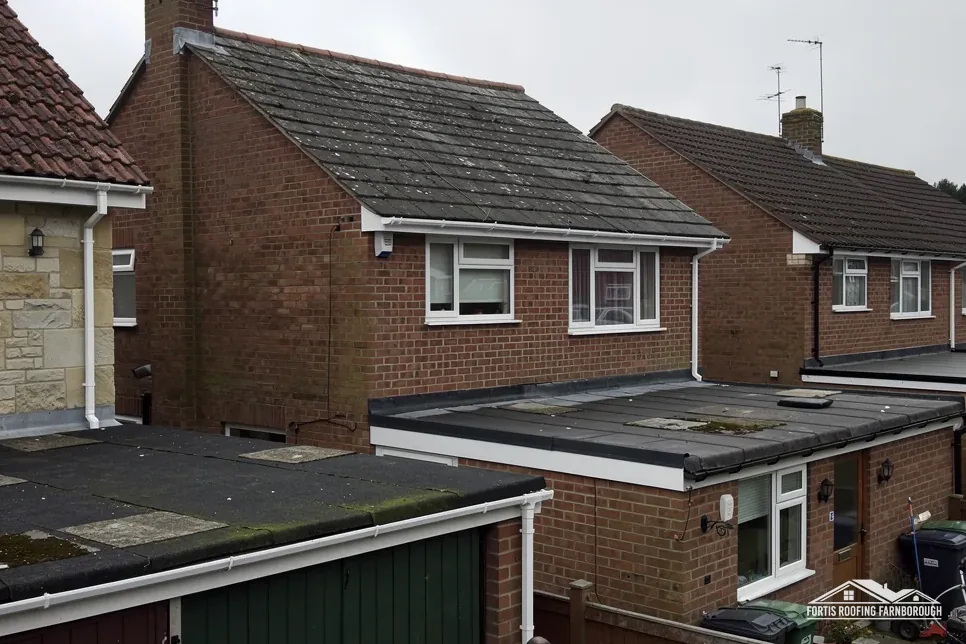
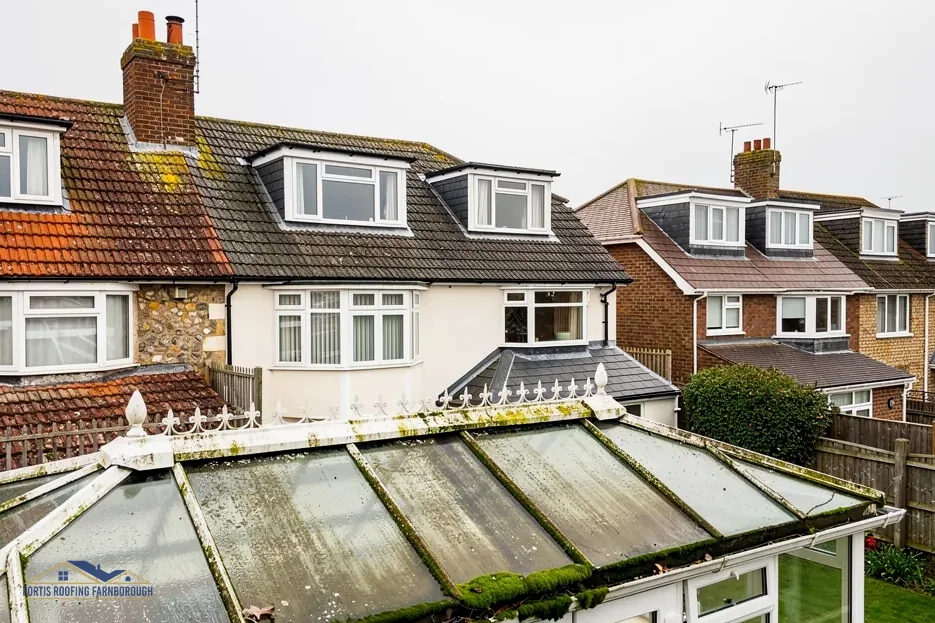
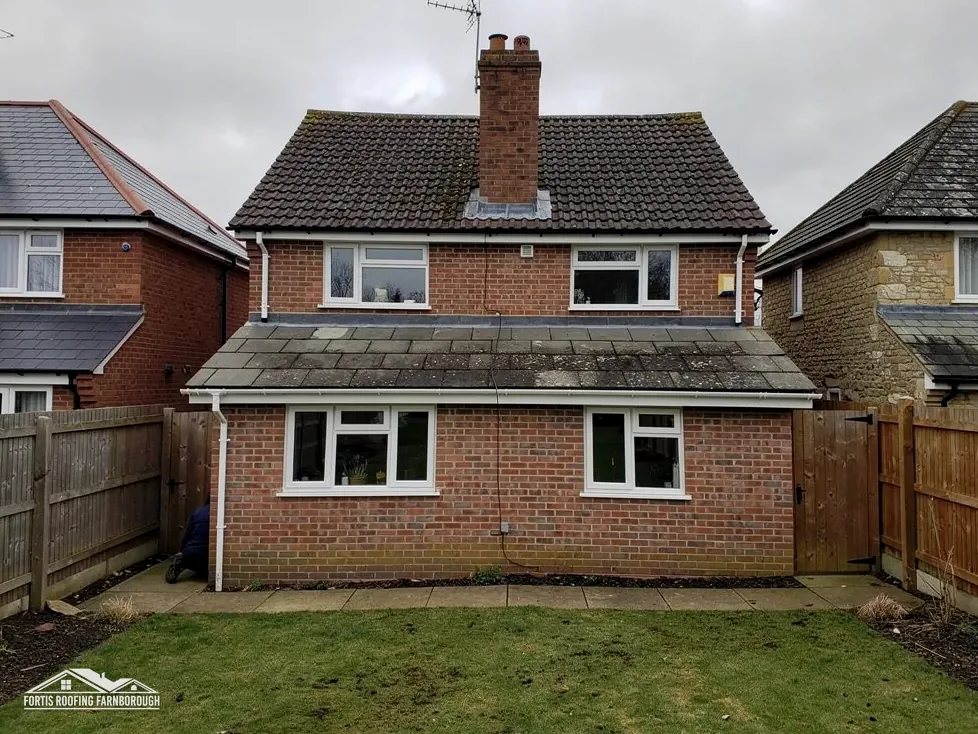
Roofs in a 1980s neighbourhood on Farnborough's western edge
Southwood is a 1980s neighbourhood on Farnborough's western edge, beside Cove. Each roof is surveyed slope by slope, photographed, then priced once in writing.
Rushmoor's overview dates Southwood's new housing to the 1980s, which with Cove's estates led to a new town centre.
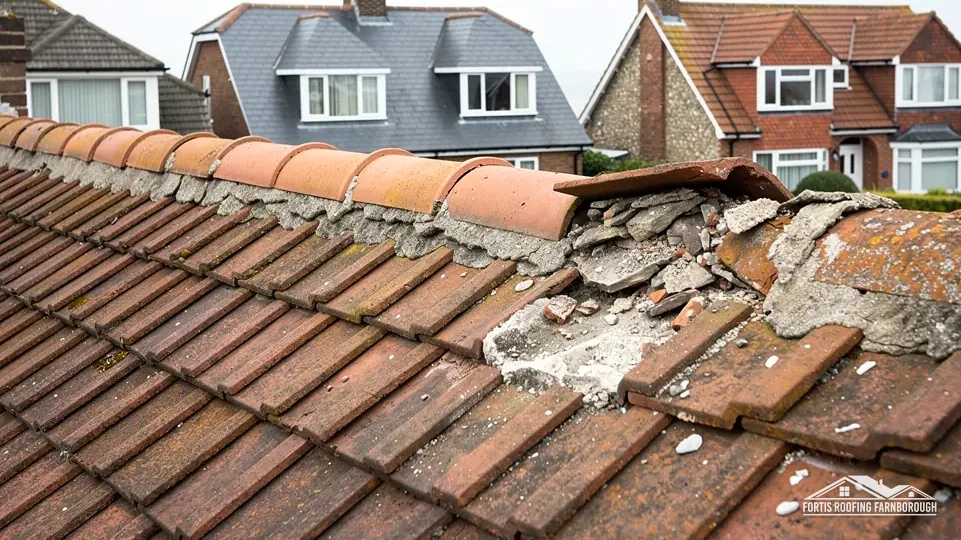
A house built in the 1980s is now about 36 to 46 years old, so its roof needs close attention.

Parts of the land within about 250 m of Southwood's centre sit in Flood Zone 3, per the Environment Agency.
Map of Southwood with Cove, West Heath, Fleet, South Farnborough, Farnborough marked around it.
Map data © OpenStreetMap contributors. Loads only when you ask for it.
North-east lie Cove and West Heath, Hawley sits north, South Farnborough east, and Church Crookham south-west, with Fleet and Elvetham Heath further out to the west.
About 2.5 road miles west of Farnborough · Rushmoor Borough Council and Hampshire County Council.
Southwood, forty years on
What Rushmoor records about Southwood's 1980s housing, how long common coverings are published to last at that age, and which map layers and consents surround a roof job in this part of Farnborough.

| No. | Chapter | The figure it turns on |
|---|---|---|
| 01 | A 1980s neighbourhood that helped create a town centre | Southwood 1980s; Cove 1950s and 1960s |
| 02 | Forty years on: published lifespans of common coverings | Concrete tile 40-50 years; clay 60-80 |
| 03 | Flood Zone 3, the canal and Rushmoor's consents | Flood Zone 3; canal conservation area 2.5 km |
Chapter 01 of 03
What Rushmoor's overview and the planning dataset give for Southwood
Rushmoor's conservation overview gives Southwood one line of history: housing built there in the 1980s, which together with Cove's estates of the 1950s and 1960s led to a new Farnborough town centre. It is brief, but it is firm. A house built in those years is now somewhere between about 36 and 46 years old, an age at which every part of a roof earns a proper look.
Roofs seldom fail on a date. They fail at particular places for particular reasons, and age raises the odds at each of them. Nails that held a tile for decades rust or loosen, ridge and verge fixings work free, valley linings and flashings wear through, and the underlay beneath dries out and tears. A felt-covered garage roof has a shorter life again than the tiles on the house. A survey is how those separate lives are read, one at a time.
Our routine is the same whatever the house. Up on the slopes we raise a handful of tiles to see the timbers and underlay, photograph each ridge, hip, verge and valley, and study every flashing. In the loft we look for light at the eaves and for damp or torn underlay. On any flat roof we check falls, laps, outlets and upstands. Measurements go into the report beside the photographs, so the reasons for a recommendation are there for you to see.
A house of this age may also have had its covering replaced since it was built, so one house can carry an older and a newer covering on different slopes. The report identifies each slope separately and never assumes an age from the street.
Pitched repairs are explained on our pitched roofing page, and garage, extension and porch roofs on our flat roofing page. If a repair would be enough, a repair is what you receive a price for, and a new covering is advised only where the old has gone across the whole house.
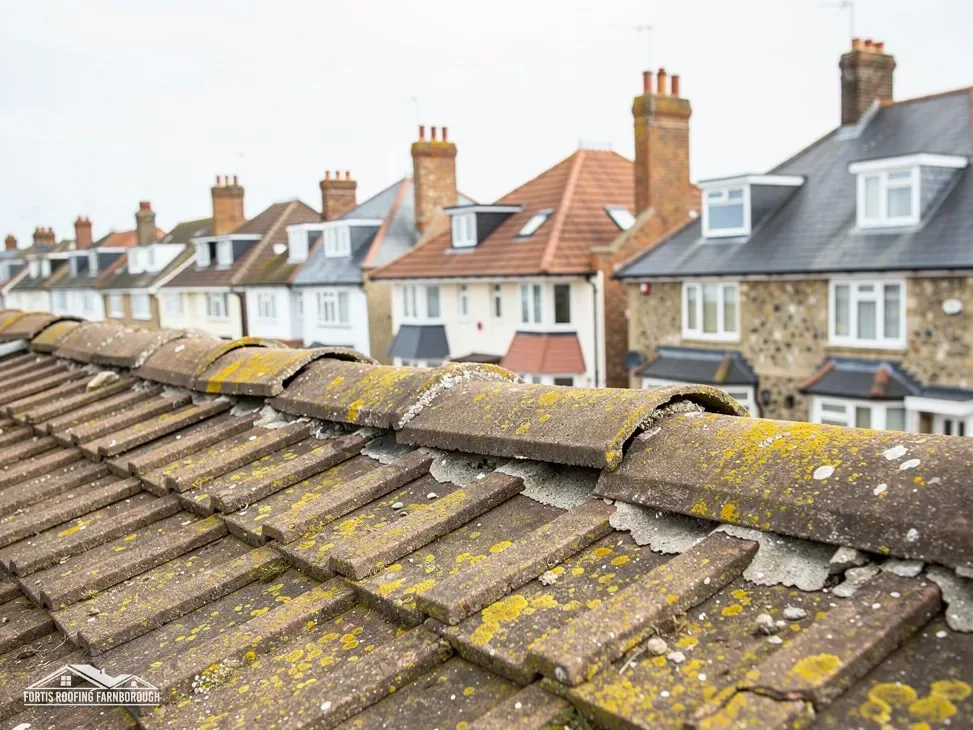
None of that needs scaffold on its own. Most inspections are done from ladders, a tower and the loft hatch, and the report you receive afterwards is the first document in the job, with every photograph numbered so you can follow our reasoning step by step.
Chapter 03 of 03
| Record | What it says | For the roof |
|---|---|---|
| Flood Map for Planning | Flood Zone 3 within about 250 m of the centre | Keep gutters and outlets working |
| Conservation areas | Basingstoke Canal, within about 2.5 km | Check your address with Rushmoor |
| Planning authority | Rushmoor Borough Council | Asked about changes to the roof's look |
| Building control | Hart and Rushmoor Building Control Partnership | Asked when a job passes the limits |
| Scaffold licence | Hampshire County Council | Needed on a highway only |
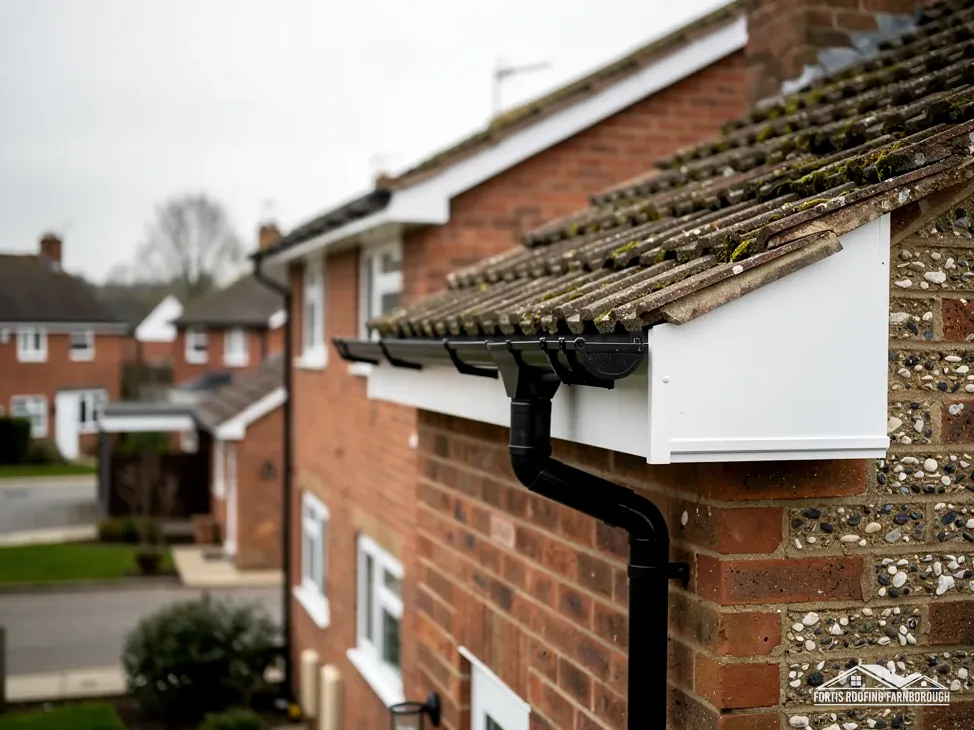
On the Environment Agency's map, part of the land within about 250 m of Southwood's centre is marked Flood Zone 3. A flood layer concerns land and says nothing about tiles or battens, so repairs here follow the usual methods. It does give a sound reason to look hard at drainage. A gutter that sags at one joint, an outlet blocked with moss or leaves, or a downpipe discharging against a wall will all put water where it should not be, and that water is often blamed on the roof.
Each Southwood survey traces rainwater from eaves to ground. Brackets, joints and outlets are photographed, any stretch where water stands is noted, and the report states what we found. Our gutters, soffits and fascias page explains how repairs and replacements are done.
Of the conservation areas in the national dataset, the Basingstoke Canal one is nearest, within about 2.5 km of Southwood, and it does not reach the 1.5 km box drawn round Southwood's centre. For your own address Rushmoor Borough Council's planning team has the answer, and a different covering or ridge is the sort of change we raise with it before a figure is written.
For building control you deal with the Hart and Rushmoor Building Control Partnership, or hire a registered approver instead. Ceilings of 25 per cent of the building envelope and 50 per cent of the roof mark the Planning Portal's no-application zone, and a covering 15 per cent heavier than the original falls outside it. Scaffold on the highway needs a Hampshire County Council licence, which the scaffolding company requests on your behalf, with 10 clear working days of notice. Scaffold wholly on private ground is outside the licence scheme, as many garage and extension repairs are, and the survey says which approach suits your roof.
Whichever route a Southwood job takes, we put the answer in writing, naming the office that gave it and the date it replied, with the photographs and measurements attached, and fix the order of events before any scaffold is booked, so that the weeks line up and nobody waits on a missing consent.
Not on age alone, no. HomeBuilding gives plain concrete tile as 40-50 years and Marley says around 60, and neither is a promise. What decides it is on the roof itself: cracked tiles, loose ridge fixings, worn valleys and the state of the battens. If only some parts have failed, a repair is the right quote.
Because some land within about 250 m of the centre is in Flood Zone 3, and because blocked or sagging gutters send water down walls, where it is often mistaken for a roof leak. The water is followed from slope to downpipe, each joint and outlet is photographed, and any run that holds water is reported.
The national dataset names it as the nearest, within about 2.5 km of the centre, and none reached the 1.5 km box around Southwood's place point. Rushmoor Borough Council alone can say whether your address lies in a conservation area, and we put the question before quoting for work that changes the roof's appearance.
HomeBuilding gives torch-on felt as 10-15 years and Less gives 10 to 20 years, so the published figures differ and we quote both. Neither is a promise. A garage roof's condition, its falls and its outlets say more than its age does, and the survey records all three before any price is written.
Get your free roof quote
Send us your Southwood road and what you have noticed. We survey first, then send your one written price.
10-year workmanship guarantee, in writing.