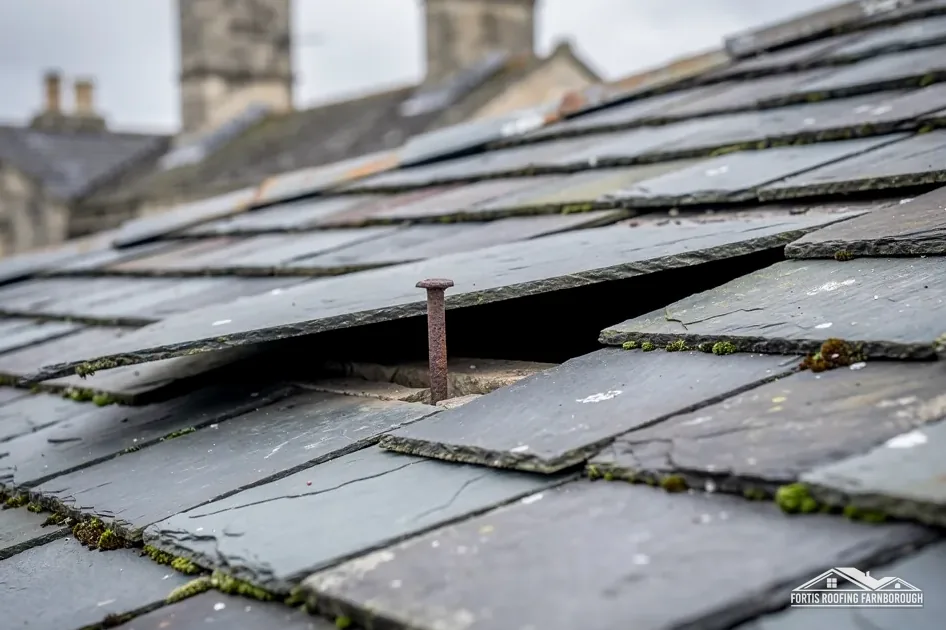
Slate roofs and tile-hanging
Rushmoor's 2025 appraisal lists slate roofs and tile-hanging among the conservation area's characteristic features.
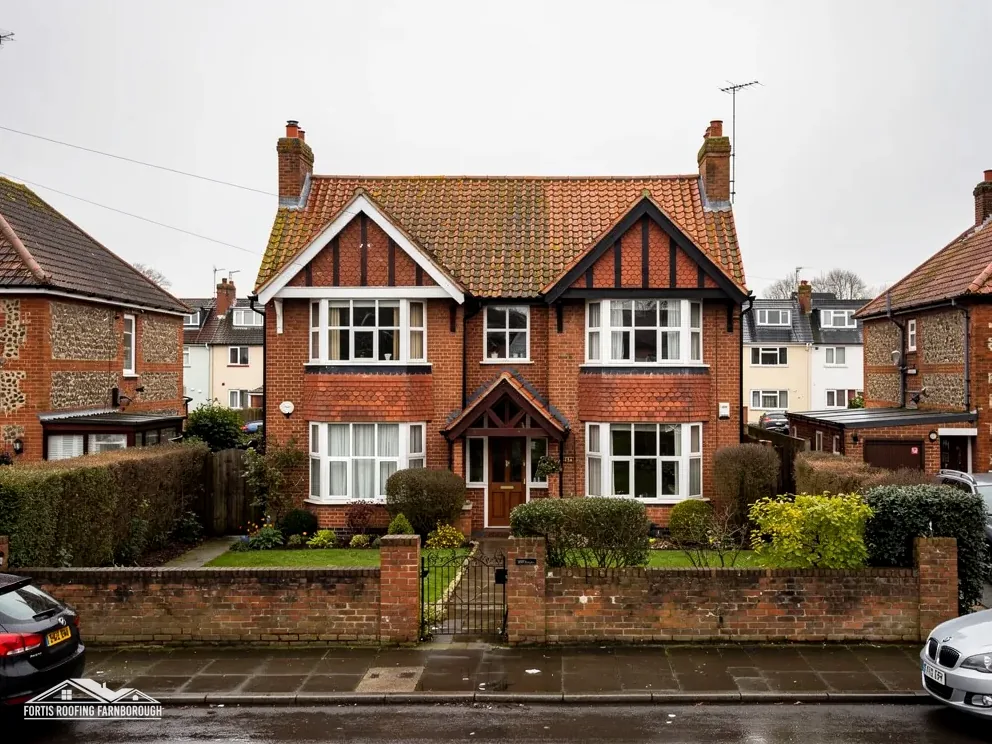
Roofs on the Victorian officers' avenues on Farnborough's south side
South Farnborough is the Victorian officers' suburb on Farnborough's south side, laid out with wide avenues. Every slope is surveyed and photographed, and the price arrives once, in writing.
Rushmoor's 2025 appraisal lists slate roofs and tile-hanging among the conservation area's characteristic features.
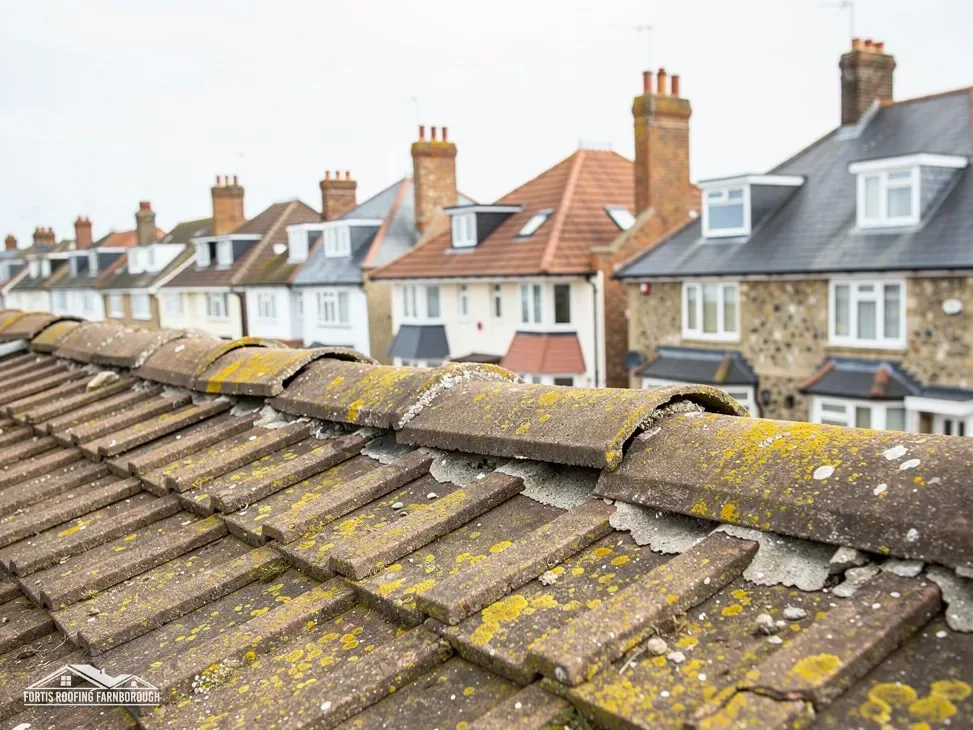
The same appraisal names decorative terracotta ridge tiles and finials, which we photograph and match on any repair.

Alongside the villas, Rushmoor notes inter-war housing and infill built between the 1930s and the 1990s.
Map of South Farnborough with North Camp, Mytchett, Ash Vale, Frimley Green, Farnborough marked around it.
Map data © OpenStreetMap contributors. Loads only when you ask for it.
North Camp lies to the south, with Ash Vale south-east, Frimley Green north, Mytchett to the north-east, and Cove and West Heath further north-west.
About 1.5 road miles south-east of Farnborough · Rushmoor Borough Council and Hampshire County Council.
South Farnborough, the villa record
How the Victorian officers' suburb was laid out, how long slate, clay and concrete are published to last, and which consents a conservation area roof job passes through.
| No. | Chapter | The figure it turns on |
|---|---|---|
| 01 | Officers' villas, tree-lined avenues and a 1987 designation | Cottage Company 1863; roads by 1874 |
| 02 | How long slate, clay and concrete last | Welsh slate 100+ years; clay 60-80 years |
| 03 | Consents for a conservation area re-roof, step by step | Rushmoor plans; Hampshire licenses scaffold |
Chapter 01 of 03
South Farnborough's founding in four published dates
South Farnborough was built as a place for army officers to live. Rushmoor's conservation overview says the heathland here was sold for housing in the 1860s, and two property companies formed to build houses for them, among them the Farnborough Cottage Company of 1863. Its agent, Edward Chatfield, and its architect, Henry Curry, laid out the wide tree-lined avenues, and the principal roads were in place by 1874. Measured from the A325, the suburb is 1.5 road miles south-east of Farnborough.
Rushmoor's South Farnborough appraisal, published in June 2025, lists slate roofs, tile-hanging, white render, red brick with contrasting string courses, and decorative terracotta ridge tiles and finials as characteristic features of the conservation area. It adds that alongside the Victorian and Edwardian villas there are red-brick and white-rendered cottages, small villas and terraces, inter-war housing, and infill from the 1930s to the 1990s. The council designated the area in 1987 and revised it in 2025.
For a roofer that list reads as a checklist of what to record before touching anything. Slates, tile-hanging on walls, ridge tiles and finials are the parts that wear first with age, and they are also the parts that give the area its look. We photograph each of them on the survey, note which are sound enough to keep, and write that into the report. A finial that can be re-bedded is not replaced, and a cracked ridge tile is matched with a like one instead of being swapped for a plain tile.
Not every house here is Victorian, and the appraisal's own list shows it. Inter-war homes and later infill have their own coverings, details and weak points. So each survey begins on the roof itself, with the appraisal as background and our photographs as the evidence. Our slate roofing page explains how slates are fixed, repaired and replaced, and what a slate roof should be asked to do.
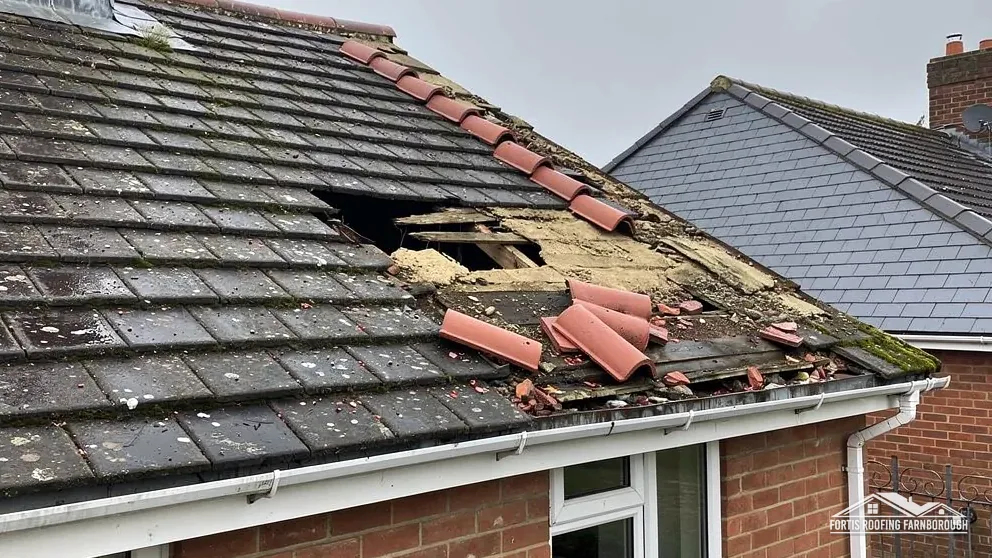
The suburb's age brings one more habit to the survey. A roof that has stood since the nineteenth century has often been patched or part-recovered more than once, so we look for the joins between old and new work: a different slate size, a change in nail line, a ridge that has been re-bedded in a harder mortar than the one beneath it. Those joins are where water tends to find its way in, and they are the first things we photograph.
Chapter 03 of 03
| Question | Who answers it |
|---|---|
| Will the work change how the roof looks? | Rushmoor Borough Council planning team |
| Is the house in the conservation area? | Rushmoor's conservation area map |
| Does a re-roof need building control? | Hart and Rushmoor Building Control Partnership, or a registered approver |
| Who licenses scaffold on the road? | Hampshire County Council; the scaffold firm applies |
| Is there an Article 4 direction nearby? | Church Circle: front garden parking, Rushmoor's list |
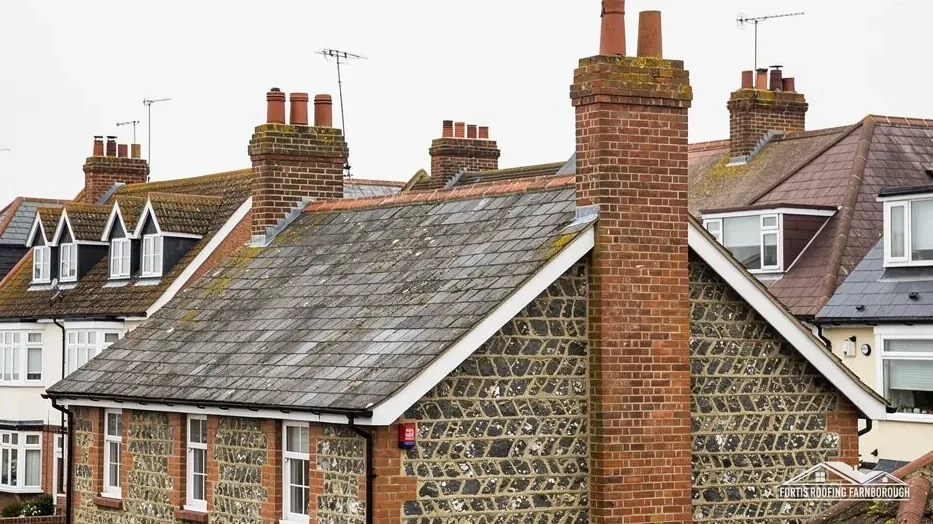
Planning decisions for South Farnborough sit with Rushmoor Borough Council, while the roads and pavements belong to Hampshire County Council. For a house in the conservation area, the opening planning question is whether the work will alter the roof's appearance. Mending with matching slate or tile and the same ridge detail is one kind of job. Swapping to another covering material is a second kind, and Rushmoor's planning team hears about that before a price exists. Rushmoor also says that flats do not have any permitted development rights, so planning permission is required for every job on a flat that is not a like-for-like replacement. Our guide to Rushmoor conservation areas and roof work covers the detail.
Rushmoor's own list of Article 4 directions includes the Church Circle direction, which names South Farnborough. The council describes it as covering homes in Church Circle, part of the conservation area, and the conversion of front garden areas to provide off-street parking. That is not a roof rule. The planning team is still asked about each address, since the notices fix the boundaries.
Building control for a re-roof comes from the Hart and Rushmoor partnership, which shares one team across both councils, or from a registered building control approver. Two Planning Portal figures matter here: 25 per cent for the building envelope and 50 per cent for the roof. Staying below both usually means no application. A covering that weighs 15 per cent more than the old is judged differently, with a structural check first. Scaffold on the road is licensed under the Highways Act 1980 by Hampshire County Council, which expects the scaffolding company, and not the householder, to apply. Hampshire County Council needs 10 clear working days before the start, and an expired licence cannot be extended, so extra time means applying afresh.
None of this should slow a small repair down. Replacing a handful of slipped slates in the same material is the sort of job the survey can price within the week, and it carries no application at all. The paperwork matters when the job changes the look of the roof, when a whole slope is re-covered, or when scaffold has to stand on the road. In those cases we tell you at the survey which of the steps in the table apply, and in what order, so that nothing arrives as a surprise.
A new covering changes the roof's appearance. The South Farnborough conservation area dates from 1987 and was revised in 2025, so Rushmoor Borough Council's planners are consulted first. A like-for-like slate repair is a different question. We photograph the existing slates and ridge details at the survey so a match can be shown.
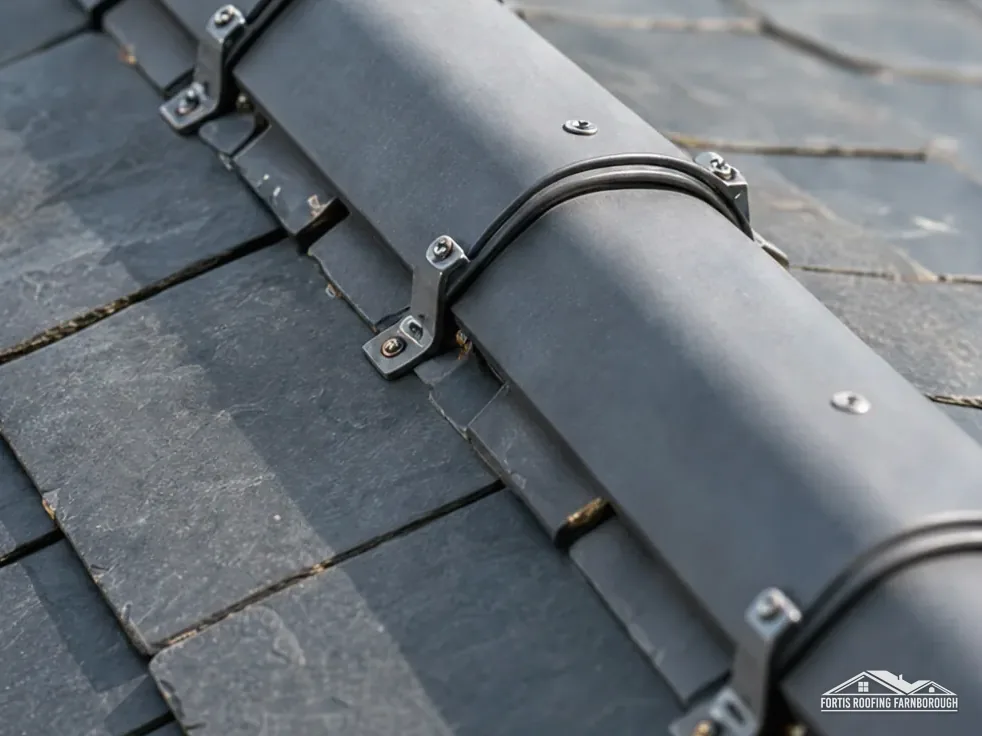
Rushmoor's appraisal names them as characteristic features, so each is recorded, sound examples are retained for re-use and any replacement is matched. Mortar alone is no longer relied on for ridge tiles under BS 5534, which Marley treats as good practice rather than law, so they receive mechanical fixings as well.
Rushmoor describes it as covering the conversion of front garden areas to provide off-street parking, which is not a roof matter. The council's notices set the boundaries, so we check your address with its planning team instead of assuming, and tell you plainly what the answer means for the job.
Under Hampshire County Council's terms a licence needs 10 clear working days of notice, costs £211.90 for its first 2 weeks and £72 for each further 2, and cannot be extended. The dates are fixed during the survey visit, so the poles stay up only as long as the programme needs.
Get your free roof quote
Tell us your South Farnborough road and what you can see. A survey follows, then one price.
10-year workmanship guarantee, in writing.