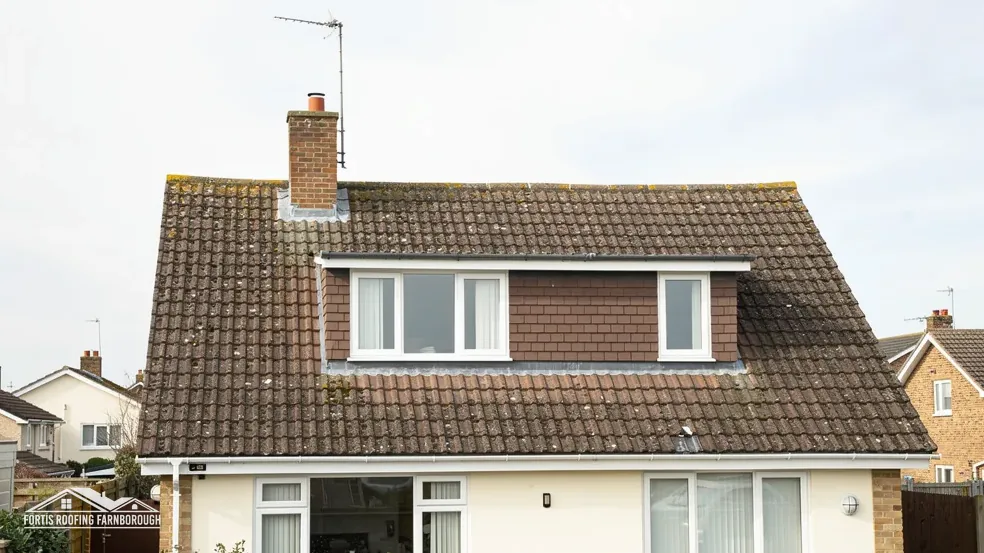
A farming parish until 1896
As late as 1896 Northolt was a lightly populated farming parish of five compact settlements, apart from a brick industry.
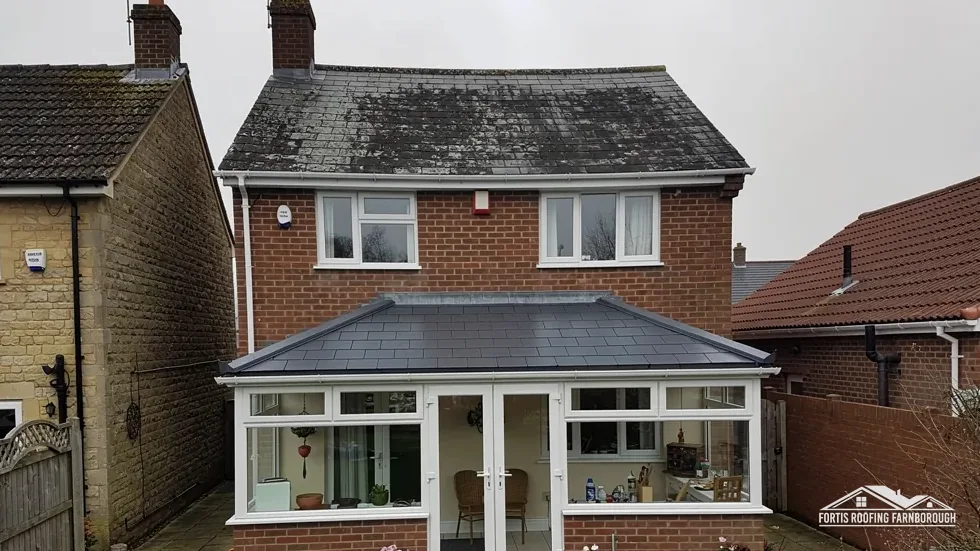
Roofs on estates and flat blocks built after 1928 on clay
Northolt stayed a lightly populated farming parish until 1896, then filled with council estates and flats. We survey flat and pitched roofs on their evidence.
As late as 1896 Northolt was a lightly populated farming parish of five compact settlements, apart from a brick industry.
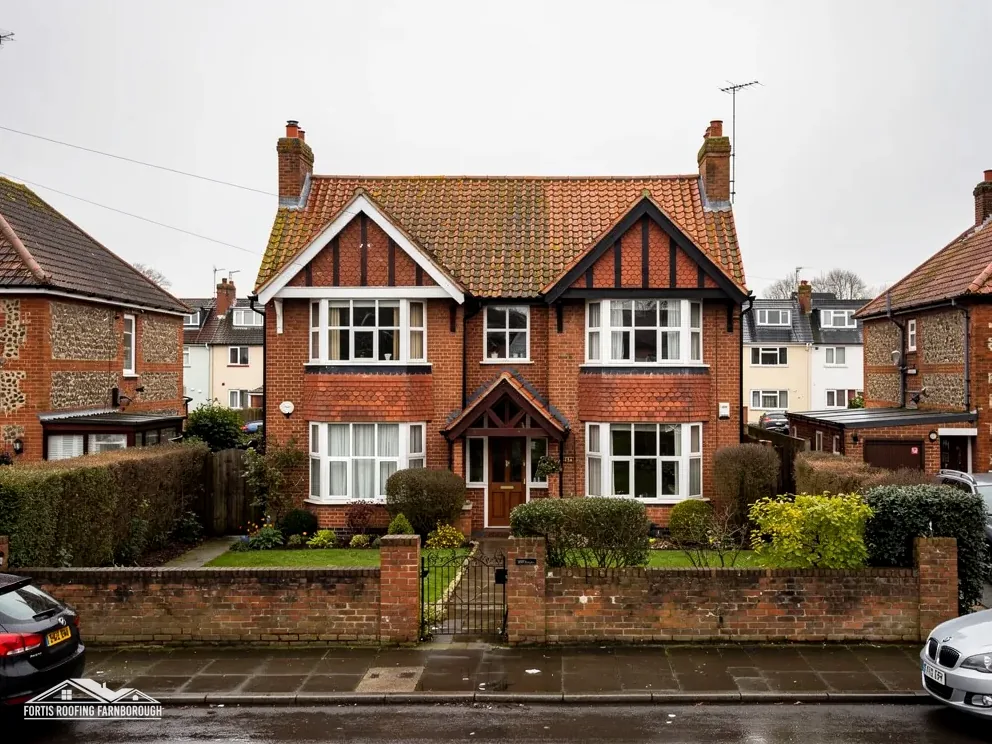
By 1946 work had begun on five council estates, the largest being South-East Northolt and Bridge Farm.
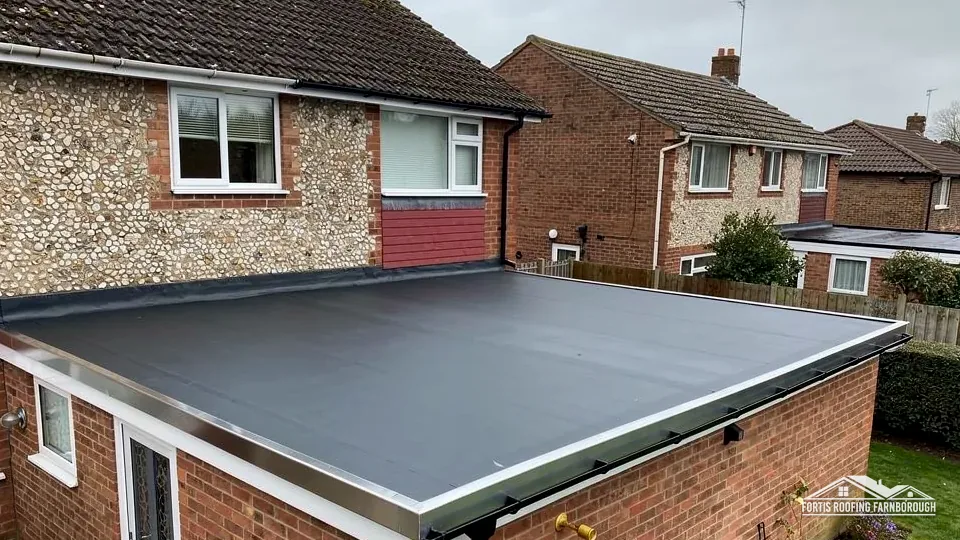
Building began in 1951 and by 1963 1,084 of 1,150 planned homes were complete, including several multi-storey blocks of flats.
Map of Northolt with Southall, Ruislip, Hayes, Brentford marked around it.
Map data © OpenStreetMap contributors. Loads only when you ask for it.
Northolt is a suburb on the A40 west of Greenford, on London Clay, and Farnborough lies 28.6 road miles away, to the south-west of it.
About 28.6 road miles north-east of Farnborough · London Borough of Ealing (unitary).
Northolt, flat roofs and estates
How long flat roof coverings last according to two guides that disagree, what falls a flat roof needs, how Northolt's estates and flats grew from 1928, and what flats and Grade I St Mary's mean for a repair.

| No. | Chapter | The figure it turns on |
|---|---|---|
| 01 | Flat roof life, and what the guides disagree on | Two guides, two ranges |
| 02 | From farm parish to estates on London Clay | 1,084 homes by 1963 at Northolt Park |
| 03 | Grade I St Mary's and the village green | St Mary's church, Grade I |
Chapter 02 of 03
Northolt's building boom, four published figures
The Victoria County History of 1971 says that as late as 1896, apart from a local brick industry in the south, Northolt was a lightly populated agricultural parish with five compact settlements. Poor water supply and bad roads were blamed for the slow pace of development. Only 52 council dwellings were built between 1928 and 1939, but by 1946 work had begun on five council estates, the largest being South-East Northolt and Bridge Farm on the old brick-field area.
The borough council bought the 124-acre Northolt Park estate in 1946. Building began in 1951, and by 1963 1,084 of the planned 1,150 homes, including several multi-storey blocks of flats, were complete. Apart from two areas of brickearth in the extreme south, the soil is London Clay. The picture is of a place where much of the housing went up after 1928, though the record does not describe the roofs themselves.
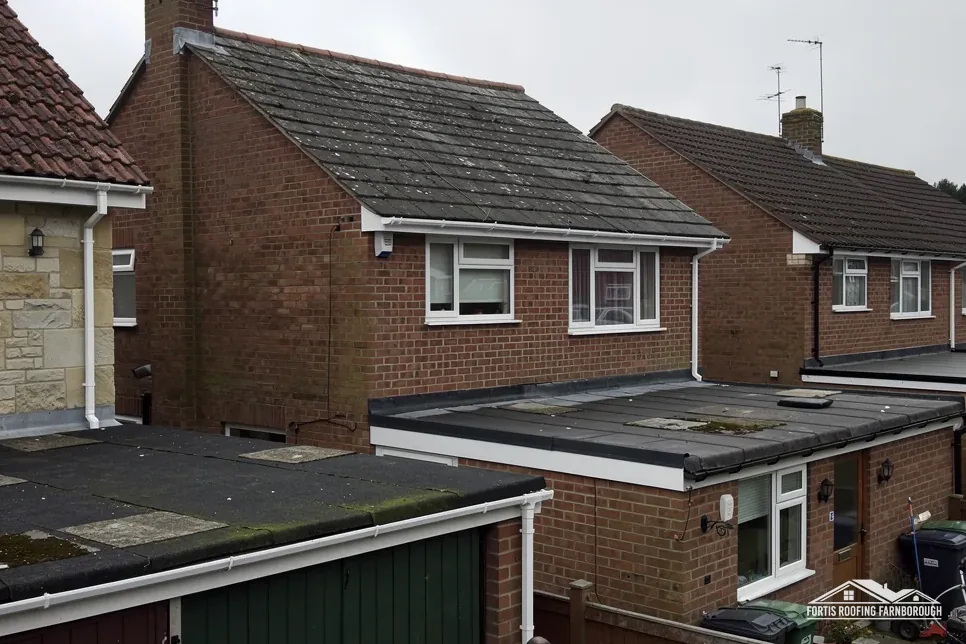
A roof from the 1950s is now more than seventy years old, so any covering still on it is probably not the first, and may already have been replaced once or twice. A survey of a roof of that age checks tiles or slates for slipping, the battens beneath, any flat section's membrane and seams, and the gutters and fascias, all of which are photographed. Gutter boards are worth a glance too, since rot in the timber that carries a gutter is often the first sign that it is about to fail, and it is invisible from the ground.
On a block of flats, the roof belongs to the building and not to one flat. Responsibility normally sits with the building's freeholder or its managing agent, and a leak into a top-floor flat can begin in the roof or in a gutter that serves several homes. We report the findings and the photographs in a form that you can pass on to whoever manages the block.
Northolt Park
Brick-fields mean clay, and clay soil moves with the seasons, so an old estate house can show it. A cracked ridge or a gap at a flat roof upstand can show that a building has shifted slightly, and the survey records those joints as well as the wear, with a photograph of each.
Chapter 03 of 03
| Record | In Northolt | For roof work |
|---|---|---|
| Conservation areas | Northolt Village Green; Canalside, north-west part | Matching repairs; ask Ealing about changes |
| Grade I listed church in use | Church of St Mary (NHLE 1079414) | Church of England faculty system |
| Listed buildings nearby | 1 within 900 m of the centre | Check before work near it |
| Blocks of flats | No permitted development rights | Planning permission for changes to appearance |
Northolt Village Green is the conservation area nearest the centre, inside about 0.75 km, and the same search also reaches the north-west part of Canalside, so the line between them matters. Ealing's planning team can tell you which, if either, takes in your street. In such an area, matching materials preserve the character, and any change of covering is for the planners to hear about before a date is fixed.
St Mary's has been listed Grade I since 24 February 1950, and the national list holds it as the only listed building within 900 metres of the centre of Northolt. Its congregation worships in the Anglican tradition, which places roof work under the faculty system. There is no listed building consent question for ordinary houses and flats nearby, though a neighbour's old building is still worth a check before scaffold goes up.
For an estate house, the usual route applies: repair, or re-roof after a survey and one written price, with the findings explained plainly. With a flat, you begin with the freeholder or management company, and a change to the roof's appearance needs planning permission because flats carry no permitted development rights. Our planning permission and roof work guide explains the difference between maintenance and alteration.
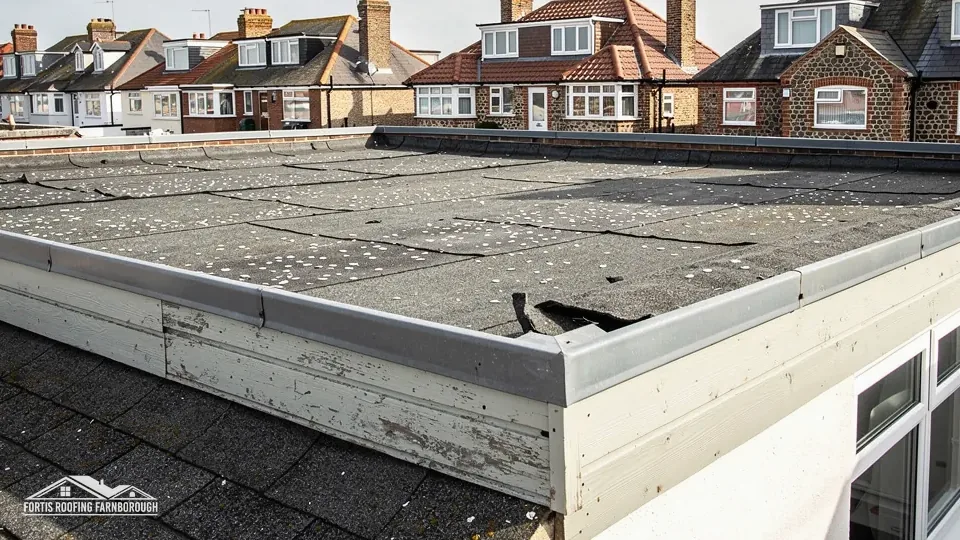
For flat roofs, our flat roofing page covers EPDM, GRP and felt in detail. For gutters and fascias on blocks, gutters, soffits and fascias explains the options.
For every building, flat block or house, our dated photographs of the roof from before and after travel with the written price. On a block, a further copy can go to the managing agent.
If a leak into a flat has an unclear source, the survey follows the water from the ceiling stain upward, through the flat above if access is given, to the roof outlet or joint that failed. It is slower than guessing, and it finds the real cause, which a patch applied to the wrong spot never does.
Where a block fronts a pavement, a scaffold frame needs a highway licence under section 169 of the Highways Act 1980, and it has to be laid out around residents' entrances so that nobody loses access to their front door.
One more practical point: waste from a block roof is lowered in sacks or chutes to a skip at the kerb, and the skip is placed to leave bin stores and entrances clear.
We look for water still standing a day or two after rain, then check outlets, upstands and the surface. BS 6229:2025 keeps a minimum finished fall of 1:80 for ordinary areas, and roofs are designed for 1:40 so they still drain when finished. Ponding can mean the fall was lost, or never there.
The two guides differ. HomeBuilding gives EPDM 25 to 30 years and Less 30 to 50, GRP 25 to 30 and 25 to 40, and felt 10 to 15 and 10 to 20. Treat them as typical ranges, never promises, because looking at your own roof tells you much more than either guide can.
Replacing it like for like is maintenance, but permitted development rights do not extend to flats, so anything that changes the roof's appearance needs planning permission. The roof also usually belongs to the freeholder, so approach the managing agent first. We supply a survey report and photographs that you can pass on to them.
No. St Mary's has a Grade I listing, yet it remains a place of Anglican worship, so it falls within the ecclesiastical exemption and its roof is a faculty matter. The London Borough of Ealing grants listed building consent for other listed buildings, and St Mary's is the only listed building the national list records within 900 metres of the centre.
Get your free roof quote
Give us your Northolt address, noting house or flat, and we will book a time to survey the roof.
10-year workmanship guarantee, in writing.