
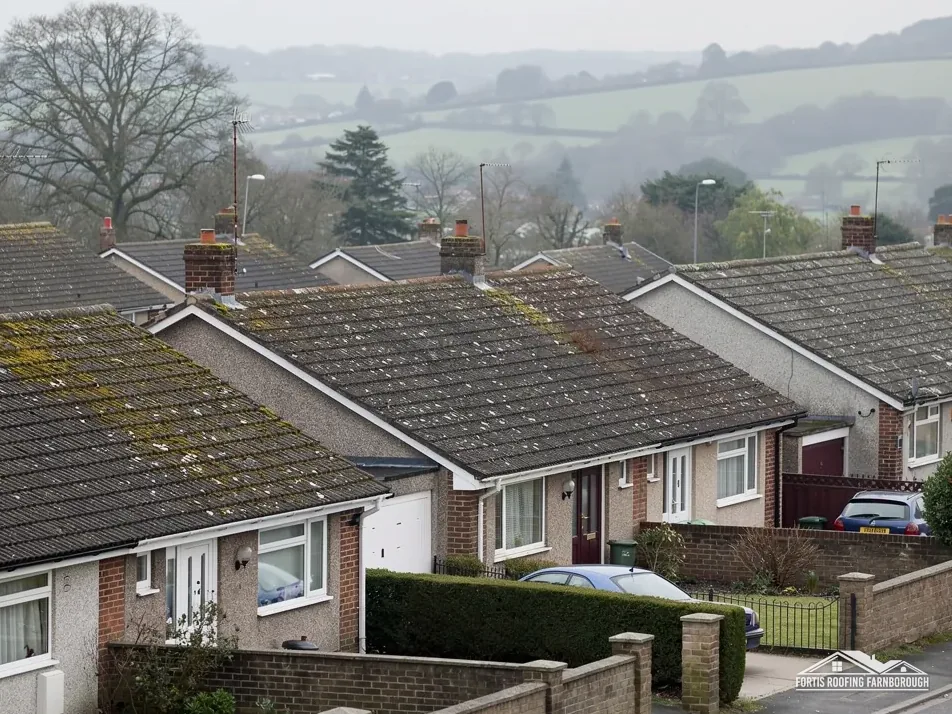
The refaced rectory
The rectory house is a large early 17th-century building refaced with brick, says the 1925 county history.

Roofs on Horton's brick-refaced farmhouses and Milton's village church
Horton's rectory is a large early 17th-century house refaced with brick, and Milton lived here for six years. We survey every roof carefully and give one written price.
The rectory house is a large early 17th-century building refaced with brick, says the 1925 county history.
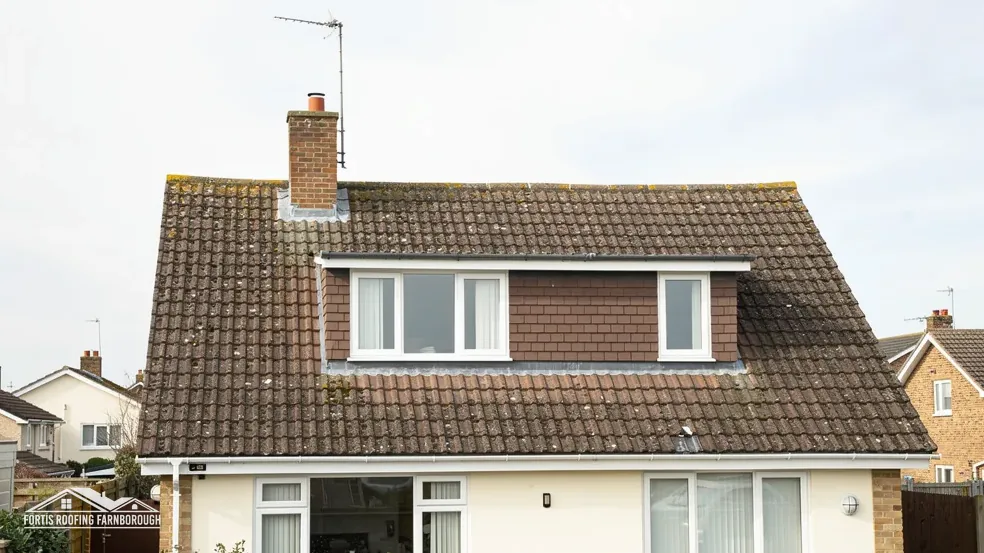
Asgood Farm is a two-storey 17th-century building with a facing of modern brick.

Berkin Manor was built about 1850 on an older house's site, leaving a red brick dovecote.
Map of Horton with Colnbrook, Poyle, Wraysbury, Datchet marked around it.
Map data © OpenStreetMap contributors. Loads only when you ask for it.
Colnbrook is the nearest neighbour, with Poyle just beyond it, Wraysbury to the south-west, Datchet to the north-west, Stanwell Moor to the south-east and Langley further north.
About 19.9 road miles north-east of Farnborough · Royal Borough of Windsor and Maidenhead (unitary).
Horton, lead and old farmhouses
Which rules and councils sit behind a Horton roof, what the 1925 county history says about its rectory, farm and manor, and how Royston Lead's published codes help choose lead for flashings and valleys.

| No. | Chapter | The figure it turns on |
|---|---|---|
| 01 | A Grade I church and RBWM's caravan direction | St Michael's Grade I, faculty route |
| 02 | Brick refacing, a dovecote and Berkin Manor | Refaced in brick, built on older sites |
| 03 | Lead codes for flashings and valleys | Code 4 to code 8 lead |
Chapter 01 of 03
| Subject | Position for Horton addresses |
|---|---|
| Planning, roads, building control | Royal Borough of Windsor and Maidenhead, a unitary council |
| Church of St Michael | Grade I; Church of England in use, so faculty system |
| Other listed buildings | Listed building consent from RBWM |
| Article 4 direction on RBWM's list | Wraysbury, Horton and Datchet parishes: moveable structures and caravans |
| Nearest conservation area | Colnbrook, in the national dataset |
Horton is a flat village fed by small tributaries of the Thames and the Colne, which runs along its eastern edge, and the 2021 Census found 1,201 residents here. Windsor and Maidenhead is a unitary Royal Borough, so one office covers planning, roads and building control for any Horton address.
The 1925 county history notes that Milton wrote his earlier poems at Horton and lived here six years. St Michael's church carries the highest listing grade, Grade I. As a working Anglican church, it sits within the ecclesiastical exemption, which sends roof work through the faculty system run by the church, not through the council's listed building consent. Its custodians decide a faculty application on the evidence they are given.
Elsewhere the council route applies. Ashgood Farmhouse, Brookfield and Horton Cedars are each listed Grade II, and 11 listed buildings stand within about 500 metres of the village. For these, work that alters the building's character needs consent before the first tile is lifted.
One entry on the Royal Borough's register of withdrawn permitted development names Horton together with Wraysbury and Datchet, and covers land used for moveable structures or for caravans. The subject is land, not buildings, so it has no effect on a roof repair. We mention it because it shows why an address is checked with the council and never assumed.
Scaffold on a Horton road needs the Royal Borough's permission as highway authority. Its published page gives no fee and no applicant, so the question goes to the council itself and nothing is dated until the reply arrives. A written answer from the Royal Borough is kept on your file.
Lanes in a flat village like this can be narrow, and a skip on the wrong spot blocks a drive. Deliveries and skips are therefore placed on a plan agreed with you before the first day, and the neighbours on either side are told when the lorry is due.
Because so many nearby buildings are listed, we open every survey with one question: is this house listed, and if not, is it close enough to a listed neighbour for its setting to matter? That one question decides how careful every later step must be, and what has to be recorded first.
Chapter 02 of 03
Horton: dates and buildings from the county history
The county history describes Horton's rectory house as a large early 17th-century building refaced with brick, and Asgood Farm as a two-storey 17th-century building with a facing of modern brick. Berkin Manor was built about the middle of the 19th century on the site of an older house, said to be the one rented by Milton's father. That older house was pulled down at the end of the 18th century, except for a red brick dovecote.
Refacing is the key idea in these records. A house that was timber-framed or plain in the 17th century and later given a brick skin keeps its original frame and roof structure behind a newer face. The face is brick, and the roof above it may be the original frame with a covering of any age.
Where a wall has been refaced, the roof meets the new face at the eaves and gables, and those junctions were adapted at the time. The front of a house may have been refaced while the back was left alone, so each elevation is surveyed on its own. Often the eaves of an older roof were extended or boxed in to suit the new facade, and the result can be a tangle of old rafter ends and new timber that traps damp.
On a survey those edges are examined from the roof itself and from the loft side. We press the timber at the wall plate, photograph any staining and note whether the roof structure appears original. A roof of the 1600s can be sound if kept dry, and a younger one can be failing if it was badly adapted.
The dovecote is a reminder that small brick buildings in a village can be easy to forget, and an outbuilding left unrepaired often becomes the next building to need a full re-roof. A garden structure, a stable or a store has a roof, and the same rules apply: it is surveyed, photographed and priced like any other.
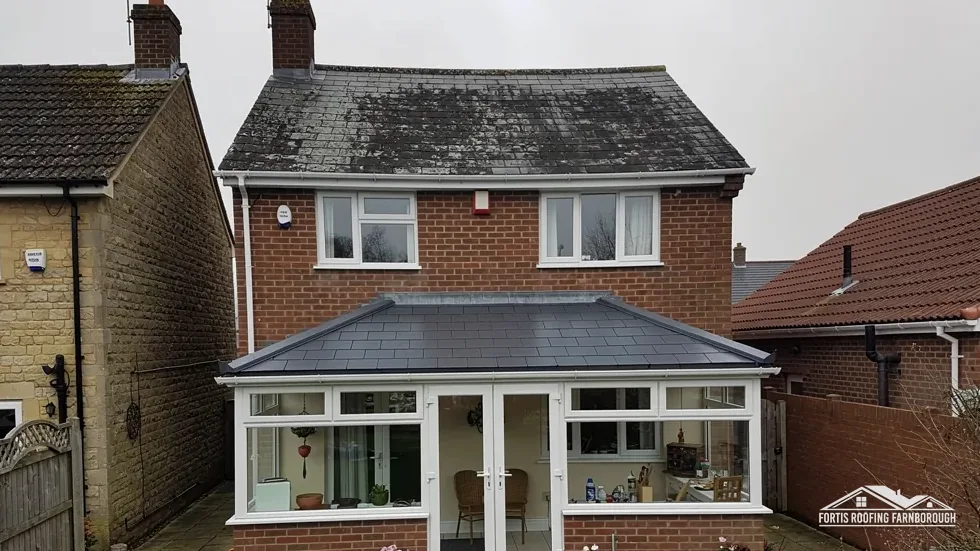
The pitched roofing page describes tile repairs and the chimney repairs page covers the stacks that old farmhouses carry, where brick, mortar and flashing all age at different rates.
Before any work begins on an older house, the roof timbers are looked at from below as well as above, so the repair is planned for the structure, not just the tiles. If the timbers are sound and only the covering has failed, the covering alone is replaced, and the price says so.
Chapter 03 of 03
| Code | Thickness (mm) | Weight (kg/m²) | Colour |
|---|---|---|---|
| 3 | 1.32 | 14.97 | Green |
| 4 | 1.80 | 20.41 | Blue |
| 5 | 2.24 | 25.40 | Red |
| 6 | 2.65 | 30.05 | Black |
| 7 | 3.15 | 35.72 | White |
| 8 | 3.55 | 40.26 | Orange |
Old farmhouses and rectories depend on lead. It lines valleys, dresses round chimney stacks, seals the joint at a wall abutment and covers parapet gutters. The table above gives Royston Lead's sheet codes with each thickness, weight and colour. A higher code is thicker and wears better where the metal works hard, though it is dearer and harder to bend round tight corners.
Royston's brochure matches codes to jobs. Code 3 is for soakers only, the small pieces that lap the tile courses beside a wall. Royston gives code 4 for soakers as well as flashings, valleys on a pitched roof and dormer work; code 5 leaves out soakers but takes on parapet gutters, box gutters and tapered valleys. The heavier codes, 6 to 8, are shown for the more demanding gutter work.
The Building Regulations guidance on moisture, Approved Document C, points to BS 6915:2001 for lead. A code is picked from the lead's position, its width and its exposure, and on a listed building it is written into the consent application.
According to MyJobQuote, lead flashing can survive well past 80 years, a floor rather than a ceiling. That assumes the right code, laid with room to expand and fixed so it can move. A flashing that has cracked at a fold or lifted off its fixings has not run out of life; it was either poorly fitted or asked to move too far.
So every lead detail is photographed on a survey: valleys, flashings, soakers, abutments and the lead round each stack. We note apparent thickness, the state of the folds and the fixings, and we separate what can be repaired from what needs renewing. A fold that has opened can often be re-dressed, whereas lead that has thinned or split along a line of stress usually needs replacing.
On our lead roofing and leadwork page you can read how lead details are renewed and why a heavier code is sometimes the better choice.
A sound tile roof with one failed flashing needs only the flashing replaced, and the written price reflects that. Where a stack leaks at its base, the lead round that is where we look first, since the stack itself is rarely at fault before its flashing is.
Refacing often changed the eaves, so old rafter ends, new brick and the gutter meet in one tight spot. Water collects at the wall plate and rots the timber out of sight. We press the timber, photograph the staining from the loft and tell you whether the fix is a gutter, a flashing or the wall plate.
Not while the church is in use. St Michael's is listed Grade I and is still an Anglican church, so the faculty system applies under the ecclesiastical exemption in place of listed building consent from the Royal Borough. A faculty is granted or refused by the church itself, once the work has been described to it.
The code depends on where the lead sits, how wide it is and how exposed. Royston Lead pairs lighter codes with soakers and flashings and heavier ones with valleys and box gutters. We photograph each detail, note its condition and recommend a code in writing, with the reason and a photograph of each detail.
No. The Royal Borough's register names Horton with its neighbours over caravans and moveable structures on land, which is a land-use matter. Repairing a roof does not change the use of land, though we still ask the council about your own address before any alteration, and keep its reply on your file.
Get your free roof quote
Give us your Horton address and what you spotted, and a surveyor will photograph each slope, flashing and stack.
10-year workmanship guarantee, in writing.





