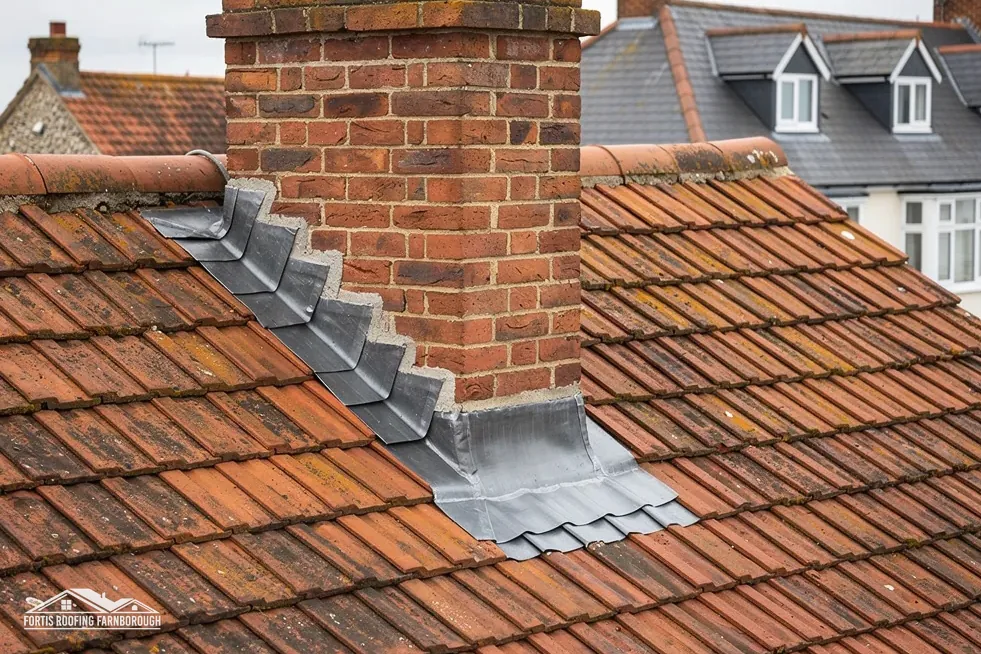
The Ostrich Inn's tiled roof
The Ostrich Inn, probably built about 1500, is timber and plaster with a tiled roof and a gabled upper storey.

Roofs along Colnbrook's old Bath Road, Ostrich Inn to Park Street
Colnbrook's long, narrow street holds 17th-century timber and brick cottages and an inn built about 1500 with a tiled roof. Every roof here is surveyed and photographed.
The Ostrich Inn, probably built about 1500, is timber and plaster with a tiled roof and a gabled upper storey.

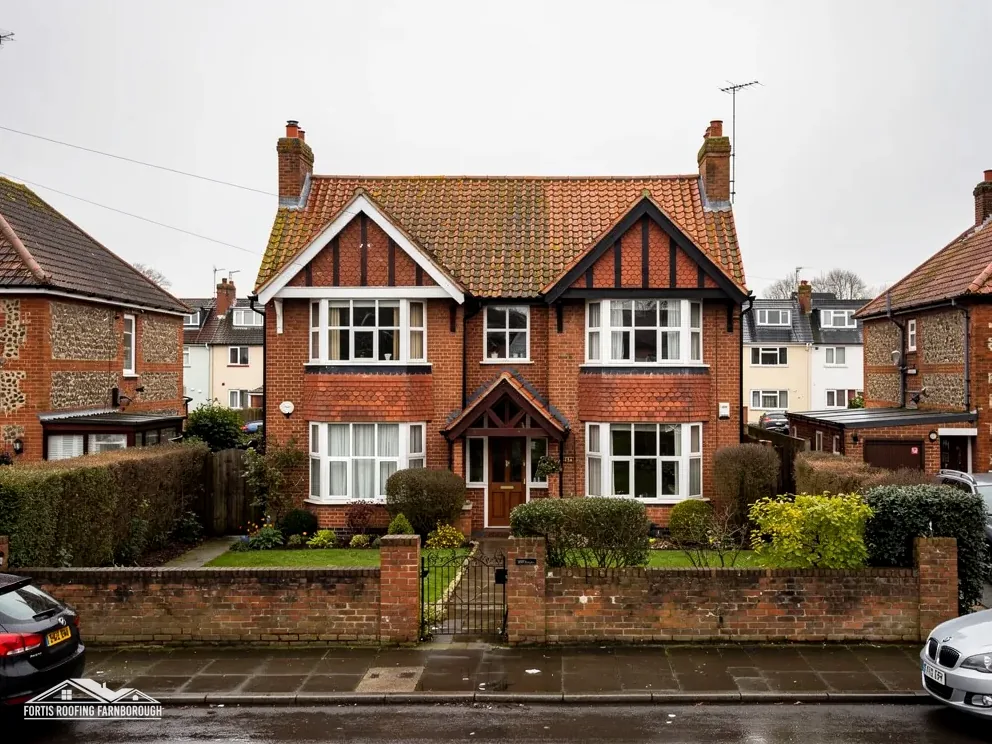
The 1925 history noted old houses and cottages along the long, narrow street, 17th-century, of timber and brick, much restored.
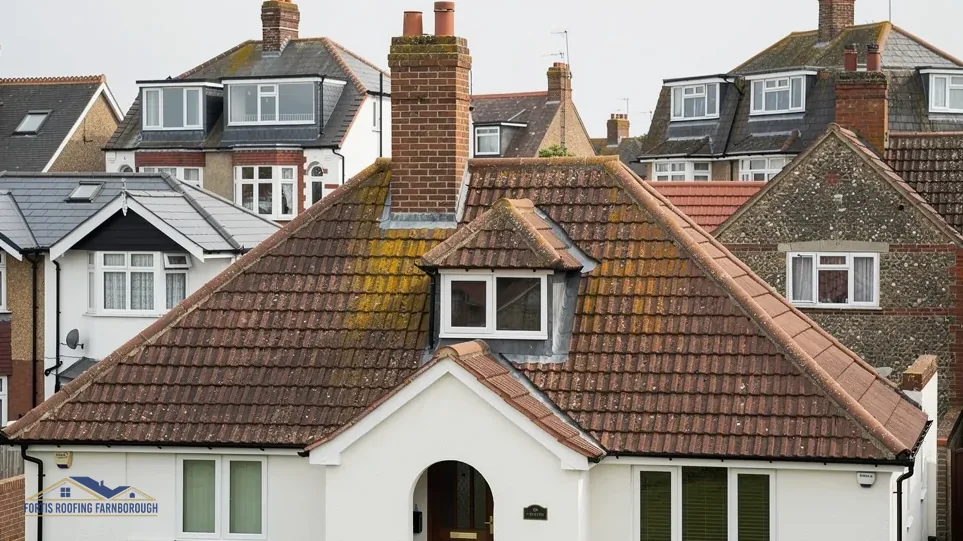
King Johns Palace is listed Grade II*, as is The Ostrich public house, among 29 listed buildings nearby.
Map of Colnbrook with Poyle, Horton, Richings Park, Langley marked around it.
Map data © OpenStreetMap contributors. Loads only when you ask for it.
Poyle lies next door to the south-east, Horton to the south-west, Richings Park to the north, Langley to the north-west, Stanwell Moor further south-east and Datchet some way to the west.
About 19.9 road miles north-east of Farnborough · Slough Borough Council (unitary).
Colnbrook, a street of old roofs
How Slough Borough Council deals with roof work in Colnbrook, what the 1925 county history records of the Ostrich Inn and the village street, and how an emergency make-safe works on an old or listed roof.
| No. | Chapter | The figure it turns on |
|---|---|---|
| 01 | Slough, the Colne bridges and a long street | 29 listed buildings within about 500 m |
| 02 | An inn of 1500, a bridge of 1777 | Ostrich Inn, about 1500, tiled roof |
| 03 | A leak at night, and a listed roof | Make safe first, repair after consent |
Chapter 01 of 03
| Subject | Position for Colnbrook addresses |
|---|---|
| Planning authority | Slough Borough Council, a unitary council |
| Highway authority and scaffold licence | Slough Borough Council |
| Building control | Slough's own building control service |
| Conservation area | Colnbrook; check your address with Slough |
| Church of St Thomas | Church of England church in use; faculty system |
Colnbrook is a small town on the old Bath Road, standing on channels of the River Colne at the old Buckinghamshire and Middlesex border, and the 2021 Census counted 1,901 people in its built-up area. Slough Borough Council is a unitary authority with no county council above it, so planning, the roads and building control all come under one roof.
Because Slough is unitary, a scaffold licence for a Colnbrook road comes from Slough, and the same council decides on planning and approves or inspects work under the Building Regulations. The fee, the notice period and who submits the form are matters we put to Slough directly, and the answer reaches you in writing before any date is agreed.
The Planning Portal's national test governs a re-roof on a house: building control is not normally involved while the work touches under 25 per cent of the building envelope and under 50 per cent of the roof. A patch repair is far below that. A full re-cover is above it.
The National Heritage List shows 29 listed buildings within about 500 metres of the centre. King Johns Palace and The Ostrich public house are listed Grade II*, and numbers 1, 2 and 3 Park Street are listed Grade II. Colnbrook is also a conservation area, so a change to how a visible roof looks gets closer scrutiny here than on an undesignated street.
St Thomas's church is listed Grade II and is still used for Anglican worship, so under the ecclesiastical exemption its roof works go through the faculty system, not the council. Every other listed building follows the council route, with listed building consent from Slough.
At the start of a survey we therefore establish whether the building is listed, whether it lies in the conservation area and which consent route applies. The answer decides the order of work, and nothing is ordered until it is known. A short written note of the findings is left with you, so the position is clear if the house is later sold, extended or insured afresh.
Colnbrook's position on the old Bath Road also matters for logistics. A long, narrow street with parked cars and through traffic means delivery slots and skip positions are agreed in advance, and neighbours are told what to expect.
Chapter 02 of 03
Colnbrook: street, inn, channels and bridge
In 1925 the county history noted several old houses and cottages along Colnbrook's long, narrow street, many of them 17th-century, of timber and brick, and much restored. The Ostrich Inn was probably built about 1500, of timber and plaster, with a tiled roof and a projecting upper storey gabled at each end. The town stands on four channels of the River Colne, each crossed by a small bridge. The wooden bridge of the 16th and 17th centuries was replaced by the present brick one in 1777.
The same history records St Thomas's church, built in 1849, as flint with a bellcote. For every other building on the street, a survey establishes what the roof carries.
A projecting upper storey, called a jetty, overhangs the street, and a gable at each end of the roof means two verges, the sloping edges where roof meets gable wall. Each verge is a place where wind lifts tiles and rain gets in. Timber and plaster walls under them move with the seasons, so cracks at a verge can let rain into the frame.
The phrase much restored deserves attention. A house that has been restored more than once has patches of different ages, with old and new materials side by side, and some earlier repairs will have been done well and some badly. We read them from the evidence: nail types, batten sizes, the way a ridge was bedded, and whether the underlay is original or a later addition.
A busy old street also means busy traffic, narrow footways and poles close to windows. Scaffold on a pavement needs a licence from Slough, and its layout must leave a safe path for people on foot. We measure the footway and plan the scaffold before any application is sent.

The pitched roofing page describes tile repairs, and the lead roofing and leadwork page covers the flashings and valleys that old roofs rely on.
For a listed building the survey photographs also serve as the record that a consent application needs, which saves a second visit. A gable end on a street like this is seen by hundreds of people a day, so a repair that matches is worth the extra care.
Chapter 03 of 03
| Building | Listing | Route for roof work |
|---|---|---|
| King Johns Palace | Grade II* (NHLE 1280920) | Listed building consent |
| The Ostrich Public House | Grade II* (NHLE 1124367) | Listed building consent |
| 1, 2 and 3 Park Street | Grade II (NHLE 1204965) | Listed building consent |
| Church of St Thomas | Grade II (NHLE 1317589) | Faculty, as a Church of England church in use |
| Colnbrook conservation area | Designated | Ask Slough before changing the look |
A roof that starts to leak on an old or listed building in the night is still an emergency. The first duty is to make it safe: stop water getting in, protect the interior and photograph the damage. A temporary cover can go on without altering the building's character, and the permanent repair, with any consent it needs, follows. On an old roof the temporary work is chosen to be removable without leaving marks, so the fabric of a listed building is not harmed by the emergency fix.
MyJobQuote, in a guide dated 6 October 2026, gives the average roof repair cost as around £650 in 2026. Its emergency roofer guide, dated 22 October 2026, says emergency call-outs typically range from £150 to £300 in the UK and that extensive storm repairs run to £1,200 or more. Those are typical UK ranges from a national cost guide and not our prices; your own written price follows a survey of your roof.
An old building changes the picture. Access may need scaffold, a listed roof may need consent before a permanent repair, and a roof of mixed ages may hide more than the leak suggests. So the emergency visit is treated as the first step and never the whole job. Often the leak is a symptom: a failed flashing, a slipped tile or a blocked valley, and a survey finds the cause and shows it to you in photographs.
The make-safe comes first, with photographs. Next is a survey of the whole roof, and a written method that describes the like-for-like repair. If consent is needed, it is sought before any permanent work. Only then is scaffold booked, if the repair needs it.
With a policy in force, speak to your insurer before work begins, keep the photographs and keep every receipt. The claim is between you and your insurer, and a dated make-safe record is useful evidence of the condition on the day.
When the leak is stopped and the survey is done, you receive one written price for the permanent repair. If a repair will do, that is what is priced, and if the roof needs more, the photographs show why.
Our emergency and general repairs page explains what a make-safe involves, and the roof replacement page describes the whole-roof option once a survey supports it.
Ring your insurer, photograph the damage from the ground and keep receipts, then book a survey. If water is coming in, a temporary make-safe protects the interior while the permanent repair is planned. We photograph the verge and gable before touching anything, so the work and any claim have evidence.
A repair that puts back the same material in the same way is judged on the facts, but any work affecting a listed building's character needs listed building consent. Colnbrook is also a conservation area. We photograph the roof, describe the repair and ask Slough before pricing.
MyJobQuote says emergency call-outs typically range from £150 to £300 in the UK, and extensive storm repairs can reach £1,200 or more. Those are national ranges. Our price is one total in writing after a survey of your roof, and it is never an estimate over the phone.
The faculty system, because St Thomas's is listed Grade II and is still used for Anglican worship, which brings the ecclesiastical exemption into play. Listed building consent from Slough is the route for other listed buildings, such as King Johns Palace and The Ostrich.
Get your free roof quote
Tell us your Colnbrook street and what is leaking, and we will visit, make safe if needed and photograph each slope.
10-year workmanship guarantee, in writing.