The short answer
Lead splits because it moves and something stops it. Sunshine and frost make the sheet expand and shrink, and if it is nailed down hard or laid in too large a piece, the stress builds until it cracks along the weakest line. A sheet that is too thin for its job, or has been knocked, will split sooner. The repair is a patch, a replaced bay or a refixed sheet.
Movement that has nowhere to go
All metals grow slightly when warmed and shrink when cooled. Lead on a roof goes through that cycle daily and seasonally, in sun, rain and frost. Met Office averages for South Farnborough (1991 to 2020) include around 53 air-frost days a year, so the swings are real.
A sheet that is free to move takes this in its stride. A sheet that is gripped at several points cannot, and the stress goes somewhere. Lead is soft and stretches a little, but repeated stretching tires the metal, and it cracks, usually along a fold or a line of fixings.
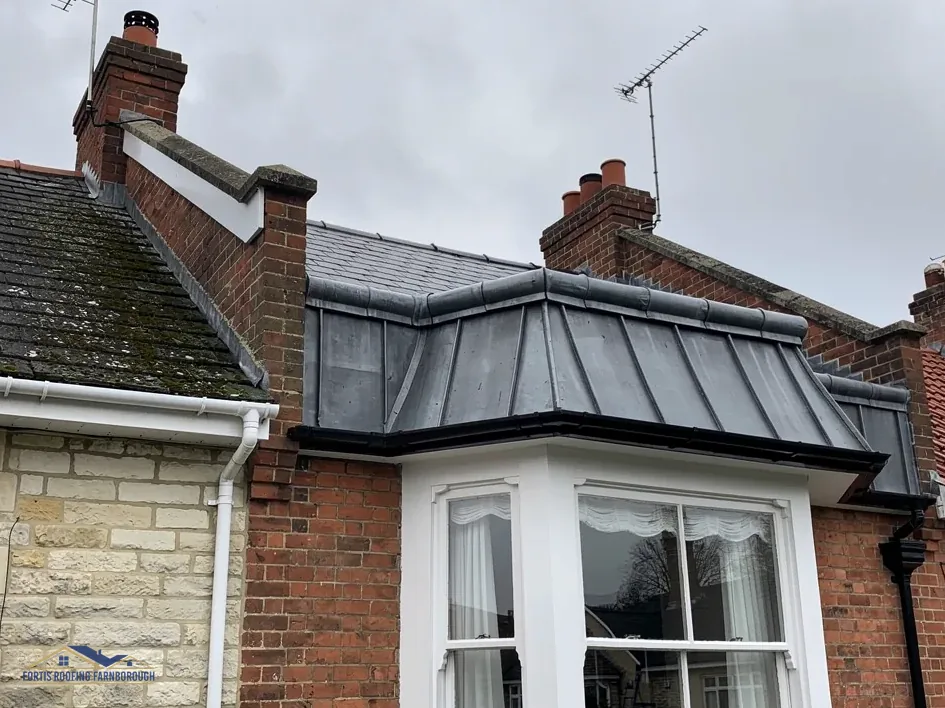
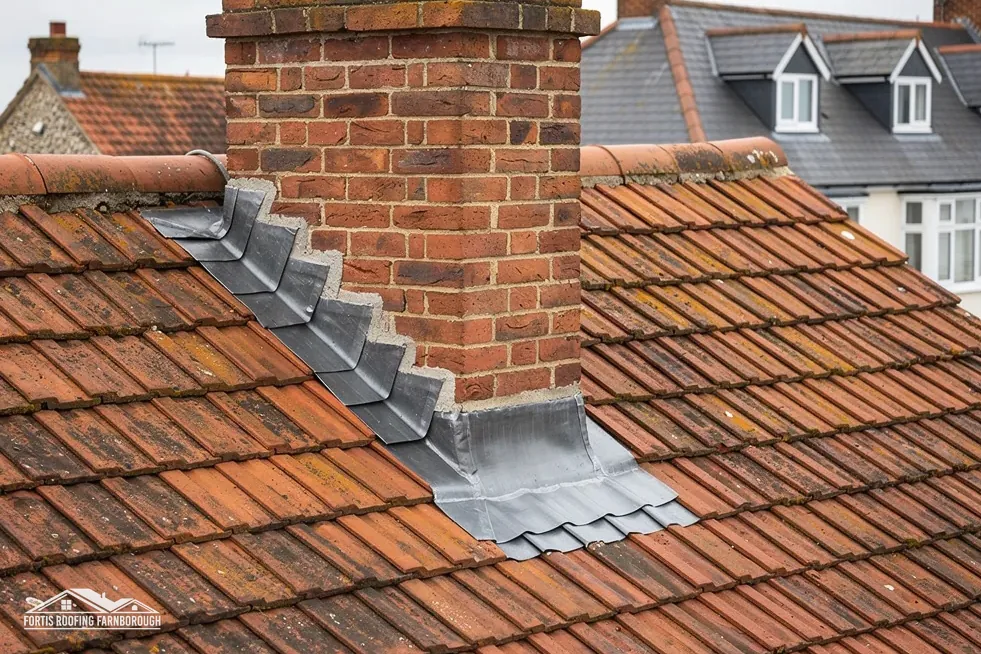
This is why lead is laid in separate sheets of limited size, overlapped at joints and held only along its edges. Rolls and drips on a flat roof, and clips and wedges on a flashing, all exist to let the metal slide.
The movement is relative to what the lead sits on, so how it is held matters as much as how big the sheet is.
The first sign is often a hairline crack in a corner or at a fixing. It looks minor, but it is the metal telling you it has no room to move.
Fixings, size and the wrong code
Several faults of installation lead to splitting.
- Fixings driven straight through the sheet, which pin it down and leave a hole where the metal tears.
- Sheets laid too long or too wide, so that the total movement is more than the joints can absorb.
- Sealant or adhesive that bonds the lead to the surface and stops it sliding.
- A code lighter than the detail needs, where the metal has little thickness in reserve. Royston's brochure puts Code 3 at 1.32 mm and Code 4 at 1.80 mm, compared with 2.24 mm for Code 5.
- Folds bent too tight, which weakens the sheet at the very place it is stressed most.
Several of these faults can be present together, and each adds to the others. A heavier code is no cure for bad fixing. Thick lead pinned down will crack as readily as thin lead, and the repair still has to put the movement right.
Our table of every code is on the lead thickness page, and the one on how lead flashing is fixed shows how to hold it while leaving it free.
Other causes: knocks, foot traffic and age
Not every split is about movement. Lead is soft, so it is easily damaged by impact and wear.
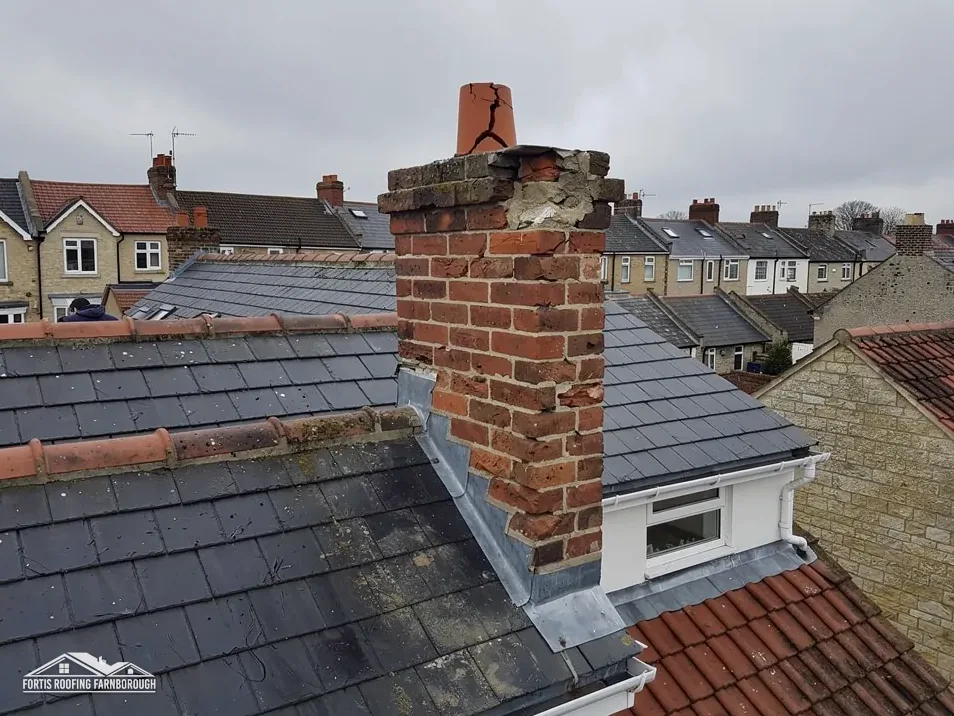
Knocks from a ladder, a fallen branch or a dropped tool can dent and crack it. Foot traffic on a flat lead roof or in a gutter can thin and crease the sheet, and repeated creasing leaves a line where it will fail. A chimney sweep or an aerial fitter may be the last person to step on a section of lead.
Age matters too, but less than people expect. MyJobQuote (Sept 2026) puts lead flashing at over 80 years, so a split in a young sheet is more likely to be a fixing or laying fault than the metal wearing out.
Poor support beneath also plays a part. If the boards under a flat lead roof sag or are uneven, the lead bridges the dip and flexes each time water or weight comes onto it.
Where a split runs along a drip or roll, the joint itself may be the fault. Our page on why a lead roof leaks goes through those details.
A close look at the crack, its direction and position, helps to point to the cause.
Repair options
The right repair depends on how many splits there are and why they happened.
- A single short split, with sound lead around it, can be patched with a new piece of lead dressed over it.
- A sheet with several splits is better replaced as a bay, or a full length of flashing, in the proper code.
- Where fixing caused the split, the new sheet is refixed to move freely, with wedges and clips, in shorter lengths.
- Where the deck is the problem, the boards are corrected before lead goes back.
A patch that ignores the cause tends to split again nearby. We therefore ask what made the first one crack before suggesting a fix.
The survey photographs show the splits, the fixings, the lead's thickness at an exposed edge and the boards beneath. You see each one and hear what it means in plain words.
If a repair is enough, that is what you are quoted. The price is one total in writing. Our lead flashing repair page covers patching in more detail, and the lead roofing hub covers the rest of our leadwork.