The short answer
A leaking flashing shows up as a damp stain on a ceiling or wall beside a chimney, extension or dormer, often worse after rain. Outside, look for lead that has lifted from the wall, a visible split, crumbled pointing or a dark gap along the top edge. These signs point to the flashing without proving it, so photograph them and get the junction looked at.
Signs inside the house
Water from a flashing usually appears close to the feature it protects. A stain beside a chimney breast, on a ceiling next to an extension wall or around a dormer window is the classic pattern.
Signs to look for include:
- a brown or yellow stain on the ceiling or wall, often with a darker edge;
- paint that bubbles, flakes or peels in one patch;
- wallpaper that lifts or discolours near a chimney breast;
- a musty smell, or mould in a corner of a room below the junction;
- damp that grows after rain and dries off in a dry spell.
The last point is a useful clue. A stain that tracks the weather suggests rain coming in from outside, whereas a stain that stays constant may be condensation or a plumbing fault.
Water can travel before it shows. It may run along a rafter or down the back of a wall and appear in a spot some distance from the entry point. So a stain in the middle of a ceiling is not proof that the leak is directly above it.
If the loft is safe to enter, check the timbers close to the feature. Dark patches on the timber or damp insulation beside a chimney are further evidence.
Signs on the outside
From the garden or pavement, a pair of binoculars or the zoom on a phone camera is enough to show the visible faults. Never climb a roof to look.
These are the visible defects to note:
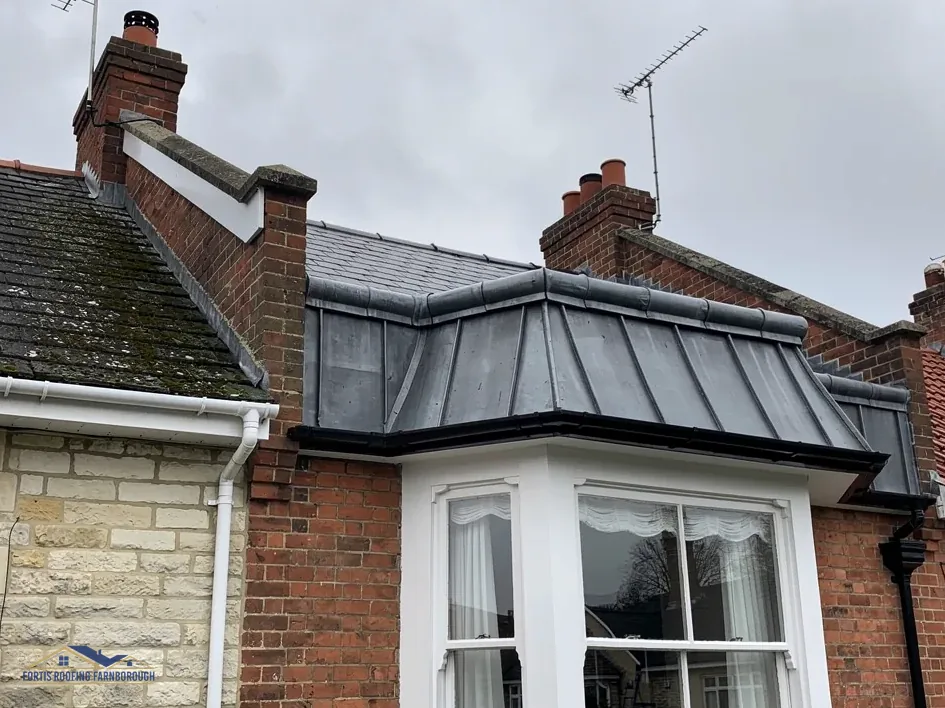
- lead standing proud of the brick, with a gap at the top edge;
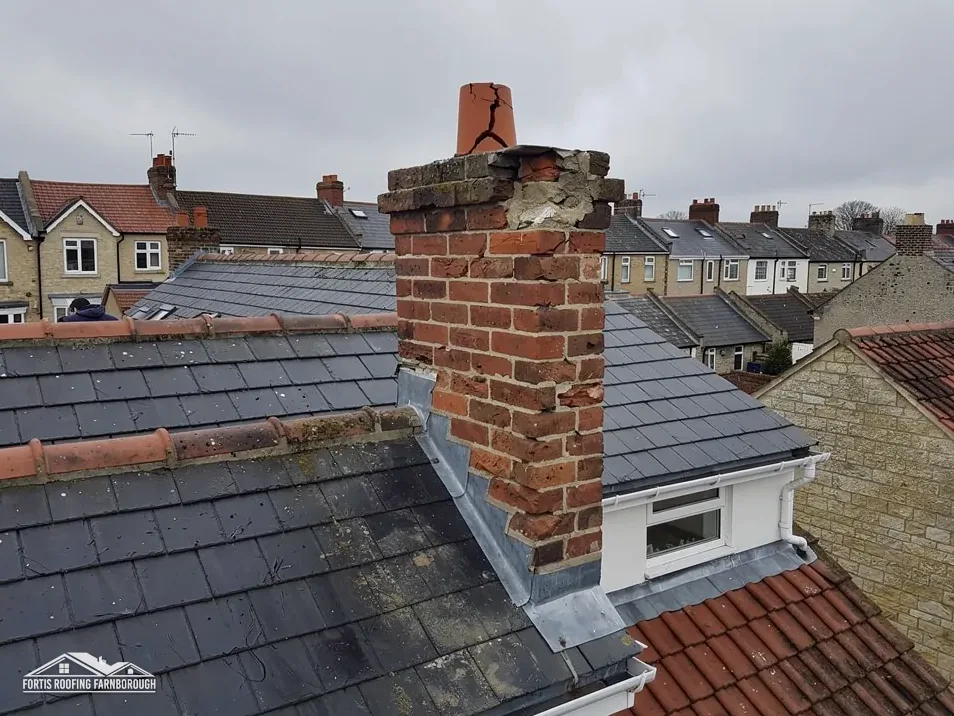
- pointing along the lead that has crumbled, cracked or fallen out;
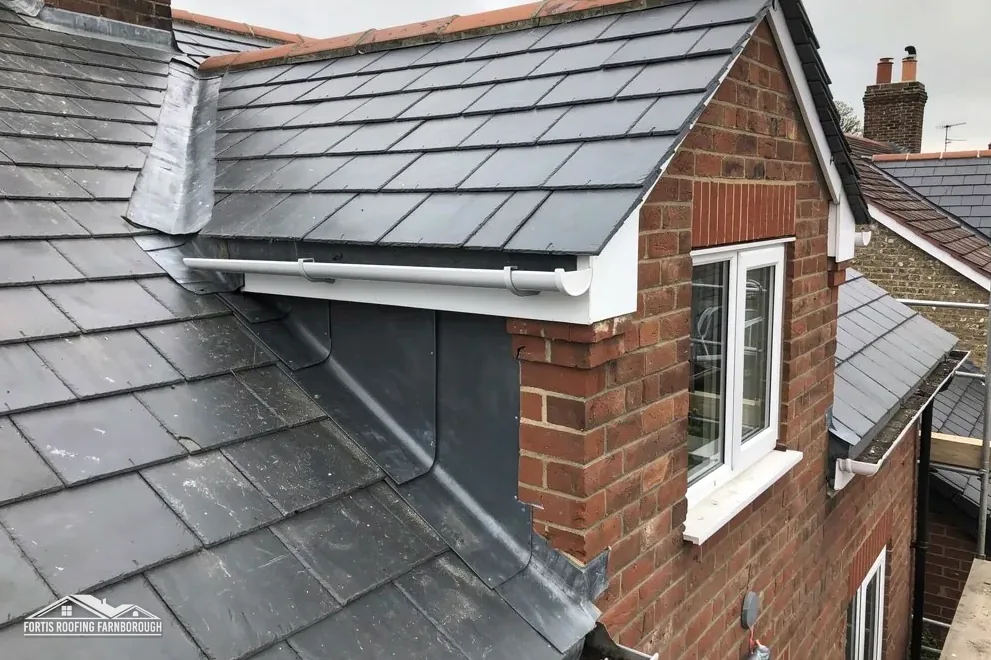
- a split or crack in the lead, often at a corner or fold;
- a lower edge that has risen clear of the tiles;
- lead that has slumped or buckled;
- a thick line of sealant or tape smeared along the joint, which is a sign of past trouble;
- moss or staining running down the wall below the flashing, showing where water has been escaping.
A single sign is not a verdict, but several together are a strong indication.
Our page on lead flashing coming away from the wall explains the most common of these faults and what causes it.
Not every flashing is lead. Look for the stepped line against a wall or around a stack, and note whether it is metal or a mortar fillet.
Is it the flashing, or something else?
Flashing is a common culprit, but not the only one. A damp patch near a chimney could also come from the stack itself, from a failed flaunching (the mortar bed around the pots), from a slipped tile, a blocked gutter or condensation.
Some pointers help to separate these:
- a stain only during or just after rain, near a wall or stack, points at the flashing;
- a stain below a gutter line after rain may be an overflowing gutter;
- damp on the chimney breast that appears in cold weather without rain may be condensation;
- water marks inside the chimney itself suggest the stack, the pots or the flaunching.
Several faults can overlap, which is why we survey the whole junction and not just the lead. The chimney, the lead and the surrounding tiles are all checked.
If the damp is on a flat roof ceiling, the cause may be the covering and not the edge flashing. Our page on why a lead roof leaks covers the covering itself.
A moisture meter, used by a surveyor, can show how far damp has spread. It can tell you whether the plaster is wet now or merely stained from an old leak.
What to do next
Photograph what you see, inside and out, with the date. Put a bowl under any drip, move furniture out of the way and check the stain again after the next rain. Watch for any change.
Then arrange for someone to look. We survey the flashing close up, record the lead, the pointing and the wall, and show you each photograph with a plain explanation. If a repair will stop the water, you hear that first. If more is needed, you are shown why.
With water coming through today, the first job is a cover to stop it, with the lasting work booked for a dry spell. A leak left alone feeds damp into plaster, insulation and timber, and the bill grows with the delay.
If the damage is significant, read your home insurance wording and tell the insurer before work starts. Photographs and receipts support any claim.
The quote after the survey is one total, in writing. The lead roofing hub explains the wider range of leadwork we handle around Farnborough and Fleet.