The short answer
A conservation area does not forbid a new conservatory roof, but it adds questions to settle before work. Ask the council's planning team whether permission is needed and whether an Article 4 direction reaches the roof, copy the existing appearance where possible, and remember that Building Regulations apply to a conservatory roof wherever it stands.
Effects of designation on a conservatory
Councils designate conservation areas to protect the character of a place. The designation looks at the street scene as a whole, so the sight of a conservatory roof from a public spot counts for more than it would elsewhere.
The legal effects are specific. Land in a conservation area is treated as article 2(3) land, which strips out certain permitted development rights, dormer windows being the best-known example. A change of roof covering on a house under Class C survives, though, so ordinary re-roofing proceeds as usual. A conservatory is a different building element, and the council judges each proposal on its facts.
The larger variable is the Article 4 direction, a tool that lets a council take away named permitted development rights across a mapped area. If one covers your address, work that is normally free of any application may need one.
Visibility changes the weight of all this. A conservatory tucked behind a terrace presents less concern than one on a prominent corner.
The council, not the roofer, has the answers. Request them in writing and file the reply with the house papers, since a later purchaser's solicitor may ask for it.
Putting the questions to the council
Contact the planning team of the authority for your address. For Rushmoor addresses that is Rushmoor Borough Council, and for Hart, Hart District Council. In the rest of Hampshire, Surrey and Berkshire it is the council named for your area, and our guide to conservatory roof planning permission goes into the wider position.
Describe the project and give the address. Say what the roof is now and what it will be: material, colour, height and any change in shape. Send photographs of the conservatory and its setting.
Four questions cover the ground:
- is the house inside a conservation area, and if so which one?
- does an Article 4 direction apply, and does it include conservatory roofs?
- does this change need an application, or does it fall within permitted development?
- does the council expect particular materials or finishes?
Only a few councils in our area publish roof-relevant direction detail. Examples are the Cargate and Wellesley directions in Rushmoor's Aldershot, the directions Hart made in 1998 and the town-centre directions in Basingstoke and Deane. Anywhere else, put the question to the council directly.
A listed house adds listed building consent, which has to be settled separately, and that route has its own timetable and its own evidence, such as photographs of the roof, frame and setting.
Keeping the appearance the same
Where a roof is renewed in a protected area, the cautious course is to copy the old one: its form, proportions, frame colour and glazing type. A replacement that repeats what stood there gives the council least to object to.
Hart District Council's heritage pages treat traditional repairs to non-listed buildings, true to the originals in detail and material, as needing no application. That statement concerns repair. Replacing a whole conservatory roof is a larger step, and the council will form its own view on whether it counts as repeating the old.
Basingstoke and Deane shows how a council can think. In four of its town-centre conservation areas it wants Welsh slate and clay tile kept, and says modern substitutes such as concrete tile are unlikely to be accepted. That is its wording for its own areas, but it shows why a change of material draws attention.
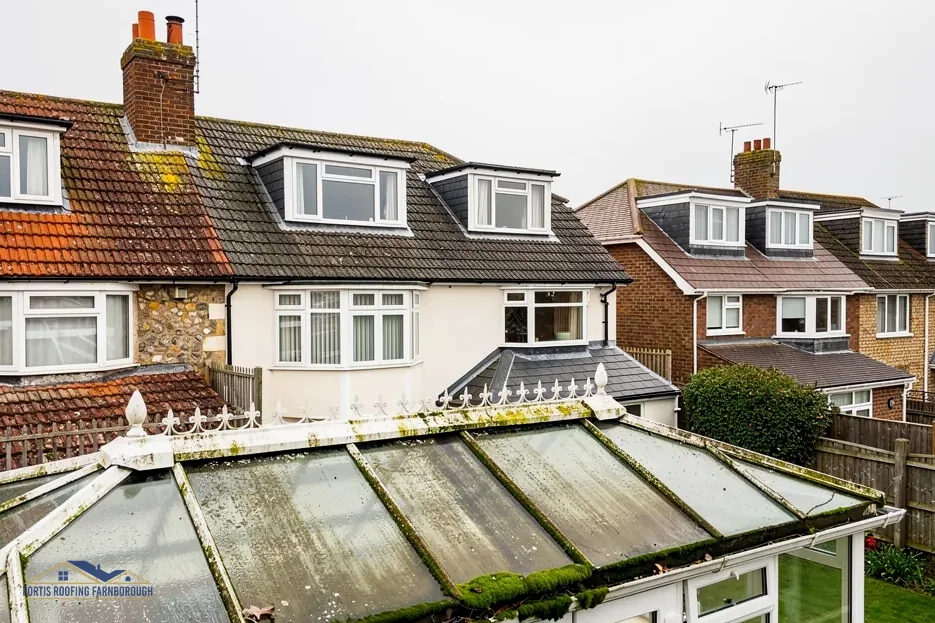
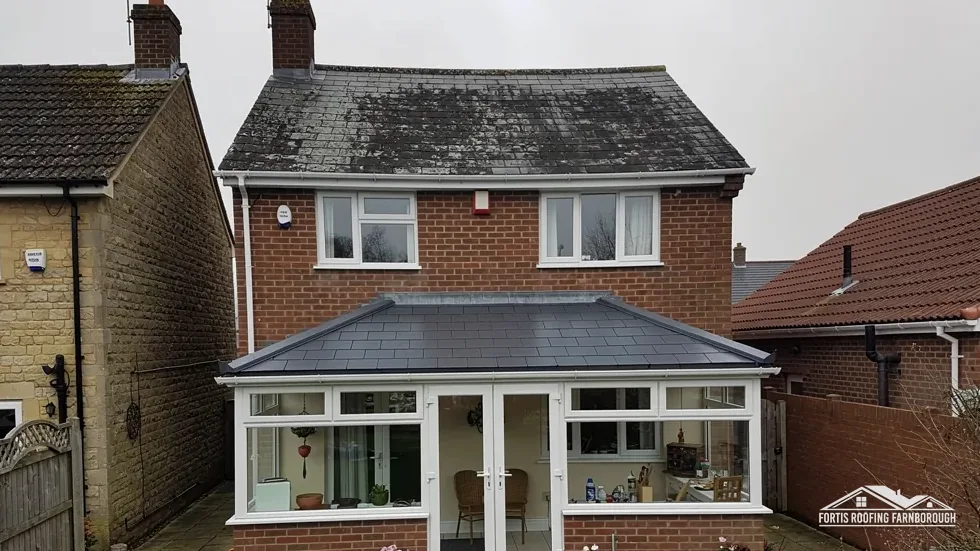
Swapping polycarbonate for a solid tiled roof, or glass for a lantern of different profile, alters the look. Pitch and ridge height count as well, because both change the outline seen from the street. Our guide to conservatory roof options compares the types.
Photograph the existing roof before any work starts, as a record of what stood there.
The structural and energy rules do not change
Planning is one question, and Building Regulations are another. They apply in a conservation area exactly as elsewhere. Under the Planning Portal's guidance, a replacement conservatory roof has to be structurally sound, energy efficient and ventilated.
On site, the structure is checked first, because a solid roof loads the frame and base more than glass does. Glazing and insulation have energy standards to meet, and ventilation controls condensation and summer heat. These checks add time to the programme, so ask building control early about inspection stages, certificates and who will visit.
Approval comes from building control. The shared Hart and Rushmoor team, on 01252 398715, serves those two boroughs, while other addresses use their own council or a registered building control approver. Our answer on whether conservatory roofs need vents deals with one part of compliance.
A survey starts the process. We photograph the roof, frame and setting, explain what the work involves and map the planning and regulation questions before a price is agreed, so that the written price covers work you may lawfully carry out.
The conservatory roofs hub lists the options and related guides.