The short answer
On a commercial roof an emergency repair means making the building safe and stopping water, then planning the permanent work. A leaking roof is covered or patched first, stock and equipment are protected, and access is set up safely, since many industrial roofs are fragile. Tell your insurer, keep photographs and receipts, and ask the roofer what the plan under CDM will be.
Make safe, then repair
The sequence in an emergency is fixed. People come first, then the building and its contents, then the permanent repair.
Safety is the opening concern. Where water drips through a ceiling above electrical equipment, isolate the supply to that area if you can do so safely and keep people clear. If a section of roof has been lifted by wind, or a ceiling has sagged under water, keep the area closed until it has been checked.
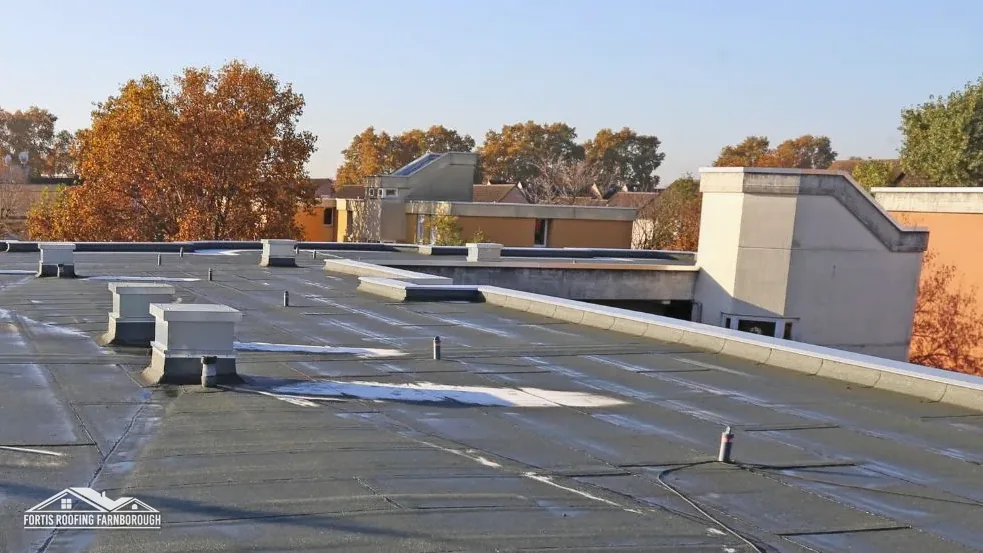
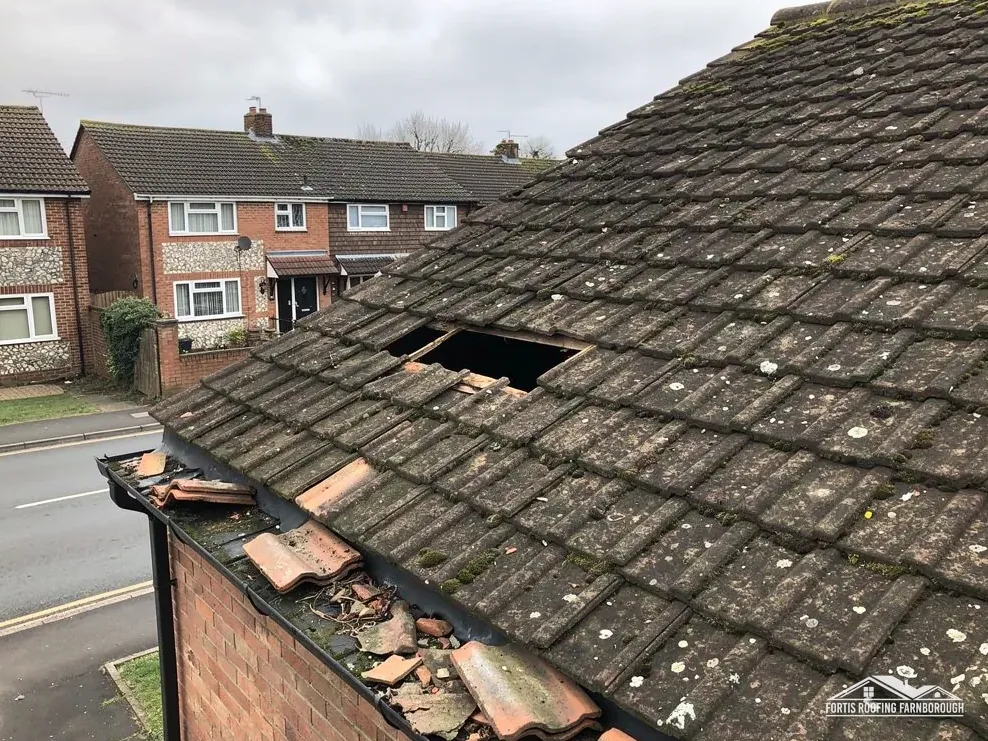
The roofer's first visit is to stop the water. On a flat roof that might be a patch over a split, a temporary membrane over a failed area or sealing a damaged outlet. On a sheet roof, it may be covering a missing or damaged sheet with a temporary one or a tarpaulin, fixed securely. The work is temporary, and it exists to hold the position until the permanent repair can be planned.
On arrival the first job is to stop the water and secure the roof, and then you hear what we found, with photographs, so that you can see how big the problem is and decide how to proceed. A commercial owner often has a lease, an insurer and staff to inform, and clear evidence helps with all three.
Tracing the source of a leak in an industrial unit is a separate exercise from the make-safe visit.
Protecting stock, plant and the premises
While the roof is being made safe, there is often a second job: protecting what is underneath. This is usually the owner's or the occupier's task, though a roofer can advise.
Move stock and sensitive equipment away from the leak where you can, or cover it with plastic sheeting. Place buckets or trays under drips, and channel water away from walkways to prevent slips. A ceiling that bulges with water is better released through a small controlled hole into a bucket than left to collapse, but only where that can be done safely.
Photograph everything before it is moved, including the damage to stock and the leak itself, with the date recorded. A separate list of affected items helps with an insurance claim.
Electrical safety deserves a note of its own. Water and electricity are a poor mix, and a lighting circuit that runs through a wet ceiling void may need isolating by a competent electrician. Do not touch wet fittings.
Consider the neighbours. A shared roof or a gutter that discharges onto an adjoining unit can spread the damage, and a quick call to the occupier next door helps both sides. Planning work around the people in an occupied building is a topic of its own.
Safe access on commercial roofs
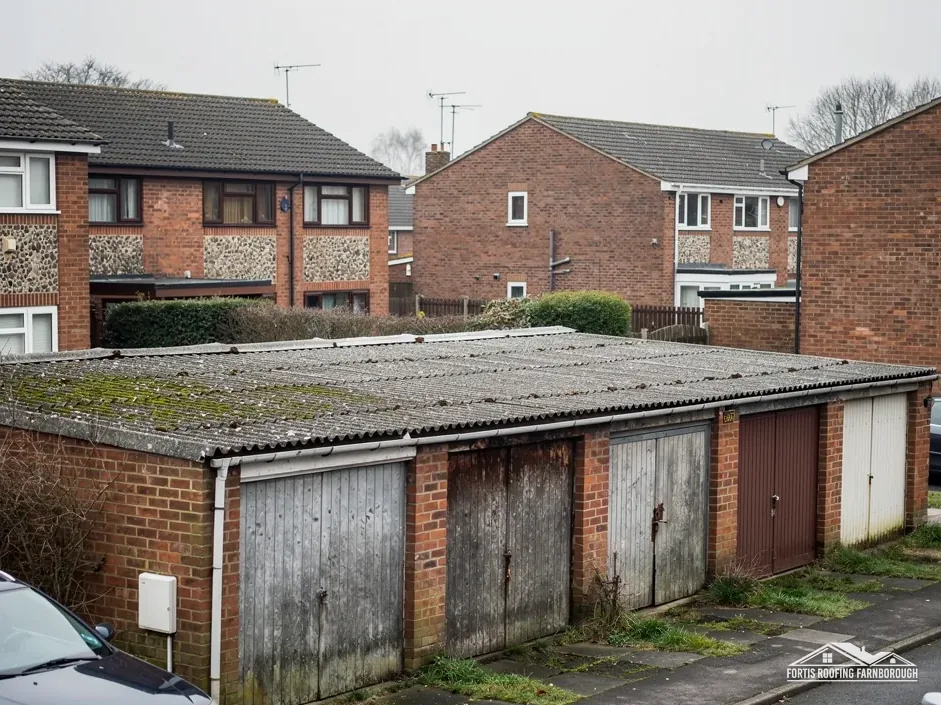
Emergency repairs are done under pressure, which makes safe access more important, not less. Many commercial and industrial roofs are fragile. HSE regards asbestos cement roofing as fragile every time, and old rooflights can be hidden under moss or paint and give way without warning. A person who steps on one can fall through.
The access plan therefore matters even for a short visit. It uses crawling boards or staging over fragile sheets, edge protection or a harness system on a secure anchor, and a safe route onto the roof, such as a fixed ladder, a tower or a mobile platform. Nobody should walk across a roof they have not assessed.
Our guide to fragile roof safety sets out the controls in more detail. They apply to us and to anyone else working on the roof, including maintenance staff and other trades.
Weather can interrupt an emergency repair. High wind and ice make some roofs unsafe to work on, and the work may need to wait for conditions to improve, with a ground-level or tower-based cover in the meantime. A roofer who insists on working in unsafe conditions is placing people at risk.
If the roof contains old cement sheets, an asbestos check is part of the plan before anything is cut or broken. A survey and an agreed method come first.
Insurance, CDM and what to expect
Tell your insurer as soon as you can, before arranging anything beyond the temporary make-safe. Ask what evidence it wants. Take photographs of the damage, keep receipts for emergency work and keep any damaged materials until the insurer releases them. The Financial Ombudsman's pages note that insurers look at whether the roof was already in poor condition, so records of past surveys help.
We do not make timing promises for emergency work, because the position depends on the site, the weather, access and the safety plan. What we can say is what we do on arrival: assess the roof, make it safe and tell you what we found.
CDM applies to commercial work as well. The Construction (Design and Management) Regulations 2015 require a construction phase plan for every project, and a second contractor on the project brings the extra duties of a principal designer and a principal contractor. Our guide to CDM on commercial roofing explains the duties of a commercial client.
After the emergency, a single written price covers the permanent repair, based on the survey and the photographs. A temporary cover that holds is not a reason to delay that stage. The commercial roofing hub lists the permanent options.