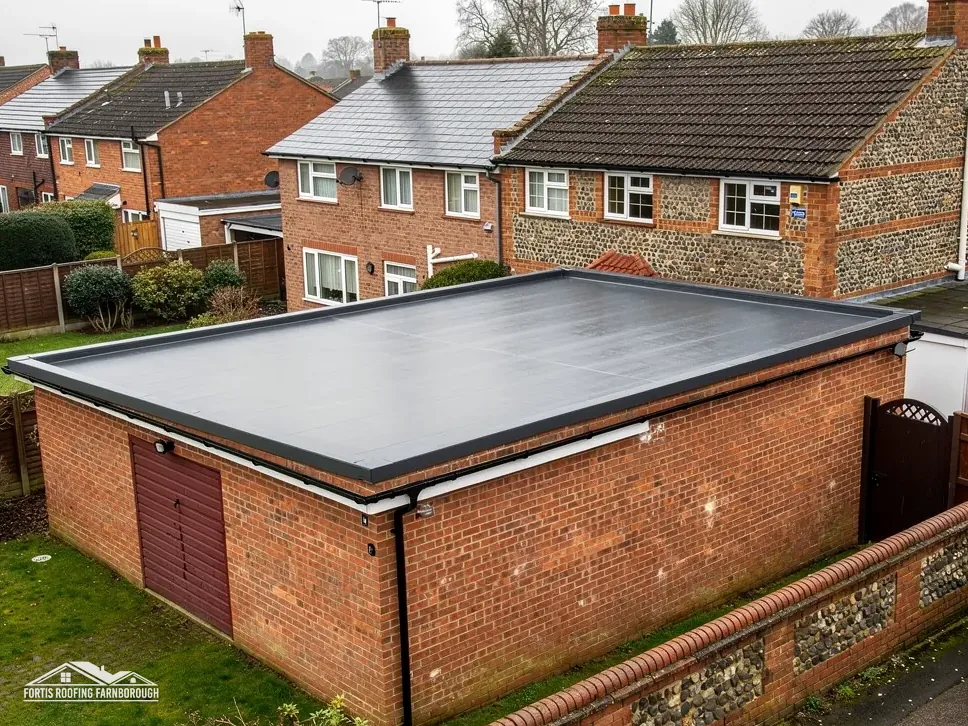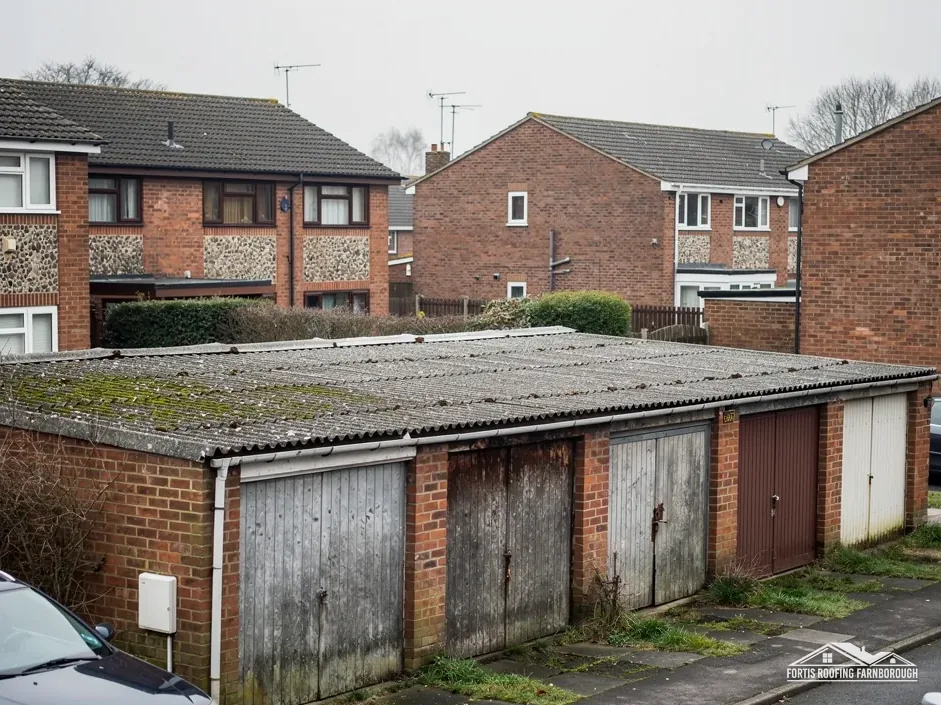
Corrugated asbestos-cement sheets cover a large number of older industrial, agricultural and commercial buildings. They were common until the end of the twentieth century, they last a long time and, left undisturbed, they pose no particular problem. The trouble comes when they age, crack and leak, because the owner then has to decide what to do with a roof that cannot be repaired casually and cannot be walked on.
There are two main ways forward. Overcladding fixes a new roof sheet system over the old one and leaves the asbestos-cement in place. Replacement takes the old sheets off and puts a new roof on. Each has costs, benefits and rules, and the right answer depends on the roof.
This guide sets out what the HSE says about the categories of asbestos-cement work, what overcladding involves and when it suits, what removal and waste handling mean, and the steps that a building owner as duty holder should take. This guide describes the work and the evidence needed. The HSE's own pages are the authority, and a survey of your building is the starting point for any decision.
Two routes for an old asbestos-cement roof
Before looking at the rules, it helps to see the two routes side by side.
Overcladding
A new weatherproof skin, usually profiled metal sheeting, is fixed over the existing roof. It is carried by the existing purlins or by new support fixed to the structure, and the old sheets stay in place beneath. The roof is made watertight and the asbestos-cement is left undisturbed and, in effect, enclosed.
Replacement
The old sheets are removed, together with their fixings, and a new roof is installed. The asbestos is taken away and disposed of as hazardous waste. At the end, the building no longer contains the material in its roof.
What they have in common
Both need an asbestos survey first, a plan for the work and safe access that accounts for the fact that asbestos-cement roofs are fragile in every case. Both also need the structure to be sound, and the choice between them is partly a question of what the structure can carry.
Key differences
- Overcladding leaves the asbestos in the building, while replacement removes it from the roof.
- Overcladding avoids disturbing the sheets in the main. Replacement handles them all.
- Overcladding adds weight. Replacement may reduce it.
- Overcladding leaves a record that must be kept and passed on. Replacement leaves one less thing to manage.
No right answer in general
The better choice depends on the sheets, the structure, the building's life ahead and the budget. On the access side of both routes, our guide to fragile roof safety describes why nobody walks on the sheets until a plan is in place.
The HSE categories of asbestos-cement work
The HSE divides asbestos work into categories that decide what controls are needed. Asbestos-cement sits in the lowest category, but the line is crossed easily.
Non-licensed work
Under the HSE's list, roof sheeting and rainwater goods made of asbestos-cement count as non-licensed so long as they are handled with care and removed without breaking. Weathered cement that is not otherwise badly damaged is included. The aim is to take the sheets off whole, not to smash them.
Notifiable non-licensed work
Once the cement is going to be badly damaged or broken into pieces, the work becomes notifiable non-licensed work. That brings notification to the enforcing authority, medical surveillance and a register of work. The HSE expects the records of such work to be kept for 40 years.
Licensable work
Asbestos insulating board is a different material. If the risk assessment shows a job on it will last more than a short time, the work is licensable. The board turns up in external soffits, so a roof job that includes soffits needs them checked first, and it looks much like boards that contain no asbestos.
Why it matters here
An old, brittle roof is exactly the sort that breaks when handled. If a roof is so degraded that sheets cannot be lifted whole, the job may fall into the notifiable category. That affects the programme and the price. Our short answer on asbestos work that needs no licence goes through the categories.
No claim of a licence
Where a job calls for a licence, a firm that holds one does it, and the owner should ask to see the paperwork before any work starts.
Overcladding: what it involves and when it suits
Overcladding is an established way to deal with an asbestos-cement roof that is worn out, but it does not suit every building.
How it is done
A new sheet system, usually insulated, is fixed over the old roof. Support is provided by the existing purlins where they are sound, or by new framing. The detailing at eaves, ridge, verges and roof lights is rebuilt to suit the new system. Work is done from above, with the old sheets as little disturbed as possible.
Why owners choose it
It avoids removing and disposing of a large quantity of asbestos-cement, which saves time and cost. It keeps the building weathertight during work, which matters where the building stays in use. It can improve thermal performance, since a new insulated layer is added.
Conditions for it to work
- The structure can carry the extra weight of the new system.
- The existing sheets are stable enough to be left in place.
- Fixings for the new system can be installed without breaking the old sheets.
- The building has a future that justifies a long-life new roof.
What remains
The asbestos is still there. It must be recorded in the building's asbestos register, and anyone working on the roof in future must be told. When the building is eventually demolished or refurbished, the material still has to be dealt with.
Building Regulations
A new roof covering may need Building Regulations approval, and roof insulation standards can apply. Ask your building control body early. Our answer on fibre-cement roof sheets adds detail on the material.
Replacement: removal, waste and programme
Replacing the roof takes the asbestos out of the building. It is the more thorough route, and it involves more steps.
Removal
The sheets are unfixed and lowered whole where possible, with the aim of avoiding breakage. Dust is controlled by damping and by using suitable methods, and the work area is kept clear, with a clean route for the sheets from the roof to the waste container. The sheets are not dropped, smashed or thrown from height.
Packaging and waste
The HSE's guidance EM9 calls for asbestos waste to be double-wrapped and labelled, and that is the standard we expect on any job. The waste is hazardous, so it travels on a consignment note and goes to a site that is permitted to accept it. It is never put in an ordinary skip. A carrier of such waste needs the right registration.
The new roof
Once the old sheets and fixings are off, the purlins and structure are inspected and repaired, and the new roof is built. The building is exposed during the changeover, so the programme plans for weather and for protecting what is below.
Occupants and neighbours
If the building stays in use, planning is needed to keep people clear of the work area, and to protect stock and equipment. Neighbours need notice.
Cost and time
Removal and disposal add to the cost compared with overcladding, and the programme is longer. MyJobQuote gives asbestos roof removal at around £2,750 and a survey at around £325 (Sep 2026, typical UK range). Those figures suit a typical roof, and a large commercial building will differ. See our answer on asbestos roof removal cost.
Steps for the building owner
The owner or manager of a non-domestic building is the duty holder for asbestos, and a handful of steps put them on firm ground.
Find out whether asbestos is present
The HSE says that for a building built or refurbished before 2000, you should assume asbestos is present until you know otherwise. Do not guess. Commission a survey from a competent surveyor, and keep the report.
Keep a register
Record where asbestos is, its type and its condition, and review it. Make it available to anyone who might disturb the material, including contractors.
Manage it in place if it is sound
Asbestos-cement in good condition, left alone, is often best managed in place, with checks on its condition. The decision to overclad or replace follows when the roof leaks, fails or has to be disturbed.
Control access
Keep people off the roof. Treat it as fragile. Tell contractors and maintenance staff before they go anywhere near it.
Plan the project
For overcladding or replacement, a construction phase plan covers access, asbestos controls, waste, protection of occupants and emergencies. Under CDM 2015, a lone contractor draws up the plan, and a principal designer and principal contractor join the project when two or more contractors share it. Our guide to CDM on commercial roofing jobs explains the roles in full, and how they apply to a single re-roofing contractor.
Use the right people
Check that anyone carrying out asbestos work is competent, and that work needing a licence goes to a firm holding one. Ask to see the paperwork.
Keep records
Keep the survey, the plan, waste consignment notes and any air test results. They are your evidence if the building is sold, inspected or later refurbished, and a missing record can hold up a sale.
Choosing a route and how we price it
The decision rests on evidence, and the first piece is an asbestos survey of the roof.
Questions the survey should answer
- What material covers the roof, and does asbestos appear in the sheets, soffits or elsewhere?
- What is the condition of the sheets, and can they be handled whole?
- What is the condition of the purlins and the structure?
- Can the structure carry overcladding?
- What future does the building have?
Overcladding tends to suit
A building with a sound structure, sheets that are stable and a long future in use, where keeping the building weathertight and avoiding disturbance matter most.
Replacement tends to suit
A building with a weak structure, sheets that cannot be left in place, plans for refurbishment or sale where clean title to the roof matters or where the owner wants the material gone.
Where a repair fits
A limited repair can bridge a gap, but it is not a long-term answer for a roof that is leaking widely.
How we price
We survey the roof from a safe position, photograph the condition, review the asbestos survey and explain the options. After that, you receive one total written price for the route you choose, including access. Our commercial roofing page lists the related work. The survey is shared with us before work starts, and a roof of unknown material is identified first.