The short answer
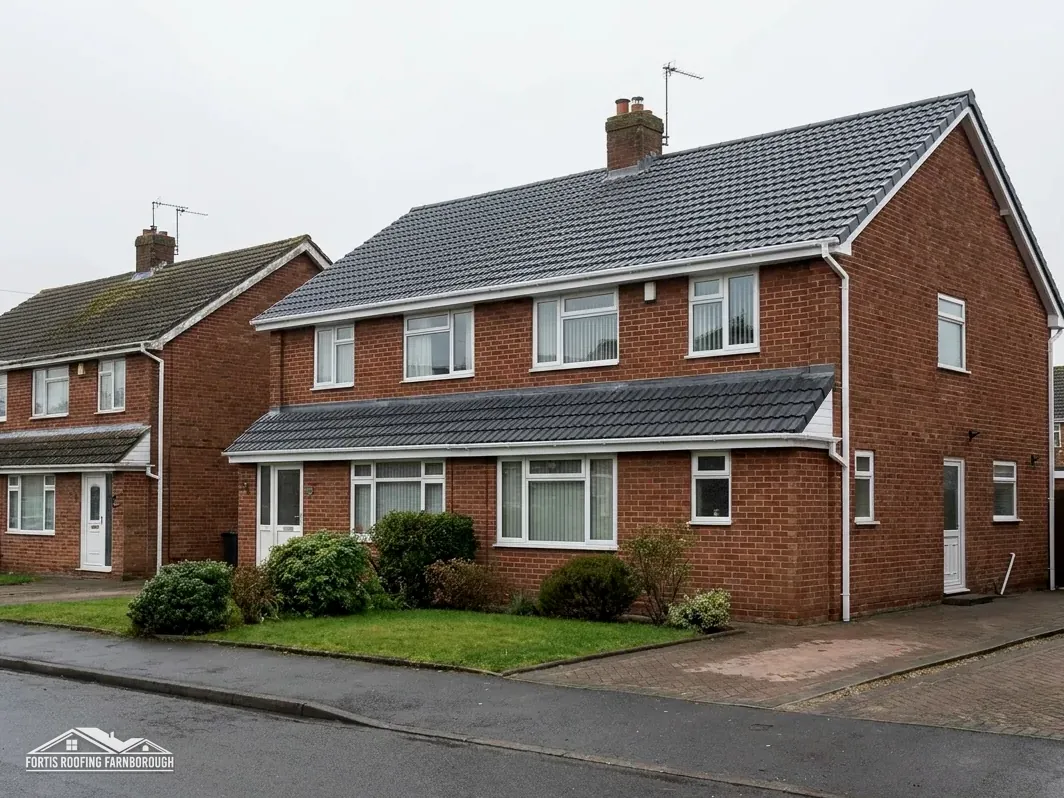
Judge the finished roof, not the sales pitch. Straight tile lines, ridge and verge tiles that are mechanically fixed, flashings that sit tight and neat against the wall, a cleared site and photographs of the work are the signs of a job done properly. For a re-roof that needs approval, you should also see the building control sign-off.
Ridges, hips and verges
Three lines meet the weather first: the ridge, which caps the top where two slopes join; the hips, the sloping edges of a hipped roof; and the verges, the edges that run up a gable. How they are fixed says a lot.
Look along these from the garden. Ridge tiles should sit in a straight run with even gaps, and the verge should follow the gable without waves or hollow patches. A line that wanders suggests rushed work.
The fixing method matters more than it looks. Marley notes that since the 2014 revision of BS 5534, mortar's grip is no longer to be relied on as the only hold for ridge and hip tiles. Mortar is not banned, but it no longer works unaided. Dry-fix systems, which hold the tiles with clips and screws, are tested to BS 8612.
BS 5534 is a British Standard, not a law, so a roofer is not breaking the law by ignoring it, but a careful one works to it. Ask the roofer, in writing if you like, how the ridge and verge were fixed, and what they were fixed with. A clear answer is a good sign, and a vague one is worth noting.
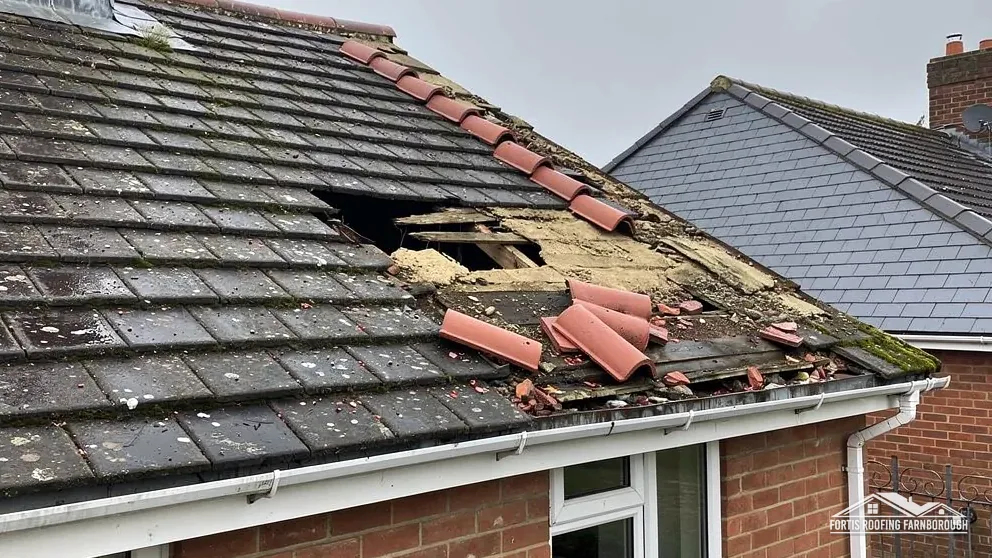
On a tile roof, also check that no tile has been left cracked or slipped around the edges of the work.
Flashings, valleys and chimneys
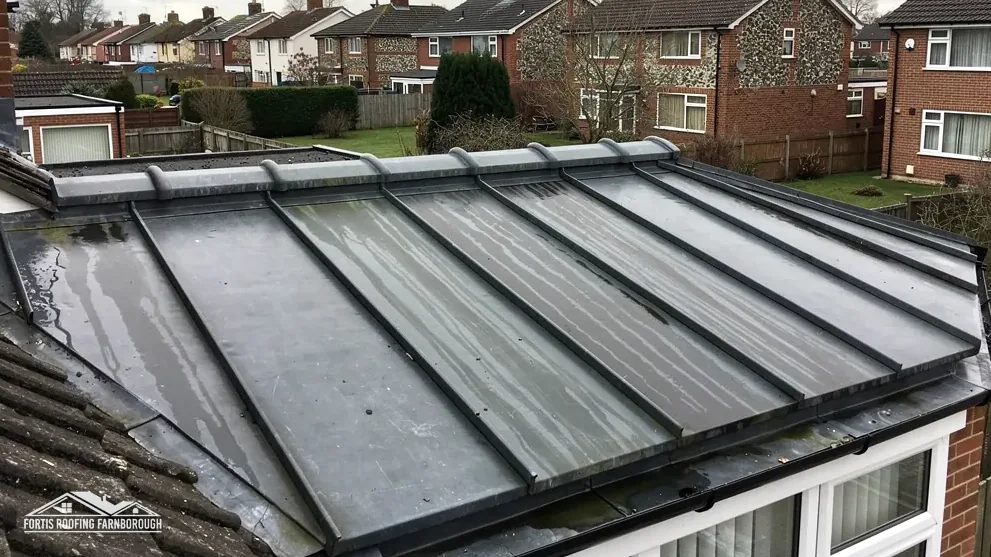
Flashings are thin metal strips, normally lead, that seal a roof's junction with a wall, chimney or roof window. Leaks after a repair often show up at these joints, so inspect them with care.
From the ground, with binoculars if you have them, look for these points:
- lead that sits flat to the wall and the tiles, without gaps or wrinkles;
- a neat line where the flashing goes into the brickwork, with the joint tidily filled;
- valleys, the channels where two slopes meet, free from debris and without ragged cut tiles beside them;
- no large blobs of sealant doing the work that lead should do.
Sealant has its place for small repairs, but a flashing made up chiefly of sealant is only a patch. Our guide to sealant on lead flashing explains where the line falls.
Look at the gutters as well. A roofer who has worked above them should have left them clear and fixed, with no tile fragments or mortar in the run.
Inside, a loft check after the first heavy rain is the real test. Dry timbers and no new stains mean the weatherproofing is working.
The site and what you should be handed
A job done well leaves little trace. The garden should be clear of broken tile, nails and offcuts, the drive swept and the skip or waste gone. Scaffolding comes down only when the work above is finished and checked, and the property should be as secure as before.
Paperwork is the other half. You can reasonably ask for:
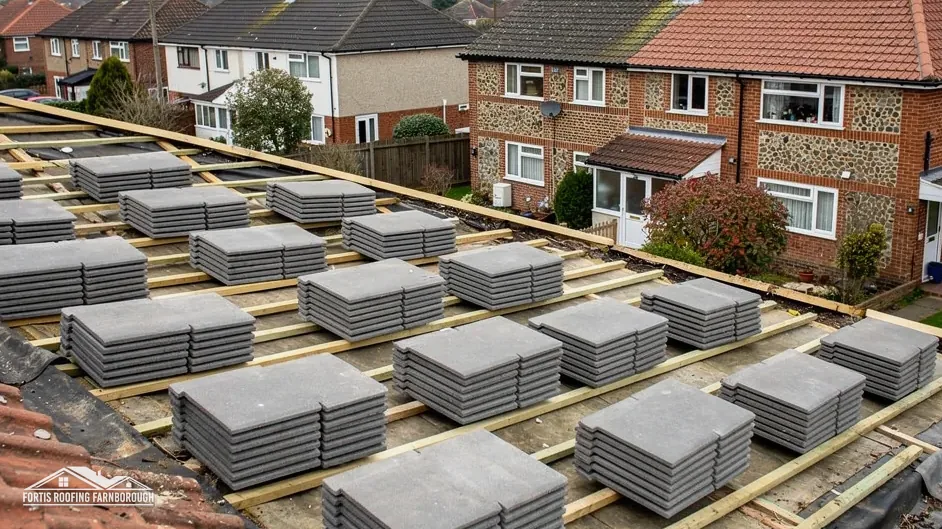
- pictures taken before and after the work, including hidden items such as new battens or underlay;
- a final invoice that matches the one total price you agreed in writing;
- the building control completion certificate, where the job needed approval.
Under the Planning Portal's guidance, a new covering that adds 15 per cent or more to the old one's weight calls for approval, and a full re-roof can reach its wider test too. If it applied to your roof, a sign-off from the council team or a registered building control approver should exist, and the roofer can tell you which body dealt with it. Our answer on Building Regulations for roof work sets out when approval applies.
Photographs matter later too, because a buyer's surveyor or an insurer may ask what was done and when. Keep them with the invoice.
When something does not look right
If you spot a problem, act while the work is fresh. Photograph it from the ground, note the date and write to the roofer describing what you see and what you want done. A polite, specific email is more effective than a phone call.
Give the firm a fair chance to return. A good roofer wants to correct a fault, and a slipped tile in the first week is a simple return visit. If the firm will not respond, the Consumer Rights Act 2015 expects the work to be done with reasonable care and skill, and our page on how to complain about a roofer sets out the steps and the Citizens Advice helpline, 0808 223 1133.
This page is about judging a job once it is finished. If you are choosing a roofer in the first place, our guide to spotting a dodgy roofer covers the questions to ask before anyone starts.
On our own jobs, we show you photographs of what we found and what we did, so you are not taking our word for the result. Our other services are listed from the homepage.