Our post on what to ask a roofer is about the conversation. This one is about the paper. Whatever a roofer says on the phone or on your drive, the things that protect you are the things you can read afterwards: a written scope, photographs of the actual fault, a price on a page, and a clear idea of which rules apply to the job.
The aim is to give you a short, practical list of evidence to collect and a way to judge it. There is no single credential that proves a roofer is good. A van covered in logos tells you less than a dated photograph of a cracked flashing on your own chimney, and a confident manner tells you less than a quote that describes the work in plain terms.
The approach has three parts. First, gather what each roofer can show: scope, photos, price. Second, compare at least three, because the comparison itself is the most useful check you have. Third, know the legal baseline, so that you know what you are entitled to if the work falls short. A short warning-signs section sits at the end, and the fuller list of scams lives in our guide to spotting a dodgy roofer.
A written scope you can read twice
The first piece of evidence is a description of the work. A scope turns "sort the roof out" into a list that both sides can check at the end of the job.
What a good scope names
- The part of the roof affected: which slope, which valley, which chimney, which flat section.
- The covering and the fixings: tile or slate type, battens, underlay, ridge and verge method.
- The extras: flashings, lead, gutters or fascias, and what happens to old materials.
- What is excluded, and how any extra work would be agreed.
Vague is a signal
"Repair roof" or "general roof works" gives you nothing to hold anyone to. A scope that names parts is also a sign the person writing it has looked at your roof. If two roofers describe the same job in different terms, that is useful. Ask each to explain the difference, and notice which of them can do so in plain words.
Put dates on everything
The scope, the quote and the photographs should all carry dates. Dates let you show later what was agreed and in what order. Keep the email or letter they arrive in, because that keeps the date on the record.
If a roofer is reluctant to put the scope in writing, take that seriously. It is not a minor matter. A written scope is the least expensive protection you will ever be offered, and it costs the roofer a few minutes of typing. If you cannot get one, ask yourself what else will not be written down.
Photographs of the problem on your roof
The second piece of evidence is a picture of the fault. If there is a leak, the roofer should be able to show where the water is getting in, or at least show the defect they believe causes it.
What useful photographs look like
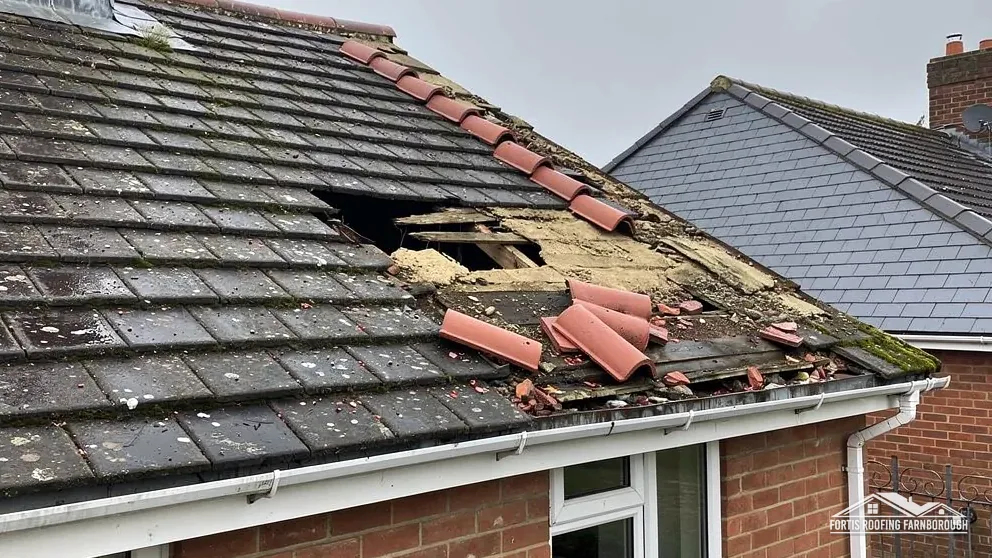
A useful set shows the cracked or slipped tile in close-up and the same tile in context on the slope. It shows the failing flashing and the stack it sits on. It shows the ridge, the verge and the valley, whether sound or not. Pictures taken inside the loft show the underside of the covering, the timbers and any staining. The best sets come with a note saying which part of the roof each one shows.
Check them against your own eyes
You can compare the photographs with what you see. Does the stain on the bedroom ceiling sit below the area shown in the picture? Does the tile in the photo match the tiles on the slope? A roofer with something to hide will avoid giving you pictures, or give you pictures that could be of any roof.
Measurements go with them
Photographs say what is wrong; measurements say how much. A quote for ten metres of ridge or six square metres of flat roof is one you can check. A quote that says "the roof" is one you cannot.
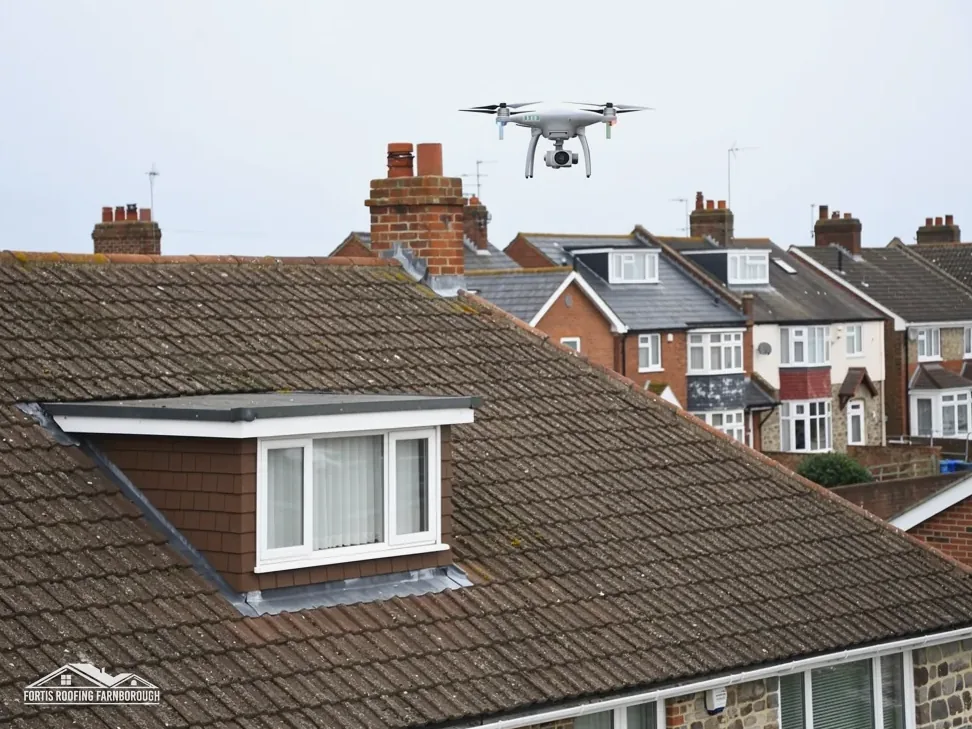
Our own surveys end with pictures and figures for your roof, delivered before the price, which you are free to pass to another roofer. A second opinion built on the same pictures is easier to get than one built on a conversation.
Three written quotes, compared properly
Citizens Advice recommends putting at least three written quotes side by side before you pick a trader. With three in front of you, you can see what is ordinary and what is not.
Compare the scope first
If the quotes describe different jobs, the totals cannot be compared. One roofer may be pricing a patch repair, another a full re-cover, a third a repair plus new battens. Ask each to quote against the same scope, or ask why theirs differs. The difference is often the most informative part of the exercise.
Then the total
A good quote states a single total for the whole job. Check whether it includes VAT, whose standard rate is 20%, and whether it includes scaffolding and the removal of waste. Do not assume. Ask.
Use national figures as a sense-check
The published cost guides give typical UK ranges, not prices for your roof. As one illustration, MyJobQuote's average for roof tile replacement is around £215, covering a handful of tiles (updated 6 October 2026), where Which? (November 2025, ex VAT) puts a job of one to six damaged or missing standard tiles at £75 to £400. If a quote for a small tile job sits far outside both, ask why.
The lowest quote is not automatically the best, and the highest is not automatically the most thorough. The one with the clearest scope and the best evidence usually earns the job.
The legal baseline: reasonable care and skill
Whatever the quote says, some protection applies by law. It is useful to know what, because it tells you what you can reasonably expect.
Consumer Rights Act 2015
Under section 49, anything a trader does for you must show reasonable care and skill. Section 52 covers the time the job takes where none has been fixed: it must be done within a reasonable time. Sections 54 and 57 set out remedies if the standard is not met, and say that liability cannot be excluded by the contract. In practice that means you may ask for the work to be repeated or put right, or ask for a price reduction, and a clause saying otherwise does not override it.
What the law does not give you
It does not guarantee how long a roof will last. Typical lifespans are published ranges, never promises: HomeBuilding gives clay tile 60-80 years, for example, but that describes the covering, not a particular roof. A warranty is a separate thing, and what it covers should be read in the paperwork, not assumed from a leaflet.
Where to take a problem
If a dispute cannot be settled directly, the Citizens Advice consumer helpline on 0808 223 1133 explains the next steps. Keep your scope, quote, photos and messages together, because that file is your evidence.
No roofing licence exists in the UK, so there is no licence to inspect. The legal baseline above is what applies to every roofer, on every job.
Site duties that the paperwork should cover
Some rules turn on the shape of the job rather than the promises made. Knowing them helps you judge whether a roofer has thought it through.
Construction rules and the domestic client
In the CDM Regulations 2015, a householder commissioning work on their own house, and not for a business, is a domestic client. A lone contractor prepares the construction phase plan. When another contractor joins, two further appointments arise, one a principal designer and the other a principal contractor. HSE sets this out for domestic clients, so a roofer who knows it is a good sign.
Party walls and chimneys
Taking out or cutting away part of a chimney breast on a party wall can fall under the Party Wall etc. Act 1996, which wants notice served no less than two months ahead. A neighbour who says nothing has not agreed to anything. The right person to ask is a party wall surveyor, not building control.
Building Regulations
Some roof work needs approval from building control, and the roofer should tell you whether yours does. In Farnborough the people to ask are the Hart and Rushmoor Building Control Partnership. A quote that never mentions consents for work that obviously might need one is a quote to question.
Scaffold
Scaffold on the footway or road falls under Highways Act s169, so a highway licence is needed first. Ask who arranges it, and how long it takes.
A short list of warning signs
For the full list of scams, read how to spot a dodgy roofer, our longer guide. This is a brief list, tied to the evidence above.
Signs worth acting on
- No written scope, or one that names nothing specific.
- No photographs, or photographs that could be of any roof.
- A price given on the spot, with pressure to start tomorrow.
- A request for the whole payment up front, particularly in cash.
- No clear answer on who arranges scaffold and consents.
Things that are not evidence
A logo on a van, a badge on a website and a list of happy customers are claims, not proof. Ask what any badge means and who awarded it before you place weight on it. A roofer who is confident in their work will show you the photographs and the paper instead.
Promises of cover
If a roofer offers a warranty, ask for it in writing: who gives it, what it covers, what it excludes and how long it lasts. Lifespan and warranty are not the same, and a long-sounding promise with no detail behind it adds nothing. Read the terms before you rely on them.
If the evidence stacks up, the next step is a survey of your own roof. The Fortis Roofing Farnborough homepage explains how to arrange one, and our post on what to ask a roofer before hiring gives the questions to put on the day.