The question sounds simple and the answer is a range. MyJobQuote's cost guide, last updated on 12 October 2026, puts a roof survey at an average of around £300, with a table showing two price bands, £100 to £200 and £200 to £350. That is a national figure from an outside guide. It is not our price, and the cost of any particular survey depends on the building in front of the surveyor.
What you get for the money matters as much as the number. A survey can mean a quick look from the ground, or it can mean someone on the roof and in the loft, measuring, taking photographs of every part and writing down what they found. Those are different jobs, and a low figure for the first buys a different thing from a higher figure for the second.
This is the page on this site that owns the survey-cost question. Below we explain what a roofer's survey covers, how it differs from a full building survey, what pushes the price around, and how to compare two offers fairly before you spend anything.
The typical figure and its price bands
MyJobQuote's roof survey page gives its average as around £300. Beneath that sits a table with two bands: £100 to £200 and £200 to £350. A guide like this draws on quotes gathered from tradespeople across the country, so it reflects a national mix of small houses, large houses, flats, extensions and commercial units. A survey of a two-storey terrace and a survey of a rambling detached house with three roof levels are not the same size of job.
Why one figure cannot be your price
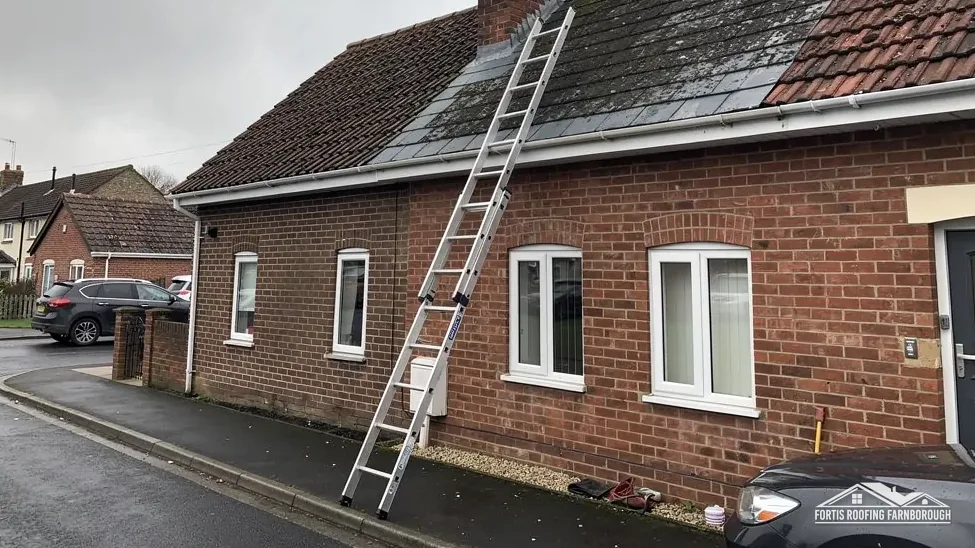
Two surveys at the same figure can still be very different. One might be a visual look from a ladder at the eaves. Another might include a climb onto the roof, a loft inspection, measurements and a written report with photographs. The price follows the time, the access and the detail, plus the written findings that come with it.
What the typical figure leaves open
The guide does not say whether a survey fee comes off the cost of any work that follows, and other firms handle that in their own way. If you are comparing offers, ask each one directly. Ask too whether the figure covers VAT, because VAT at the standard rate of 20% adds to the bill for a homeowner, and firms may present it differently.
Treat the national figure as a sense-check rather than a target. If an offer sits far below the bands, find out what it leaves out. If it sits far above, ask what extra is included, and whether that extra is something you actually need.
What a roofer's survey covers
A survey by a roofer is a close look at the roof itself and the parts that keep water out. Done properly it has two halves: the outside and the inside.
On the roof
The surveyor checks the covering for slipped, cracked or absent tiles and slates, and looks along the ridge, hips and verges to see how each is fixed. Valleys, flashings, chimney stacks and the junctions between roof and wall come next, because those are the places where leaks tend to begin. On a flat roof the surveyor checks outlets, upstands and membrane for ponding or splits.
In the loft
From inside, the surveyor studies the covering from below and the roof timbers: daylight where there should be none, stains, rot, and whether insulation or a blocked eaves gap is trapping moisture. This view often explains a problem that looked mysterious from the ground, and it shows whether an earlier repair actually worked. Stains on a rafter that are dry and old tell a different story from stains that are damp today.
Photographs and measurements
The point of a good survey is evidence you can hold. Photographs of the actual problems, measurements of the slopes and a written note of the findings give you something to set against any other quote. We work this way on every job: you see photographs and measurements of your own roof before the written price arrives.
The individual checks are listed in our page on what a roof inspection includes, which follows the same running order.
How it differs from a building survey
People often mix up a roof survey with the building survey commissioned when buying a house. They answer different questions and are done by different people.
The whole house against the roof
A building survey looks at the entire property: structure, walls, damp, drains, services and the roof among many other things. The roof gets a share of the surveyor's time, and a surveyor working from the ground or a ladder may simply recommend that a specialist inspects the roof. That recommendation is the cue for a roofer's survey.
The roofer's survey goes deeper on one part
A roofer's survey does not replace a building survey. It adds depth on the part of the house most likely to cost money soon. It covers what can be seen from the roof and loft, names the repairs, and produces a written price for them.
When you need each
- Buying a house: the building survey first, then a roofer's survey if it flags the roof.
- A leak or storm damage: a roofer's survey, with photographs you can show your insurer.
- Planning a re-roof or extension: a roofer's survey, so that the quote rests on measurements rather than guesses.
- Selling: a roofer's survey can head off awkward questions from the buyer's side.
For buyers, the next step is our guide to roof checks when buying a house. The report is evidence, which you can pass to a mortgage adviser or a solicitor.
What moves the price up or down
A handful of factors explain the gap between £100 and £350, and each makes sense once you picture the job.
Size and shape
More slopes, more valleys, dormers and chimney stacks mean more to examine and more photographs to take. A simple pitched roof on a terrace is quicker than a roof with a flat extension, a bay and two chimneys.
Height and access
A single-storey roof reached by ladder is straightforward. A three-storey building, or a roof hidden behind a neighbour's wall, takes longer and needs more equipment. If scaffolding or a tower is needed to inspect the roof close up, that cost has to be recovered somewhere. If a scaffold would take up the pavement or road, Highways Act s169 calls for a licence first, so access must be planned before the visit.
The covering
Slate, clay tile, concrete tile, lead and flat membranes each need a different eye. A survey of a lead flat roof looks at details that a tile survey never touches, such as the laps, the fall and the joints. A survey of a slate roof pays attention to nails and slipped slates, and a survey of a clay roof to the condition of each tile.
Extras
HSE advises treating a building from before 2000 as likely to contain asbestos until it is tested. A roof survey may note materials that need testing, but it does not itself identify asbestos, and that is a separate job. MyJobQuote lists an asbestos survey separately, at around £325.
Report detail matters too. A short note takes less time than a full write-up with every photograph labelled and cross-referenced to the roof plan.
Comparing two offers fairly
Citizens Advice recommends comparing three or more written quotes before you settle on a trader, and the same logic applies to surveys as to the work that follows. To compare like with like, put the same questions to each firm.
Questions that expose the difference
- Will someone go up on the roof, or is it a ground-level look?
- Is the loft inspected too?
- Do I get photographs and measurements, or only a verbal summary?
- Is the survey fee refunded or deducted if I go ahead with the work?
- Is VAT included in the figure?
What the law expects of the surveyor
Section 49 of the Consumer Rights Act 2015 sets the standard for any service at reasonable care and skill. That is the legal baseline for a survey and for any work that follows from it. It is not a promise that a roof will last, and it does not turn a visual survey into a structural one.
A warning sign
A price quoted on the doorstep, with pressure to sign today, is worth treating with caution. A written, dated report you can take away and read, with photographs, is the opposite of that approach.
Cooling-off becomes relevant if you sign at home after a survey. A contract made away from the trader's premises can normally be cancelled within 14 days, unless you specifically asked the trader round for an urgent repair.
After the survey: what happens next
A survey ends with a decision, and the decision should be yours. A good report separates what needs doing now, what can wait, and what is simply a note for the future.
Repair, partial work or re-roof
The finding often points to a repair: a handful of tiles, a ridge, a flashing or a gutter. In other cases the photographs show a covering that is spent. Published figures for a full replacement disagree widely, which is why a survey of your own roof is worth more than a national average. Which? (November 2025, ex VAT) gives £7,000 to £21,000 to replace the entire roof of an ordinary three-bedroom house, while MyJobQuote puts it around £5,250. Neither is a quote for your roof.
Permissions
The survey also shows whether consent is likely to matter. Re-covering a house is normally Class C permitted development, flats have no permitted development rights, and listed buildings need listed building consent in addition. If you are unsure, put the question to your own council before any work is priced.
One price, in writing
When the survey is done and the findings agreed, one total price, in writing, comes next. If you want to talk a job through first, our list of questions to put to a roofer is a useful starting point, and the Fortis Roofing Farnborough homepage shows how to arrange a survey.
Keep the report with the house papers. It is useful to a later buyer, and it dates the condition of the roof. If you later claim on insurance after a storm, an earlier report helps show what the roof looked like beforehand.