The short answer
No single interval fits every roof, so treat inspection as a set of triggers. Look after a severe storm, before buying or selling a house, and more often as a covering nears the end of its published lifespan. A glance from the ground costs nothing, and a roofer's survey is worth paying for when something looks wrong or the roof is getting old.
The moments that call for a look
A fixed timetable suits a boiler service better than a roof. A roof's needs depend on its covering, its age and what the weather has done to it, so it is more useful to know when to look than to follow a calendar.
These are the moments that justify an inspection:
- after a severe storm, or after a spell of heavy rain or snow;
- before you buy a house, since a roof problem found late becomes your bill;
- before you sell, so that a surveyor's comment does not surprise you;
- when a stain, a drip or a draught appears inside;
- when the covering is close to the age at which published lifespans end.
Weather is worth a word. Met Office averages for South Farnborough (1991 to 2020) show an annual rainfall near 715 mm over 118 wet days, with around 53 air-frost days. Rain and frost are normal here, and they work hardest on a covering that is already loose or cracked, so a check after an unusually hard spell is sensible.
If a storm has already damaged the roof, photograph the damage from the ground and tell your insurer before anything is moved or repaired.
What you can check from the ground
A good deal can be learned without leaving the ground. Standing in the garden or on the pavement, ideally in dry daylight, look at the following.
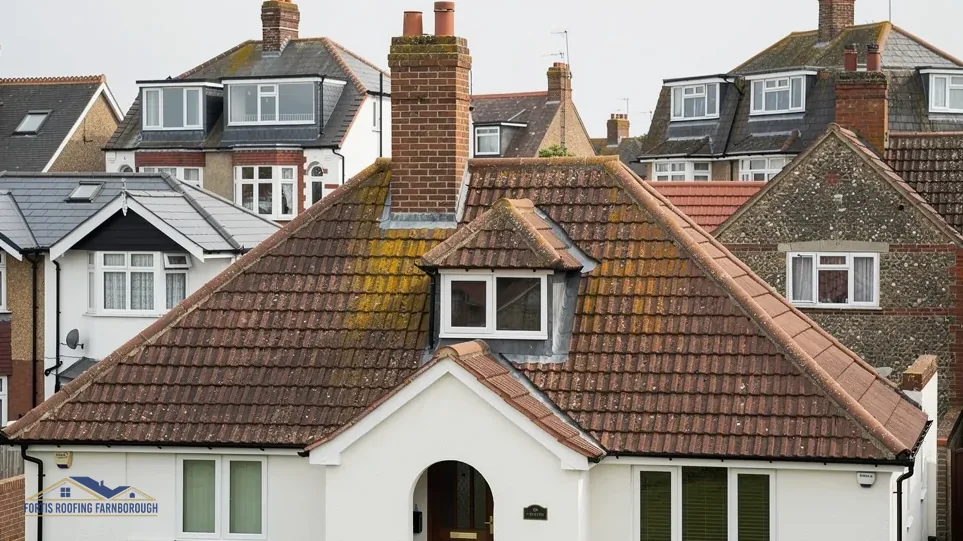
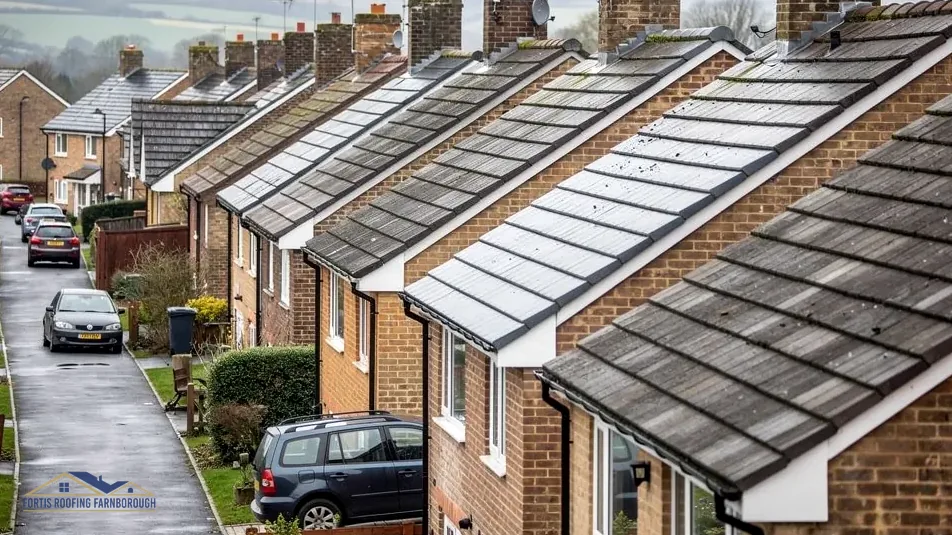
- the ridge line and the rows of tiles, for any that sag, slip or show a gap;
- the gutters and downpipes, for plants growing in them, sagging runs or water marks on the wall beneath;
- chimney stacks, for loose mortar or a lean, and the lead where they meet the slope;
- the fascia and soffit boards under the eaves, for flaking paint or soft timber;
- the roof's overall line, since a dip often signals a problem underneath.
Binoculars help, and so does a phone camera zoomed in, which gives you a record to compare with later.
Indoors, check the loft with a torch after rain. Look for dark patches on the timbers, damp insulation or daylight where there should be none. Treat any of these as a reason to book a survey, not as a job to fix yourself.
Keep off the roof itself. A slate or tile that looks sound can break underfoot, and falls from roofs are serious. Our roof maintenance checklist turns these checks into a routine.
Age and covering: how it changes the answer
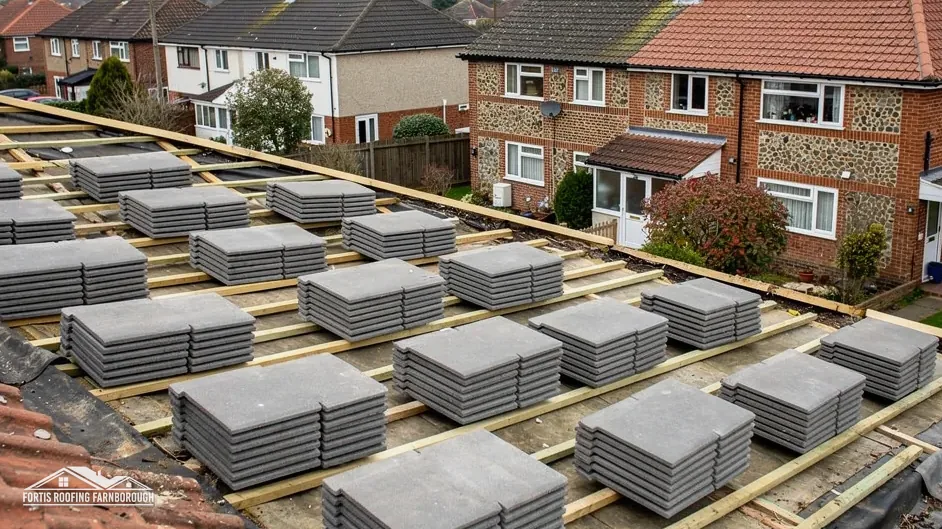
The older the covering, the more often it deserves attention. Published lifespans are typical ranges, not promises, but they show where the risk rises. HomeBuilding (Sep 2025) gives torch-on felt "10-15 years" and EPDM "25-30 years", while Less puts EPDM at "30 to 50 years". For plain concrete tiles HomeBuilding says "40-50 years", and for Welsh slate "100+ years".
A felt flat roof at 12 years old is close to the top of its range, so a yearly look from a ladder and a check inside are reasonable. A slate roof at 60 years is mid-life by the same sources, but the nails that hold it can fail long before the slate does.
If you do not know your covering or its age, pin that down before anything else. Check the published lifespan ranges for each covering, and ask a roofer to name what you have if the look and feel of it is unfamiliar.
A house bought recently with no record of the roof's history is worth a survey in the first year. You then have a baseline, with photographs, against which later checks can be compared.
When a survey is worth paying for
A roofer's survey goes beyond what you can see from the ground. It means a close inspection of the covering, flashings, valleys and eaves, and a look at the loft from inside. Our guide to what a roof inspection includes lists the parts.
On cost, MyJobQuote puts a typical roof survey at around £300, with its table showing rows of £100 to £200 and £200 to £350. A survey can lead to a repair, a re-roof or nothing at all, depending on what it finds. Our blog post on what a roof survey costs goes into the detail.
The value is in the evidence. A survey with photographs and measurements tells you whether a small repair will do or the covering needs to be replaced. It also gives you something to hold up against another firm's quote.
A survey is where each job with us starts, and the photos of your own roof come before any decision. You can book one from any page of the site, and the homepage lists the work we cover.