The school of 1820
The National school was built in 1820, the Duchess of Kent laying the foundation stone, and enlarged in 1897.
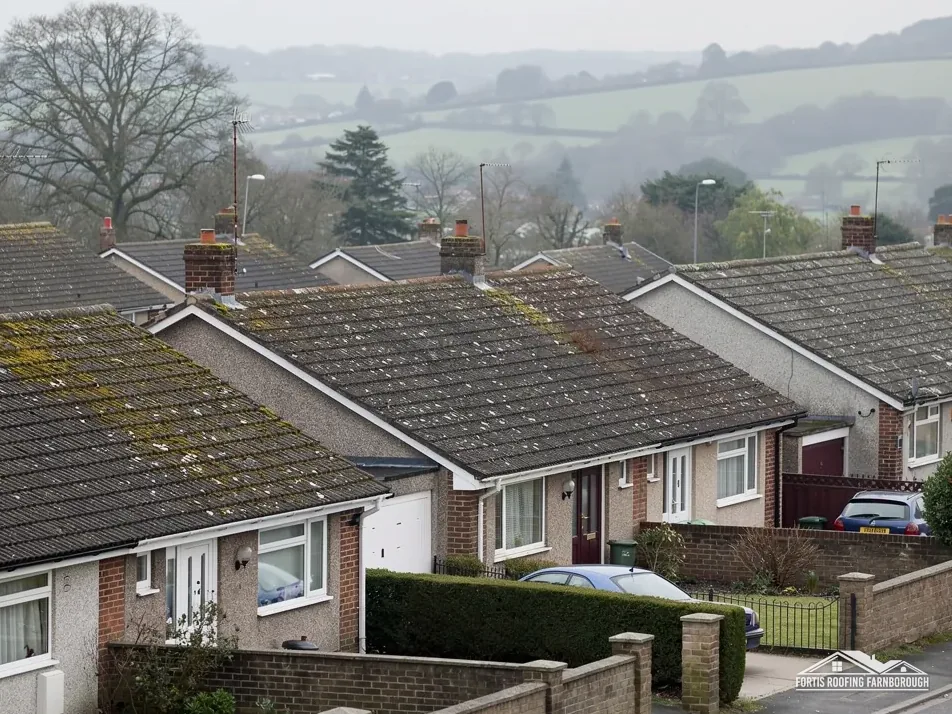
Roofs on the Bagshot sand heaths between Esher and Leatherhead
Oxshott is a heathland village that grew round a railway station opened in 1885, with a school of 1820 and Grade II farmhouses. Our surveys include a wildlife check.
The National school was built in 1820, the Duchess of Kent laying the foundation stone, and enlarged in 1897.
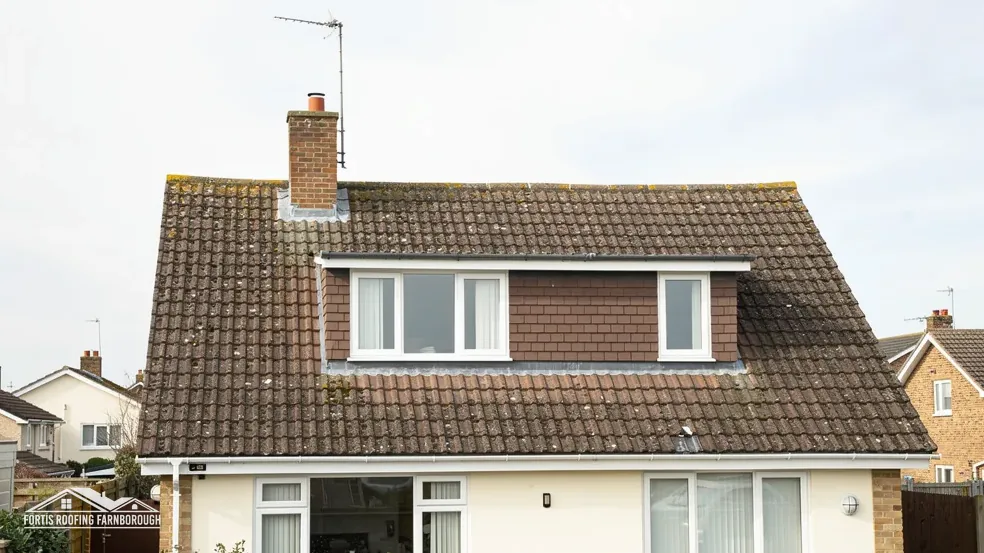
In 1911 a number of houses had been built in Oxshott since the railway opened.
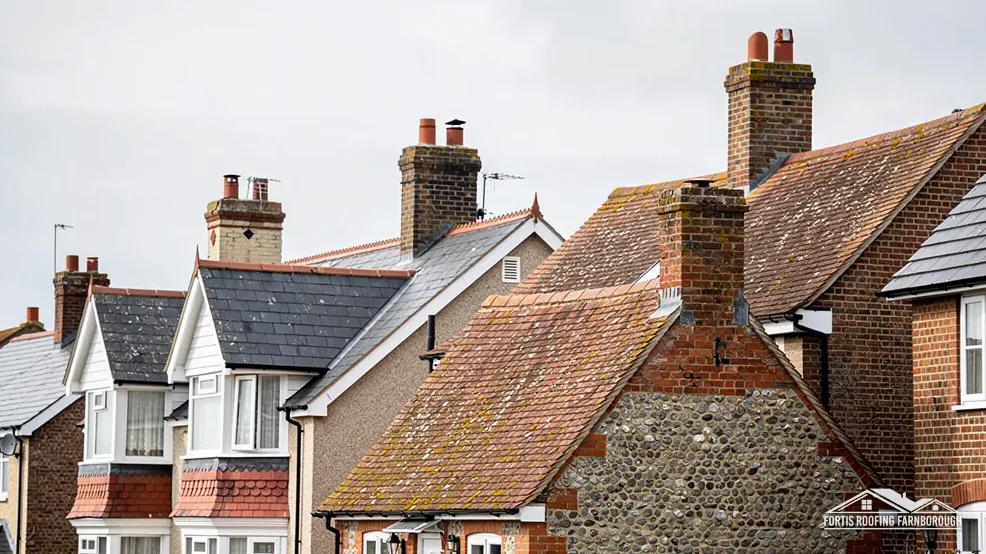
Birdshill Farm House and Danes Hill Farm House are each listed Grade II, with Highwayman's Cottage.
Map of Oxshott with Stoke D'Abernon, Claygate, West End, Elmbridge, Cobham marked around it.
Map data © OpenStreetMap contributors. Loads only when you ask for it.
Stoke D'Abernon lies south-west of Oxshott, Cobham west, Claygate north-east, West End and Esher to the north, and Fetcham and Leatherhead south and south-east.
About 26.2 road miles east of Farnborough · Elmbridge Borough Council and Surrey County Council.
Oxshott, heath and wildlife
What the law says about nests and bats before an older Oxshott roof is touched, what the 1911 history records about the station, the school and the hamlet, and what nearby conservation areas and Grade II farmhouses ask.
| No. | Chapter | The figure it turns on |
|---|---|---|
| 01 | Nests, bats and an older Oxshott roof | Intent matters for nests; not for roosts |
| 02 | A hamlet, a station and a school of 1820 | Station on the 1885 Cobham line |
| 03 | Nearby conservation areas and three Grade II farms | Nearest conservation areas within 2.5 km |
Chapter 01 of 03
Wildlife law and roofs in four published points
Oxshott's older houses and farm buildings stand among trees and heath, and a roof in that setting can be home to wildlife. The law treats birds and bats differently, and the difference decides what we do before a tile is lifted. Under section 1 of the Wildlife and Countryside Act 1981, intentionally taking, damaging or destroying an active wild bird's nest is an offence, so for birds the test is intent, and a building project is not accepted as a reason to relax it.
For bats the position is stricter. GOV.UK gives every species strong protection and treats renewing or mending a roof as work that may touch a roost. Under section 9(4) of the 1981 Act, disturbing a bat in its shelter or blocking the way in is an offence if done intentionally or recklessly, and regulation 43 of the 2017 Habitats Regulations reaches damage to a roost even where nothing was meant.
In practice, the survey looks into the roof space, along the eaves and under ridge and verge tiles for droppings, staining and nesting material, and says what it finds. If a roost is suspected, work waits for specialist advice. The question is always what the roof holds on the day, so the check is repeated just before work starts.
Elmbridge Borough Council decides planning, Elmbridge Building Control Services handles building control, and Surrey County Council keeps the highways until 31 March 2027, when East Surrey Council replaces both. Under the Planning Portal's yardstick, a re-roof affecting under 25 per cent of the building envelope and under 50 per cent of the roof usually needs no Building Regulations application. A full re-roof is surveyed and planned with the wildlife check built in.
Ask yourself before you ring whether you have seen birds going in and out under tiles, droppings on a window sill or stains on a loft rafter. Those clues help us plan which parts of the roof to inspect first, and they tell us how much time the wildlife check is likely to need. A quiet roof with clean timbers takes a short look; an old barn full of nesting material takes longer, and the plan allows for that before a date is fixed.
Chapter 02 of 03
| Subject | What the history records |
|---|---|
| Station | Ockshot (Oxshott) and Fairmile station on the Cobham line, opened in 1885 |
| Neighbourhood | Fairmile with Oxshott becoming a residential area reaching into Cobham, Esher and Stoke D'Abernon parishes |
| School | The National school of 1820, laid by the Duchess of Kent, enlarged in 1897, also used for Sunday services |
| The hamlet | A mile and a half north-east of Stoke D'Abernon church, where a number of houses had been built since the railway |
| Ockshot Grange | Perhaps part of the Waverley monks' holding; owned by one of the Vincent family under Charles I |
Surrey's Victoria County History, in its 1911 volume, said Fairmile with Oxshott was becoming a residential neighbourhood that reached into the parishes of Cobham, Esher and Stoke D'Abernon, and that it was served by Ockshot and Fairmile station on the Cobham line, which opened in 1885. Oxshott itself, spelt Ockshot, was a hamlet a mile and a half north-east of Stoke D'Abernon church, where a number of houses had been built since the railway came.
Houses built after a railway arrive in waves, and Oxshott's streets of different decades can stand a short walk apart. The record gives no roof details, so a covering is never inferred from a date. Our survey identifies what lies on every slope, dates earlier repairs where it can and logs the junctions and stacks. Our pitched roofing page describes the repairs that follow, from loose tiles to ridges and valleys.
The National school of 1820, where the Duchess of Kent laid the foundation stone, was enlarged in 1897 and also served for Sunday services. A building altered in 1897 has a roof of two periods, and the lesson applies to houses too: additions mean seams, and where an old roof meets a newer one the flashing and abutment get their own record.
Ockshot Grange, perhaps part of the Waverley monks' holding, was owned by one of the Vincent family in the time of Charles I. A name from the 17th century says little about today's roofs, but it is a reminder that an old site can carry buildings of several periods, each with its own roof.
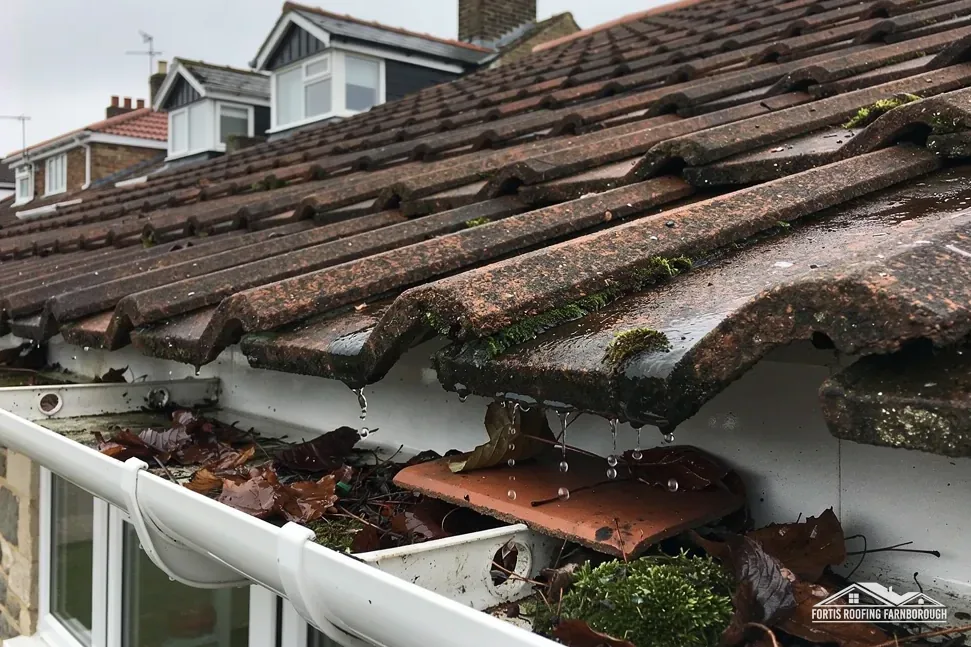
Oxshott lies on the Bagshot sand heaths, between Esher and Leatherhead, and trees press close to some roofs. Leaves, moss and shade follow, and our gutters, soffits and fascias page describes the tests for outlets and falls. We clear what we can reach and record the rest, with a note of any branch that overhangs a slope and should be cut back before work begins.
Two Oxshott dates
The survey follows every downpipe to its gully and reports any that discharges against brickwork, since water at the base of a wall can be mistaken for a fault in the roof. It also notes the condition of the fascia boards and soffits beneath the eaves, where rot and nesting can both begin.
Chapter 03 of 03
Oxshott's designations in four published figures
Three conservation areas are named near Oxshott in the national dataset, within about 2.5 km: Claygate Foley Estate, Cobham The Tilt and Stoke D'Abernon. None reaches the 1.5 km area around the centre, so houses near the centre are unlikely to be inside one, yet some at the edge may be. The conservation map at Elmbridge answers for an address, and its planners can say if an Article 4 direction reaches your street. Inside a conservation area the planning order removes permitted development for dormers.
Birdshill Farm House, Danes Hill Farm House and Highwayman's Cottage are listed Grade II, with 5 listed buildings on the national list within 500 m of the village centre. If work would change the character of any one of them, listed building consent is required, and Elmbridge is asked before a price is given. An older farm building may have roof voids that shelter birds or bats, so the wildlife check and the consent question are taken together at the survey, and the report deals with both.
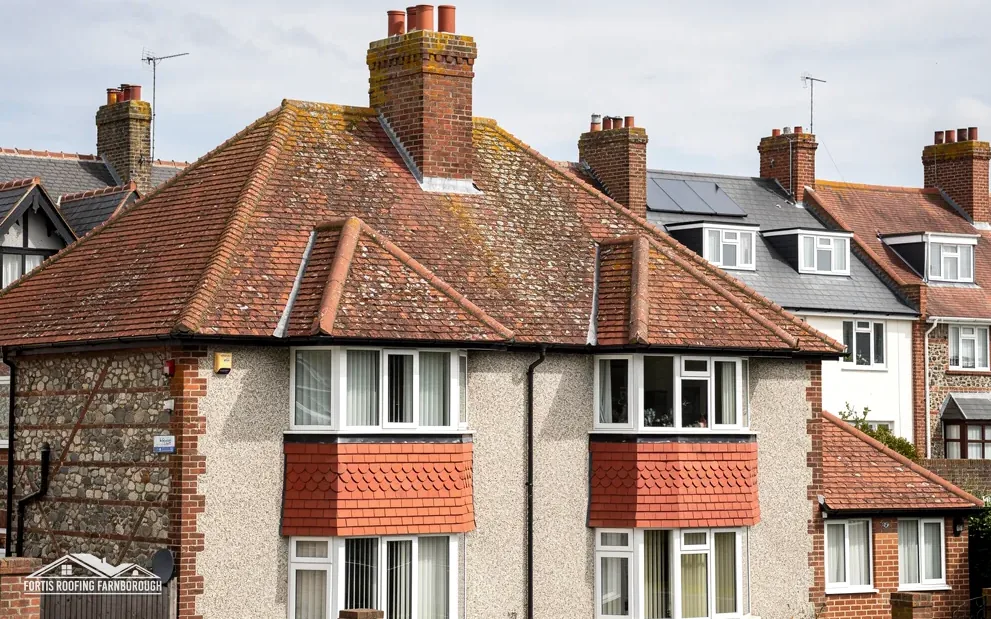
For a house that is unlisted and outside any designation, section 55 of the Town and Country Planning Act 1990 means a repair that keeps its look materially the same is not development. A matching repair is the simple case here, with the survey pictures as the record. A fresh covering, a higher ridge or a new opening should go to the council first. Our planning permission for roof work guide covers the national rules in full.
Chimneys on farmhouses can be tall and old. Our chimney repairs page covers pointing, flashing and full rebuilds, and the survey notes any nesting in or on a stack before it is touched. A stack with a nest in use waits, and the work is planned around it.
If the house you look after is old, send us what you know of its history: earlier surveys, invoices, pictures of past repairs. Such papers show us which materials to match, and show the council what the roof has been through, which makes an application easier to decide. Tell us too about anything living in or on the building, since it shapes the programme.
Not while the nest is active. Under section 1 of the Wildlife and Countryside Act 1981 it is an offence to intentionally damage a wild bird's nest in use, so the survey looks for nests and plans around any, so the repair harms no nest and leaves the roof open for no longer than it must be.
They are. GOV.UK gives each bat species strong legal protection and says work on a roof can affect them. Regulation 43 of the Habitats Regulations makes damaging a roost an offence even where nobody meant it. If a roost is suspected, work stops until specialist advice has been taken, and we explain what that involves.
The dataset names Claygate Foley Estate, Cobham The Tilt and Stoke D'Abernon within about 2.5 km, and none touches the 1.5 km area round the centre. Elmbridge's map confirms your address. Within one, a dormer has to be applied for, and the council is told of any change to the roof's appearance.
Elmbridge Building Control Services handles it for Elmbridge Borough Council, and a registered building control approver is the private alternative. Whether any application arises depends on the Planning Portal's limits, under 25 per cent of the envelope and 50 per cent of the roof, which the survey measures first.
Get your free roof quote
Send your Oxshott address and what you have noticed, from stains to birds, and we will set a visit.
10-year workmanship guarantee, in writing.