
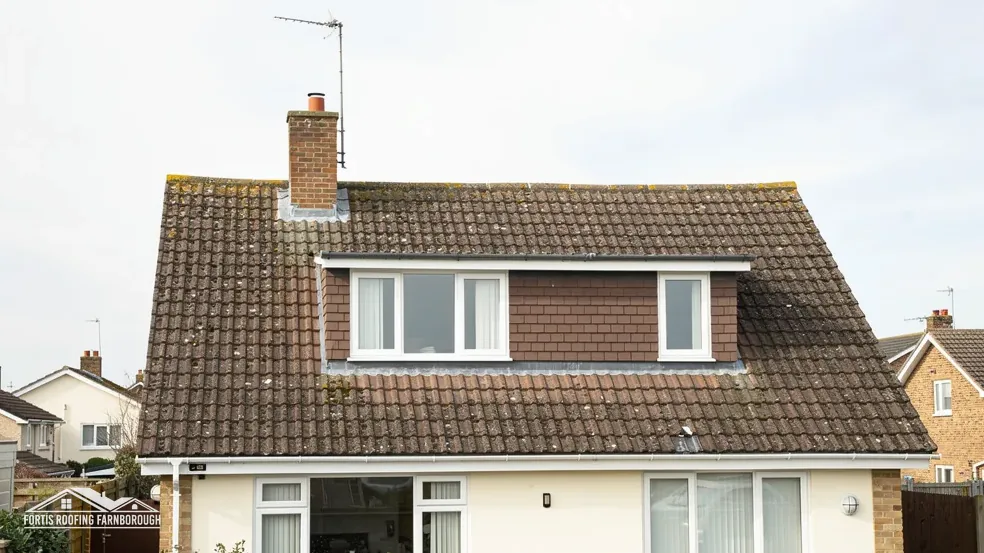
Christ Church, brick and stone
Sir Gilbert Scott built Christ Church in 14th-century style, of brick and stone, with a tower and spire.
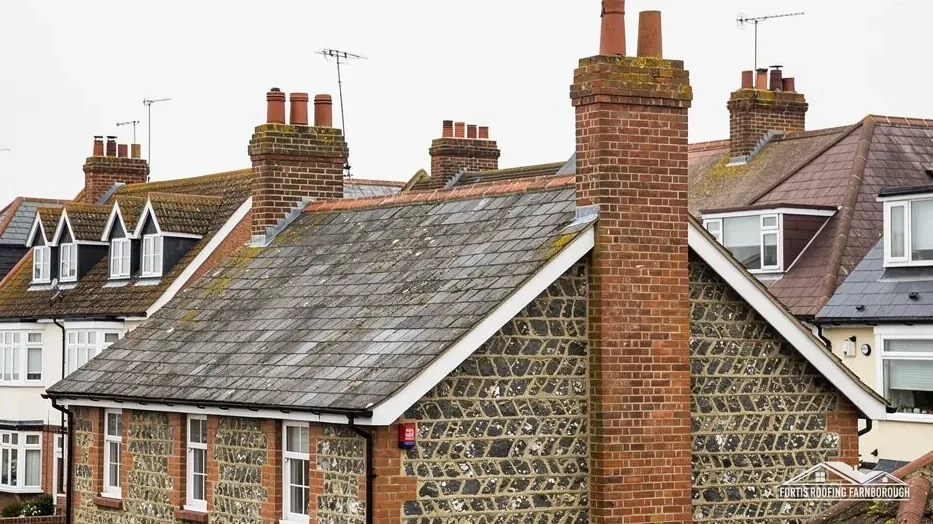
Roofs near a Gilbert Scott spire where the Bagshot heaths begin
Ottershaw and Brox became an ecclesiastical district of Chertsey parish in 1865, with Church schools built in 1870 and a Scott-designed church. We survey each roof slope on its own.
Sir Gilbert Scott built Christ Church in 14th-century style, of brick and stone, with a tower and spire.

The Church schools of the Ottershaw and Brox district were built in 1870.
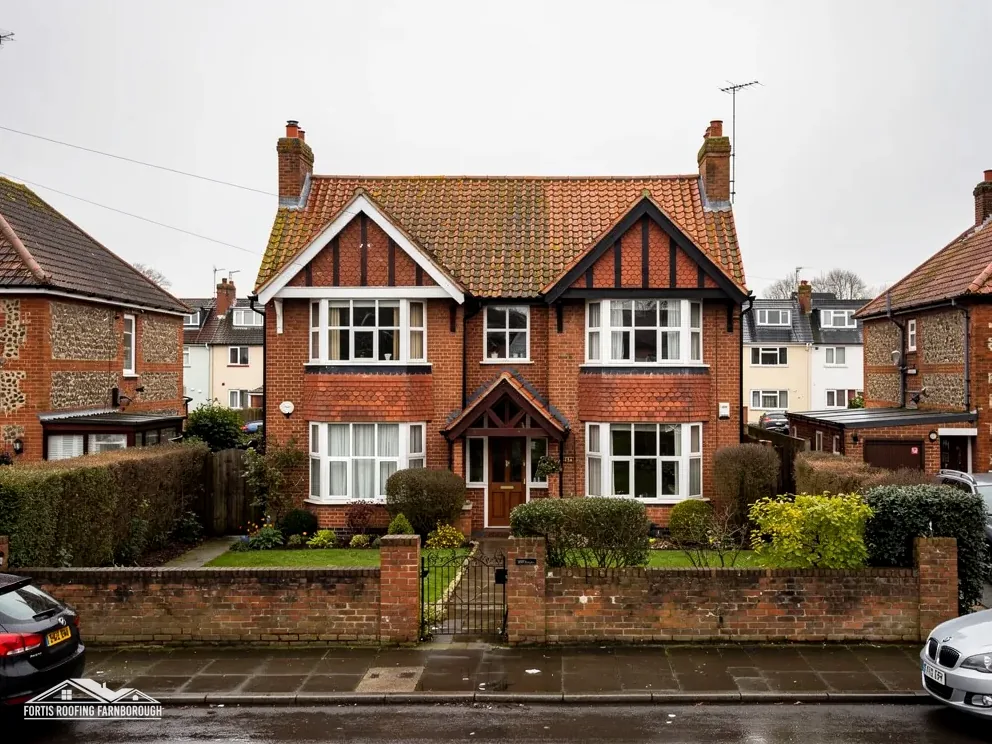
A Grade II listed building, first listed on 9 June 1972, stands on the Chobham Road.
Map of Ottershaw with Lyne, New Haw, Addlestone, West Byfleet marked around it.
Map data © OpenStreetMap contributors. Loads only when you ask for it.
Lyne lies to the north, Chertsey to the north-east, Addlestone to the east, New Haw to the south-east and Pyrford to the south, with Farnborough to the south-west.
About 17.3 road miles north-east of Farnborough · Runnymede Borough Council and Surrey County Council.
Ottershaw, church district and council
How Runnymede and Surrey share the rules for an Ottershaw roof, how a church district carved from Chertsey shaped the village, and what the sparse listing and the Basingstoke Canal conservation area nearby mean for repairs.
| No. | Chapter | The figure it turns on |
|---|---|---|
| 01 | Runnymede's building control and Surrey's licence fees | 28-day periods in the Surrey scaffold fee |
| 02 | A church district, Gilbert Scott and the schools | Church schools built in 1870 |
| 03 | Few listings, and a canal conservation area nearby | 2 listed buildings within 500 m |
Chapter 01 of 03
| Matter | Office for Ottershaw addresses |
|---|---|
| Planning | Runnymede Borough Council |
| Highway authority (until April 2027) | Surrey County Council |
| Building control | Runnymede Borough Council's own team |
| Scaffold licence on the highway | Surrey County Council |
| From 1 April 2027 | West Surrey Council replaces both |
Ottershaw lies 17.3 road miles north-east of Farnborough, in Runnymede, measured from the A325 Farnborough Road. Planning and building control sit with Runnymede Borough Council, which runs its own team and names no partner. The highway belongs to Surrey County Council until 31 March 2027, after which West Surrey Council takes both functions over.
The Planning Portal gives two limits for roof work: 25 per cent of the building envelope and 50 per cent of the roof. A job below both is not a building control matter in the ordinary way, and Runnymede adds no figure of its own. A porch roof, a new run of ridge or a replaced valley falls below them. Stripping and re-covering the entire roof goes beyond them. So does any covering 15 per cent or more heavier: approval is needed whatever area it covers.
On the survey visit each slope gets measured and photographed, and the total is set against those limits on paper, so that an approval route is decided before the work starts, not after the covering has come off. A registered building control approver, the private alternative to Runnymede's team, is given notice in the same way.
Surrey County Council's page sets the licence at £208 for each 28-day period, with the same figure on renewal, and says the application fee is not refundable. It asks for the application at least 10 working days before the start. That makes it worth deciding early whether scaffold must stand on the highway at all, because a licence applied for and not used is not recovered. Poles that stay inside your own boundary raise no highway licence question.
That page leaves the applicant unnamed, and we settle the point with the scaffolder before you are given a date. If a stack needs work, the same scaffold serves it, and our chimney repairs page lists what is done at the top and where the lead is checked.
We also confirm that the scaffold and the lift for tiles fit your drive, and that a neighbour who shares it knows when deliveries are due. If the forecast turns poor we say whether to hold the strip, since a roof stripped and left under a sheet helps nobody. Where water is already getting in, we make the roof safe first and plan the lasting repair afterwards, with the dates agreed in writing.
Chapter 02 of 03
Ottershaw's story in four published facts
The 1911 county history of Surrey, in its Chertsey volume, describes Ottershaw and Brox as an ecclesiastical district of Chertsey parish, with Church schools built in 1870. It says Christ Church was built by Sir Gilbert Scott in 14th-century style, of brick and stone, with a tower and spire. Ottershaw Park is said to have been built by Sir Thomas Sewell, Master of the Rolls.
The same history says the district was formed in 1865, and that the western and southern parts of Chertsey parish lie on higher ground where the barren heaths of the Bagshot Sand begin. Ottershaw sits in that southern part. The record is about the church, the schools and the big house, and the coverings on today's homes are something we find on the roof. A house altered at different times may have different coverings on different slopes.
The practical rule is therefore the one we apply everywhere: we find out what is on each slope by lifting a few tiles, checking the battens and underlay, and photographing the ridge, verges, valleys and flashings. Where we meet a brick stack, we photograph it from the roof and the loft.
The brick and stone tower and spire that Scott built put tall masonry on the village skyline, and they serve as a reminder that anything rising from a roof needs flashing of its own. The same holds for a domestic chimney: wherever a stack meets a slope, a lead or flashing junction keeps the water out, and the flaunching on top keeps it from entering the stack.
Where the covering across a whole slope has reached the end of its useful life, our roof replacement page walks through a complete re-cover and lists what the photographs must show first.

On an older house, we pay particular attention to the lead in valleys and behind chimneys, the condition of timber fascia and soffit boards, and the gutters, because those parts meet the weather first. A fascia is the board at the eave edge that holds the gutter, and a soffit is the board under the overhang. We photograph each along its full length.
Chapter 03 of 03
| Designation | Near Ottershaw | For roof work |
|---|---|---|
| Conservation area | Nearest: Basingstoke Canal, within about 2.5 km | Check your address on the Runnymede map |
| Article 4 direction | Checked by address | Ask Runnymede whether one applies |
| Grade II listed | 2, Chobham Road (NHLE 1377935) | Listed building consent for works affecting its character |
| Grade II listed | Murray House (NHLE 1295081) | Listed building consent for works affecting its character |
Runnymede lists the Basingstoke Canal among its conservation areas, and in the planning dataset that canal area lies within about 2.5 km of Ottershaw. Runnymede's mapping pages settle the position for a given house, and we look before pricing any job that would alter how a roof looks. Runnymede also publishes 2023 guidance on permitted development in conservation areas, which we consult where it is relevant.
Whether an Article 4 direction covers an Ottershaw address is for Runnymede to say. The council's planning team can answer it for a named property, and the reply is passed to you in writing. If the reply is that a direction applies, the job is planned around it before any price is set.
2, Chobham Road carries a Grade II listing from 9 June 1972, and Murray House is also Grade II listed. A listed building's owner needs consent for changes, but neighbours do not, and we plan scaffold so that it never touches a listed wall. Historic England's list counts 2 listed buildings within about 500 m of the village point. Should your house be one of them, any change to its character calls for listed building consent first, and a roofer who starts without it exposes the owner to enforcement. A like-for-like repair on a listed house still calls for care, and we say what we propose before starting.
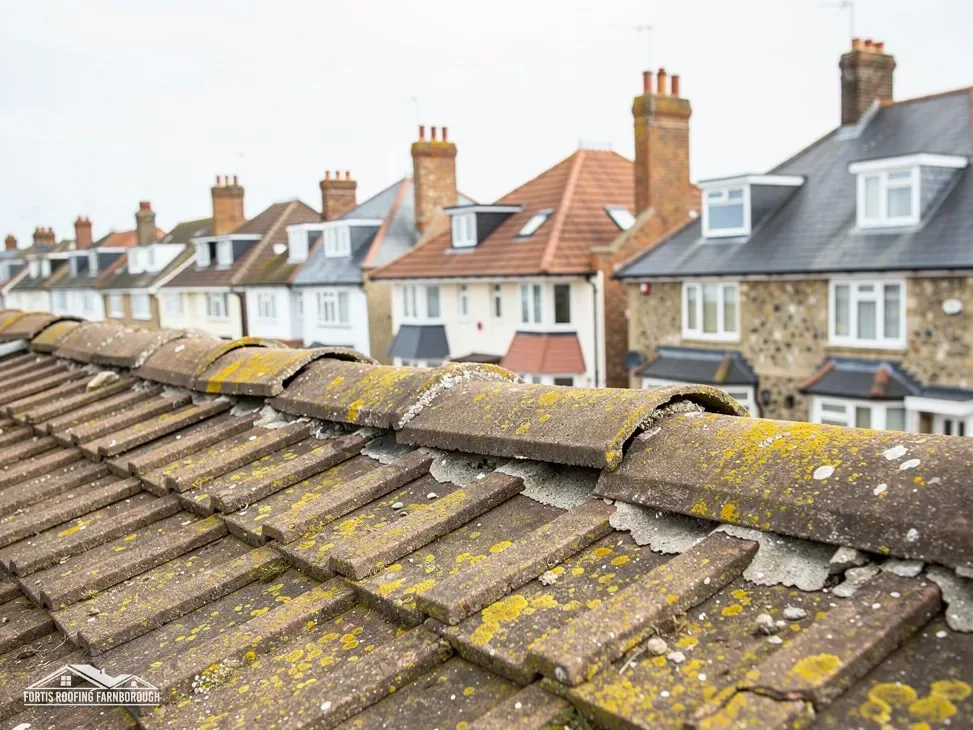
For every other Ottershaw house the route is the plain one, with a survey, photographs, a written plan, one total price and a record of what was done. The file is yours, and it is useful to a buyer or a surveyor later. On an older Ottershaw house the loft gets the same attention as the slopes, because rafters, battens and the underside of the covering show past repairs and fresh damp long before anything shows from the road. Where a valley or a stack has been patched before, we photograph the old repair beside the sound work, so you can see how well it has lasted and whether it is worth repeating.
A short job gets a short file: three or four photographs of the fault, a note of what was done and the date. A longer job gets a full plan with each slope named. Where nothing on the map applies to your address, the work is simply a matter of doing it well, so we name the covering, the fixings and the ridge, photograph before and after, and give a single written price covering everything.
A stack can leak at one of three places: the flashing or lead where the stack meets the slope, the flaunching on top, or worn mortar joints in the brickwork. Each is photographed on the roof and then again in the loft, so the repair is matched to the fault. A small repair stays small when the evidence supports it.
The Basingstoke Canal conservation area lies within about 2.5 km of the village in the planning dataset. For your own house, Runnymede's map is the check, and we ask Runnymede's planners before we price any job that would change the roof's look.
Surrey County Council's page says the application fee is non-refundable, and a licence costs £208 per 28-day period. We settle the dates on the survey visit so the licence is lodged only when the job can start, and we say in writing whether the scaffold is part of the total price.
Where the job goes past the Planning Portal's limits of 25 per cent of the building envelope and 50 per cent of the roof, or the covering is 15 per cent or more heavier, yes. Runnymede runs its own team, with a registered building control approver as the private alternative, and we take the measurements before saying which applies.
Get your free roof quote
Send your Ottershaw road with a note of what you have noticed, and a survey slot follows.
10-year workmanship guarantee, in writing.





