Railway-era cottages
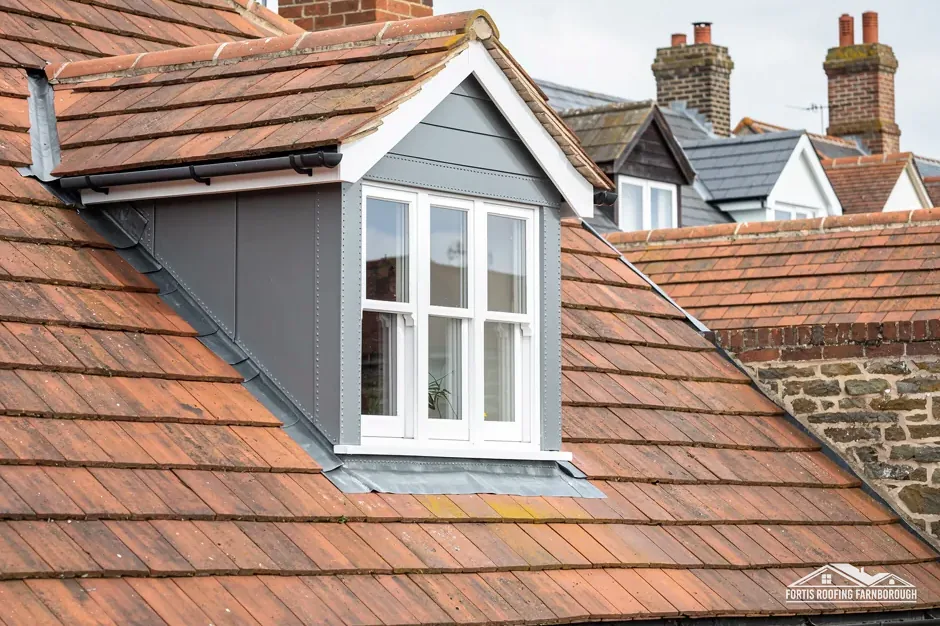
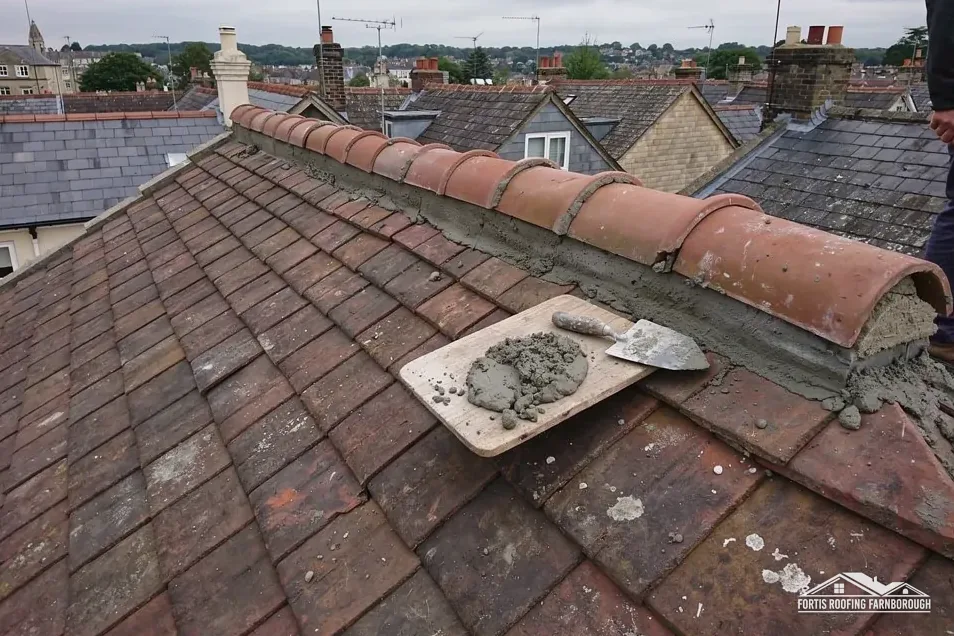
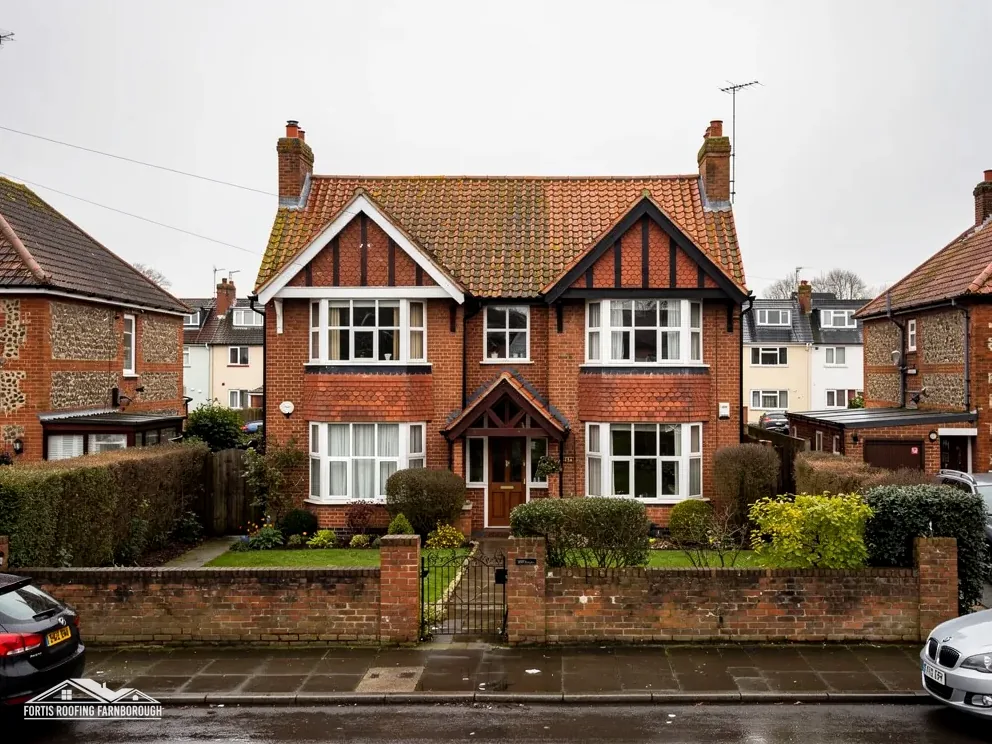
Cottages and villas went up on Newnham, Sheldons and Dorchester Roads in the 1880s to 1900s.

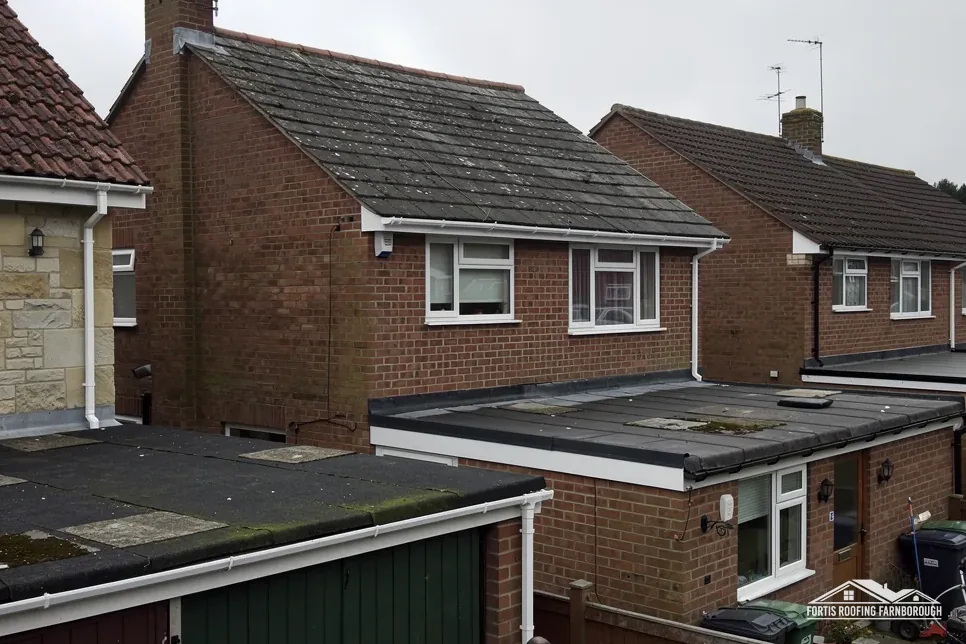
Railway-era cottages and concrete-tile cul-de-sacs beside the M3
Hook is a large village on the A30 and the main railway, beside the M3, with railway-era cottages and later cul-de-sacs. A written price follows each roof survey.
Cottages and villas went up on Newnham, Sheldons and Dorchester Roads in the 1880s to 1900s.
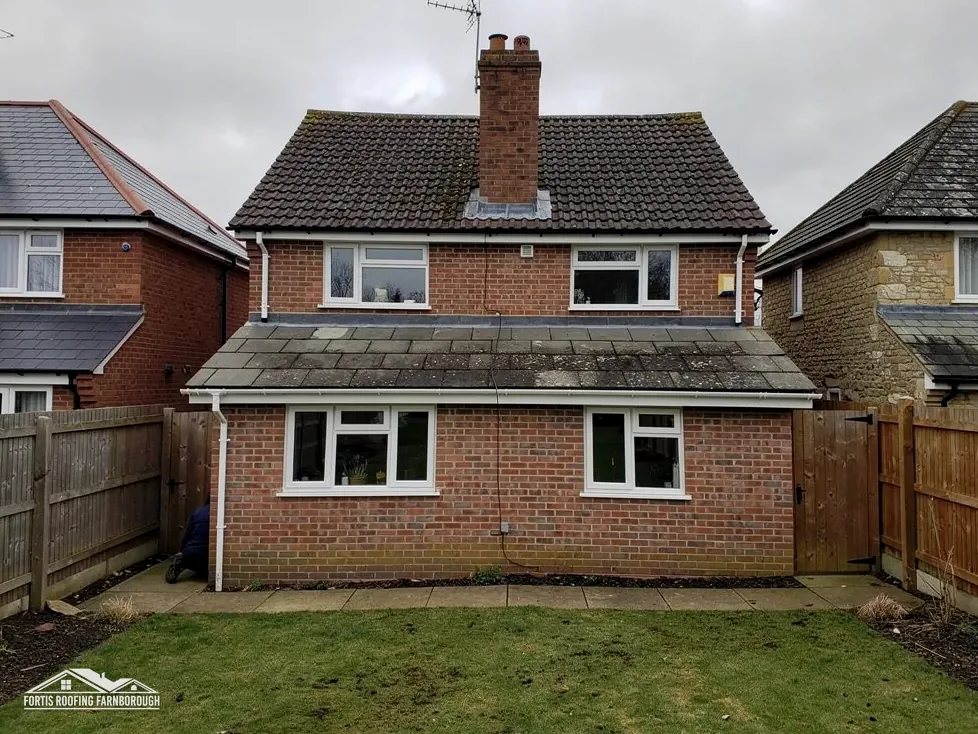
Hart's study describes yellow and brown brick, tile-hanging or weatherboarding and concrete tile roofs.
Holt Farmhouse and its barn are listed Grade II, among 14 listed buildings within 900 m.
Map of Hook with North Warnborough, Odiham, Hartley Wintney, Sherfield on Loddon marked around it.
Map data © OpenStreetMap contributors. Loads only when you ask for it.
North Warnborough lies to the south, Odiham to the south-east, Hartley Wintney to the north-east, Sherfield on Loddon to the north-west, and Old Basing west of the village.
About 12.2 road miles west of Farnborough · Hart District Council and Hampshire County Council.
Hook, railway, cul-de-sacs and farms
Who handles a Hook roof job, what Hart's 2010 study records about the railway cottages and the later cul-de-sacs, and what the concrete tile roofs, the canal conservation areas and the Holt Farm listings mean for repairs.
| No. | Chapter | The figure it turns on |
|---|---|---|
| 01 | Hart, Hampshire and the Rushmoor desk | Hart plans; Hampshire licenses scaffold |
| 02 | The railway of 1839 and the estates after | Railway 1839, station 1883 |
| 03 | Canal conservation areas and Holt Farm | 14 listed buildings within 900 m |
Chapter 01 of 03
| Role | Body for Hook addresses |
|---|---|
| Planning authority | Hart District Council |
| County council and highway authority | Hampshire County Council |
| Building control | Hart and Rushmoor Building Control Partnership |
| Scaffold licence on the highway | Hampshire County Council; scaffold firm applies |
Hook lies 12.2 road miles west of Farnborough, starting the count at the A325 Farnborough Road. Hart District Council is its planning authority, Hampshire County Council looks after its A30 and side roads, and Hart's building control comes from a Rushmoor team in Farnborough under a partnership running since July 2015. The team's number is 01252 398715.
For a Hook house the Planning Portal's test is the starting point: under 25 per cent of the building envelope and under 50 per cent of the roof need no application, and a 15 per cent or greater rise in load needs approval and a structural check. A cul-de-sac house with a simple roof can have a good-sized patch repaired within those lines, and the survey measures to say so.
When water is already coming in, the first step is to stop it. MyJobQuote says the average roof repair cost is around £650 in 2026 (6 October 2026), and puts emergency call-out charges at typically £150 to £300 and extensive storm repairs at £1,200 or more (22 October 2026). Those are national guides and not our price, and a temporary make-safe is quite different from the permanent repair that follows the survey.
A homeowner whose roof was hurt by a storm may be able to claim on buildings insurance. Photographs of the damage taken before any temporary cover goes on help that claim, and the survey that follows adds its own dated record of the cause, so the insurer sees the damage and the repair described in the same terms.
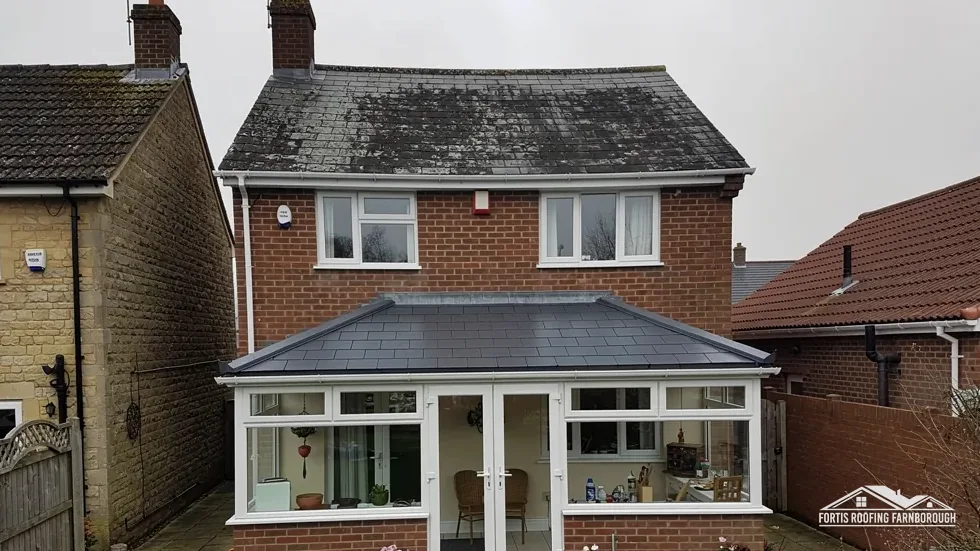
Many Hook houses have a conservatory or a garage added. A polycarbonate conservatory roof has a typical life of about 10 years according to HomeBuilding, and about 10 to 15 years according to The Eco Experts, who put replacement at between £2,300 and £6,000; MyJobQuote gives £3,200 to £6,000 (20 October 2026). Our flat roofing page covers lean-to and flat sections.
Scaffolding on the A30 or a side road needs a licence under section 169 of the Highways Act 1980. Hampshire County Council wants the scaffolder, not the householder, to apply. Hampshire's fee is £211.90 for the first two weeks and £72 for each further two, ten working days must separate application from start, and extensions are not granted. Scaffold wholly inside a garden or drive is outside the licence.
On a cul-de-sac, where a scaffold may block the turning head, the plan covers access for neighbours, bin collections and deliveries, and each day ends with the road clear.
Chapter 02 of 03
Hook in sourced dates and numbers
Hart's 2010 study says the railway reached Hook in 1839, built by the London and South Western company, with a station following in 1883, and that cottages and villas were built on Newnham, Sheldons and Dorchester Roads in the 1880s to 1900s. Cul-de-sacs of houses and bungalows were built in the 1940s and 1960s, first as council housing and later privately, and the large Alderwood Drive and Oak Tree Drive estate followed in the early 1980s. The 2021 Census counted 9,069 usual residents in the parish.
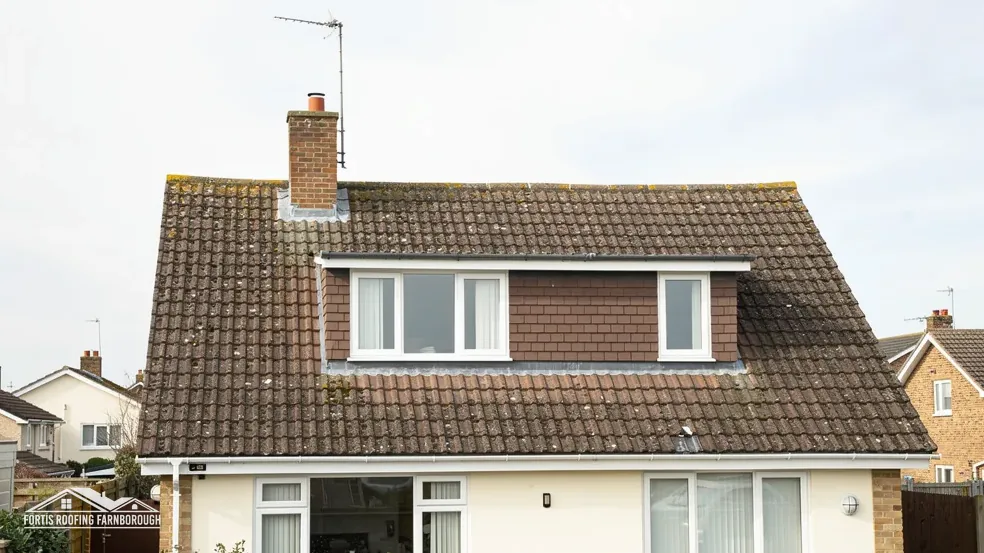
The study describes Hook's 1960s and 1970s cul-de-sacs as yellow and brown brick with tile-hanging or weatherboarding and concrete tile roofs. Concrete tile has its own record on lifespan: Marley expects its roof tiles to last around 60 years while stressing that this is not a guarantee, whereas HomeBuilding puts plain concrete tile at 40-50 years and Double Roman at 40-50. Because the sources differ, the report judges your own roof on its condition and not its age, and Marley's minimum pitches, for instance 35 degrees for its plain tile, are checked against the slope.
Garages of the 1960s and 1970s can have roofs of asbestos cement sheet. For asbestos cement roofing, HSE's position is that such roofs are always fragile, that any building from before 2000 should be assumed to contain asbestos, and that careful removal without breaking the material is non-licensed work. MyJobQuote gives a garage roof as between £750 and £3,500 and asbestos roof removal at around £2,750 (9 September 2026). The survey identifies the material first, and nobody walks on a fragile roof.
Tile-hanging and weatherboarding on the walls add junctions to the roof edge: the tile-hanging meets the eaves, the weatherboarding meets the soffit, and the lead or flashing between them has to stay sound. The survey lifts each junction and photographs it. Our gutters, soffits and fascias page describes the roofline checks.
The railway-era cottages and villas belong to another method: smaller tiles or slate, taller stacks, lead valleys. A cottage that has stood since the 1880s may carry a later covering, and what lies beneath may differ from what shows. Each slope has its covering named and its layers photographed. Our chimney repairs page sets out the stack checks.
Chapter 03 of 03
| Designation | Near Hook | For roof work |
|---|---|---|
| Conservation areas, nearest | Basingstoke Canal, Greywell, Newnham, North Warnborough, Odiham | Ask Hart whether your address is inside |
| Grade II listed | Holt Farmhouse (NHLE 1244350) | Listed building consent for work affecting character |
| Grade II listed | Barn at Holt Farm (NHLE 1244351) | Listed building consent for work affecting character |
| Grade II listed | Hook House (NHLE 1273214) | Listed building consent for work affecting character |
Planning data lists the conservation areas nearest Hook, inside about 2.5 km, as the Basingstoke Canal, Greywell, Newnham, North Warnborough and Odiham, among others. Hart's map settles whether a Hook address sits inside one, and the check is made before any price is given. The National Heritage List records 14 listed buildings within 900 m, including Holt Farmhouse and its barn to the north-east (the barn first listed on 26 June 1987, NHLE 1244351) and Hook House (NHLE 1273214), each Grade II.
Inside an area, the same covering and ridge put back keeps the look, whereas a changed material goes to Hart before work begins. Hart applied Article 4 directions to most of its conservation areas in 1998, reaching frontage roof slopes and chimneys on dwellings, and the map shows which touches which address. A house a street from a boundary may stand outside every direction, and the report states plainly on which side of the line yours falls.
Most of Hook's cul-de-sacs and railway streets are not in the areas named above, so for them the question is usually nothing more than an address check, answered once and recorded with its date. Where an answer is yes, the council receives photographs, measurements and a plain description before any price is set.

Changing the character of Holt Farmhouse or its barn calls for listed building consent, and the repair is laid out first, naming the tiles to reuse, those to match and the battens that have actually failed. A barn roof is big and plain, so all of it is measured and every slope walked, with the ridge and the gable verges photographed along their length and a note made of any signs of earlier patching.
Rainwater from a barn roof often runs to a shared ditch or soakaway, so the survey follows the downpipes to their outlets, notes whether a pipe discharges onto a wall, and records any gutter bracket that has pulled away.
A listing stops at the listed building. Neighbouring houses are surveyed in the ordinary way, though each address is checked against the heritage list and Hart's map, and the report shows you what was found and on what date.
Each check is dated in your written report, which gives you the consent route ahead of any booking, and one price is written afterwards.
Marley expects its roof tiles to last around 60 years, while stressing that this is not a guarantee, whereas HomeBuilding puts plain concrete tile at 40-50 years. The sources differ and neither promises how long your roof will last, so the survey records the condition of each slope and gives its own view.
It adds junctions. Where tile-hanging meets the eaves, or weatherboarding meets the soffit, the flashing has to stay sound, and a failure lets water in behind the cladding. We lift and photograph each junction, repair what has failed, and the report shows each finding beside the repair proposed, so you can compare before agreeing.
Only if your address lies inside one, which Hart's map decides. Planning data names the Basingstoke Canal, Greywell, Newnham, North Warnborough and Odiham areas close to Hook. Inside one, restoring the same covering keeps the look, while a different material is for Hart to consider first, and the survey records which side of the line you are on.
Hampshire County Council expects the scaffolder to apply, so the form is not yours to complete. Hampshire charges £211.90 for the first fortnight, requires ten working days between application and start, and grants no extensions. A scaffold wholly on a private drive falls outside the licence, and the written plan records how access is kept for neighbours.
Get your free roof quote
Send us the road name and what you have noticed, and a visit gets booked.
10-year workmanship guarantee, in writing.