The short answer
Most skylight faults fall into four groups: a failed glass unit, worn hinges or opening gear, perished seals, and a leaking flashing. Each has its own repair. Glass, hinges and seals can often be dealt with without replacing the window, while a rotten frame or a flashing that has failed beyond repair usually means a new one.
The common faults and what they look like
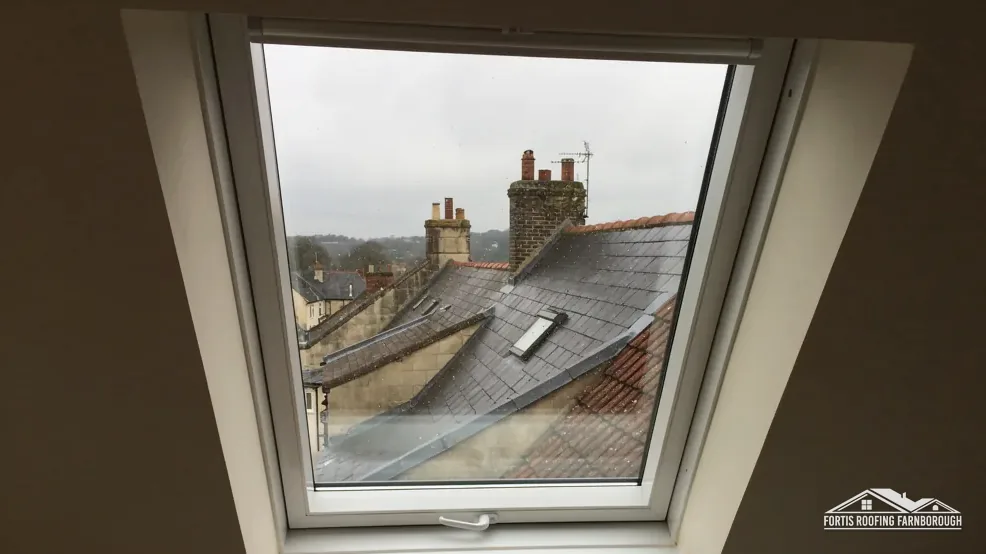
The symptoms point to the cause. Mist or droplets trapped between the panes means the sealed glass unit has failed. A window that is stiff, sags when open or will not stay in position has a hinge, pivot or friction problem. A window that does not close tight, or whistles in wind, has worn or flattened seals. A drip, a stain on the lining or a damp reveal after rain suggests the flashing, the junction with the roof covering.
Some faults look alike. A damp lining can come from condensation on a cold morning or from a leak after rain, and the timing tells you which. Our answer on condensation on a roof window explains how to tell them apart.
Electric and solar-powered windows add motors, rain sensors and wiring to the list, and a fault there is a job for the maker's service route or an electrician. A fixed skylight has fewer parts and so fewer faults, though it can leak at the flashing just the same.
Age shapes what goes wrong. Seals and sealed units wear out over the years, hinges loosen, and timber frames suffer where water has stood. Snap the label on the frame, showing model and date code, because it tells a supplier exactly which parts fit.
Glass, hinges and seals: what can be repaired
A failed sealed unit can be replaced in the existing sash. The new unit comes made to size, the old one is released and lifted out, and the new one is set in with fresh seals. It restores clear glass and the window's insulating value, and our answer on replacing just the glass covers it.
Hinges and opening gear can be adjusted, lubricated or replaced if the parts are available. A window that has dropped on its frame may be re-hung. If the cause is a swollen or distorted sash, the repair goes deeper, and our answer on a window that will not close works through the causes.
Seals are strips of rubber or foam that fit around the sash and the frame. When they flatten, crack or come away, they let in air and water. New seals are often a simple fit, and they make a noticeable difference to draughts and noise.
The aim in each case is to fix the part that has failed and leave what is sound alone. A repair is a good buy when the frame is healthy and the model is still supported. It stops being a good buy when parts are unobtainable or the window needs several repairs at once.
Flashings and the roof around the window
A leak is rarely the glass. The flashing, the set of metal parts that carries rain around the frame and over the roof covering, is the usual source. Fixings work loose, sealant dries and splits, and a piece of flashing can lift in the wind or be knocked by a ladder.
Repair here means looking closely. We check each flashing piece, the lap at the top and the sides, and the tiles or slates round the window for cracks or slips. A cracked tile beside the frame can let water run behind the flashing and appear as a leak at the window. Resealing a flashing can buy time, though it is a temporary fix when the metal itself has failed.
If the flashing kit is the wrong one for the covering, or was fitted badly, the repair is to lift the covering and refit it properly. The manufacturer's flashing kit instructions show how the parts should go together.
Active water ingress is dealt with by a temporary cover first. Cover or sealant stops the water, then the survey tracks down the cause. We do not guess at a cause before looking.
Repair or replace, and who fixes what
Some repairs belong with the manufacturer or an electrician: motors, control units and sensors on powered windows. Others belong with a roofer: flashings, tiles and the junction with the covering. The glass and the seals can be done by either, as long as the parts match the model.
The decision comes down to the frame and the age. A sound frame with a failed unit or tired seals is worth repairing. A frame with soft, flaking timber, repeated leaks, or a model for which parts are no longer made points to a replacement window, which means replacing the whole roof window.
Cost is part of it. MyJobQuote (Sep 2026) puts a standard mid-range roof window at £1,100 as a typical UK figure, with a straightforward swap around £100 less. A repair costs less than that, but a series of repairs on an old window can add up to more than a new one.
At the survey we photograph the frame, the glass, the seals and the flashing, and the findings and recommendation are explained. Where a repair is enough, that is the advice given, with the work named in the scope and one written total to follow. See roof windows and skylights for the rest of the service.