The short answer
Roofers do, with care, but a homeowner should not. Tiles are made to shed rain, not to carry a person, and a step in the wrong place cracks one. The slope also drops away fast. Access is gained with a roof ladder or crawl board that spreads the load, plus fall protection. For a one-off look, a zoom lens from the ground beats the slope.
Why tiles crack underfoot
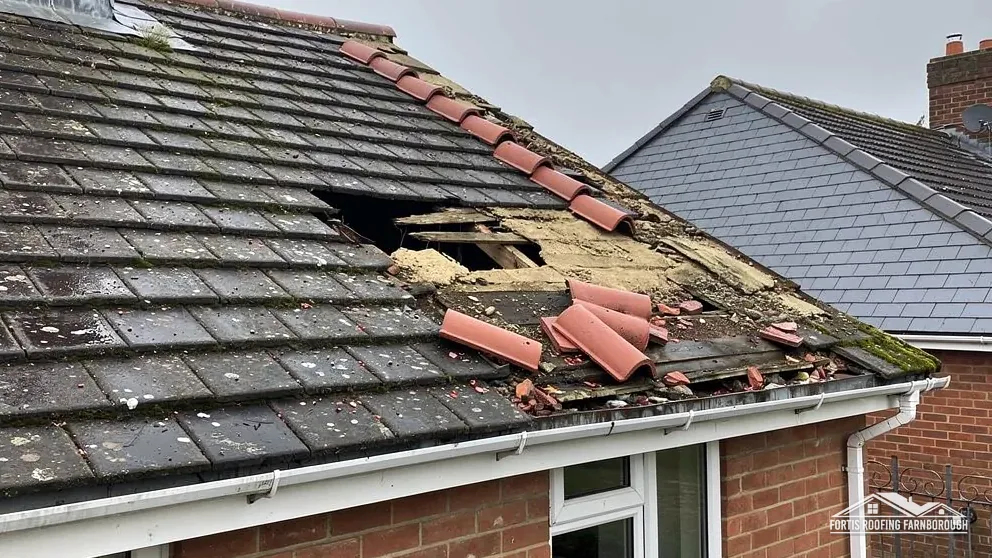
A roof tile is built to resist weather. It is thin, it is held by a nib and a nail at the top, and its lower end rests on the course beneath. Press down on the middle of a tile and the pressure goes straight through a thin section onto the batten edge, where it can snap. Clay and concrete are strong in some ways and brittle in others.
The crack may not be visible. A hairline fracture underneath looks fine from above, then opens in the next frost and lets water through. By the time a stain appears on the ceiling, the walker has forgotten the day they went up.
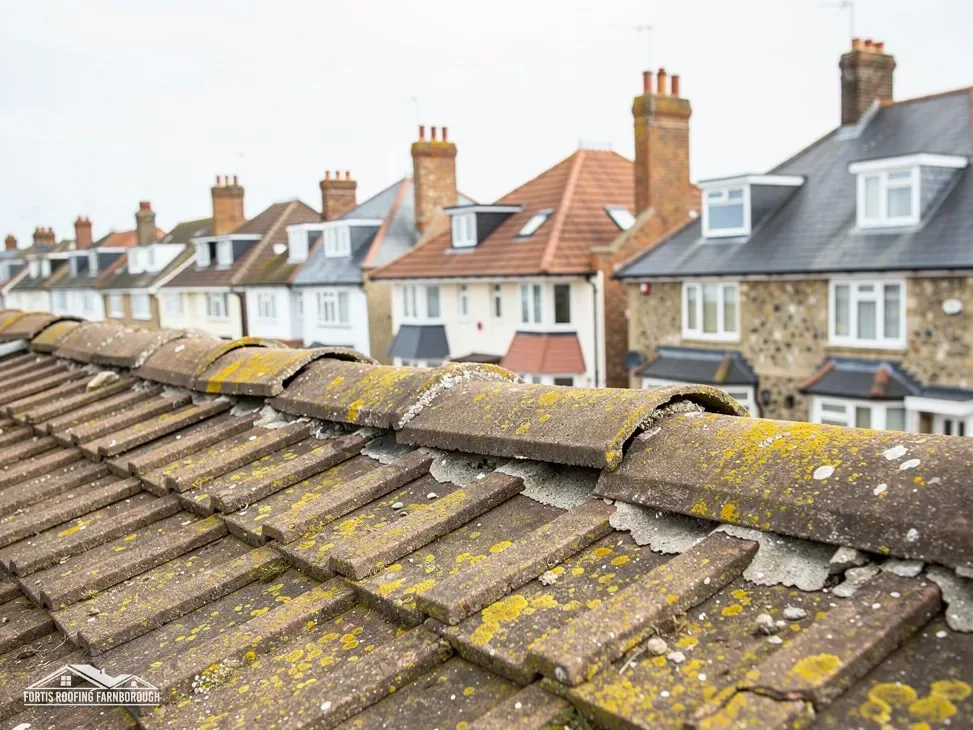
Tiles that are old, dry or already fatigued are the most at risk, and moss makes them slippery. On a wet or frosty day even a sound roof is treacherous.
There is the other problem too, which is the fall. A pitched roof drops away steeply, tiles move under a foot, and a slip leads to a long drop over the gutter. A fall from a roof is a serious source of injury. HSE guidance on working at height is worth reading before anyone goes up.
Our page on what causes cracked roof tiles covers how foot traffic fits into the usual causes.
Roof ladders and safer access
Professionals avoid putting weight on tiles at all where they can. The standard tool is a roof ladder, a short ladder with a hook that fits over the ridge, laid flat on the slope. It spreads the load across many tiles, and a person climbing it is held by the ridge and not by the tiles.
A crawl board does a similar job on a shallow slope, bridging the battens or rafters. For work on or near the edge, scaffold or an edge protection system keeps people from falling. A tower can be used for jobs at a gable or chimney.
The way a roofer moves matters too. Stepping on the lower, supported part of a tile, close to the batten, is stronger than the middle. Moving in the dry, in good light and with a second person on the ground, matters even more.
None of this is a how-to for amateurs. Judging the weather, the condition of the tiles and the safest route takes experience on top of the equipment. A ladder set against the gutter can also crack the tiles and the gutter itself.
To see the roof, use a phone zoom from the pavement, or ask us to survey it. Our page on slipped roof tiles explains what to look for from below.
What CDM 2015 expects
Safety law reaches roof work even when a householder hires someone. The Construction (Design and Management) Regulations 2015, known as CDM, call a householder who commissions building work on their own home a domestic client, and hiring a roofer makes that label yours.
What CDM asks depends on how many contractors there are. With two or more (regulation 5(1)), the job needs a principal designer and principal contractor; a lone contractor (regulation 15(5)) writes a construction phase plan. It is the contractor count that triggers the extras, not notification.
On a typical repair by one firm, the roofer therefore plans the work: how the roof is reached, how falls are prevented, how household and passers-by are protected and how the site is kept safe. You are not expected to do that yourself, which is one reason to hire someone who does.
A roofer who turns up with a single ladder and no plan for the edge should raise a question in your mind. Ask how the roof will be accessed, and expect a clear answer.
We cover that at the survey. Where scaffold is needed, we arrange it, and the quote includes it.
If you need to know what is up there
The ground tells you plenty. A phone with a good zoom, a pair of binoculars or a camera on a pole shows slipped tiles, gaps at the ridge, moss and damaged flashings. Check after storms and once a season.
From inside, a torch in the loft shows daylight where tiles have gone, damp on the timbers and the state of the underlay. That is safe if the loft is floored or you stay on the joists, and stay clear of the ceiling boards.
When something looks wrong, ask for a survey. The roof is measured and recorded from the slope with proper access, and each picture comes with a plain explanation, leading to a repair where one will do and a re-roof only where the evidence calls for it.
A tile that has dropped onto a path or lawn means keeping people clear until the gap is closed, with a temporary cover first if water is coming through.
One total covers the work, access included. The pitched roofing hub explains the tile repairs we handle for homes around Farnborough, Fleet and Camberley.