The short answer
Yes, when the roof is dry enough and safe enough to work on. Tiles themselves can be fixed in cold weather. What winter changes is mortar, which needs to set without being rained on or frozen, and the safety of the roof surface. Dry-fix parts suit the season. If water is coming in and the weather is poor, a temporary cover goes on first.
What winter changes
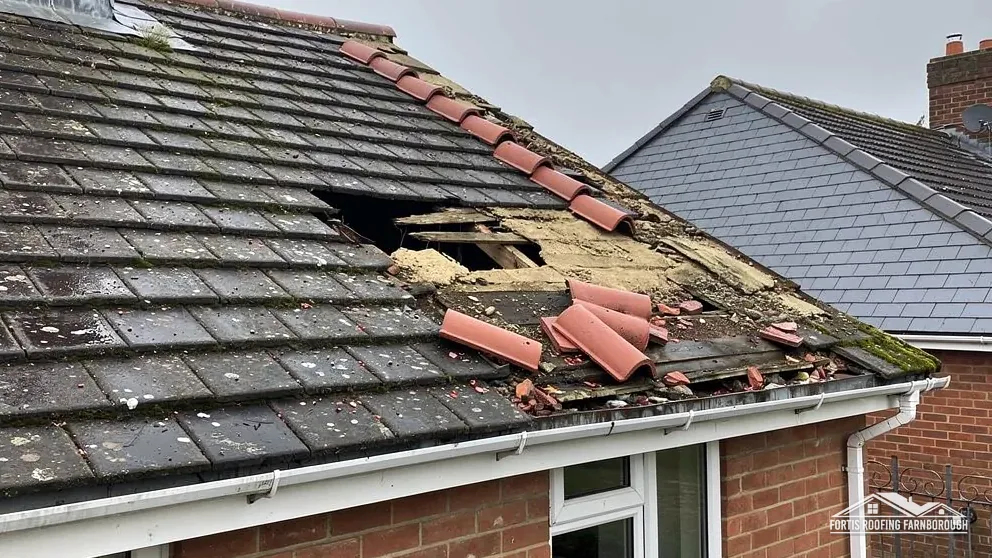
Replacing a single roof tile is a simple fix: lift the neighbouring tiles, remove the broken one, slide in a new one and fix it. None of that depends on warmth. What depends on the weather is everything around the job.
The first factor is safety. A roof slick with frost, ice or rain is dangerous to stand on, and so are the ladder and the access boards. A roofer who decides to wait for the surface to dry is not being slow. A fall is a worse outcome than a few days' delay.
The second factor is wind. Handling tiles and ridge pieces in a strong gust is awkward, and a loose tile can be carried off the roof. Work stops when the wind makes it unsafe.
The third is dampness. Laying new tiles over a wet batten or underlay is generally fine, since the covering keeps the rain off once it is in. But work that seals or bonds, such as pointing, needs conditions to suit.
Met Office averages for South Farnborough (1991 to 2020) show around 53 air-frost days and 118 wet days in a year, so a winter roof here has plenty of both. Good working days are not rare, though. They need to be chosen.
Dry-fix and mortar in cold weather
Mortar is where the season bites. Fresh mortar needs time to cure, and a downpour or a hard overnight freeze during that time can ruin it. Work with mortar, such as bedding ridge or hip tiles, is often the part that has to wait for a better day, or be done in a dry spell when frost is not forecast.
Dry-fix is less affected. A dry ridge, hip or verge system holds tiles mechanically, with clips, screws and trims instead of a mortar bed. There is nothing to set, so it can be fitted on a cold, dry day without waiting. The test specification for those systems is BS 8612:2018.
Dry-fix is not the answer to every winter repair, because each system is made for particular tiles and pitches. But where a ridge or verge needs doing in the colder months, it is worth asking whether a dry system can be fitted. Our page on dry ridge versus mortar compares them.
Single tiles are neither. A replacement tile is fixed with a nail or clip, not mortar, so a single tile can usually go in on any day when the roof is safe.
Mortar is not banned. It simply suits dry spells better, and in any season it is paired with fixings for ridge and hip tiles.
Weather windows and planning
Because the weather varies, a winter repair is a matter of picking the right window. A roofer looks at the forecast for the days ahead, and a dry, still day with the roof clear of frost is a good one. A short window is enough for a handful of tiles.
Bigger jobs, such as a ridge rebuilt in mortar or a slope re-tiled, are harder to fit into winter, because they take several days and the roof is open while the work goes on. These are sometimes better planned for a drier time of year, as long as the roof is safe to wait.
Which way to go turns on how the roof is faring. If tiles are slipping and the underlay is exposed, waiting risks water reaching the timbers. If the roof is sound but tired, a spring job is reasonable.
Which applies becomes clear at the survey, with photographs to show why. A tile that has slid and lets water in is a problem for today. Our page on slipped roof tiles explains the signs.
Costs do not depend on the season in any figure we can source. Our page on roof tile replacement cost gives the typical UK ranges, which are for the work and not the weather.
Making it safe first
When rain is coming in and the weather rules out a proper repair, the first step is a temporary cover. A leaking roof is made safe before anything else, perhaps with a sheet fixed over the damaged area, a few tiles refitted to close a gap or a patch across bare battens.
It is meant to last a short time. It protects the loft, the insulation and the ceilings while the permanent repair waits for a dry day. It is not the repair.
Meanwhile, protect the inside: move belongings, catch drips and note the date and weather beside any stain, which helps trace the fault. A leak near electrics means keeping clear and getting advice before touching anything.
If a tile has fallen onto a path or garden, steer people clear of the ground below the gap and leave the refitting to a roofer.
The survey happens when the roof is safe to climb, with the faults recorded and explained. Our quote comes as a single written sum. The pitched roofing hub covers the other tile repairs we handle for homes across Farnborough, Fleet and Camberley, in any season.