The short answer
Fix the source of the water first, because mould returns wherever the damp is left to continue. Once the roof is sound, dry the area thoroughly, clean small patches and consider specialist advice for large or recurring growth. Check also whether the cause is condensation and not a leak, since the cure for each is quite different.
Stop the water before anything else
Mould grows where surfaces stay damp, so cleaning a stained ceiling while the roof still drips achieves nothing. The first job is to find where the water is coming in and stop it.
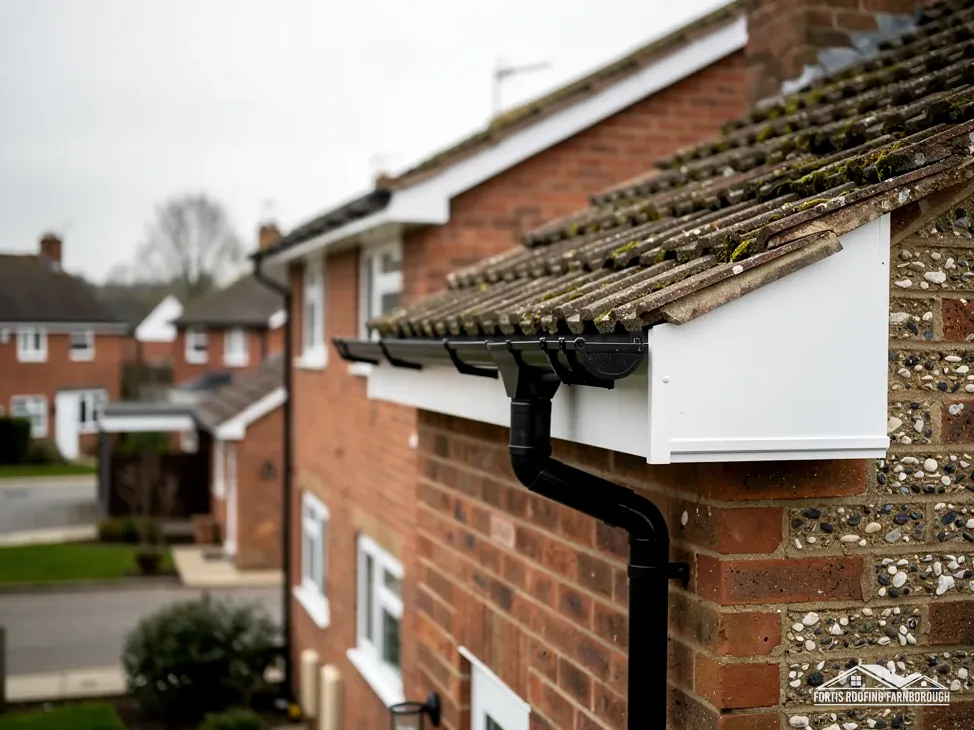
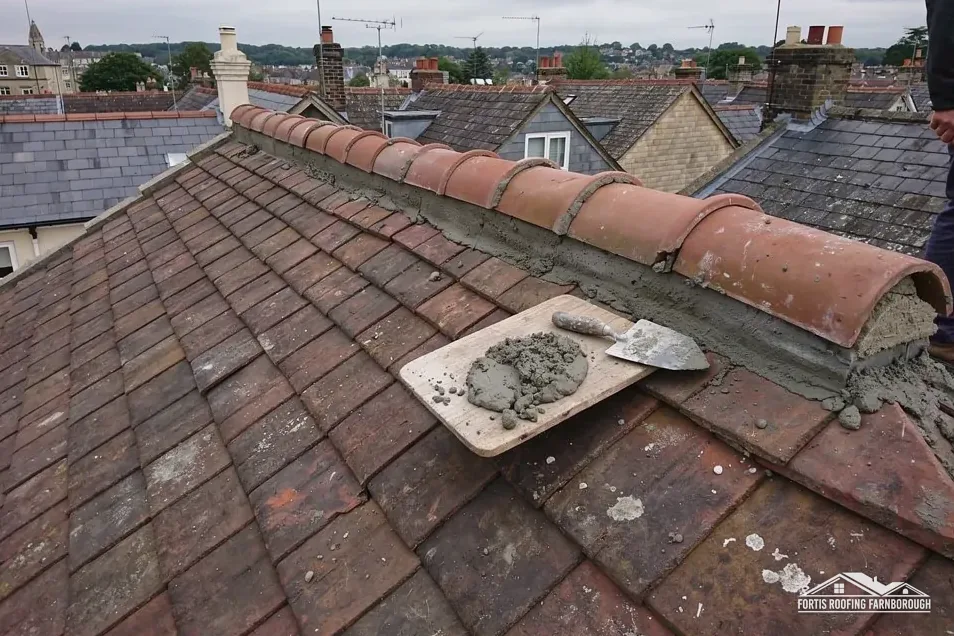
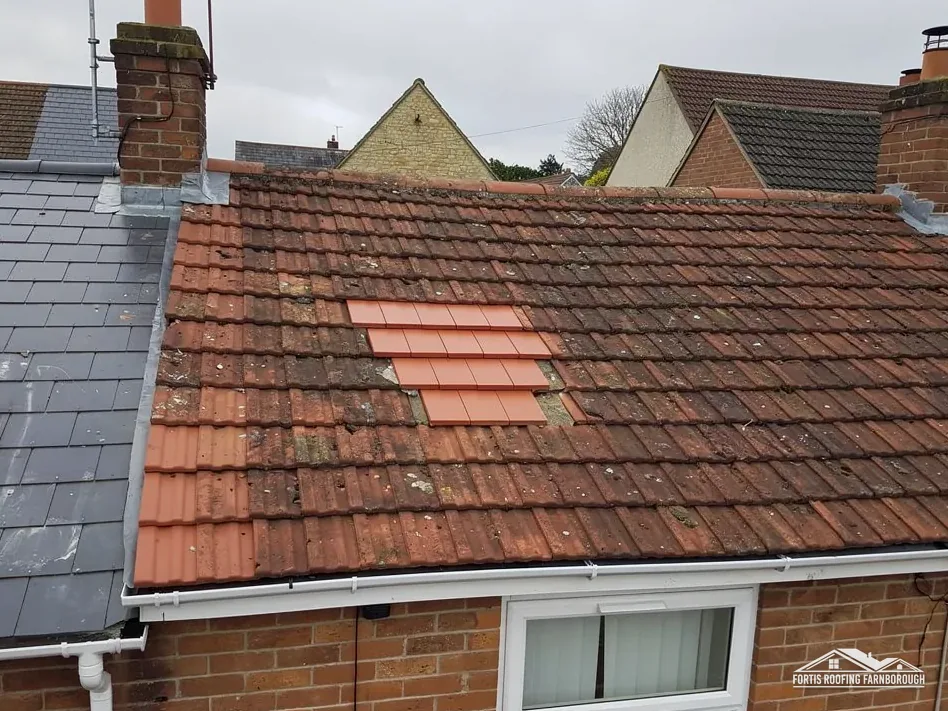
Leaks rarely appear at the point where water enters the roof. Water travels along rafters and battens, and under the covering, before it drops through a ceiling, so a stain in a bedroom may be a metre or more from the real fault. Common sources are slipped or cracked tiles, failed flashings around a chimney or wall, a blocked valley and a gutter overflowing onto the wall.
A roofer looks from outside and from the loft. Inside, the signs are wet insulation, dark timber and a damp smell. Outside, they are displaced tiles, lifted lead and gaps at the junctions.
If water is coming in now, a temporary cover or a quick repair stops further damage while the full repair is planned. Our find a roof leak page describes how a leak is traced to its source.
Only when the roof has stopped letting water in does it make sense to turn to the mould itself.
Drying out and cleaning up
After the repair, the damp structure needs time and air to dry. Open windows when the weather allows, run a dehumidifier in the affected room and keep furniture away from damp walls so air can circulate. Wet plasterboard that has been soaked for a long time may need to be cut out and replaced, and a roofer or builder can judge that when the ceiling is opened up.
In the loft, wet insulation loses its value and can hold moisture against timber, so sodden sections are removed and renewed. Timbers are checked for softness. A rafter or batten that has stayed wet for a long period can lose strength, which is a structural question rather than a cosmetic one.
For small areas of surface mould, many people wipe the surface with a detergent solution and dry it. Larger patches, mould that returns after cleaning, or growth within a building's structure warrant specialist advice, and so does any household member with breathing problems.
Do not paint over damp. Paint hides the stain for a few weeks while the cause continues underneath, and the patch reappears through the new coat. Wait until the wall or ceiling is dry, then redecorate.
Condensation lookalikes
Not every dark patch is a leak. Condensation is moist indoor air turning to water on a chilly surface, and the mould it feeds can look very like leak damage. It shows up in corners, at the ceiling edge, behind wardrobes and on north-facing walls, and it tends to follow cold spells.
Approved Document C sets out the principle for roofs. A roof should resist the penetration of precipitation, and be built so that moisture forming inside the roof construction, called interstitial condensation, does not undermine its structure or its insulating performance. It also points to BS 5250, the code on managing moisture in buildings, for how to ventilate a cold roof.
A loft with blocked eaves vents, insulation pushed hard against the roof edge or a poor seal around the hatch can build up condensation on the underside of the roof. Marley's ventilation advice for cold roofs using HR underlay, which does not breathe, asks for a 25 mm gap along the eaves at pitches of 15 degrees or less, and 10 mm above that.
Our page on telling a roof leak from condensation offers a simple way to check which you have.
How we help
We look at the roof, not at the mould. Our survey takes in the tiles, flashings and gutters from outside, then the loft from within, and we photograph the damp areas and the likely entry point. You receive the photographs and an explanation in ordinary words.
If the cause is a leak, the repair is targeted at that fault. If the survey points to condensation, we tell you, and the answer is ventilation and moisture control, not new tiles. In either case the roof work is the right fix only when the evidence supports it.
Where the damage has gone beyond the roof, such as rotten timbers or wet plasterboard, we tell you what we see and which parts of the work belong to other trades.
The roof work is priced as a single written total after our visit. The roof repairs hub describes the repairs we carry out.
If mould is already present, tell us, because it affects the order in which the dry-out and the redecoration are planned, and we can describe what we found in the loft when you speak to an insurer or a decorator.