Knapp Hill's convict prisons
The male and female convict prisons at Knapp Hill opened in 1859 and had become barracks by 1911.

Roofs on the sand heath, from 1850s institutions to later streets
Knaphill sits on Bagshot sand heath at the western end of Woking. Its prisons, church and school date from the 1850s to the 1880s, and we survey roofs near them.
The male and female convict prisons at Knapp Hill opened in 1859 and had become barracks by 1911.
An iron church, Holy Trinity, was built in 1855, and Knapp Hill school followed in 1877, enlarged in 1884.
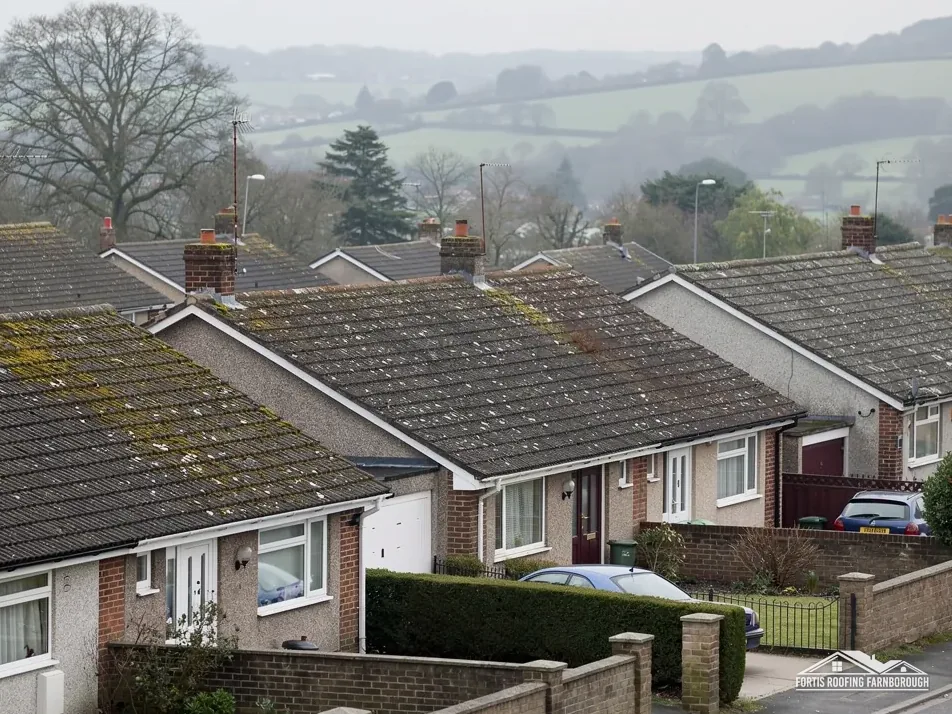
The Lower Knaphill conservation area lies within about 0.75 km of the centre of Knaphill.
Map of Knaphill with Bisley, Brookwood, St John's, West End, Surrey Heath marked around it.
Map data © OpenStreetMap contributors. Loads only when you ask for it.
Bisley lies to the north-west, Brookwood and Pirbright to the south-west, St John's and Horsell to the east, West End to the north-west, and Chobham to the north.
About 8.3 road miles east of Farnborough · Woking Borough Council and Surrey County Council.
Knaphill, Knapp Hill and the rules
The councils behind a Knaphill roof, Knapp Hill's prisons, church and school as the 1911 county history lists them, and how the Lower Knaphill conservation area shapes a repair, each point with its source.

| No. | Chapter | The figure it turns on |
|---|---|---|
| 01 | Woking regulates, Surrey licenses the scaffold | Woking's own building control service |
| 02 | Knapp Hill's prisons, church and school | Prisons opened 1859, school 1877 |
| 03 | Lower Knaphill and the Basingstoke Canal | Lower Knaphill within about 0.75 km |
Chapter 01 of 03
| Role | Body for Knaphill addresses |
|---|---|
| Planning authority | Woking Borough Council |
| County council and highway authority | Surrey County Council (until 31 March 2027) |
| Building control | Woking Borough Council, its own service |
| Scaffold licence on the highway | Surrey County Council, 10 working days ahead |
Knaphill is 8.3 road miles away, to the east of Farnborough, taken from the A325 Farnborough Road. Planning and building control both sit with Woking Borough Council, which runs its own building control service, and the roads and pavements are Surrey County Council's. From 1 April 2027 Surrey's councils give way to West Surrey Council, so forms sent after that date may carry a new name.
The Planning Portal states the national test plainly. Building control is not normally needed where the work affects less than 25 per cent of the building envelope and less than 50 per cent of the roof. Refixing a ridge or swapping a few slipped tiles sits under that line, while a whole new covering is a larger job, and then an application goes to Woking or to a registered building control approver before work begins. We measure the slopes at the survey so you see the figures that decide it.
A change of covering raises a separate question: weight. A new covering 15 per cent or more heavier than the existing one needs Building Regulations approval, and the Planning Portal suggests a structural check before the job is planned. Knaphill's mix of house ages makes that check worth doing before material is ordered, so we put existing and proposed coverings side by side in the survey notes.
Scaffolding that blocks a pavement or carriageway requires the highway authority's licence, as section 169 of the Highways Act 1980 provides. In Knaphill that is Surrey County Council, whose published fee is £208 per 28 day period, with notice of at least 10 working days. Surrey is silent on which party applies, so the scaffold firm and we agree it between us and you hear the answer on survey day. Private land needs no licence. Surrey's page also sets out an emergency licence for cases where a structure is unsafe; the council asks to be phoned.
Should rain be getting in while those questions are open, stopping it comes first. A temporary cover or a repair that stops the leak does not wait for the scaffold licence or the building control question, and the longer-term plan follows once the roof is dry.
Where the scaffold stands matters on a street with parked cars and narrow pavements. We agree the position before booking, so the access is safe for the roofers and still usable for the people who live next door.
Chapter 02 of 03
Knapp Hill's public buildings, by date
The 1911 Victoria County History of Surrey records how Knapp Hill took shape in the 1850s. An iron church, Holy Trinity, was built there in 1855. The convict prisons, male and female, first opened in 1859 and had been turned into barracks by 1911. Knapp Hill school was built in 1877 and enlarged in 1884, and the account adds a Wesleyan chapel. Knaphill lies at the western end of Woking's built-up area, on Bagshot sand heath.
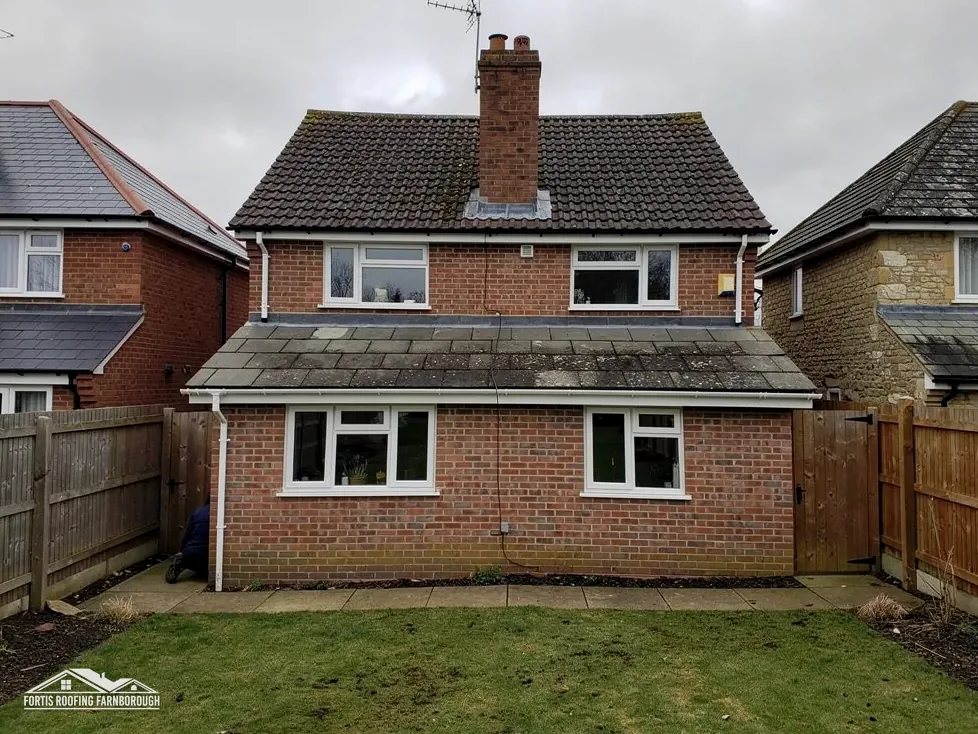
A village with institutions from the 1850s to the 1880s will hold houses from many decades side by side, and their roofs differ in age and covering even where the walls look alike. The record tells us when places were built, not what covers any one house today, so we never assume. On the survey we lift a few tiles on every slope, photograph the layers beneath and write down what each slope is covered with, and the front and rear slopes of one house can differ.
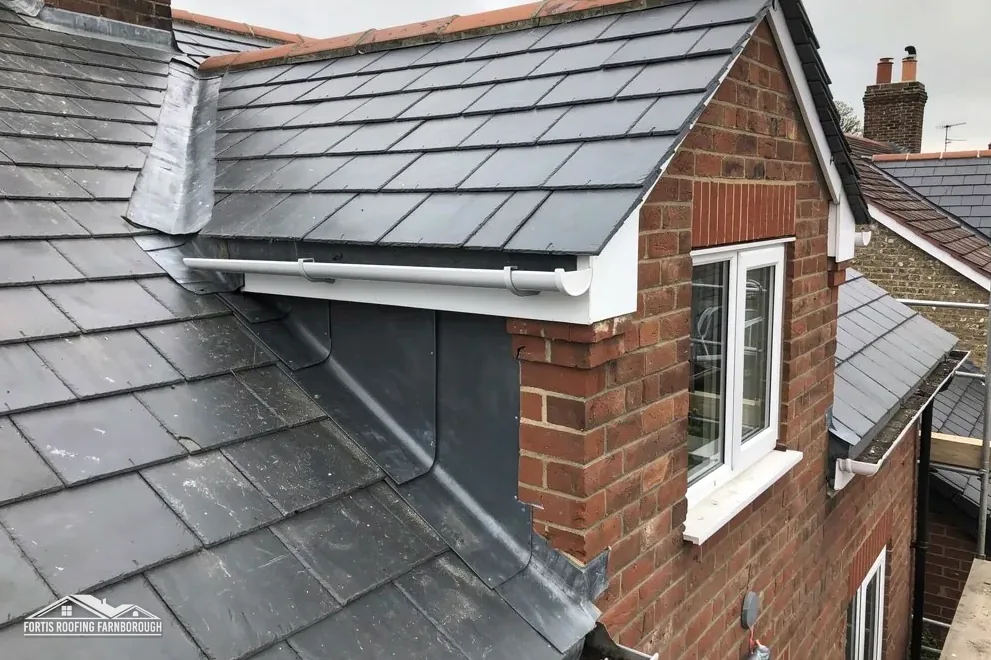
On houses of mixed age, repairs often come down to the joins: where an extension meets the main roof, where a valley, the internal angle between two slopes, carries water away, and where a gutter hangs from the eaves. Water that finds a join soaks the timber underneath before it shows on a ceiling. Our pitched roofing page explains how slopes and valleys are surveyed.
A loft can look dry while a slow leak runs at a valley, so we check the timber at the join as well as the ceiling below, and we probe any batten or rafter end that looks dark or soft. We tell you what we found in plain words and show the photos.
Gutters are part of the same read. Brett Martin's rainwater guidance gives a fall of 1 mm for every 600 mm, and any length that sags out of true holds water, overflows at the joints and stains the wall below. We check the line of each run and record it.
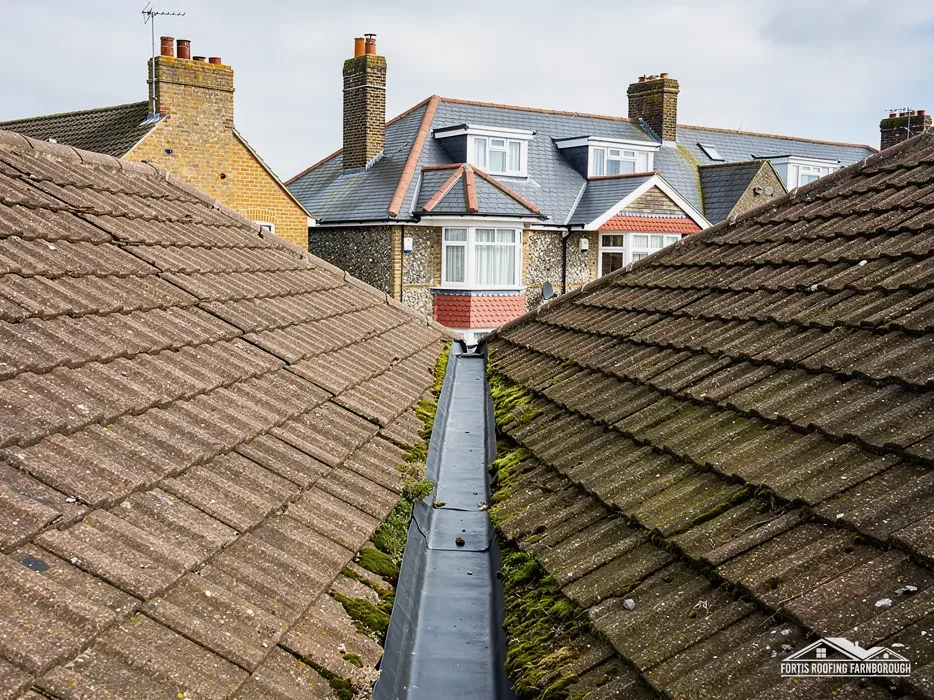
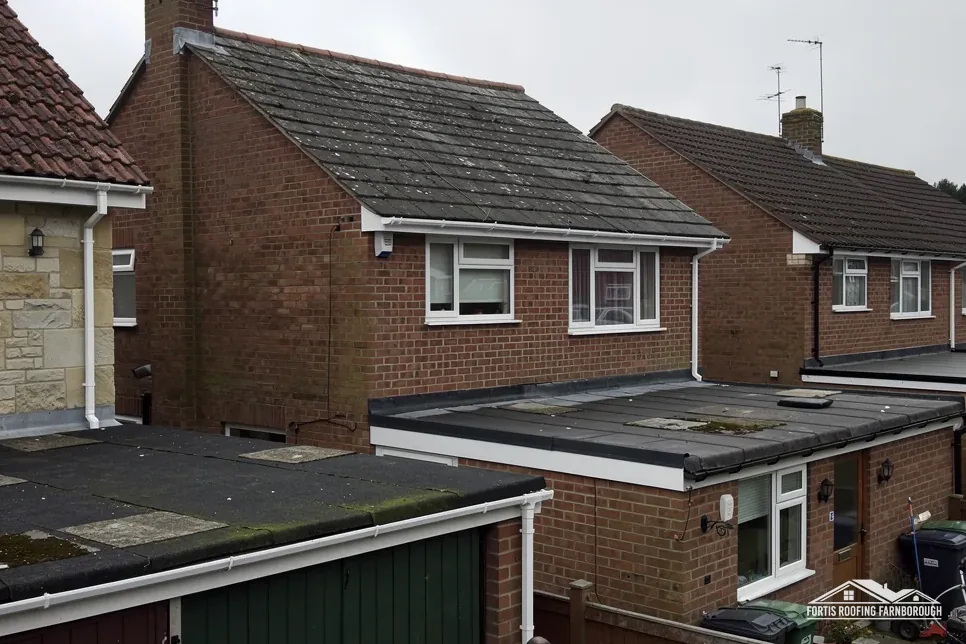
Extensions of later decades often end in a flat section. For flexible-membrane flat roofs, BS 6229:2025 keeps a minimum finished fall of 1:80 for general roof areas, so standing water days after rain tells us the deck has sagged below that slope.
Chapter 03 of 03
| Check | In Knaphill | For roof work |
|---|---|---|
| Conservation area | Lower Knaphill, within about 0.75 km | Ask Woking before changing a roof's look |
| Conservation area | Basingstoke Canal | Ask Woking before changing a roof's look |
| Listed building | Checked on the National Heritage List by address | Listed building consent for work affecting character |
| Article 4 direction | Checked by address with Woking | Shows whether a roof right has been withdrawn |
The national planning dataset puts the Lower Knaphill conservation area within about 0.75 km of the centre of Knaphill, and that query reaches the edge of the Basingstoke Canal conservation area too. Woking Borough Council puts its conservation areas at 27, and its page on planning policies and constraints is where an address gets checked first, before anyone prices a change.
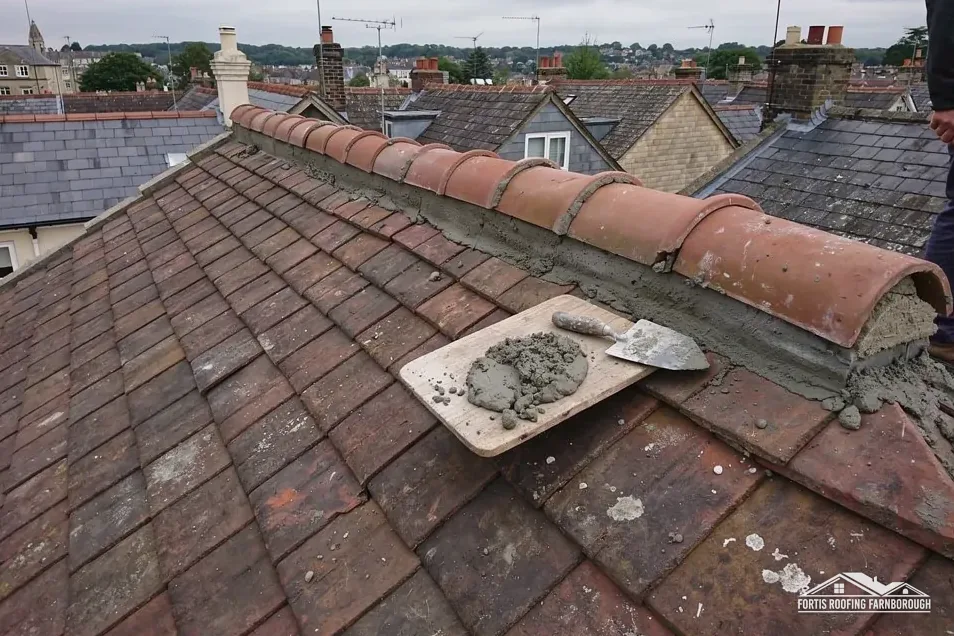
A conservation area does not forbid maintenance. The test is whether the work changes how the building appears from outside: restoring the existing covering, ridge and verge as they were does not, while a new material, a different ridge profile or an altered chimney does. For those changes we put the question to Woking's planning team before pricing, and our photos of the roof as it stood stay on file for any later comparison.
Listed building consent is the permission needed before changing what gives a listed building its character, and an Article 4 direction withdraws specified permitted development rights within a mapped area. We check both against your address with Woking before the survey ends, and we tell you the result in writing. Where the roof is a flat section on a rear extension, the flat roofing page explains how it is surveyed; the same checks apply to it as to the main slopes.
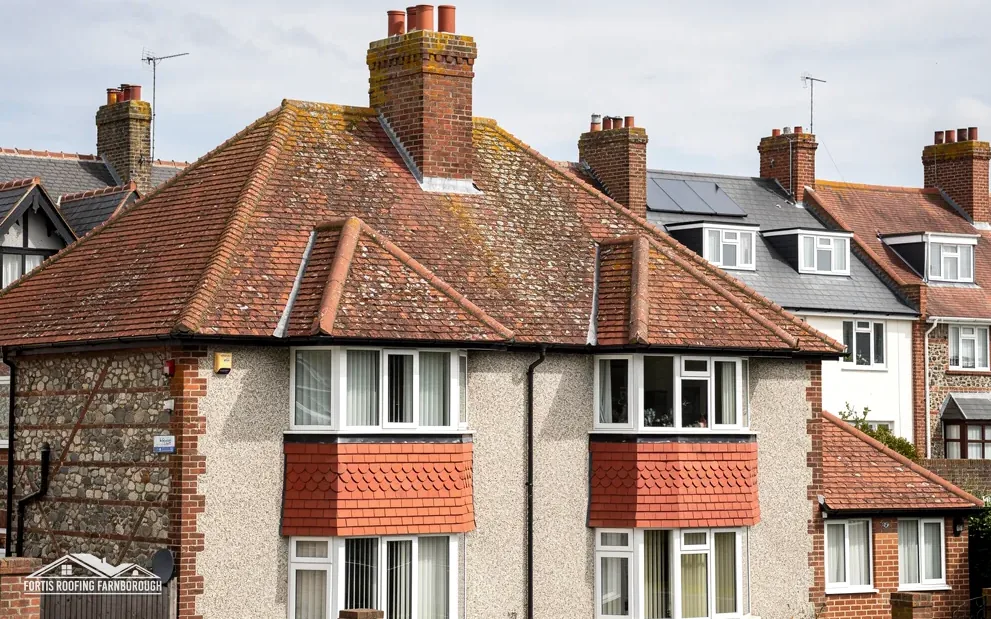
The Basingstoke Canal conservation area follows the waterway, so an address near the canal is worth checking even when the house is some way from Lower Knaphill's streets. Where a house falls inside neither area, listing and any Article 4 direction are still checked, because they follow the address and not the conservation area map.
A planning constraints page lists what applies to a given site. We read it for your address, then confirm the result with a planning officer at Woking where there is any doubt, so the consent route is written down before work is booked.
On site the routine never varies: access set up properly, waste taken away, and a brief daily update telling you the progress and the next step. The consent route and the price are in your hands before the first tile is lifted.
We open up the roof around the eaves, verge and ridge, photograph battens and underlay, and record the covering slope by slope. Front and rear slopes of one house can differ, so we record them separately. The written price then rests on what the photos show, not on an assumption about the street, and you keep the photos.
Not when the repair puts back the old covering, ridge and chimney, because the look from the road stays as it was. A new material or ridge profile does change the look, so we raise it with Woking's planning team first. We look up any Article 4 direction covering your address ahead of pricing, and write the result down for you.
No. A few slipped or cracked tiles sit well inside the Planning Portal's test of less than 25 per cent of the building envelope and less than 50 per cent of the roof. A whole-house re-roof is a bigger job, and then Woking or a registered building control approver is involved. At the survey we say which applies, in writing, before any date is booked.
Surrey County Council licenses scaffold on roads and pavements, charging £208 per 28 day period and asking for at least 10 working days' notice. The council does not say who should apply, so the scaffold firm and we agree that between us when we survey. Private drives and gardens need no licence.
Get your free roof quote
Name your road and the trouble you have noticed up top, and a survey date follows.
10-year workmanship guarantee, in writing.